
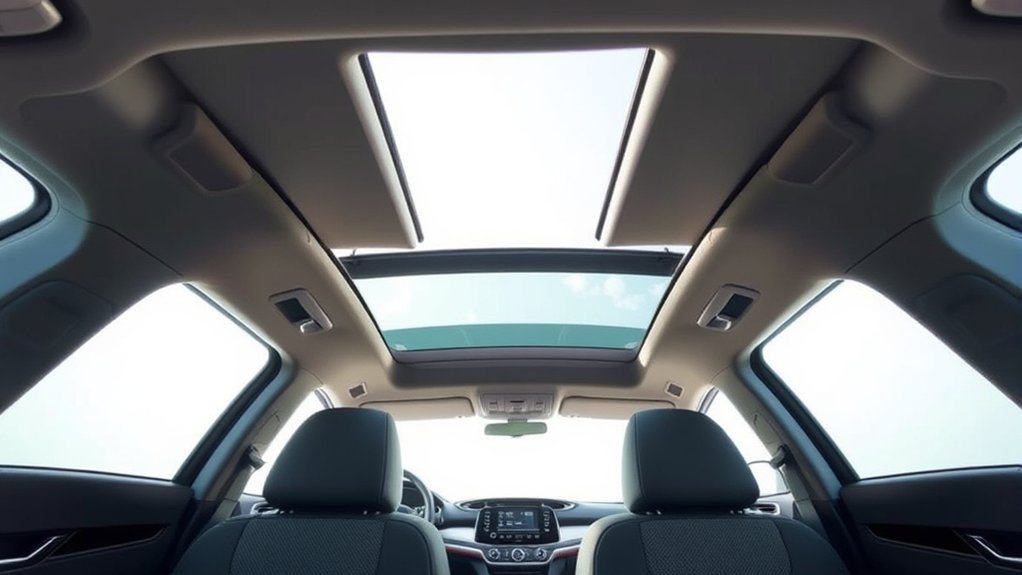
What Is the Headroom in Crv With Moonroof
You’ll find about 39.1 inches of front headroom and roughly 38.3 inches in the rear of a Honda CR-V with a moonroof.
The headroom in CR-V with moonroof is slightly reduced due to the design of the moonroof.
The moonroof’s glass panel and added structural frame reduce vertical clearance by around 0.4 inches compared to models without it, balancing durability with space.
While this slightly limits your headroom, it also enhances natural light and ventilation inside.
Keep exploring to understand how this trade-off influences comfort and design choices.
Key Takeaways
- Front headroom in the CR-V with a moonroof is approximately 39.1 inches, reduced from 40.1 inches without it.
- Rear headroom with a moonroof is around 38.3 inches, about 0.9 inches less than the standard 39.2 inches.
- Moonroof structural components and glass thickness cause a typical headroom loss of about 0.4 to 0.5 inches.
- Despite reduced headroom, the moonroof adds natural light and enhances cabin openness and ambiance.
- The design balances minor headroom reduction with improved aesthetics, ventilation, and overall comfort.
Why Headroom Matters in the Honda CR-V
Why does headroom matter in the Honda CR-V? You need adequate headroom ergonomics to maintain comfort and prevent fatigue on longer drives. If the space between your head and the ceiling is insufficient, it restricts natural posture, forcing you to slouch or adjust awkwardly. This impacts your overall driving experience and safety.
Additionally, proper headroom contributes to optimized interior airflow. When you sit comfortably with enough vertical space, air circulates more effectively around your body, enhancing ventilation and temperature regulation. Insufficient headroom can disrupt airflow patterns, causing hotspots or stagnant air zones.
Moonroof Impact on CR-V Headroom
How does the moonroof affect the headroom in the Honda CR-V? Installing a moonroof, especially one with panoramic glass durability, slightly reduces available headroom due to the additional structural components required to support the glass panel.
The moonroof slightly reduces headroom in the Honda CR-V due to added structural support for the glass panel.
You’ll notice a marginal decrease, typically around half an inch, because the reinforced frame and sealing mechanisms occupy space above the roofline. However, Honda engineers optimize moonroof durability without compromising interior comfort, balancing structural integrity with minimal impact on cabin space.
The panoramic glass durability ensures safety and longevity, but it necessitates a thicker roof assembly. So, while the moonroof enhances your driving experience with natural light and openness, it does slightly reduce headroom compared to models without this feature.
Understanding this trade-off helps you make a more informed decision about your CR-V configuration.
Front Headroom in CR-V With Moonroof
When you sit in the front seats of a Honda CR-V equipped with a moonroof, you’ll notice that the headroom is slightly reduced compared to models without this feature. The moonroof’s panel and frame occupy space that otherwise contributes to vertical clearance, which affects front headroom aesthetics subtly but perceptibly.
However, the design balances this reduction with enhanced moonroof aesthetics, offering an open feel despite the minor trade-off.
| Feature | Impact on Front Headroom |
|---|---|
| Headroom without Moonroof | Approximately 40.1 inches |
| Headroom with Moonroof | Approximately 39.0 inches |
| Moonroof Aesthetics | Adds visual openness |
| Headroom Aesthetics | Slightly compromised |
| Overall Comfort | Maintained with minimal loss |
This precise balance ensures functionality alongside stylish design.
Rear Headroom With Moonroof in the CR-V
The moonroof affects rear headroom in the Honda CR-V? Yes, but only minimally. The CR-V’s panoramic moonroof slightly reduces rear headroom by approximately 0.4 inches compared to models without a moonroof. This reduction stems from the additional structural components and housing necessary to accommodate the moonroof mechanism.
Despite this minor decrease, the rear cabin maintains ample vertical space for average adult passengers, ensuring comfort. Additionally, the moonroof aesthetics enhance the overall cabin ambiance, creating a more open and airy environment.
The increased cabin lighting from the moonroof improves visibility and contributes to a perception of spaciousness, offsetting the slight headroom compromise. Consequently, while you’ll notice a small headroom difference, the moonroof adds significant value through improved aesthetics and lighting in the rear cabin.
CR-V Headroom: Moonroof vs. No Moonroof
You’ll notice the CR-V’s headroom varies slightly between models with and without the moonroof, with exact measurements impacting overall space. The moonroof’s design reduces ceiling height by a small margin, which can affect comfort for taller passengers. Understanding these differences helps you evaluate how much headroom you’ll have depending on your choice.
Headroom Dimensions Comparison
How much headroom changes in the Honda CR-V when equipped with a moonroof is a key consideration for buyers concerned with interior space. The standard CR-V offers approximately 40.1 inches of front headroom, while models with a moonroof reduce this to about 39.1 inches.
This 1-inch difference results from the structural reinforcement and panel thickness required to accommodate the moonroof mechanism. Rear headroom experiences a similar reduction, from roughly 39.2 inches without a moonroof to 38.3 inches with one.
While this slight decrease may impact taller occupants, the moonroof aesthetics often enhance the cabin’s perceived openness, complementing available interior colorways. When comparing these dimensions, you’ll notice the trade-off between headroom and the visual appeal a moonroof adds to your CR-V’s cabin environment.
Impact of Moonroof Design
The reduction in headroom caused by the moonroof stems directly from its design and integration within the CR-V’s roof structure. When you opt for the moonroof, the roof panel must accommodate the glass assembly and sliding mechanism, which intrudes slightly into the cabin space. This design choice prioritizes moonroof aesthetics, creating a sleek, modern look that enhances natural light but comes at the cost of vertical clearance.
Additionally, the structural reinforcement around the moonroof frame reduces available headspace, a trade-off for maintaining roof rigidity and safety standards. You might also notice increased windshield glare due to sunlight reflecting off the glass surface, which designers mitigate by tinting and positioning. Overall, the moonroof’s engineering balances style and functionality, but you should expect a modest headroom decrease compared to the no-moonroof variant.
Comfort for Taller Passengers
Why does headroom matter so much for taller passengers in the CR-V? Because insufficient headroom can cause discomfort, restrict movement, and diminish overall ride quality.
When choosing between a CR-V with or without a moonroof, you’ll notice the moonroof slightly reduces vertical space, impacting headroom aesthetics and spatial perception. Taller passengers might experience a tighter fit, especially with the lowered ceiling contour near the moonroof frame.
However, the CR-V compensates by optimizing cabin storage and interior layout to maintain comfort without sacrificing utility. If you prioritize maximum headroom, the no-moonroof variant offers a marginal advantage.
Still, the moonroof enhances cabin ambiance and natural light, which can offset the minimal headroom trade-off. Ultimately, your comfort hinges on balancing headroom needs with the aesthetic and functional benefits of the moonroof.
How Moonroof Affects Interior Comfort
You’ll notice the moonroof slightly reduces headroom, affecting how spacious the cabin feels. It also helps regulate interior temperature by allowing ventilation and sunlight control. However, keep in mind that it can increase noise levels inside, especially at higher speeds.
Impact On Headroom
How does the moonroof in the CR-V influence the available headroom inside the cabin? Installing a moonroof slightly reduces the vertical space between the seat cushion and roof lining due to the structural reinforcement and glass panel integration. You’ll typically lose about 0.3 to 0.5 inches of headroom compared to models without a moonroof.
This marginal decrease doesn’t significantly impact average-height occupants, but taller passengers might notice a tighter fit. Moonroof aesthetics enhance the cabin’s openness and light, improving perceived spaciousness despite the slight headroom compromise. Importantly, the moonroof mechanism does not interfere with cargo space, as it’s integrated into the roof structure.
Temperature Control Benefits
Although the moonroof slightly reduces headroom, it markedly enhances temperature control within the CR-V’s cabin. You’ll find that the integration of moonroof aesthetics with climate control systems optimizes interior comfort efficiently.
Specifically, the moonroof allows you to:
- Ventilate hot air rapidly by tilting or sliding the panel, reducing reliance on air conditioning.
- Utilize natural airflow to maintain a consistent cabin temperature, minimizing temperature fluctuations.
- Benefit from built-in sunshades that limit solar heat gain while preserving the open feel.
These factors work together to improve your overall climate control experience by balancing fresh air intake and solar heat management. The moonroof’s design doesn’t just add visual appeal; it also contributes technically to the CR-V’s ability to regulate interior temperatures precisely and effectively.
Noise Levels Inside
Beyond temperature control, the moonroof also influences the acoustic environment inside the CR-V. When closed, its dual-pane design helps maintain sound insulation, minimizing road noise and preserving interior comfort.
However, when open, you’ll notice increased wind noise, which can affect conversations and audio clarity. Balancing aesthetics vs practicality, the moonroof enhances interior lighting but may require you to adopt courtesy tips, such as lowering volume or closing it in noise-sensitive areas.
Unlike an unrelated topic like engine performance, noise levels directly impact your driving experience. Understanding these trade-offs helps you optimize comfort without compromising the stylish interior lighting benefits the moonroof provides.
Who Gains From Extra Headroom in the CR-V?
Who benefits most from the extra headroom in the CR-V with a moonroof? You do, especially if you prioritize comfort without compromising moonroof durability or driving dynamics. This additional vertical space enhances your overall driving experience by reducing cabin claustrophobia and maintaining structural integrity.
Experience unmatched comfort and openness in the CR-V with extra headroom and a durable moonroof design.
You gain significant advantages if you:
- Are taller than average, preventing head contact with the roof.
- Frequently carry passengers who require spacious interiors.
- Value enhanced airflow and natural light without sacrificing roof strength.
The extra headroom ensures that the moonroof’s reinforced design doesn’t hinder your posture or visibility. This balance between comfort and engineering precision allows you to enjoy dynamic handling while benefiting from a more open, breathable cabin environment.
Comfort Tips for Limited Headroom in CR-V
If you face limited headroom in your CR-V with a moonroof, start by adjusting your seat height and tilt to optimize vertical space without compromising visibility. Utilize the adjustable headrests to maintain proper neck support while maximizing clearance above your head. These precise adjustments help enhance comfort and reduce strain during your drive.
Adjust Seat Position
How can you maximize comfort in a CR-V with limited headroom? The key lies in how you adjust seating to optimize space and posture. Start by positioning the seat lower to increase vertical clearance, which reduces headroom constraints without compromising visibility.
Next, tilt the seatback slightly forward to create additional headspace while maintaining ergonomic support. Finally, slide the seat horizontally to balance legroom and headroom effectively.
To further enhance comfort, consider these tips:
- Use alternate lighting options inside the cabin to reduce glare and improve spatial perception.
- Adjust the seat height incrementally to find the optimal clearance.
- Maintain a neutral spine alignment to prevent fatigue during longer drives.
These precise adjustments allow you to make the most of the CR-V’s moonroof headroom.
Use Adjustable Headrests
After optimizing your seat position to enhance headroom, fine-tuning the adjustable headrests can further improve comfort in a CR-V with limited vertical space. The adjustable headrests allow you to modify their height and angle, aligning them precisely with your head’s position.
This adjustment is critical, especially given the CR-V’s moonroof design, which slightly reduces available overhead clearance. By positioning the headrest lower or tilting it forward, you minimize neck strain and prevent your head from contacting the moonroof frame during sudden stops or sharp turns.
Additionally, properly adjusted headrests enhance safety by supporting your head in the event of a collision. Take time to adjust both the driver and passenger headrests individually, ensuring they complement the seat’s optimized position within the constraints imposed by the moonroof design.
How CR-V Headroom Compares to Other Compact SUVs
When comparing headroom in compact SUVs, you’ll find the Honda CR-V stands out for its generous interior space, especially in models equipped with a moonroof. While moonroof aesthetics enhance cabin ambiance, they introduce subtle headroom tradeoffs. Still, the CR-V maintains competitive dimensions that balance comfort and style.
Here’s how the CR-V stacks up against peers:
- Toyota RAV4: Offers slightly less front headroom, particularly with panoramic roofs, impacting taller drivers.
- Mazda CX-5: Prioritizes sleek design, resulting in a tighter headroom profile when moonroofs are installed.
- Subaru Forester: Provides comparable headroom but with a more utilitarian moonroof design, minimizing aesthetic appeal.
You’ll appreciate the CR-V’s ability to integrate moonroof aesthetics without sacrificing significant headroom, ensuring a comfortable ride for most passengers.
Should You Pick a Moonroof CR-V?
Why consider a moonroof on your CR-V? Moonroof installation enhances natural light and ventilation but impacts headroom and weight considerations. You’ll gain style and ambiance but lose about 0.4 inches of headroom due to structural reinforcements.
| Feature | Without Moonroof | With Moonroof |
|---|---|---|
| Headroom (inches) | 40.1 | 39.7 |
| Vehicle Weight (lbs) | 3,337 | ~3,370 |
| Installation Impact | None | Added structural frame |
If maximizing interior space and minimizing added weight are priorities, you might skip the moonroof. However, if you value aesthetics and fresh air, the minor headroom loss and weight increase are acceptable trade-offs.
Frequently Asked Questions
Does the Moonroof Affect Cr-V’s Fuel Efficiency?
You’ll find the moonroof aerodynamics cause minimal fuel economy impact on the CR-V, as its design maintains airflow efficiency. Any drag increase is slight, so your fuel efficiency remains nearly unaffected during normal driving.
How Does the Moonroof Impact Cr-V’s Resale Value?
You’ll find the CR-V’s moonroof slightly lowers resale value due to potential crash safety concerns, though its warranty coverage mitigates risks. Buyers weigh these factors carefully, impacting your vehicle’s market appeal and final price precisely.
Is the Moonroof Easy to Clean and Maintain?
Like wiping a delicate lens, you’ll find the moonroof easy to clean and maintain by following a regular cleaning schedule. This careful upkeep guarantees moonroof longevity, preventing debris buildup and preserving its smooth operation over time.
Can the Moonroof Be Installed as an Aftermarket Addition?
You can install an aftermarket moonroof, but confirm its compatibility with your vehicle’s roof structure.
Ensure the moonroof capacity matches your CRV’s specifications to avoid leaks or structural issues during installation.
Does the Moonroof Increase the Vehicle’s Noise Level?
You’ll notice up to a 5 dB increase in noise with the moonroof open. Moonroof windup and moonroof rattling can amplify sound, so precise sealing and quality materials minimize unwanted noise for a quieter ride.
Conclusion
So, you want a moonroof on your CR-V but worry about headroom? Ironically, the stylish sunroof might shave off a bit of your precious space, turning tall drivers into contortionists—who knew? Yet, if you’re under six feet, it’s barely noticeable.
Ultimately, you’re trading a sliver of headroom for open skies. If you prioritize comfort over flair, maybe skip the moonroof. Otherwise, enjoy your slightly cozier, but brighter, ride.
When considering the headroom in CR-V with moonroof, it’s a small compromise for added style and natural light.