What Oil Filter Do I Need
You need an oil filter that matches your engine’s size, threading, and filtration requirements to maintain proper oil pressure and prevent leaks or damage. Choosing the right oil filter is essential for your engine’s performance and longevity.
Select a quality filter with synthetic or cellulose media that balances filtration efficiency and oil flow. Check your vehicle’s specifications for micron rating, dimensions, and pressure limits.
Using the right filter also ensures durability under high temperatures. Understanding these factors can help you select and install the ideal filter for your engine’s needs.
Key Takeaways
- Verify your vehicle’s engine specifications for correct oil filter size, threading, and pressure requirements to ensure compatibility.
- Choose a filter with appropriate micron rating and media type (synthetic, cellulose, or blend) for effective contaminant filtration.
- Select a reputable brand offering filters that match your engine’s durability and filtration performance needs.
- Replace the oil filter according to manufacturer intervals or sooner under severe driving conditions for optimal engine protection.
- Prepare and install the filter properly by lubricating the gasket and hand-tightening to prevent leaks and ensure a secure fit.
Why Oil Filter Compatibility Matters
Why does oil filter compatibility matter? Because using the wrong filter can lead to engine damage, reduced performance, or oil leaks. You might encounter irrelevant topic or random discussion online, but understanding compatibility ensures you select a filter designed to fit your engine’s specifications.
Filters vary in size, threading, and filtration media, so mismatched filters may not seal properly or filter contaminants effectively. This isn’t just a minor detail; it’s critical to maintain oil pressure and prevent debris from circulating.
When you prioritize compatibility, you avoid unnecessary repairs and maintain optimal engine health. Focusing on this technical aspect helps you make informed decisions rather than getting distracted by random discussions unrelated to your vehicle’s specific needs.
What Makes a Quality Oil Filter?
How do you determine if an oil filter meets high-quality standards? Start by examining the quality materials used in its construction, such as synthetic fibers for superior filtration efficiency. A high-grade filter traps contaminants effectively without restricting oil flow, ensuring optimal engine performance.
Durability is equally crucial; the filter must withstand high temperatures and pressure throughout your vehicle’s maintenance schedule. Compatibility is another key factor. Ensure the filter matches your engine’s specifications to avoid leaks or malfunctions.
Additionally, review consumer reviews for real-world insights into filter reliability and performance. Together, these factors help you identify an oil filter that delivers consistent protection, prolongs engine life, and fits seamlessly into your vehicle’s maintenance routine. Avoiding subpar filters reduces risks and maximizes engine efficiency.
How to Choose the Right Oil Filter for Your Vehicle
When selecting the right oil filter for your vehicle, you must consider several critical specifications to ensure compatibility and performance. Choosing lubrication that matches your engine’s requirements is essential to maintain optimal filtration performance and engine longevity.
Pay attention to the filter’s micron rating, which determines the size of particles it can trap. Additionally, verify the oil filter’s physical dimensions and thread size to ensure a secure fit.
- Micron rating for effective particle filtration
- Compatible thread size and gasket dimensions
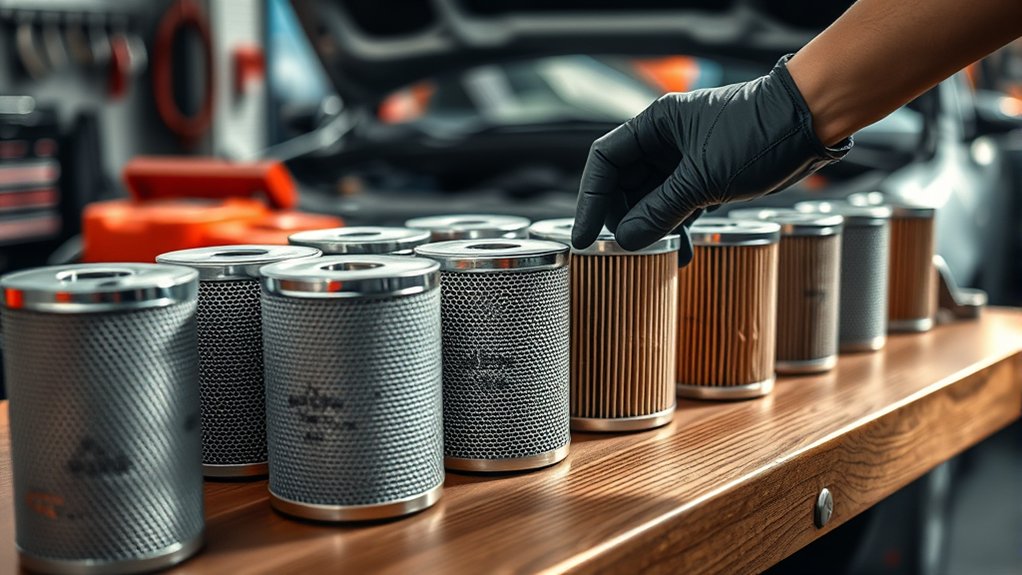
- Filter media type (synthetic, cellulose, or blend)
- Manufacturer’s pressure and flow rate specifications
These factors influence how well the filter supports your engine’s lubrication system and maintains filtration performance, preventing contaminants from causing damage.
Comparing Top Oil Filter Brands and Models
You’ll often find that top oil filter brands differentiate themselves through build quality, filtration efficiency, and durability under various operating conditions. When comparing brands, avoid unrelated topic distractions or off topic comparisons that don’t focus on these core factors.
Here’s a concise comparison of three leading models:
| Brand | Key Feature |
|---|---|
| Bosch | High-efficiency synthetic media |
| Fram | Durable cellulose blend |
| Mobil 1 | Extended performance filter |
Bosch filters excel in synthetic media that traps fine particles. Fram offers robust cellulose blends optimized for standard use. Mobil 1 targets longer intervals with reinforced construction.
You want to match these features to your vehicle’s requirements, not get sidetracked by unrelated topic claims or off topic comparison metrics like price alone. This focused evaluation ensures you pick the right filter for optimal engine protection.
When to Replace Your Oil Filter
You should replace your oil filter according to your vehicle manufacturer’s recommended intervals, typically every 3,000 to 7,500 miles. Pay attention to signs of filter wear, such as decreased engine performance or unusual engine noises. Timely replacement ensures best filtration and protects your engine from contaminants.
Recommended Replacement Intervals
Although oil filter replacement intervals vary by vehicle and driving conditions, adhering to the manufacturer’s recommendations ensures optimal engine performance and longevity. When planning your maintenance scheduling, consider these discussion ideas to determine the right replacement frequency for your oil filter:
- Replace the oil filter every oil change, typically every 3,000 to 7,500 miles, depending on your vehicle’s specifications.
- Adjust intervals if you frequently drive in severe conditions like extreme temperatures, dusty environments, or stop-and-go traffic.
- Consult your owner’s manual or service guide for manufacturer-specific replacement intervals.
- Factor in synthetic oil use, which may extend filter life but still requires timely replacement to prevent clogging.
Signs of Filter Wear
How can you tell when your oil filter needs replacing? Key signs of wear include reduced engine performance, unusual engine noises, and a drop in oil pressure. Modern vehicles often have a filter warning indicator on the dashboard, alerting you to potential clogging or failure.
If you notice this filter warning, inspect the oil filter immediately. Additionally, a dark, dirty oil appearance or metal shavings in the oil can signal filter degradation. Ignoring these signs of wear risks contaminants circulating through the engine, causing accelerated wear or damage.
Regularly monitoring these indicators and adhering to replacement intervals ensures your oil filter functions effectively, maintaining optimal engine protection and longevity. Don’t wait for severe symptoms; proactive replacement prevents costly repairs.
How to Install an Oil Filter Correctly
Before installing your new oil filter, make sure to lubricate the rubber gasket with clean engine oil to ensure a proper seal. You’ll want to screw the filter on by hand until it’s snug, then tighten it according to the manufacturer’s specifications to avoid leaks or damage. Following these steps precisely will help maintain optimal engine performance and prevent oil leaks.
Preparing the Oil Filter
Why is preparing the oil filter correctly essential for your engine’s performance? Proper preparation ensures a secure seal and optimal filtration, preventing leaks and contamination.
Before installation, follow these key preparation steps:
- Inspect the new oil filter for defects or damage.
- Apply a thin layer of clean oil to the filter’s rubber gasket to enhance sealing.
- Clean the filter housing mounting surface thoroughly to remove old gasket material and debris.
- Pre-fill the filter with fresh oil if the manufacturer recommends it, to avoid dry starts.
Proper Installation Techniques
After preparing the oil filter by inspecting, lubricating the gasket, and cleaning the mounting surface, you’ll need to focus on installing it correctly to ensure a proper seal and optimal engine performance. Begin by hand-tightening the filter onto the mounting base, avoiding over-tightening, a common newbie mistake that can damage the gasket or cause leaks.
Use the tools needed, such as an oil filter wrench, only if the filter cannot be turned by hand once the gasket contacts the mounting surface. Turn the filter an additional three-quarters to one full turn to secure it properly.
Finally, double-check the fit and clean any spilled oil before adding fresh oil. Proper installation prevents leaks, maintains oil pressure, and extends engine life.
Frequently Asked Questions
Can I Use a Synthetic Oil Filter With Conventional Oil?
Yes, you can use a synthetic oil filter with conventional oil. Synthetic compatibility guarantees the filter material handles different oil types effectively.
Despite filter material differences, it maintains proper filtration and engine protection without performance issues.
Do Oil Filters Affect Engine Performance or Horsepower?
Yes, oil filters directly impact engine performance by maintaining engine cleanliness through efficient oil filtration. Clean oil reduces friction and wear, helping you preserve horsepower and ensure optimal engine operation over time.
Are Reusable Oil Filters Worth the Investment?
Reusable filters symbolize sustainability’s promise, and if you value cost effectiveness, they’re worth it. You’ll save over time despite higher upfront costs, while maintaining filtration quality through proper cleaning and maintenance routines.
How Do Oil Filters Impact Oil Change Intervals?
Oil filters impact oil change intervals by controlling contaminant buildup and maintaining oil quality. You’ll extend intervals with efficient filtration, but always follow your vehicle’s maintenance schedule for optimal engine protection and consistent performance.
Can a Clogged Oil Filter Cause Engine Damage?
Yes, a clogged filter can cause engine damage by restricting oil flow, leading to increased friction and overheating.
You must replace filters regularly to maintain proper lubrication and prevent costly engine wear or failure.
Conclusion
Choosing the right oil filter is like picking the perfect shield for your engine’s heart. You want a filter that fits precisely, traps contaminants efficiently, and lasts through every mile. By understanding compatibility, quality markers, and timing for replacement, you ensure your engine runs smoothly and reliably.
Follow proper installation steps to seal the deal—your engine’s performance depends on it. Don’t leave it to chance; protect your ride with the right oil filter every time. Knowing what oil filter do I need is key to keeping your engine in top shape.