What Tools Do I Need to Change Spark Plugs
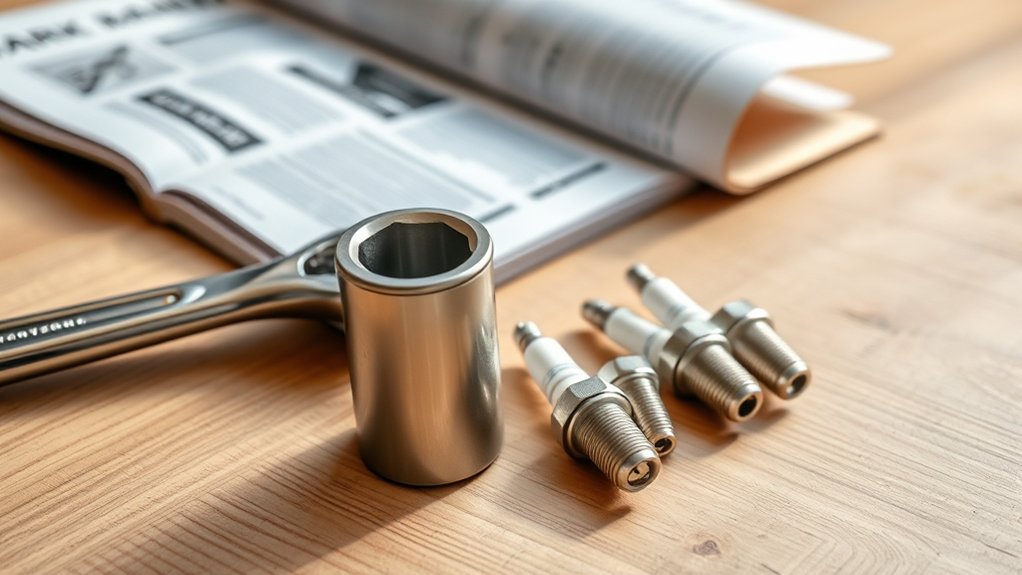
You’ll need a correctly sized spark plug socket—typically 5/8” or 13/16”—with a rubber insert or magnet to grip the plug securely. This is essential when changing spark plugs to avoid damaging the plug or surrounding components. Pair it with a ratchet and extension to reach recessed plugs, plus a torque wrench to tighten to exact specs.
Use a gap gauge to check electrode spacing, ensuring optimal performance. Lubricants like anti-seize and dielectric grease help protect threads and electrical contacts from corrosion. Keeping your tools and parts organized guarantees efficiency and prevents loss.
Learn how to optimize each step for reliable results when changing spark plugs. Having the right tools and following proper procedures will make the process smoother and extend the life of your engine components.
Key Takeaways
- Use a spark plug socket with a rubber insert or magnet to grip the plug securely without damage.
- A ratchet wrench with an extension helps reach recessed spark plugs easily.
- A torque wrench ensures spark plugs are tightened to the manufacturer’s specified torque.
- Gap/feeler gauges verify and adjust the spark plug electrode gap for optimal engine performance.
- Dielectric grease and anti-seize protect spark plug threads and boots from corrosion and ensure electrical integrity.
What Tools Are Essential for Changing Spark Plugs?
What tools do you absolutely need to change spark plugs efficiently? First, a reliable spark plug socket is essential. It grips the plug securely without damage.
A reliable spark plug socket is essential for securely gripping the plug without causing damage.
You’ll also need a ratchet wrench with an extension to reach recessed plugs. A torque wrench is critical for spark plug maintenance, ensuring you apply the manufacturer’s specified tightness. This prevents over- or under-tightening.
Additionally, a spark plug gap gauge helps verify proper electrode spacing, a key topic idea in spark plug maintenance. A set of feeler gauges or a wire gauge can assist with this.
Finally, a dielectric grease applicator improves spark plug connection and longevity. Having these precise tools ensures you change spark plugs correctly, maintaining engine performance and preventing potential damage.
How to Choose the Right Spark Plug Socket?
When selecting a spark plug socket, you’ll want to focus on size compatibility and build quality to guarantee a secure fit and durability. Start by identifying the exact spark plug size from your vehicle’s manual since spark plug selection varies by engine type.
Choose a socket type designed specifically for spark plugs, typically 5/8-inch or 13/16-inch, to match the plug’s hex size. Opt for sockets with a rubber insert or magnetic feature to hold the plug firmly during installation or removal, preventing damage.
Additionally, prioritize sockets made from high-strength chrome vanadium steel for corrosion resistance and longevity. Using the correct socket type reduces the risk of rounding off the spark plug, ensuring efficient maintenance and extending the life of both the spark plug and your tools.
Why You Need a Spark Plug Gap Gauge and How to Use It
You need a spark plug gap gauge to ensure the electrode gap matches your engine’s specifications for optimal ignition. An incorrect gap can cause misfires, poor fuel economy, and engine damage. Use the gauge to measure and adjust the gap precisely before installation.
Importance of Spark Plug Gap
Why does the spark plug gap matter so much for engine performance? The gap determines the spark’s intensity and timing, directly impacting combustion efficiency. If the gap is too wide or too narrow, you risk misfires, poor fuel economy, and increased emissions.
Avoid getting distracted by irrelevant topics like general engine tuning or off-topic ideas unrelated to the spark plug gap. Focusing on the precise gap ensures optimal ignition, smooth idling, and consistent power delivery.
This small measurement controls the electrical arc that ignites the air-fuel mixture, so accuracy is critical. Maintaining the correct gap prevents excessive wear and engine damage over time.
Understanding its importance helps you see why a proper spark plug gap is essential for reliable engine operation and longevity.
Using a Gap Gauge
How do you ensure your spark plugs have the exact gap required for optimal engine performance? You use a spark plug gauge. This tool provides precise gap measurement, which is critical because incorrect gaps can lead to misfires, poor fuel economy, or engine damage.
Using a spark plug gauge, you can quickly verify and adjust the electrode spacing to manufacturer specifications.
Here’s how to use a gap gauge effectively:
- Select the correct gauge size based on your vehicle’s specs
- Insert the gauge blade between the spark plug electrodes
- Check if the blade fits snugly without forcing
- Adjust the gap by gently bending the ground electrode if necessary
- Recheck the gap measurement to confirm accuracy
Employing a spark plug gauge guarantees optimal ignition and engine efficiency.
How to Use a Ratchet and Extension for Spark Plug Access
When accessing spark plugs located deep within the engine bay, which tools can provide the necessary reach and control? A ratchet extension is essential for spark plug access in tight spaces.
Start by attaching the appropriate socket to the ratchet handle, then connect the extension to the socket. This setup lets you reach recessed spark plugs without straining or damaging components. Insert the ratchet and extension assembly into the spark plug well, ensuring the socket seats securely on the plug.
Use steady, controlled turns to loosen or tighten the plug, minimizing the risk of cross-threading. The extension allows you to maintain leverage while maneuvering around obstructions.
How and When to Use a Torque Wrench for Proper Installation
You need to use a torque wrench to tighten spark plugs to the manufacturer’s specified torque setting to avoid damage or improper sealing. Start by hand-threading the plug, then use the wrench to apply torque gradually until you reach the exact specification. This ensures a secure fit without over-tightening, which can strip threads or crack the plug.
Correct Torque Specifications
Why is achieving the correct torque essential when installing spark plugs? Proper torque ensures a secure seal, preventing combustion leaks and avoiding damage to the spark plug or cylinder head. Over-tightening can strip threads or break the plug, while under-tightening risks poor engine performance.
To maintain effective spark plug maintenance, you must apply the manufacturer’s specified torque accurately using a calibrated torque wrench.
Keep these points in mind for correct torque specifications:
- Always consult the vehicle’s service manual for exact torque values
- Use a torque wrench calibrated for the torque range specified
- Ensure clean threads for accurate torque application
- Follow a consistent tightening sequence to prevent warping
- Maintain tool organization to avoid mixing torque wrenches and other tools
Correct torque protects engine integrity and optimizes performance.
Step-by-Step Torque Application
Applying the correct torque to spark plugs requires a systematic approach using a calibrated torque wrench. First, ensure your wrench is set precisely to the manufacturer’s recommended torque value. Before installing, clean sockets thoroughly to remove debris that could affect torque accuracy.
Hand-tighten the spark plug until it seats firmly to avoid cross-threading. Then, apply the torque wrench steadily until it clicks or indicates the preset torque. Avoid over-tightening, which can damage threads or spark plug integrity.
After torquing, check for proper seating and replace wires carefully, ensuring connections are secure without stressing terminals. Using this method guarantees optimal spark plug performance, prevents engine damage, and ensures reliable ignition.
Regularly calibrate your torque wrench to maintain accuracy during future maintenance tasks.
Must-Have Extras: Anti-Seize and Dielectric Grease for Spark Plugs
How do anti-seize and dielectric grease enhance the spark plug replacement process? These two must-have extras improve installation quality and longevity. Anti-seize prevents corrosion and galling on spark plug threads, ensuring easier removal in future maintenance and protecting against damage caused by extreme engine temp fluctuations.
Anti-seize and dielectric grease boost spark plug installation quality and protect against corrosion and heat damage.
Dielectric grease, applied on the spark plug boot, seals out moisture and dirt, preserving electrical conductivity and preventing misfires, which directly supports optimal fuel efficiency.
Key benefits include:
- Preventing thread damage during installation/removal
- Protecting spark plugs from high engine temp stress
- Ensuring consistent electrical connections
- Reducing chances of ignition misfires
- Enhancing overall engine performance and fuel efficiency
Using these compounds correctly safeguards your spark plugs and helps maintain engine reliability.
Tips for Keeping Your Spark Plug Tools Organized During the Job
Keeping your spark plug tools well-organized during replacement not only speeds up the job but also reduces the risk of losing small parts like anti-seize packets or spark plug boots treated with dielectric grease. Use a magnetic tray or dedicated container to hold sockets, ratchets, and spark plugs securely.
Avoid the irrelevant topic of tool placement in unrelated areas; it only complicates workflow. Lay out tools in the order you’ll use them, minimizing tangential considerations and unnecessary movements.
Label compartments if possible, so you can quickly identify each item. Wiping tools clean before placing them back prevents dirt buildup.
This systematic approach ensures efficiency and accuracy, helping you maintain focus on the task without distraction. Staying organized ultimately safeguards your tools and parts, making spark plug replacement smoother and more reliable.
Frequently Asked Questions
How Often Should Spark Plugs Be Replaced?
You should follow your vehicle’s spark plug replacement schedule, typically every 30,000 to 100,000 miles. Monitor signs of wear like misfires and poor performance.
Consider weather impact, which can accelerate wear in extreme conditions.
Can I Change Spark Plugs Without Disconnecting the Battery?
You shouldn’t change spark plugs without disconnecting the battery. For proper spark plug calibration and ensuring battery safety, disconnecting prevents electrical shorts or shocks.
This protects both you and your vehicle’s sensitive electronic components during maintenance.
What Are the Signs of Worn-Out Spark Plugs?
Like a forum debate topics thread derailed by unrelated discussion, worn-out spark plugs cause engine misfires, rough idling, poor acceleration, and increased fuel consumption.
You’ll notice difficulty starting and reduced power, signaling it’s time for a replacement.
Is It Safe to Reuse Old Spark Plugs?
You shouldn’t reuse old spark plugs because incorrect spark plug torque from worn threads can cause misfires, impacting fuel economy.
Always install new plugs to maintain optimal engine performance and prevent costly damage.
How Do Weather Conditions Affect Spark Plug Performance?
Imagine driving through a cold snap. Weather impact shifts ignition timing, causing misfires or rough starts.
You’ll notice spark plug performance drops as extreme temperatures alter combustion efficiency and timing, demanding precise adjustments to maintain ideal engine function.
Conclusion
Remember, “a stitch in time saves nine”—using the right tools guarantees your spark plug change goes smoothly and prevents future issues. Equip yourself with a proper spark plug socket, gap gauge, ratchet with extension, and a torque wrench for precision.
Don’t forget anti-seize and dielectric grease to protect your work. Staying organized with your tools will save you time and frustration.
With the right gear and technique, you’ll keep your engine running efficiently and reliably. Having the proper tools is essential for a successful spark plug change.