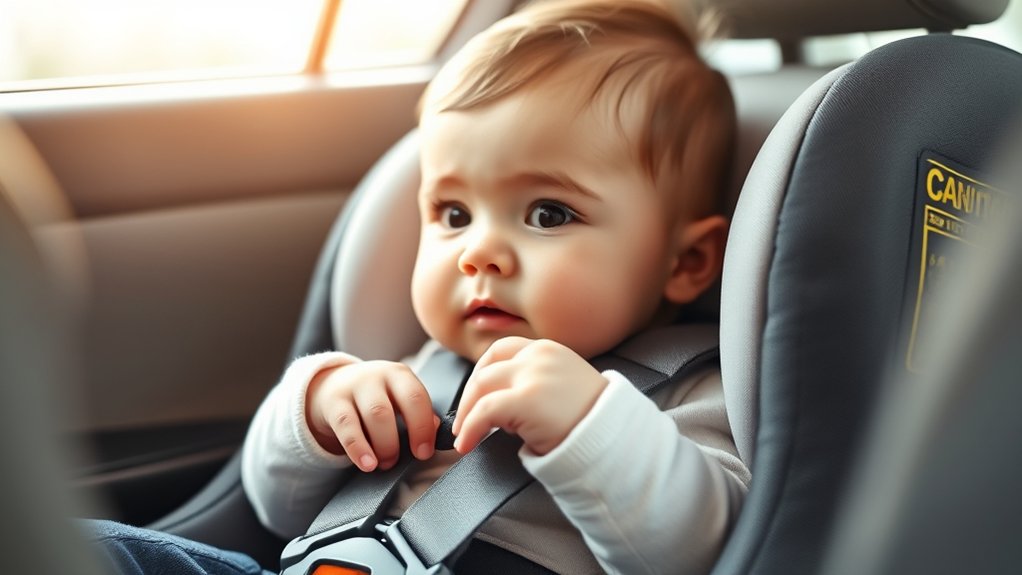
When to Switch From Infant Car Seat
You should switch from an infant car seat as soon as your baby exceeds the seat’s height or weight limits set by the manufacturer. This is a crucial step in ensuring your child’s safety during travel. Check that the harness position rises above the shoulders or the maximum weight is surpassed—these are clear signs it’s time to transition.
Make sure the new seat fits your vehicle and meets safety standards like side-impact protection and proper installation. Choosing the right car seat helps keep your child secure and comfortable as they grow.
Understanding these key points helps keep your child safe and comfortable as they grow.
Signs Your Baby Has Outgrown the Infant Car Seat
How do you know when your baby has outgrown their infant car seat? The key indicators revolve around outgrowing limits set by the manufacturer, especially weight and height restrictions. Check the car seat’s manual or labels for maximum weight and height specifications.
If your baby’s weight exceeds these limits, it’s time to switch. Also, pay close attention to harness heights. The harness straps should be at or below your baby’s shoulders; if your little one’s shoulders rise above the highest harness slot, the seat no longer fits properly.
Using a seat that’s too small compromises safety. Regularly monitoring these factors ensures your baby stays secure and comfortable during travel. Don’t wait for discomfort—recognize the signs and plan the transition accordingly.
Timing for Transition to a Convertible or Toddler Car Seat
Although every child develops at their own pace, you should plan to switch your baby to a convertible or toddler car seat soon after they exceed the infant seat’s limits. Proper transition timing ensures your child’s safety and comfort.
Switching to a convertible car seat promptly after outgrowing an infant seat is key for safety and comfort.
Before making the change, consider these key factors:
- Weight and height limits: Confirm your child surpasses the infant seat’s maximums but falls within the convertible or toddler seat’s requirements.
- Seat compatibility: Check that your vehicle supports the new car seat, focusing on installation methods and fit.
- Manufacturer guidelines: Follow the car seat maker’s recommendations for transition timing to maintain safety standards.
Choosing the Right Convertible or Toddler Car Seat
What factors should you prioritize when choosing a convertible or toddler car seat? First, focus on safety features such as side-impact protection, a five-point harness, and strong crash-test ratings. Consider your child’s size and weight limits to ensure the seat fits well and lasts longer, minimizing switching costs.
Evaluate ease of installation since improper setup compromises safety. Look for reputable car seat brands known for quality and durability, as they often offer better customer support and updated safety standards. Additionally, check if the seat is compatible with your vehicle and easy to adjust as your child grows.
How to Safely Switch Your Baby’s Car Seat
When should you switch your baby’s car seat to guarantee maximum safety? The key is ensuring a smooth transition with safe installation and backward compatibility in mind. Follow these steps:
- Check Weight and Height Limits: Only switch when your baby outgrows the infant seat’s limits to ensure the new seat fits properly.
- Verify Backward Compatibility: Confirm your new convertible or toddler seat fits your vehicle’s anchors and supports rear-facing installation for optimal safety.
- Install Securely: Follow the manufacturer’s instructions carefully. Use either the seat belt or LATCH system, but never both, for a safe installation.
Mistakes to Avoid When Switching Car Seats
Switching your baby’s car seat involves several critical steps, and skipping or rushing through any of them can compromise safety. One of the biggest mistakes to avoid during car seat transitions is moving to the next seat based solely on age instead of weight and height limits. Always check the manufacturer’s guidelines before making a switch.
Another common error is improper installation. Don’t guess; follow instructions carefully and ensure a secure fit. Avoid using a car seat that’s expired or damaged, as this can reduce protection.
Lastly, don’t neglect to adjust harness straps to fit your growing child snugly. By steering clear of these mistakes to avoid, you’ll ensure a safer, smoother transition and protect your child on every ride.
Frequently Asked Questions
Can I Use a Secondhand Car Seat for My Toddler?
You can use a secondhand car seat for your toddler, but prioritize secondhand safety by checking expiration dates, recalls, and damage.
If unsure, consider temporary alternatives like borrowing from trusted sources until you find a new, reliable seat.
How Do Car Seat Laws Vary by State or Country?
Car seat laws vary widely by state, with differences in age, weight, and height requirements. You’ll need to check your state’s specific regulations, as variations impact when and how you must use car seats for your child.
What Are the Best Brands for Infant Car Seats?
You might be surprised, but the best brands for infant seats like Chicco, Graco, and Britax consistently top safety and comfort charts.
You’ll want to choose these trusted names to keep your little one secure.
How Do I Clean and Maintain an Infant Car Seat?
You’ll clean and maintain your infant car seat by regularly vacuuming crumbs and wiping surfaces with mild soap. Follow the manufacturer’s care instructions carefully. Proper cleaning and maintenance ensure safety and effectively prolong the seat’s lifespan.
Can Car Seats Expire or Have a Usage Limit?
Car seats have expiry dates to ensure safety, as material wear weakens their protection over time. You shouldn’t rely on older seats; always check the manufacturer’s guidelines and replace seats past their recommended usage limit.