Where Can I Mount a Car Camera in California
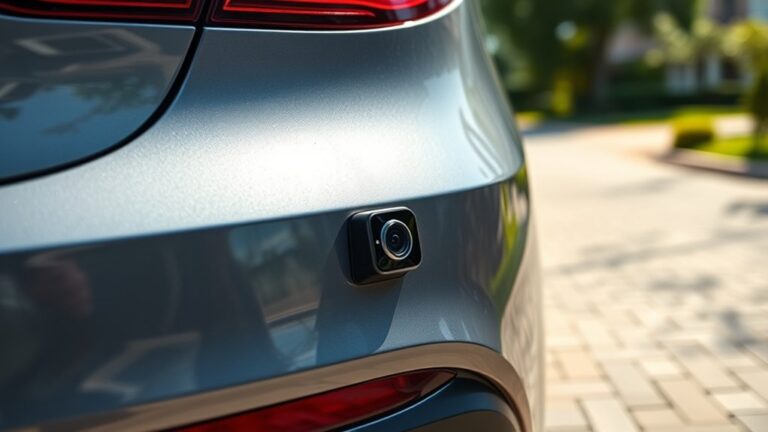
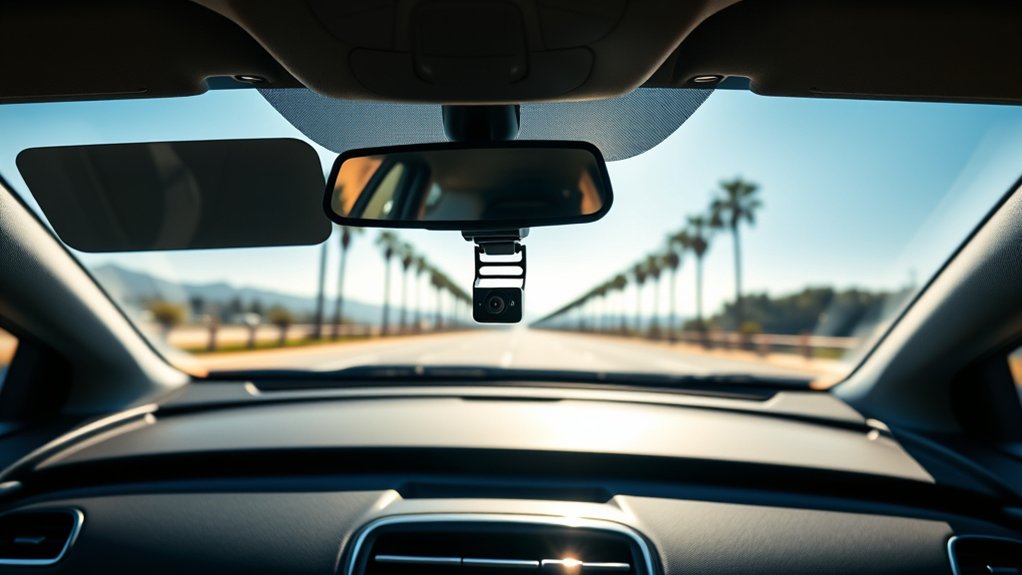
You can mount a car camera in California on the lower center windshield or near the rearview mirror, as both locations are legal and minimize obstruction.
Make sure it doesn’t block your driving view or create blind spots.
Avoid placing it in upper windshield corners, which are illegal.
Also, respect privacy laws by disabling audio recording unless all parties consent.
Proper placement ensures safety and clear footage.
Explore further to learn their best tips for mounting and video quality.
Key Takeaways
- Mount dash cams in California on the lower center windshield for minimal obstruction and legal compliance.
- The rearview mirror area is a common, legal mounting spot if it does not block the driver’s view.
- Avoid mounting dash cams on the upper corner of the windshield, as it is illegal and may obstruct vision.
- Ensure the dash cam placement does not create blind spots or obstruct the driver’s sightline for safety.
- Comply with California privacy laws by disabling audio recording unless all parties consent.
California Car Camera Laws You Need to Know
What should you know about California car camera laws before installing one? Understanding California privacy regulations and dash cam legality is essential.
California allows you to use dash cams in your vehicle, but you must respect privacy laws. Recording audio without consent can violate the state’s two-party consent rule, so it’s best to disable audio recording unless all parties agree.
Video recording is generally legal in public places, but you can’t record in a way that invades others’ reasonable expectation of privacy, like inside private spaces. Also, ensure your dash cam doesn’t obstruct your view while driving.
Where You Can Legally Mount Your Dash Cam
After understanding the legal considerations around privacy and audio recording, the next step is to know exactly where you can mount your dash cam in California. The state enforces strict dash cam legality rules, mainly to ensure your view isn’t obstructed while driving.
Mounting considerations focus on placement within the windshield or dashboard area without blocking the driver’s sightline.
Here’s a quick reference:
| Location | Legality Status | Notes |
|---|---|---|
| Lower center windshield | Legal | Preferred, minimal obstruction |
| Rearview mirror area | Legal | Common spot, must not block view |
| Upper corner windshield | Illegal | Often blocks driver’s vision |
Always follow California’s mounting considerations to avoid fines and ensure safety.
How to Keep Your Camera From Blocking Your View
How can you guarantee your dash cam stays out of your line of sight while driving? First, position the camera so it doesn’t create blind spots or obstruct your view of the road. Avoid placing it directly in front of your eyes or near areas you rely on heavily, such as the windshield’s lower center.
To minimize camera glare, choose a spot that doesn’t catch direct sunlight or reflections from your dashboard. Using a matte mount or anti-glare film can also help reduce unwanted reflections.
Regularly adjust the camera angle to ensure it records effectively without compromising your vision. By carefully selecting a discreet, non-intrusive location, you maintain safety while capturing clear footage without blocking your driving view.
Mounting Tips for Car Cameras on Rearview Mirror and Dashboard
Ensuring your dash cam doesn’t obstruct your view sets the foundation for choosing the right mounting location. When placing your car camera on the rearview mirror or dashboard, consider these tips to optimize functionality and maintain mounting aesthetics:
- Position the camera close to the rearview mirror to minimize distraction while keeping the lens unobstructed.
- Use mounting brackets or adhesive pads designed for glare reduction to avoid reflections that impair footage quality.
- Keep cables tidy and tucked away to preserve a clean dashboard appearance and prevent interference with vehicle controls.
- Test your chosen spot during different lighting conditions to ensure the camera captures a clear view without creating blind spots.
Following these steps helps you secure your camera effectively while adhering to safety and aesthetic standards.
How to Get Clear Footage From Your Car Camera
What steps can you take to capture clear footage from your car camera? First, ensure the lens is clean and free from dust or smudges that can blur the image.
Start by keeping your car camera lens clean and clear of dust or smudges for sharp footage.
Use mounting tips to position the camera where it has an unobstructed view, typically behind the rearview mirror or on the dashboard, avoiding areas where glare or reflections occur. Adjust the angle carefully to frame the road ahead without capturing the car’s interior excessively.
Also, check your camera’s settings to optimize resolution and frame rate for sharper video. Avoid placing the camera too low or high, as this can distort the footage.
Regularly inspect and adjust the mount to maintain stability, preventing shaky or blurry recordings. Following these steps will help you consistently record clear footage for your safety and evidence needs.
Frequently Asked Questions
Can I Use a Car Camera for Insurance Claims in California?
Yes, you can use a car camera for insurance claims in California. It provides claim evidence, helping support your case with clear footage.
This can expedite the car insurance process and improve your chances of a fair settlement.
Are Wireless Car Cameras Allowed in California Vehicles?
You’ll find wireless legality in California is clear: wireless car cameras are allowed as long as your dash cam placement doesn’t obstruct your view.
How Do I Power a Dash Cam Without Draining My Battery?
You can power your dash cam without draining your battery by using dash cam wiring with a hardwire kit that includes power management. It automatically cuts power when your battery voltage drops, preventing battery drain efficiently.
Can I Record Audio With My Car Camera in California?
You can record audio with your car camera in California, but be aware of audio legality and privacy expectations. California requires two-party consent for recordings, so ensure you’re not violating laws by capturing private conversations without permission.
Are There Privacy Concerns With Recording Passengers Inside the Car?
Imagine passengers noticing a camera’s red recording light; yes, there are privacy concerns. You must get passenger consent before recording inside your car to respect their privacy and avoid potential legal issues related to unauthorized surveillance.
Conclusion
Now that you know where to legally mount your car camera in California, you can hit the road with confidence. Just remember, keeping your view clear is like having a clear window to the road—essential for safety and capturing critical footage.
Follow mounting tips for your dashboard or rearview mirror to get the best shots without distractions. Stay informed and drive smart, so your camera works flawlessly without blocking your vision.
By understanding where can I mount a car camera in California, you ensure both compliance with the law and optimal recording quality.