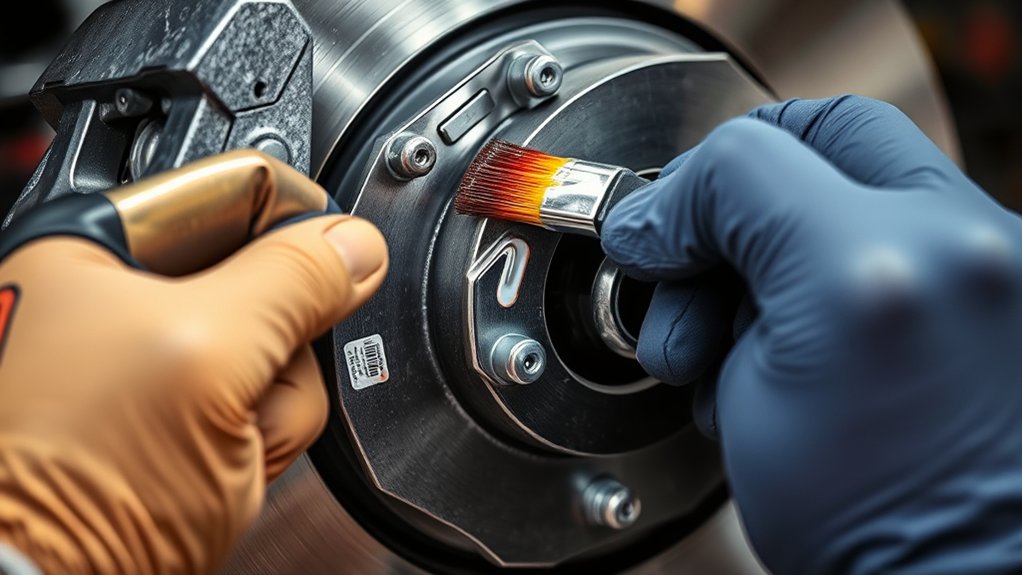
Where to Grease Brake Pads
You should grease brake pads only on the metal backing plates, caliper slide pins, and mounting brackets to reduce friction and prevent noise. Greasing brake pads in these specific areas helps ensure smooth brake operation and prolongs component life. Focus on applying a thin, even layer of high-temperature brake-specific grease to these metal-to-metal contact points.
Avoid applying grease to friction surfaces such as the pads and rotors, as this can compromise braking efficiency. Proper cleaning and drying of parts before application are crucial for effective lubrication. Understanding precise application techniques and lubricant choices is essential to maintain optimal brake performance and longevity.
Key Takeaways
- Apply a thin layer of high-temperature grease to the metal backing plate on the back of brake pads.
- Lubricate caliper slide pins and guide pins thoroughly to ensure smooth pad movement.
- Grease contact points where brake pads slide within the caliper bracket to prevent noise and vibration.
- Avoid applying grease on friction surfaces like the brake pads’ front or the rotors.
- Always grease after cleaning and drying components, using brake-specific high-temperature grease.
Why Greasing Brake Pads Is Essential
Why should you grease brake pads during replacement? Proper greasing reduces friction between the brake pad backing plate and caliper components, preventing noise and uneven wear. This two word discussion idea, “friction control,” is crucial for smooth brake operation.
Neglecting lubrication can cause pad sticking or seizing, which compromises braking efficiency and vehicle safety. Safety considerations emphasize that greasing specific contact points, like the caliper slide pins and pad edges, ensures consistent pad movement and even pressure distribution.
This minimizes vibration and heat buildup, prolonging brake component life. By applying high-temperature brake grease precisely where needed, you maintain optimal brake response and prevent premature component failure. Remember, using inappropriate lubricants can degrade rubber seals and cause malfunctions, so always select recommended grease types.
How to Prepare Brake Parts Before Greasing
How do you guarantee brake components are properly prepared before applying grease? Begin by thoroughly cleaning all brake parts to remove dust, rust, and old lubricant. Use a wire brush and brake cleaner for effective surface preparation.
Thoroughly clean brake parts with a wire brush and brake cleaner to remove dust, rust, and old grease.
Inspect the brake parts for wear or damage; replace any compromised components to ensure optimal performance. Dry the parts completely before proceeding, as grease won’t adhere properly to wet surfaces.
Remember lubrication basics: only apply grease to metal-to-metal contact points, avoiding friction surfaces like pads or rotors. Use a high-temperature brake-specific grease to withstand operating conditions.
Proper preparation ensures the grease adheres correctly, reduces noise, and extends component life. Neglecting this step compromises brake function and safety, so be meticulous and precise.
Where to Apply Grease on Brake Pads and Components
Where exactly should you apply grease on brake pads and components to ensure optimal function? Focus on the contact points where metal meets metal, such as the back of the brake pads, caliper slides, and mounting brackets. Apply a thin, even layer of grease to these areas to reduce friction and prevent noise.
Avoid getting grease on the friction surface of the pads or the rotor. Timing is critical—apply grease after thoroughly cleaning and drying components but before reassembling the brake system.
Your grease selection must suit high temperatures and resist water washout to maintain effectiveness. Proper application timing and precise grease placement ensure smooth caliper movement and prevent pad seizing, ultimately extending brake life and ensuring reliable performance.
Best Grease Types for Brake Pads and Caliper Parts
You’ll want to use high-temperature brake grease to withstand the extreme heat generated during braking. Silicone-based lubricants provide excellent water resistance and prevent corrosion on caliper parts. For metal-to-metal contact points, applying anti-seize compounds helps avoid seizing and ensures smooth operation.
High-Temperature Brake Grease
Why is selecting the right high-temperature brake grease essential for brake pads and caliper components? It ensures optimal performance under extreme heat generated during braking, preventing seizing and noise. High-temp grease withstands temperatures beyond typical engine cooling and tire rotation heat levels, maintaining lubrication integrity and protecting metal surfaces.
Use high-temp grease specifically formulated for brake systems, avoiding general-purpose lubricants that degrade quickly. Apply it on caliper pins, slides, and pad backing plates to reduce friction and wear.
| Property | Importance |
|---|---|
| Temperature Range | Must exceed 300°C |
| Water Resistance | Prevents corrosion |
| Shear Stability | Maintains consistency |
| Compatibility | Safe on rubber and metal |
Choosing correctly preserves brake function, safety, and longevity.
Silicone-Based Lubricants
How do silicone-based lubricants enhance brake pad and caliper performance compared to other grease types? Their unique lubrication chemistry offers excellent thermal stability and water resistance, which prevents degradation under extreme conditions.
When you apply silicone-based grease to brake pad contact points and caliper slides, it minimizes brake noise by reducing metal-to-metal friction and vibration. Unlike petroleum-based greases, silicone compounds maintain consistent viscosity across temperature variations, ensuring reliable lubrication during braking cycles.
They also resist corrosion and do not harden or break down easily, extending component life. By effectively isolating noise-causing vibrations and maintaining a stable lubricating film, silicone-based lubricants optimize brake system performance.
When you want a precise, durable solution to combat brake noise and ensure smooth caliper operation, silicone-based grease is a top choice.
Anti-Seize Compounds
Although silicone-based lubricants excel at reducing noise and friction, anti-seize compounds play a pivotal role in preventing metal galling and corrosion on brake pad and caliper components. When you apply anti-seize on caliper bolts, slide pins, and backing plates, you create a protective barrier that withstands extreme heat and pressure.
This barrier prevents seizing, ensuring smooth component movement and easier future disassembly. Avoid confusing anti-seize with unrelated concepts like general-purpose grease; its specialized formulation contains metallic particles that inhibit cold welding and rust formation.
Discussing irrelevant topics such as unrelated concept lubricants detracts from understanding the specific benefits of anti-seize in brake systems. You should apply anti-seize sparingly on contact surfaces prone to corrosion but never on friction surfaces, as it compromises braking efficiency.
How to Grease Brake Pad Slides, Pins, and Backs
When maintaining your brake system, you’ll want to focus on greasing the brake pad slides, pins, and backs to guarantee smooth operation and prevent premature wear. Start by removing the caliper to access the slide pins, which you should clean thoroughly before applying a high-temperature, synthetic brake grease. This ensures proper pad lubrication and prevents pin corrosion.
Next, coat the caliper slides with grease to facilitate free movement during braking. Finally, apply a thin layer of grease to the backs of the brake pads, avoiding the friction surface, to minimize noise and vibration.
Proper caliper maintenance like this ensures even pad wear and optimal brake response. Remember, using the correct lubricant designed for brake components is crucial to avoid deterioration and maintain system integrity.
Common Mistakes to Avoid When Greasing Brake Pads
Why do some brake pads still squeal or wear unevenly despite regular greasing? Often, it’s due to common mistakes you should avoid when greasing. Applying lubricant incorrectly or using the wrong type can cause issues.
Here’s what to watch out for:
| Mistake | Consequence |
|---|---|
| Using petroleum-based grease | Damages rubber components |
| Over-greasing | Attracts dirt, causing wear |
| Greasing friction surfaces | Reduces braking efficiency |
| Ignoring manufacturer specs | Voids warranty, safety risks |
| Skipping cleaning before greasing | Leads to poor lubricant adhesion |
Avoid these pitfalls by applying only high-temperature brake grease to the correct areas: slider pins and pad backs. This precision prevents noise and uneven wear, ensuring optimal brake performance and longevity.
Tips to Keep Your Greased Brakes Quiet and Smooth
To keep your greased brakes quiet and smooth, focus on applying lubricant only to designated contact points like the back of the brake pads and caliper slides. Use a high-temperature, brake-specific grease to ensure durability and prevent contamination. Always clean the surfaces thoroughly before lubrication to avoid trapping debris that can cause noise or uneven wear.
Proper Grease Application Areas
Where exactly should you apply grease to guarantee your brake system operates quietly and smoothly? Focus on specific contact points where friction and noise typically arise. Apply a thin layer of high-temperature grease to the back of the brake pads, especially on the metal backing plate, to prevent vibration and squeal.
Next, lubricate the caliper slide pins and guide pins thoroughly; this ensures smooth movement and even pad wear. Don’t forget the contact points where the brake pads slide within the caliper bracket. Proper lubrication here minimizes binding.
Avoid applying grease on the friction surface of the brake pads or rotors. Following these lubrication practices precisely will reduce noise, improve pedal feel, and extend component life, ensuring your brake system performs efficiently without compromising safety or efficiency.
Choosing The Right Lubricant
Applying grease correctly at specific brake components sets the foundation for quiet and smooth operation, but selecting the right lubricant ensures those benefits last. You need to consider substrate compatibility to prevent chemical reactions that degrade performance or damage surfaces.
Also, factor in torque considerations; some lubricants can alter friction, affecting bolt tightness and caliper function.
| Lubricant Type | Best Use Case |
|---|---|
| Silicone-based | High-temp resistance |
| Ceramic-based | Noise reduction |
| Synthetic grease | Metal-to-metal contacts |
| Copper-based | High torque tolerance |
| Molybdenum disulfide | Extreme pressure zones |
Choose a lubricant specialized for brake applications, ensuring it withstands heat and pressure without compromising torque or substrate integrity.
Cleaning Before Lubrication
Why does cleaning before lubrication matter so much for your brake system? Contaminants like dirt, rust, and old grease can impair lubricant adhesion, causing uneven application and noise.
Before you apply any lubricant, thoroughly clean the caliper pins, slides, and pad contact points using a wire brush and brake cleaner. This step ensures a contaminant-free surface, critical for smooth movement and consistent brake response.
Integrating this into your maintenance routines prevents premature wear and squeaking. When discussing ideas for brake pad servicing, emphasize cleaning as a prerequisite to lubrication. It’s not just about applying grease but preparing surfaces.
Skipping cleaning compromises lubricant effectiveness and can lead to operational issues. So, always prioritize cleaning; it’s the foundation for quiet, smooth, and reliable brake performance.
Frequently Asked Questions
How Often Should Brake Pads Be Greased for Optimal Performance?
You should grease frequency every 20,000 to 30,000 miles to maintain pad lubrication etiquette. Consistent lubrication prevents squeaking, reduces wear, and ensures optimal braking performance under varying conditions, so don’t skip this essential maintenance step.
Can Greasing Brake Pads Affect Brake Pad Wear or Lifespan?
Greasing brake pads with the correct grease composition and pad compatibility can reduce wear by up to 30%. You’ll extend lifespan by minimizing friction and preventing corrosion, but using incompatible grease risks accelerating pad deterioration.
Is It Necessary to Remove the Entire Brake Assembly to Grease Pads?
You don’t have to remove the entire brake assembly to apply pad lubrication. Focus grease placement on the backing plate’s contact points and caliper slides, ensuring precise application without disassembling the whole system for efficiency and safety.
Are There Any Health Risks Associated With Brake Grease?
Yes, brake grease poses health risks like skin irritation and respiratory issues. You should wear gloves, use proper ventilation, and avoid inhaling fumes. Following these safety precautions minimizes exposure and protects your health effectively.
Can I Use Household Lubricants Instead of Specialized Brake Grease?
You shouldn’t substitute specialized brake grease with slippery household lubricants. Improvised lubricants lack necessary heat resistance and anti-corrosion properties, potentially causing component damage or brake failure.
Always select precise, purpose-built brake grease for optimal performance and safety.
Conclusion
Properly greasing your brake pads and components can reduce brake noise by up to 70%, enhancing both safety and comfort. Focus on applying high-temperature brake grease to the pad backs, sliding pins, and caliper brackets—never on the friction surface.
Preparing parts thoroughly and avoiding common mistakes ensures optimal performance. Clean all surfaces before applying grease to prevent contamination and wear.
By following these detailed steps, you’ll maintain smooth, quiet braking and extend the life of your brake system. Knowing exactly where to grease brake pads is key to achieving precision and reliability in your braking performance.