Can You Wash Car Seat Covers
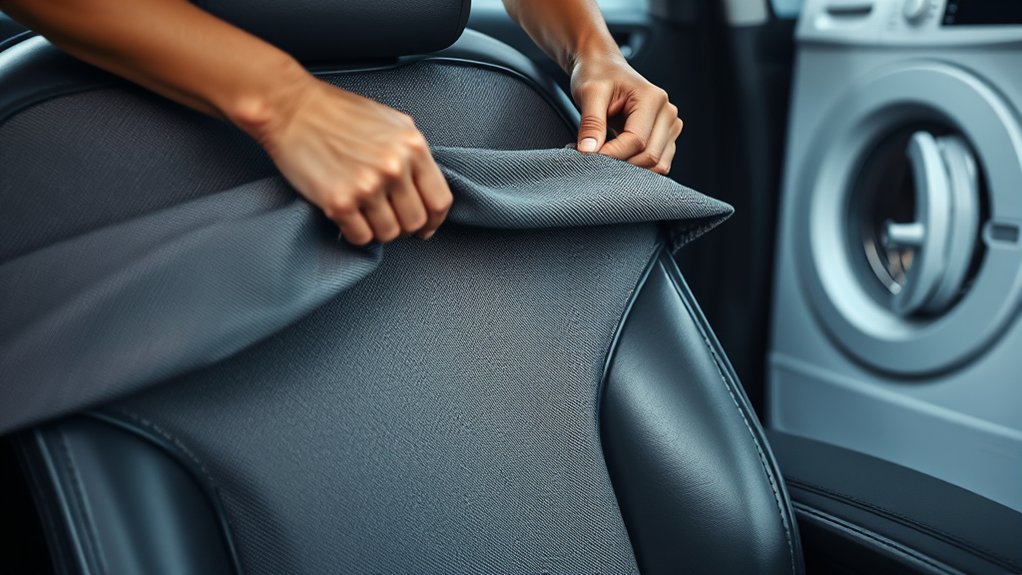
You can and should wash car seat covers regularly to keep them hygienic and prevent fabric deterioration.
Checking your cover’s material is important—fabric and neoprene can be machine washed on gentle cycles with cold water and mild detergent, while leather requires specialized cleaners and conditioners.
For delicate fabrics, hand washing with mild detergent is best.
Always air dry covers away from direct sunlight to avoid shrinking or damage.
Proper care extends cover life and appearance—explore detailed methods to ensure optimal maintenance.
Can You Wash Car Seat Covers? When to Do It
When should you wash car seat covers to maintain their condition and hygiene? Ideally, you should clean them every few months or immediately after spills, stains, or noticeable dirt buildup. Regular washing prevents fabric deterioration and maintains hygiene standards.
Use gentle wash cycles to avoid damaging delicate materials, especially if your covers have foam padding or specialized coatings. Always follow specific fabric care instructions provided by the manufacturer to preserve colors and textures.
Machine wash on low agitation settings, cold water, and mild detergents to minimize wear. Avoid harsh chemicals and high heat, which can degrade fibers and stitching.
How to Identify Your Car Seat Cover Material
Identifying your car seat cover material is essential for selecting the appropriate cleaning methods and products. Start by checking your vehicle’s owner manual or any tags on the seat covers for fabric information. Common car seat fabrics include leather, neoprene, polyester, and vinyl.
Each material requires specific care to ensure durability when maintaining upholstery. You can also perform a simple touch and visual test: leather feels smooth and supple, neoprene is thick and spongy, polyester is soft and synthetic, while vinyl has a plastic-like texture.
Avoid harsh chemicals on delicate fabrics like leather or neoprene to prevent damage. Correct identification helps you avoid costly mistakes and ensures you maintain upholstery integrity, prolonging the life of your car seat covers effectively.
How to Machine Wash Fabric and Neoprene Covers
Start by removing your fabric or neoprene car seat covers carefully, ensuring you unfasten any clips or zippers without causing damage. Before placing them in washing machines, check the manufacturer’s label for specific fabric care instructions.
Use a gentle cycle with cold water and mild detergent to prevent shrinking or color fading. Avoid bleach or fabric softeners. After washing, air dry the covers flat to maintain their shape and elasticity.
| Step | Action | Tip |
|---|---|---|
| 1 | Remove covers | Unfasten clips/zippers gently |
| 2 | Check label | Follow fabric care instructions |
| 3 | Machine wash | Use gentle cycle, cold water |
| 4 | Dry | Air dry flat, no dryer |
How to Clean Leather Car Seat Covers Without Damage
You should clean leather car seat covers using gentle methods to avoid cracking or discoloration. Use a soft cloth with a mild cleaner specifically designed for leather, then apply a conditioner to maintain suppleness. Regular conditioning also protects the leather from drying out and extends its lifespan.
Gentle Cleaning Methods
How can you clean leather car seat covers without causing damage? Begin by using a soft microfiber cloth slightly dampened with distilled water to avoid mineral deposits.
For gentle cleaning, mix a few drops of pH-balanced, leather-specific cleaner with water. Apply the solution sparingly to the cloth, not directly on the leather, and wipe the surface in small circular motions.
Avoid harsh chemicals, abrasive brushes, or excessive moisture that can degrade the leather’s finish. After cleaning, use a dry microfiber cloth to remove residual moisture.
Ensure proper ventilation to promote natural drying. These gentle cleaning methods maintain the integrity of your car seat covers, preventing cracking or discoloration while effectively removing dirt and grime.
Always test any product on a hidden area first to confirm compatibility with your leather type.
Leather Conditioning Tips
Why does conditioning leather car seat covers matter as much as cleaning them? Leather conditioning is essential because it replenishes natural oils stripped away during cleaning, preventing dryness and cracking.
To maintain car seat longevity, apply a pH-balanced leather conditioner specifically formulated for automotive use. After cleaning, use a soft, lint-free cloth to evenly distribute a thin layer of conditioner, allowing it to absorb fully before buffing off any excess.
Avoid products with harsh chemicals or petroleum-based ingredients, as they can degrade the leather fibers over time. Regular conditioning, ideally every three to six months, restores suppleness and protects against UV damage and wear.
How to Hand Wash Delicate Car Seat Covers
When should you choose hand washing for delicate car seat covers? Opt for hand wash when your covers are made of sensitive materials like silk, lace, or thin synthetic blends that could be damaged by machine agitation.
Begin by removing loose debris with a soft brush or vacuum. Fill a basin with lukewarm water and add a mild detergent formulated for delicate fabrics. Submerge the seat cover, gently agitating the water to distribute soap without scrubbing or wringing.
Start by brushing off debris, then soak the cover in lukewarm water with gentle detergent, agitating softly.
Let it soak for 10 to 15 minutes to loosen dirt. Rinse thoroughly with cool water until soap residue is gone. Avoid twisting to prevent distortion.
Hand washing preserves the integrity of fibers, maintaining both appearance and function. This method ensures you clean effectively without compromising the delicate fabric structure.
How to Dry Car Seat Covers to Prevent Shrinking and Warping
Proper drying techniques play an essential role in maintaining the fit and durability of your car seat covers. To guarantee effective shrink prevention, avoid high-heat drying methods like tumble drying on hot settings, which can cause fabric distortion.
Instead, utilize air drying by laying the covers flat on a clean surface or hanging them in a well-ventilated, shaded area. This controlled drying method minimizes the risk of warping and fabric tension changes.
Additionally, avoid direct sunlight exposure, as UV rays can degrade materials and alter colors. Using drying methods that control temperature and airflow will help preserve the original dimensions and elasticity of your covers, ensuring they remain snug and functional over time.
Always refer to manufacturer guidelines for specific drying recommendations to optimize care.
How to Remove Stains and Odors From Car Seat Covers
To effectively remove stains from your car seat covers, you need to apply targeted cleaning techniques that match the type of stain and fabric. Eliminating odors naturally requires using ingredients like baking soda or vinegar, which neutralize smells without harsh chemicals. Selecting the right cleaning products guarantees you protect the material while achieving thorough stain and odor removal.
Effective Stain Removal Techniques
How do you effectively eliminate stubborn stains and lingering odors from your car seat covers? Start by treating spots immediately using appropriate stain removers. Use enzyme-based cleaners for organic stains and solvent-based ones for grease. Always test cleaners on a hidden area first.
Use a soft brush to agitate stains gently and blot with microfiber cloths. For odors, apply specialized fabric deodorizers after cleaning. Maintaining your car wash routine and showroom cleanliness standards can prevent buildup and ease future stain removal.
| Stain Type | Recommended Treatment |
|---|---|
| Organic (food, sweat) | Enzyme-based cleaner, gentle brushing |
| Grease/Oil | Solvent-based stain remover, blotting |
| General Odor | Fabric deodorizer post-cleaning |
Following these techniques ensures your seat covers stay fresh and pristine.
Natural Odor Elimination Methods
Although commercial deodorizers offer quick solutions, natural odor elimination methods provide a safer and eco-friendly alternative for rejuvenating your car seat covers. Start by sprinkling baking soda evenly across the fabric; it absorbs odors effectively without compromising color matching. Let it sit for at least 30 minutes before vacuuming thoroughly.
Next, prepare a solution using eco-friendly detergents diluted in warm water to gently clean the covers without fading or damaging the fabric. Apply the solution with a soft cloth, targeting odor-prone areas, and rinse with minimal moisture to prevent retention.
Finally, air dry the covers completely in a well-ventilated space. These methods ensure odor removal while preserving fabric integrity and color matching, making your car seat covers fresh and safe to use.
Choosing the Right Cleaning Products
Which cleaning products work best for removing stains and odors from car seat covers? You should opt for eco friendly detergents specifically formulated for delicate fabrics to avoid damaging materials or leaving residues. These detergents effectively break down stains without harsh chemicals, preserving your seat covers’ integrity.
For persistent odors, enzymatic cleaners target organic compounds, neutralizing smells at the source. After cleaning, apply fabric protectants designed for automotive textiles to create a barrier against future spills and stains. These protectants enhance stain resistance and simplify maintenance.
Always test products on a hidden area to ensure compatibility and prevent discoloration. By selecting eco friendly detergents and appropriate fabric protectants, you’ll maintain cleanliness while safeguarding your car seat covers’ durability and appearance.
How to Protect and Maintain Car Seat Covers After Washing
Why should you take extra care after washing your car seat covers? Maintaining their integrity ensures longevity and preserves appearance. Post-wash, always air-dry covers away from direct sunlight to prevent fabric degradation, confirmed by durability comparisons.
Avoid high heat, which can weaken fibers and cause shrinkage. Conduct periodic colorfast testing by dampening a hidden area, pressing with a white cloth, and checking for color transfer. This helps you assess if the dyes remain stable after washing.
Additionally, apply fabric protectors designed for automotive textiles to repel stains and moisture effectively. Regularly inspect seams and fasteners for wear, addressing minor issues promptly to prevent further damage.
Frequently Asked Questions
Can Washing Car Seat Covers Affect Airbags?
Washing your car seat covers won’t directly impact airbags, but improper cleaning might damage or misalign sensors embedded in the fabric.
Are There Eco-Friendly Detergents Safe for Car Seat Covers?
Yes, you can use eco friendly detergents specifically formulated as fabric safe cleaners for car seat covers. These detergents effectively remove dirt without damaging materials or affecting airbags, ensuring both safety and environmental responsibility during cleaning.
How Often Should Car Seat Covers Be Replaced?
Like a well-oiled machine, your car seat covers’ replacement frequency depends on durability considerations such as material wear and exposure. Typically, replace them every 2-3 years or sooner if you notice significant damage or loss of protection.
Can Pets Damage Car Seat Covers Beyond Cleaning?
Yes, pets damage car seat covers beyond cleaning, causing scratches and tears. Durability testing often reveals weakened fabric integrity after repeated exposure to claws and bites, reducing overall lifespan and protective effectiveness substantially.
Do Tinted Car Seat Covers Fade in Sunlight?
Yes, tinted fabrics in car seat covers can experience sunlight fading over time. UV exposure breaks down dyes, causing color loss.
To minimize fading, you should use UV protectants or park in shaded areas whenever possible.