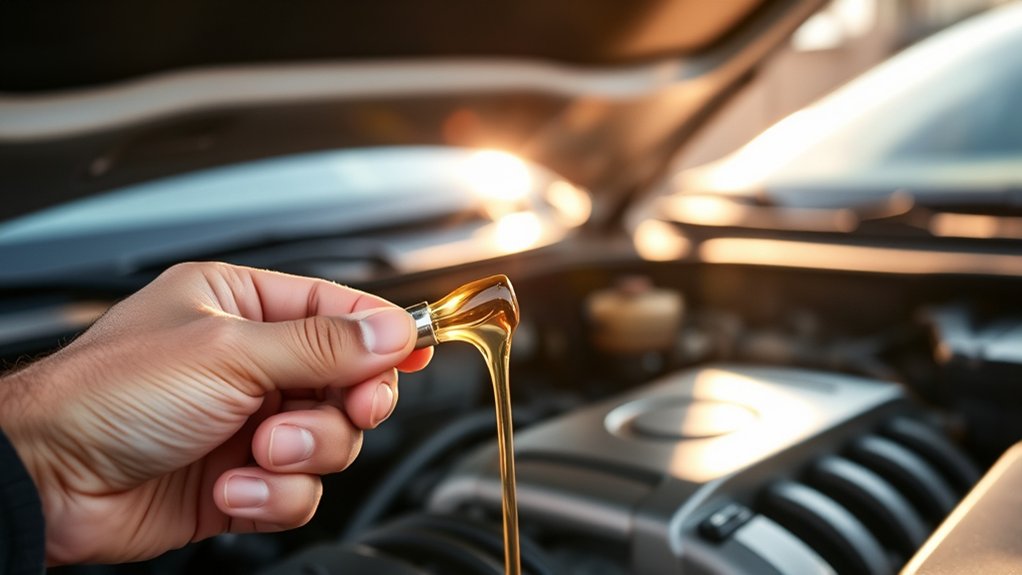
Can I Check My Oil After Driving
You shouldn’t check your oil immediately after driving because the engine heat keeps oil circulating, causing thinner oil and inaccurate readings. Checking your oil right away can result in a falsely low level and poses a burn risk due to hot oil.
Waiting 15 to 30 minutes allows oil to settle back into the pan, providing a precise measurement and preserving safety. Understanding these details ensures you maintain proper oil levels and protect your engine’s longevity and performance.
More insights can help you manage oil care effectively.
When Is the Best Time to Check Your Car’s Oil Level?
When should you check your car’s oil level to get the most accurate reading? The ideal time is when the engine is cold or has been off for at least 10-15 minutes. This pause allows the oil to settle back into the oil pan, giving you a true measurement of the oil quantity.
Checking immediately after driving can yield misleading results due to oil circulating through the engine. Oil viscosity changes with temperature; warm oil thins out, affecting the level reading. Ensuring the oil is at the right viscosity helps maintain proper lubrication and minimizes engine noise caused by insufficient oil.
Why Not Check Your Oil Right After Driving?
Although it might seem convenient to check your oil immediately after driving, doing so can produce inaccurate readings because the oil remains dispersed throughout the engine. When the engine is hot, oil circulates vigorously, coating internal components and not fully settling in the oil pan.
If you check the oil gauge or dipstick at this time, the level may appear lower than it actually is, leading you to add unnecessary oil. Additionally, handling a hot engine increases your risk of burns.
Waiting at least 10 to 15 minutes allows the oil to drain back into the sump, providing a stable and accurate measurement. This ensures your oil gauge reflects the true oil level, helping you maintain proper engine lubrication without guesswork or safety hazards.
How Engine Heat Can Trick Your Oil Gauge
When your engine heats up, the oil expands, causing the oil gauge to show a falsely high level. If you check the oil immediately after driving, you might get inaccurate readings. Waiting for the engine to cool down guarantees you measure the true oil level.
Oil Expansion From Heat
Why does your oil gauge sometimes give misleading readings after driving? The answer lies in oil expansion from heat. As your engine runs, it generates significant heat, causing the oil’s temperature to rise.
When heated, oil expands, increasing its volume. This expansion can temporarily elevate the oil level on your dipstick or gauge, making it appear fuller than it actually is. Checking your oil immediately after driving fails to account for this thermal expansion, leading to inaccurate readings.
It’s important to avoid off topic or irrelevant distractions when assessing oil levels—you want to focus strictly on the oil’s physical state, not unrelated factors. To get precise readings, always wait for the engine to cool, letting the oil contract to its normal volume before measuring.
False High Oil Readings
Heat-induced oil expansion not only affects volume but can also cause your oil gauge to display falsely high readings. When your engine heats up, oil viscosity decreases, causing the oil to become thinner and expand.
This expansion can trick the oil level sensor into registering a higher volume than is actually present. Because the sensor relies on oil contact or displacement, the altered viscosity and volume distort its accuracy, resulting in false readings.
If you check your oil immediately after driving, the gauge might overestimate the oil level, leading you to believe it’s sufficient when it may not be. Understanding this phenomenon is crucial for precise oil level assessment and avoiding potential engine damage caused by misinterpreted oil levels.
Waiting Time Importance
How long should you wait before checking your oil after driving? Ideally, you should wait at least 10 to 15 minutes to let the engine cool down. When the engine is hot, the oil expands and may give a falsely high reading on the dipstick.
This waiting period allows the oil to settle back into the oil pan, providing an accurate measurement. Ignoring this step leads to the off topic misconception that you can check oil immediately after driving without error.
Some believe engine heat doesn’t affect oil levels, but that’s an unrelated topic and a common mistake. To avoid misjudging your oil level, always wait for the engine to cool.
This precise timing ensures your oil gauge reflects the true oil quantity, preventing maintenance errors.
Step-by-Step Guide to Checking Your Oil Level
When should you check your oil level to get the most accurate reading? Ideally, after the engine has been off for at least 10-15 minutes, allowing oil to settle. First, ensure your vehicle is on level ground.
Open the hood and locate the dipstick, usually marked with a bright handle. Pull it out, wipe it clean with a lint-free cloth, then reinsert it fully. Remove the dipstick again and observe the oil level against the marked indicators.
Pay attention to your oil type. Synthetic blends and conventional oils may behave differently in viscosity and settling time. If the level is below the minimum mark, add the recommended oil type gradually.
Always consult your owner’s manual for specific oil types and quantities to maintain optimal engine performance.
How to Read and Understand Your Oil Level and Condition
After wiping the dipstick clean and reinserting it, pull it out again to check the oil level against the marked indicators. Pay close attention to the oil’s color and texture, as these reveal its condition and whether it needs changing. Understanding both the level and quality helps you maintain peak engine performance.
Checking Oil Level
Why does accurately checking your oil level matter? Maintaining the correct oil volume ensures ideal lubrication, protecting engine components from excessive wear.
To check it precisely, park on level ground and let the engine cool for at least 10 minutes, allowing oil to settle. Pull out the dipstick, wipe it clean, then reinsert fully before removing it again to read.
The oil level should fall between the minimum and maximum marks. Pay attention to oil viscosity; thicker oil may yield a different reading if the engine is warm.
Also, consider the oil filter’s condition, as a clogged filter can affect oil circulation and pressure. Regular, accurate checks help prevent engine damage and maintain performance.
Assessing Oil Condition
How can you determine if your engine oil is still effective beyond just checking its level? To assess oil condition, first wipe the dipstick clean, reinsert it, then withdraw it again to observe the oil’s color and texture.
Fresh oil is amber and translucent, while dark, gritty, or milky oil indicates contamination or degradation. Avoid confusing unrelated symptoms or engaging in irrelevant topic debates about oil checks after driving; focus strictly on oil appearance and consistency. Do not entertain off topic discussion like engine noises or unrelated fluids here.
If oil appears thick, gritty, or diluted, it’s time for a change. Regularly evaluating oil condition ensures optimal lubrication, prevents engine wear, and maintains performance. This process complements level checks, providing a comprehensive understanding of your engine’s health.
Tips for Maintaining Proper Oil Levels
When should you check your engine oil to crucial readings and maintain optimal performance? Ideally, you should check it when the engine is cold or has been off for at least 10 minutes. This allows the oil to settle, giving a precise level measurement.
Maintaining proper oil levels is crucial for preserving oil viscosity, which directly impacts engine lubrication and fuel economy. Use the manufacturer’s recommended oil grade to ensure optimal viscosity under varying temperatures.
Proper oil levels preserve viscosity, enhancing engine lubrication and fuel economy—use the recommended oil grade.
Avoid overfilling, as excess oil can cause increased pressure and leaks, while underfilling risks engine wear. Regularly inspect your oil level using the dipstick, and top up with the correct oil type as needed.
Following these steps helps maintain engine efficiency and prolongs its lifespan.
Warning Signs That Mean You Should Check Your Oil Level More Often
Keeping your oil levels within the recommended range is fundamental, but certain warning signs indicate you should check your oil more frequently. If you notice unusual engine noises, oil pressure warnings, or visible leaks, don’t delay oil level checks.
These signs can signal compromised oil filtration or accelerated oil degradation. Use this table as a guide for discussion ideas on when to increase your monitoring:
| Warning Sign | Possible Cause | Recommended Action |
|---|---|---|
| Engine knocking | Low oil level | Check oil immediately |
| Oil pressure light | Filter blockage | Inspect oil filtration system |
| Oil leak stains | Seal failure | Examine and top off oil |
| Excessive smoke | Oil contamination | Evaluate oil condition |
| Overheating engine | Poor lubrication | Increase oil check frequency |
Regular checks help maintain engine health and prevent costly repairs.
Risks of Checking Oil When It’s Hot
Why should you avoid checking your oil immediately after driving? When the engine is hot, the oil’s viscosity decreases, making it thinner and less accurate for measurement. This can lead to misleading readings and improper assessments of oil levels.
Additionally, hot oil poses safety risks and can interfere with proper oil recycling.
Consider these risks:
- Burn hazard: Hot oil and engine parts can cause serious burns.
- Inaccurate readings: Thin oil flows differently, compromising level accuracy.
- Impaired oil recycling: Hot oil may not settle properly, affecting contamination detection.
Wait at least 15-30 minutes for the oil to cool and settle. This pause ensures you get a precise level reading and protects your safety, maintaining the integrity of oil recycling processes.
Frequently Asked Questions
How Often Should I Change My Car’s Oil?
You should change your car’s oil every 5,000 to 7,500 miles, depending on your vehicle and oil type. Avoid checking oil myths; follow the manufacturer’s recommended oil change cadence for optimal engine performance and longevity.
What Type of Oil Is Best for My Vehicle?
Choosing the best oil hinges on your engine’s specs. Oil viscosity matters most.
Synthetic oils offer superior protection and stability over conventional ones, especially in extreme temperatures.
Check your manual; using the right type ensures optimum performance and longevity.
Can Low Oil Levels Damage My Engine?
Yes, low oil risks include increased friction and overheating, which can severely damage your engine. Don’t believe oil pressure myths; low oil pressure signals insufficient lubrication, so maintaining proper levels is critical to prevent costly engine failures.
How Do I Know if My Oil Needs Changing?
Ever wonder if your oil’s still up to the job? You should check oil color. Dark or gritty means change time. Also, inspect oil viscosity.
If it’s too thin or thick, your engine’s protection is compromised, so act promptly.
What Tools Do I Need to Check My Oil?
You’ll need a clean rag and your vehicle’s oil dipstick for checking oil after driving. Use the oil dipstick technique: pull it out, wipe, reinsert fully, then remove again to read oil level accurately.
Conclusion
Checking your oil right after driving is like trying to read a thermometer while you’re feverish—it won’t give you an accurate picture. For precise results, wait until the engine cools down to avoid misleading readings caused by heat expansion.
By following the proper steps and timing, you’ll keep your oil level spot-on, ensuring your engine runs smoothly and reliably.
Remember, a well-maintained oil system is the lifeblood of your car’s performance. So, can I check my oil after driving? It’s best to wait for the right moment to get the most accurate reading.