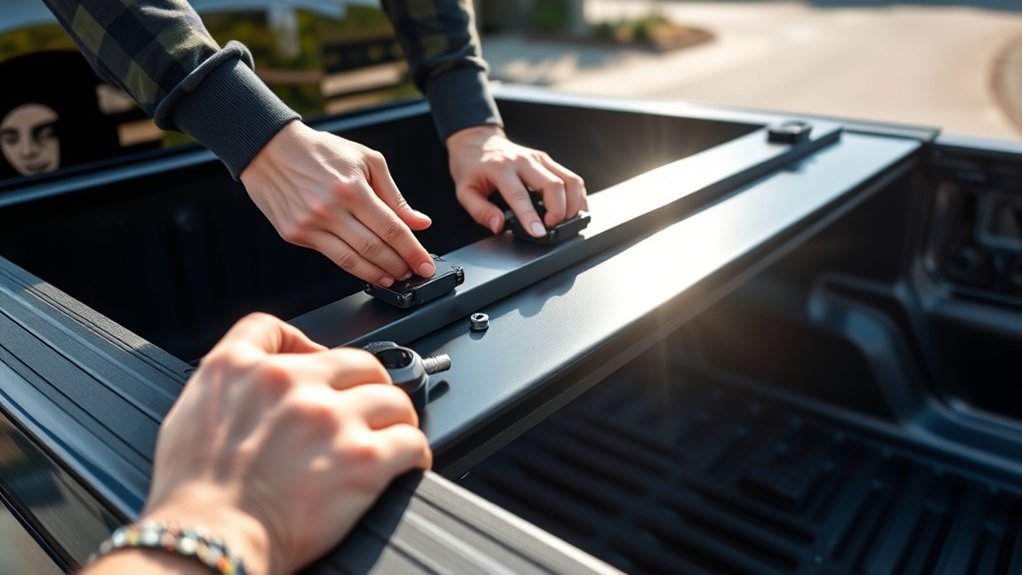
How to Install Tonneau Cover Rails
To install tonneau cover rails, first measure your truck bed’s length and width precisely. Gathering the right tools is essential; you will need a tape measure, drill, screwdriver, and mounting hardware.
Start by cleaning and prepping the bed rails to ensure a smooth installation surface. Align the cover rails so they are flush and parallel with the bed edges.
Next, mark and drill pilot holes carefully to avoid damaging the truck bed. Securely attach the rails using appropriate fasteners.
Use a torque wrench for even tightening to ensure the rails are firmly in place. Apply seals along the rails to prevent water and dust ingress.
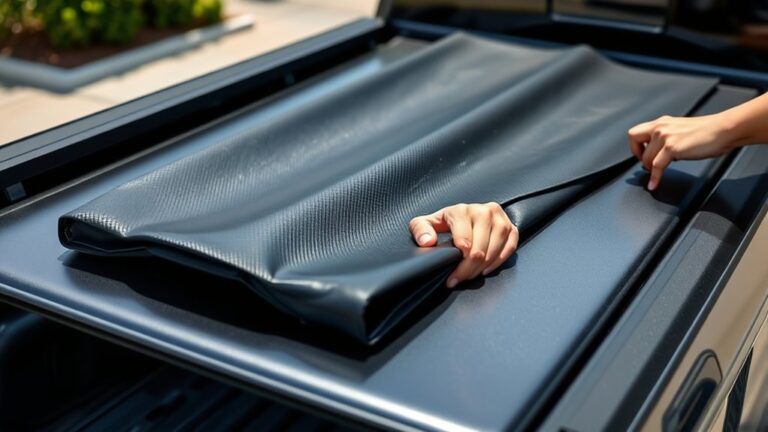
Once the rails are installed, snap the cover into place. Finally, test its fit and weather resistance to confirm a proper installation.
For step-by-step guidance and troubleshooting tips, keep exploring this process further.
Why Install Tonneau Cover Rails?
Why should you install tonneau cover rails on your truck bed? Installing these rails provides a secure mounting base for your tonneau cover, ensuring a tight fit that enhances weatherproofing. This setup protects your cargo from rain, dust, and debris, following proven weatherproofing tips to maintain cargo integrity.
Additionally, rails improve the aerodynamics of your truck, potentially boosting fuel efficiency. They also enable creative parking solutions by allowing you to cover and lock your bed contents, deterring theft in tight urban spaces.
Proper installation guarantees stability and prevents damage to both the cover and truck bed. Overall, installing tonneau cover rails is a practical step that enhances protection, security, and functionality, making your truck more versatile for daily use and specialized tasks.
Gather Tools and Materials
What tools and materials do you need to install tonneau cover rails correctly? First, gather a tape measure, screwdriver set, power drill with appropriate bits, and a rubber mallet. These will help ensure accurate bed alignment during installation.
You’ll also need mounting brackets, bolts, washers, and the tonneau cover rails themselves. Use a torque wrench to tighten bolts precisely without damaging components, which promotes tool longevity.
Additionally, keep a clean cloth and mild cleaner handy to prep the truck bed surface, enhancing adhesion and preventing corrosion. Avoid using worn or damaged tools, as they can compromise installation accuracy and safety.
Measure Your Truck Bed
How do you guarantee your tonneau cover rails fit perfectly? Start by measuring your truck bed accurately. Use a steel tape measure to record the length from the bulkhead to the tailgate inside edges.
Begin by precisely measuring your truck bed length from the bulkhead to tailgate inside edges.
Measure the width between the bed rails at multiple points, front, middle, and rear, to account for any irregularities. Note these dimensions precisely, as even slight errors can affect fitment.
Accurate measurements help you evaluate pricing options effectively, ensuring you select rails sized correctly without overspending. Additionally, check the manufacturer’s warranty considerations linked to sizing; some warranties may be voided if incorrect measurements cause improper installation.
Taking time here prevents costly mistakes and ensures your rails align perfectly, providing full protection and optimal performance when installed.
Choose the Right Rails
You’ll need to select the correct type of tonneau rails based on your truck bed’s dimensions and mounting style. Use your previous measurements to ensure the rails fit securely and align properly. Matching the rail type to your truck bed is essential for a seamless installation and optimal cover performance.
Types Of Tonneau Rails
Which type of tonneau rail fits your truck bed best? Understanding rail types ensures a secure, weatherproof fit. Avoid unrelated topic or off topic discussion about accessories or unrelated truck parts here; focus solely on rail styles.
| Rail Type | Material | Key Benefit |
|---|---|---|
| Clamp-On | Aluminum | Easy installation |
| Rail-Mounted | Steel | Maximum durability |
| Flush-Mount | Composite | Sleek, low profile |
| Snap-On | Plastic alloy | Quick removal |
Clamp-On rails attach without drilling, ideal for renters. Rail-Mounted require bolts but offer strength. Flush-Mount rails integrate with bed edges for aesthetics. Snap-On rails are convenient for seasonal use.
Choose rails matching your truck bed’s construction and use-case precisely for optimal performance.
Measuring Your Truck Bed
Where exactly should you measure when preparing to install tonneau cover rails? Focus on the inside edges of your truck bed’s top rails, measuring length from the bulkhead near the cab to the tailgate edge.
Also, measure the width between the bed rails at multiple points: front, middle, and rear to ensure consistent fit. For measuring accuracy, use a rigid tape measure or digital caliper with clear, easy-to-read markings.
Choose a tool that offers good ergonomics to maintain steady control and reduce hand fatigue during measurement. Avoid stretching the tape to prevent errors.
Record all dimensions precisely and double-check each to confirm consistency. Accurate measurements guarantee you select rails that fit snugly, ensuring optimal performance and ease of installation for your tonneau cover.
Clean and Prepare Truck Bed Rails
Before installing the tonneau cover rails, thoroughly clean the truck bed rails to remove dirt, grease, and debris that could interfere with adhesion and alignment. Use a degreaser and a stiff brush to scrub the rails, then wipe them down with a clean cloth.
Inspect the rails for rust or damage, addressing any issues before proceeding. Skipping this step is a common installation pitfall that compromises fit and longevity.
Avoid topic ideas that suggest skipping cleaning or using harsh chemicals that may damage the finish. After cleaning, let the rails dry completely to ensure adhesive strips or fasteners bond correctly.
Proper preparation here sets the foundation for a secure installation and prevents alignment problems later in the process.
Position Tonneau Cover Rails and Check Alignment
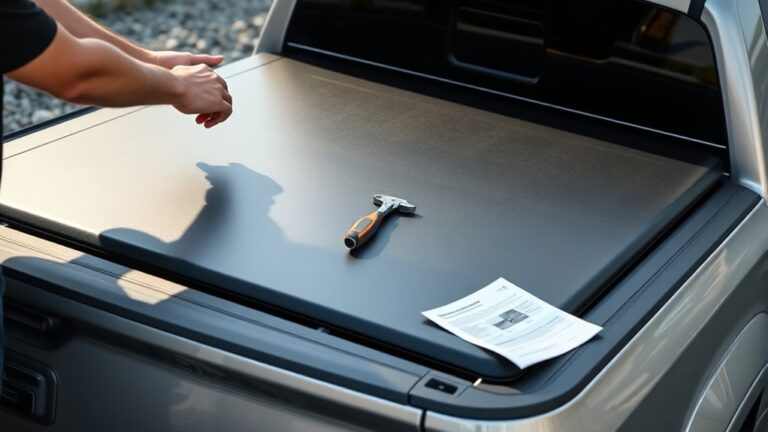
Start by aligning the rails carefully with the truck bed edges to guarantee a proper fit. Temporarily secure the rails in place using clamps or screws to prevent movement during adjustment. Then, verify the rail spacing is consistent along the entire length before final fastening.
Align Rails With Bed
How do you ensure the tonneau cover rails fit perfectly along your truck bed? Begin by placing each rail on the bed rails, aligning them with the factory bed edges.
Conduct thorough alignment checks by measuring the distance between the rail and the bed’s edges at multiple points along the length. This guarantees consistent spacing and prevents gaps that could compromise cover fit or water resistance.
Use installation tips such as adjusting the rails slightly forward or backward until they sit flush and parallel to the bed. Confirm that both rails are level relative to each other to avoid binding during cover operation.
Accurate alignment at this stage is critical for a smooth installation and optimal tonneau cover performance.
Secure Rails Temporarily
Once you’ve aligned the rails accurately along the bed edges, position them securely but temporarily. Use clamps or a similar two-word idea to hold each rail in place without fully fastening. This approach allows you to make adjustments as needed before final installation.
Ensure the rails rest evenly on the bed rails, maintaining a consistent two-word idea gap between the rail and the truck bed. Double-check that the rails sit flush against the truck’s sidewalls to prevent misalignment.
Temporarily securing the rails lets you verify positioning without committing to permanent hardware. This step is critical for avoiding costly mistakes or damage during later tightening.
Take your time; precise temporary positioning sets the foundation for a successful, secure tonneau cover installation.
Verify Rail Spacing
Where should you position the rails to ensure optimal spacing? Begin by aligning each tonneau cover rail along the truck bed rails, ensuring they sit parallel and flush.
The verification process requires you to measure the distance between the rails at multiple points: front, middle, and rear to confirm consistent spacing. Pay close attention to spacing considerations, as uneven gaps can compromise cover fitment and function.
Use a tape measure or caliper for precise readings, aiming for uniform clearance throughout. Adjust the rails as needed before fully securing them to prevent misalignment.
This step is crucial to avoid installation errors that can cause leaks or difficulties when operating the cover. Once you’re confident with the alignment and spacing, proceed to tighten all fasteners securely.
Mark and Drill Pilot Holes
Before drilling, carefully align the tonneau cover rails on the truck bed and use a pencil or marker to precisely mark the locations for the pilot holes. Double-check these marks for accuracy to avoid misalignment during installation.
Use a measuring tape and square to confirm consistent spacing. When marking, focus solely on relevant points; avoid discussion ideas or irrelevant topics that don’t pertain to hole placement.
Next, select a drill bit slightly smaller than the mounting screws to ensure a tight fit. Secure the rails temporarily with clamps to prevent movement.
Drill the pilot holes straight and steady, applying consistent pressure to avoid splitting or damaging the truck bed material. Proper pilot hole placement ensures a secure and professional installation in the next steps.
Attach Tonneau Cover Rails Securely
To attach the tonneau cover rails securely, align them carefully with the pilot holes you drilled earlier. Use the proper fasteners specified by the manufacturer to avoid voiding warranty implications.
Align rails with pilot holes and use manufacturer-approved fasteners to ensure a secure, warranty-safe installation
Ensure the rails sit flush against the bed rails, respecting all design considerations for optimal fit and function.
Confirm hole alignment before insertion
Use a torque wrench to tighten fasteners evenly
Avoid overtightening to prevent material deformation
Check for rail movement after securing
Follow manufacturer guidelines on fastener type and placement
Seal Rails to Keep Out Water and Dust
You’ll need to select the right seal material to effectively block water and dust from entering. Make certain to install the seal evenly along the rails, applying consistent pressure to ensure a tight fit. Regularly inspect and maintain the seal to preserve its protective function over time.
Choosing The Right Seal
How do you guarantee your tonneau cover rails keep water and dust from seeping into the truck bed? Choosing the right seal is crucial. Focus on materials that provide a tight barrier and enhance sound insulation to improve your truck’s interior acoustics.
Consider these factors:
- Material durability against weather and UV exposure
- Compression resistance to maintain a firm seal
- Compatibility with your rail profile
- Resistance to dust infiltration
- Contribution to reducing road noise
Selecting seals made from EPDM rubber or silicone often delivers optimal performance. These materials balance flexibility and toughness, ensuring long-term protection and noise reduction.
Proper Seal Installation
A correct seal installation is essential to ensure your tonneau cover rails effectively block water and dust from entering the truck bed. Begin by cleaning the rail surfaces thoroughly to remove debris that could compromise adhesion.
Next, align the seals carefully, considering insulation considerations to maintain temperature control and prevent condensation. When attaching, apply consistent seam compression along the entire length to create a uniform barrier and avoid gaps.
Use a roller tool to press the seal firmly into place, enhancing adhesion and sealing performance. Avoid stretching the seal, as this can cause future leaks.
Finally, inspect the installation closely for any uneven areas or loose sections, addressing them immediately to ensure a durable, water-tight, and dust-proof seal that maintains the integrity of your tonneau cover rails.
Maintaining Seal Integrity
Why does maintaining seal integrity matter for your tonneau cover rails? It ensures the rails effectively keep out water and dust, preserving your truck bed’s condition. A compromised seal disrupts proper water flow, leading to leaks and potential damage.
To maintain seal integrity, you should:
- Regularly inspect seals for cracks or wear
- Clean seals with mild detergent, avoiding harsh chemicals
- Apply silicone-based lubricant to keep seals flexible
- Ensure rails are firmly secured to prevent gaps
- Replace damaged seals promptly to restore protection
Install the Tonneau Cover
Where should you begin when installing the tonneau cover onto the rails? Start by aligning the cover’s leading edge with the front of the rails. Avoid introducing unrelated topic or spurious context by focusing strictly on the installation steps.
Carefully snap the cover into the rails, ensuring the locking mechanisms engage correctly. Use even pressure along both sides to prevent damage.
| Step | Action | Tip |
|---|---|---|
| 1 | Align cover with rails | Front edge first |
| 2 | Press cover into rail clips | Apply even pressure |
| 3 | Secure locking mechanisms | Confirm audible click |
Following this sequence ensures a secure, professional installation free from errors or misalignment.
Test the Cover and Troubleshoot Issues
How can you guarantee the tonneau cover is properly installed and functioning? Begin by thoroughly testing the cover to ensure it seals correctly and withstands bad weather while providing effective theft prevention. Follow these steps:
Close and latch the cover fully, checking for gaps or misalignments. Inspect the seals and rails for secure attachment and absence of damage. Apply moderate pressure to detect any movement or looseness.
Test the locking mechanism to confirm it engages smoothly and securely. Simulate rain or spray water to verify water resistance and proper drainage.
If you encounter issues, recheck rail alignment, tighten fasteners, and adjust seals as needed. Addressing these points ensures your tonneau cover delivers optimal protection and security.
Frequently Asked Questions
Can Tonneau Cover Rails Improve My Truck’s Fuel Efficiency?
Yes, tonneau cover rails can improve your truck’s fuel efficiency by reducing aerodynamic drag. For best benefit comparison, follow installation tips carefully to ensure a tight, flush fit that optimizes airflow and minimizes wind resistance.
Are Tonneau Cover Rails Compatible With All Truck Models?
Of course, every truck’s a perfect match for tonneau cover rails said no expert ever. You’ll face incompatibility concerns, so check precise installation fitment specs to ensure your rails snugly fit without forcing or gaps, preventing costly errors.
How Do Tonneau Cover Rails Affect Truck Bed Warranty?
You’ll want to check your truck’s warranty details since installing tonneau cover rails might affect coverage. Properly installed rails maintain towing compatibility and weather sealing, minimizing warranty risks. Unauthorized modifications could void specific bed or accessory warranties.
Can I Install Tonneau Cover Rails Without Drilling?
Yes, you can install tonneau cover rails using drilling free options like clamp-on or adhesive mounts. These alternative mounting methods secure rails without altering your truck bed, maintaining structural integrity and simplifying installation.
What Maintenance Is Needed for Tonneau Cover Rails?
Regularly reviewing your maintenance schedule prevents pesky problems. You’ll clean rails, lubricate moving parts, and apply rust prevention treatments. For detailed steps, read more in your manual. Other info may not be relevant to your specific model.
Conclusion
Installing tonneau cover rails not only protects your truck bed but can also improve fuel efficiency by up to 10%. By following precise measurements, securely attaching rails, and sealing them properly, you ensure durability and weather resistance.
Remember to test your cover thoroughly to avoid any issues. With the right tools and careful installation, your tonneau cover will provide long-lasting protection and enhance your truck’s performance on every drive. Proper installation of tonneau cover rails is key to maximizing these benefits.