How Do I Check if My Fuel Pump Is Working
To check if your fuel pump is working, start by listening for a steady hum near the fuel tank when the ignition is turned on. This sound indicates that the pump is activating as it should.
Next, use a fuel pressure gauge on the fuel rail’s Schrader valve to measure the pressure. Compare this reading to your vehicle’s specifications to ensure it is within the correct range.
Inspect the electrical connections related to the fuel pump and test the voltage with a multimeter. This will help confirm that the pump is receiving proper circuit power.
Don’t forget to examine the fuel filters and lines for any blockages that might affect fuel flow. These steps will help pinpoint any issues with the fuel pump.
Continuing from here, you can follow more detailed diagnostics and maintenance procedures to address any problems found.
Common Symptoms of a Failing Fuel Pump
Recognizing the common symptoms of a failing fuel pump is essential for diagnosing fuel delivery issues accurately. You might notice engine sputtering at high speeds, a sudden loss of power during acceleration, or difficulty starting the vehicle.
These symptoms directly correlate with inadequate fuel pressure caused by a malfunctioning pump. Avoid confusing these signs with an unrelated topic, such as electrical battery issues, which involve an irrelevant concept when diagnosing fuel delivery problems.
Additionally, inconsistent engine performance, stalling at idle, or unusual whining noises from the fuel tank are precise indicators of pump failure. By focusing on these specific symptoms, you can eliminate irrelevant diagnostic paths and zero in on the fuel system, improving your troubleshooting efficiency without diverting attention to unrelated components.
Tools Needed to Check Your Fuel Pump
To accurately test your fuel pump, you’ll need specific diagnostic tools like a multimeter and a fuel pressure gauge. Don’t forget essential safety equipment, including gloves and safety glasses, to protect yourself during the process. Understanding how to use a fuel pressure gauge is critical for measuring pump performance under operating conditions.
Essential Diagnostic Tools
Before you begin diagnosing your fuel pump, you’ll need a set of specialized tools to ensure accurate testing and safety. Avoid unclear topics or irrelevant discussions by focusing strictly on essential diagnostic equipment. These tools allow you to measure voltage, pressure, and continuity, crucial for determining your fuel pump’s condition effectively.
| Tool | Purpose | Description |
|---|---|---|
| Multimeter | Electrical Voltage & Continuity | Measures voltage, resistance, and continuity in circuits |
| Fuel Pressure Gauge | Fuel System Pressure | Measures fuel pressure to verify pump performance |
| Test Light | Circuit Testing | Detects power presence in the fuel pump circuit |
| OBD-II Scanner | Diagnostic Codes | Retrieves error codes related to fuel system malfunctions |
Using these tools precisely helps you avoid misdiagnosis and wasted effort.
Safety Equipment Required
How should you protect yourself while checking your fuel pump? Adhering to strict safety protocols is crucial to prevent injury or fire hazards. Begin by wearing appropriate personal protective equipment (PPE), including safety goggles to shield your eyes from fuel splashes, chemical-resistant gloves to protect your hands, and flame-resistant clothing.
Ensure you have a well-ventilated workspace to avoid inhaling harmful fumes. Disconnect the vehicle’s battery to eliminate electrical sparks, following manufacturer guidelines. Use non-sparking tools when working near fuel lines.
Additionally, keep a fire extinguisher rated for flammable liquids within reach. These safety measures minimize risks associated with fuel handling and electrical components, enabling you to check your fuel pump effectively and securely. Always prioritize personal safety before any mechanical diagnostics.
Fuel Pressure Gauge Usage
Where do you start when diagnosing your fuel pump’s performance? Begin with a fuel pressure gauge, a critical tool that measures the pressure within the fuel line. Connect the gauge to the Schrader valve on your fuel rail, ensuring a secure fit to avoid leaks.
Turn the ignition on without starting the engine. This primes the pump and registers pressure. Compare the reading to your vehicle’s specifications; deviations often debunk common fuel pump myths, such as assuming noisy motors always indicate failure.
A steady, correct pressure means the pump operates properly, while low or fluctuating pressure signals issues. Using the fuel pressure gauge precisely helps you isolate pump problems from other system components, enabling accurate diagnosis and effective repair decisions.
How to Listen for Your Fuel Pump Running
You’ll want to locate the fuel pump near the rear of your vehicle, usually inside or near the fuel tank. When you turn the ignition to the “ON” position without starting the engine, listen closely for a faint, steady humming or buzzing sound that indicates the pump is running. Timing is critical—this sound typically lasts only a few seconds before the engine starts or the pump shuts off.
Location of Fuel Pump
Inside the fuel tank, the fuel pump is typically mounted, often submerged in fuel to help with cooling and lubrication. This location is crucial for maintaining optimal pump temperature and preventing overheating.
The fuel pump assembly includes the pump motor, a strainer, and an internal pressure regulator, all housed within a sealed unit. You’ll find electrical wiring connected to the pump’s motor, routed through the tank’s access point or sending unit, providing the necessary power for operation.
Understanding this fuel pump anatomy is essential when diagnosing issues or performing maintenance. Since the pump is inside the tank, you won’t see it directly without removing the tank or accessing a service panel, usually located beneath rear seats or in the trunk, depending on the vehicle design.
Sound Characteristics to Hear
How can you confirm your fuel pump is running without visual access? Focus on specific sound characteristics to hear. When you turn the ignition to the “on” position (without starting the engine), a functioning fuel pump typically emits a distinct humming or whirring sound lasting about two to five seconds.
This steady, low-frequency noise indicates the pump motor is pressurizing the fuel system. In contrast, irregular, intermittent buzzing or silence often signals compromised fuel pump reliability.
Ambient noise can interfere, so perform this test in a quiet environment. Use your ear near the fuel tank area or under the rear seat, depending on your vehicle’s pump location. Identifying these precise sound characteristics helps you confirm operational status accurately before moving to further diagnostics.
When to Listen
When should you listen for the fuel pump running to get the most accurate assessment? Timing is crucial to isolate the pump’s operational sound and evaluate its condition. Follow these steps:
- Ignition On, Engine Off: Turn your key to the “ON” position without starting the engine. The fuel pump should run briefly, producing a consistent humming sound due to its sound design. This confirms initial activation.
- Engine Start: Listen during engine cranking. A steady pump sound indicates proper fuel delivery, essential for optimal fuel economy.
- Post-Start: After the engine fires, the pump runs intermittently. Detecting irregularities here can signal issues affecting fuel pressure and efficiency.
Safely Testing Fuel Pump Pressure
Why is testing fuel pump pressure essential before concluding a pump failure? Because low pressure can stem from issues other than the pump itself, like clogged filters or faulty regulators.
To test safely, first ensure the vehicle is off and the ignition system is disabled to avoid sparks. Use a fuel pressure gauge compatible with your vehicle, connecting it at the fuel rail test port.
Before connecting, inspect all wiring insulation durability, as damaged insulation can cause shorts during testing. Also, perform battery testing to verify the electrical system supplies stable voltage; inconsistent power affects pump performance and pressure readings.
Once set up, turn the ignition on without starting the engine to activate the pump and note the gauge reading. Compare it to manufacturer specifications to diagnose accurately.
Checking Your Fuel Pump’s Electrical Connections
Where should you start if your fuel pump isn’t delivering the expected pressure despite a seemingly functional pump? Begin by checking your fuel pump’s electrical connections. Faulty wiring or loose connectors can disrupt power flow, causing the pump to underperform or fail.
Avoid getting sidetracked by unrelated topics or random discussion; focus strictly on the electrical system.
Here’s what to do:
- Visually inspect all wiring harnesses for corrosion, fraying, or damage.
- Confirm that all connectors are securely attached and free of debris.
- Check the fuel pump relay and fuse for continuity or signs of wear.
This targeted approach ensures you isolate electrical faults before moving to more complex diagnostics.
Using a Multimeter to Test the Fuel Pump
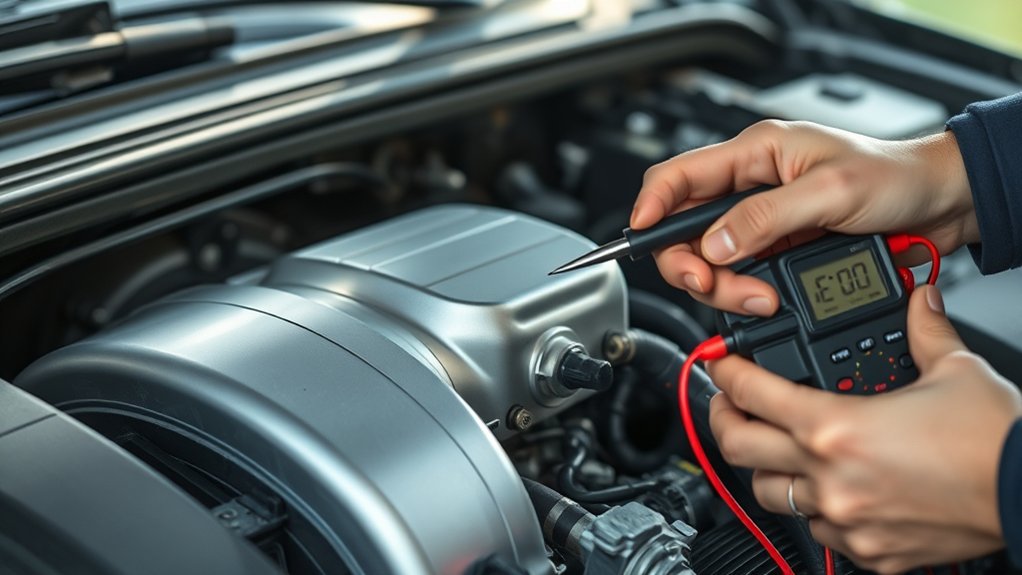
A multimeter provides a precise method to measure the voltage, current, and resistance in your fuel pump’s electrical circuit, helping you identify faults that visual inspections might miss. Start by setting your multimeter to the appropriate voltage or resistance mode, depending on whether you’re testing power supply or coil continuity.
For pump testing, connect the multimeter probes to the fuel pump terminals carefully, ensuring a solid contact. When measuring voltage, verify the reading matches the manufacturer’s specified range with the ignition on.
For resistance, compare readings to the pump’s resistance specifications to detect coil damage. Understanding multimeter basics such as proper range selection and probe placement is essential for accurate diagnostics. This method isolates electrical issues effectively, confirming whether the fuel pump is operational or defective.
Checking Fuel Filters and Lines During Fuel Pump Troubleshooting
How can you ensure that your fuel pump isn’t being hindered by clogged filters or damaged fuel lines? Start by reviewing the vehicle’s fuel history to identify any previous contamination or filter replacements. Next, conduct a noise comparison between the fuel pump’s operation under normal conditions and current behavior to detect irregular sounds indicating flow restriction.
- Inspect the fuel filter for debris or discoloration; replace it if clogged to restore optimal flow.
- Examine fuel lines for cracks, kinks, or leaks that could reduce pressure or cause fuel loss.
- Perform a pressure test downstream of the filter to verify consistent fuel delivery to the engine.
These steps isolate issues beyond the pump itself, ensuring thorough troubleshooting before considering pump replacement.
When to Replace Your Fuel Pump
After ruling out clogged filters and compromised fuel lines, focus on identifying clear signs that indicate your fuel pump requires replacement. Key indicators include consistent engine sputtering at high speeds, difficulty starting despite a fully charged battery, and noticeable loss of power under load.
Additionally, if you detect unusual whining noises from the fuel tank area, it often signals internal pump wear. Avoid confusing these symptoms with an unrelated topic such as ignition system faults or a tangential concept like sensor malfunctions; these issues require separate diagnosis.
When fuel pressure tests reveal levels below manufacturer specifications despite a clean filter and intact lines, replacement becomes necessary. Acting promptly prevents further engine damage and ensures reliable fuel delivery, maintaining optimal engine performance and safety.
How to Avoid Fuel Pump Problems With Regular Maintenance
Maintaining your fuel pump’s health hinges on consistent attention to key components and operating conditions. To avoid fuel pump problems, follow these three essential maintenance practices:
- Replace Fuel Filters Regularly: Clogged filters restrict fuel flow, causing the pump to overwork and fail prematurely. Stick to manufacturer-recommended intervals to prevent contamination.
- Use Quality Fuel: Low-grade or contaminated fuel introduces debris that damages the pump. Avoid unrelated topic distractions like off topic items such as additives not approved by your vehicle’s manufacturer.
- Keep Fuel Tank Above Quarter Full: Running low causes the pump to overheat since it relies on fuel for cooling and lubrication. Avoiding this ensures consistent pump operation and longevity.
Frequently Asked Questions
Can a Bad Fuel Pump Cause Poor Fuel Economy?
Yes, a bad fuel pump can cause poor fuel economy by delivering inconsistent fuel pressure. This issue is unrelated to the timing belt but affects engine efficiency, leading to increased consumption and potential performance problems you need to address promptly.
How Long Does a Fuel Pump Typically Last?
You can expect your fuel pump to last around 100,000 to 200,000 miles. Poor gas mileage and electrical issues often signal it’s failing sooner, so monitor these symptoms closely to avoid unexpected breakdowns.
Is It Safe to Drive With a Failing Fuel Pump?
You shouldn’t drive with a failing fuel pump. If your check engine light is on or you detect a strong fuel smell, stop immediately to prevent engine stalling, poor performance, or potential fire hazards. Get it inspected.
Can a Clogged Fuel Pump Cause Engine Misfires?
Imagine a car stalling repeatedly; that’s often due to a clogged fuel pump causing engine misfires. Don’t confuse this with unrelated topics or irrelevant discussions.
Fuel delivery issues directly impact combustion efficiency and engine timing precision.
What Are the Costs of Professional Fuel Pump Replacement?
You’ll typically pay $400 to $800 for professional fuel pump replacement, depending on labor rates and parts quality.
Avoid unrelated topic or irrelevant discussion to focus on accurate cost estimates and precise repair details.
Conclusion
By following these steps, you can accurately diagnose if your fuel pump is failing before it leaves you stranded. For example, imagine Sarah, who noticed her car struggled to start and used a multimeter to find low voltage at the pump.
She replaced a clogged fuel filter and restored normal pressure, avoiding a costly pump replacement. Regular checks like these guarantee your fuel system stays reliable and efficient.
Performing these simple tests ensures your fuel pump is working properly, saving you time and money in the long run.