
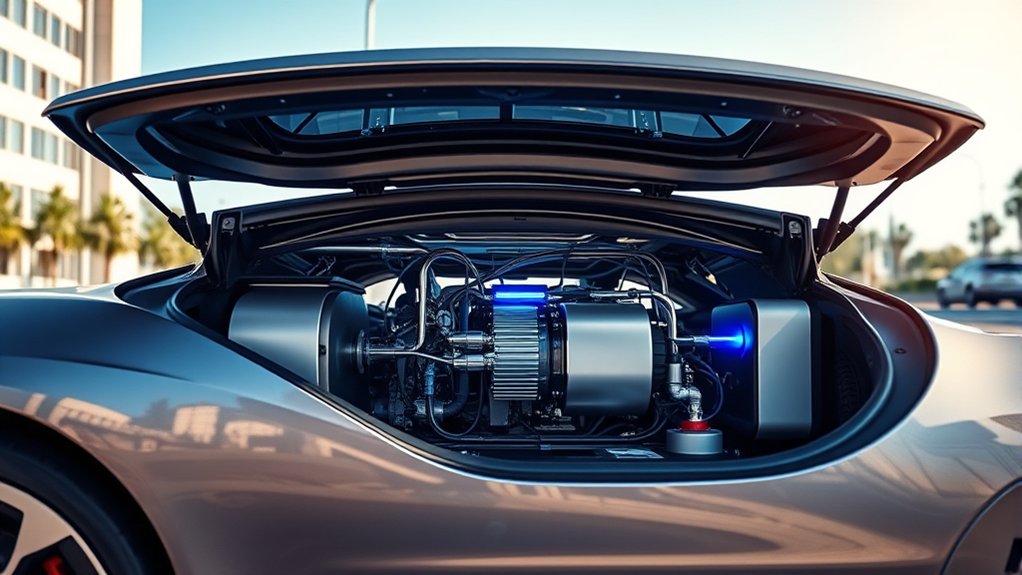
How Do Hydrogen Fuel Cell Vehicles Work
You power your hydrogen fuel cell vehicle by converting hydrogen into electricity through an electrochemical reaction. Hydrogen fuel cell vehicles utilize this process to generate clean energy efficiently. Hydrogen enters the anode where a catalyst splits it into protons and electrons.
Protons pass through the electrolyte membrane while electrons travel through an external circuit, generating electricity that drives the electric motor.
Oxygen at the cathode combines with protons and electrons, producing only water vapor as a byproduct.
This efficient, zero-emission process also involves high-pressure hydrogen storage and rapid refueling. The technology’s potential and challenges shape ongoing innovations.
What Is a Hydrogen Fuel Cell and How Does It Work?
How exactly does a hydrogen fuel cell generate power? It converts chemical energy from hydrogen into electricity through an electrochemical reaction. You supply hydrogen gas to the anode, where a catalyst splits it into protons and electrons.
The protons pass through the electrolyte membrane, while electrons flow through an external circuit, creating electricity. At the cathode, oxygen combines with these protons and electrons, forming water as the only byproduct.
This process exemplifies eco design by producing zero harmful emissions during operation. However, the hype vs reality debate arises because fuel cells require pure hydrogen, which often involves energy-intensive production methods. Understanding this distinction helps you appreciate the technology’s potential and current limitations without overstating its environmental benefits.
How Hydrogen Fuel Cell Vehicles Generate Electricity
A hydrogen fuel cell vehicle generates electricity by integrating the fuel cell stack with its powertrain system. When hydrogen gas enters the anode side of the fuel cell, it undergoes an electrochemical reaction, splitting into protons and electrons.
The protons pass through the electrolyte membrane, while the electrons travel via an external circuit, creating an electric current that powers the electric motor. Battery systems complement this setup by storing excess energy from regenerative braking and assisting during peak power demands, enhancing overall efficiency.
This synergy optimizes vehicle ergonomics by reducing weight and improving space utilization within the chassis. The seamless coordination between the fuel cell stack, battery systems, and powertrain ensures a continuous, reliable electricity supply, enabling smooth acceleration and consistent vehicle performance without compromising driver comfort or control.
Hydrogen Fuel Cell Storage and Refueling Process
Where does the hydrogen that powers fuel cell vehicles come from, and how do you safely store and refuel it? Hydrogen is produced through methods like electrolysis or natural gas reforming, then compressed to high pressures, often 700 bar, for onboard storage.
Your vehicle’s tanks use advanced composite materials designed to withstand extreme pressures, ensuring storage safety by preventing leaks and managing thermal expansion. Refueling logistics require specialized stations equipped with high-pressure dispensers and cooling systems to safely transfer hydrogen into your tank within minutes.
Precise pressure and temperature controls during refueling prevent risks like over-pressurization or embrittlement. Additionally, sensors monitor tank integrity continuously. This seamless integration of storage safety and refueling logistics enables you to handle hydrogen fuel efficiently without compromising performance or safety standards.
Comparing Driving Range and Refueling Times
When comparing hydrogen fuel cell vehicles to conventional electric or gasoline-powered cars, you’ll find their driving range and refueling times stand out as critical performance factors. In terms of range comparison, hydrogen fuel cell vehicles typically offer between 300 to 400 miles per fill, closely matching or exceeding many gasoline vehicles. This is due to the high energy density of compressed hydrogen stored onboard.
Regarding refueling speed, hydrogen vehicles can replenish their tanks in about 3 to 5 minutes, significantly faster than battery electric vehicles, which often require 30 minutes or more for a substantial charge. This rapid refueling speed enhances convenience and practicality for long-distance travel. Understanding these metrics helps you evaluate hydrogen fuel cell vehicles’ potential as efficient alternatives in daily use and extended trips.
Environmental Advantages of Hydrogen Fuel Cell Vehicles
You’ll find that hydrogen fuel cell vehicles produce zero tailpipe emissions, releasing only water vapor during operation. They also enable seamless integration with renewable energy sources by using green hydrogen generated from solar or wind power. This combination considerably reduces your overall greenhouse gas footprint compared to conventional combustion engines.
Zero Tailpipe Emissions
Although hydrogen fuel cell vehicles still require energy input, they produce zero tailpipe emissions, making them an essential technology for reducing urban air pollution. Unlike internal combustion engines, you won’t see exhaust gases such as nitrogen oxides, particulate matter, or carbon dioxide emitted directly from the vehicle.
The only byproduct released from the tailpipe is pure water vapor, which poses no environmental harm. It’s important not to confuse this with unrelated topics like fuel production emissions or energy sources, which are separate issues and often lead to off topic discussion.
When evaluating environmental impact, focus on the vehicle’s direct emissions, where hydrogen fuel cells clearly outperform traditional vehicles by eliminating local pollutants and improving air quality in densely populated areas, benefiting public health and urban ecosystems alike.
Renewable Energy Integration
A key environmental advantage of hydrogen fuel cell vehicles lies in their ability to integrate seamlessly with renewable energy sources. You can produce hydrogen via electrolysis powered by solar, wind, or hydroelectric energy, enabling a clean, sustainable fuel cycle.
This approach reduces reliance on fossil fuels and supports grid stabilization by absorbing excess renewable energy during peak production. As a user, you benefit from policy incentives designed to promote renewable hydrogen infrastructure, which lower costs and expand refueling options.
These incentives often include tax credits, grants, and subsidies that accelerate market adoption. By leveraging renewable energy integration, you help create a low-carbon transportation ecosystem that complements fluctuating renewable power generation, advancing both energy security and environmental sustainability without compromising vehicle performance or convenience.
Reduced Greenhouse Gas Impact
Many studies demonstrate that hydrogen fuel cell vehicles markedly cut greenhouse gas emissions compared to conventional internal combustion engines. Thanks to their innovative design, these vehicles convert hydrogen into electricity through electrochemical reactions, emitting only water vapor as a byproduct.
When hydrogen is produced via renewable energy sources, the entire lifecycle emissions drop significantly, offering a cleaner alternative to fossil fuels. As you consider consumer adoption, it’s crucial to recognize that widespread use depends on optimizing hydrogen production, storage, and distribution infrastructures.
Challenges and Limitations of Hydrogen Fuel Cell Technology
You’ll face significant challenges with hydrogen infrastructure development, as creating widespread refueling stations requires substantial investment and coordination. Additionally, hydrogen storage remains a technical hurdle due to its low volumetric energy density and the need for high-pressure or cryogenic containment systems. These factors limit the current practicality and scalability of fuel cell vehicle deployment.
Infrastructure Development Challenges
Where do the biggest hurdles lie when expanding hydrogen fuel cell vehicle infrastructure? You’ll face complex challenges tied to the slow pace of policy updates and the presence of unrelated regulations that inadvertently impede progress.
Regulatory frameworks often lag behind technological advances, creating uncertainty for developers and investors. You must navigate zoning laws, safety codes, and environmental standards that weren’t designed for hydrogen facilities, which complicates site approval and construction.
Additionally, the lack of standardized codes for hydrogen refueling stations limits scalability and interoperability. Coordinating among multiple agencies to align policies is essential but time-consuming.
Without streamlined, updated policies tailored specifically to hydrogen infrastructure, you’ll encounter delays and increased costs, hindering widespread adoption despite the technology’s potential benefits.
Hydrogen Storage Limitations
Overcoming infrastructure challenges is only part of the equation; hydrogen storage presents distinct technical obstacles that directly impact fuel cell vehicle performance and feasibility. You’ll face issues like the need for high-pressure tanks, typically at 700 bar, which require advanced materials to maintain structural integrity while minimizing weight.
These tanks must also meet strict aviation safety standards to prevent catastrophic failure under extreme conditions. Additionally, hydrogen’s low volumetric energy density complicates stove compatibility, as conventional appliances aren’t designed to handle hydrogen’s different combustion properties.
You’ll need specialized storage solutions that balance capacity, weight, and safety without compromising vehicle range or performance. Until these limitations are addressed, hydrogen fuel cell vehicles will struggle to achieve widespread adoption despite their environmental advantages.
Future Trends for Hydrogen Fuel Cell Vehicles
As hydrogen fuel cell technology advances, manufacturers and researchers are focusing on enhancing energy density, reducing costs, and expanding infrastructure to support widespread adoption. You’ll see future policy playing a pivotal role by incentivizing hydrogen production, establishing safety standards, and funding refueling networks.
These policies aim to alleviate current barriers, accelerating consumer adoption by improving vehicle affordability and fueling convenience. Technological innovations target higher efficiency membranes and durable catalysts, which will lower production expenses and improve system longevity.
Additionally, you can expect integration with renewable energy sources to produce green hydrogen, making fuel cells more sustainable. As infrastructure matures and economies of scale improve, hydrogen fuel cell vehicles will become a more viable alternative, especially for heavy-duty and long-range applications, reshaping the future of clean transportation.
Frequently Asked Questions
How Much Do Hydrogen Fuel Cell Vehicles Typically Cost?
You’ll typically pay between $50,000 and $70,000 for hydrogen fuel cell vehicles, reflecting limited hydrogen supply and fueling infrastructure. These costs include advanced fuel cell stacks and the need for specialized materials to handle hydrogen’s properties safely.
Are There Government Incentives for Buying Hydrogen Fuel Cell Cars?
Wondering if government incentives make buying hydrogen fuel cell cars easier? Yes, you’ll find tax credits, rebates, and grants designed to offset costs, encouraging adoption by reducing upfront expenses and supporting hydrogen infrastructure development nationwide.
What Maintenance Is Required for Hydrogen Fuel Cell Vehicles?
You’ll perform maintenance basics like checking hydrogen tanks, fuel cell systems, and coolant levels regularly. These tasks ensure long term durability by preventing leaks, corrosion, and degradation, keeping your vehicle efficient and safe over time.
Can Hydrogen Fuel Cell Vehicles Be Used in Extreme Weather Conditions?
Of course, you’ll love driving your hydrogen fuel cell vehicle in extreme weather. Just kidding. They handle cold and heat well, but you must follow strict safety considerations to protect fuel cells and ensure reliable performance under harsh conditions.
How Safe Are Hydrogen Fuel Cell Vehicles in Accidents?
You’ll find hydrogen fuel cell vehicles are very safe in accidents. Safety misconceptions often exaggerate risks, but their robust tanks and automatic shutoff valves minimize hazards.
First responders receive specialized training for proper accident response protocols.
Conclusion
Hydrogen fuel cell vehicles operate like intricate puzzles, where hydrogen and oxygen combine to generate electricity efficiently. You’ll appreciate their quick refueling and extended driving range, rivaling traditional cars. However, challenges like storage and infrastructure remain.
Despite these hurdles, the environmental benefits and ongoing advancements make hydrogen fuel cells a promising solution for sustainable transportation. As technology evolves, you’ll likely see these vehicles becoming a practical, cleaner alternative on our roads. Hydrogen fuel cell vehicles represent a key step toward a greener future in mobility.