How Do You Change a Fuel Injector
To change a fuel injector, start by confirming faulty performance through symptoms like rough idling or misfires. Testing the fuel pressure can also help diagnose the issue.
Gather essential tools such as a fuel injector puller, socket set, and torque wrench. With the engine off and the fuel system pressure relieved, disconnect the injector’s electrical connector and remove any retaining clips.
Gently extract the old injector, taking care not to damage surrounding components. Lightly lubricate the new injector and carefully seat it into place, then secure it with the retaining clips and reconnect the electrical connector.
After installation, test the fuel injector for proper function to ensure the repair was successful. Additional steps can provide further detail on this entire process.
Signs and Tests to Identify a Faulty Fuel Injector
How can you tell if a fuel injector is faulty? Begin by inspecting the engine’s performance for signs like rough idling, misfires, or poor acceleration.
Start by checking engine performance for rough idling, misfires, or poor acceleration to identify faulty fuel injectors.
Next, verify the fuel pressure using a gauge; inconsistent pressure may indicate injector blockage or leakage.
Check for faulty wiring by examining the injector’s electrical connectors for corrosion, fraying, or loose connections. These can disrupt the injector’s signal and cause malfunction.
Perform a resistance test on the injector coil with a multimeter; resistance readings outside manufacturer specifications suggest internal failure.
Additionally, conduct a fuel injector balance test to measure each injector’s flow rate; significant deviations confirm injector issues.
These methodical diagnostics help isolate a faulty fuel injector before proceeding with replacement.
Tools You’ll Need to Change a Fuel Injector
To change a fuel injector efficiently, you’ll need a specific set of tools designed for automotive fuel system work. While incorrect tire pressures and faulty spark plugs affect engine performance, addressing fuel injector issues demands precision tools to avoid damage and ensure proper installation.
Here are the essential tools you’ll need:
- Fuel injector puller or removal tool
- Socket set with extension bars
- Torque wrench for accurate tightening
- Fuel line disconnect tool
- Clean lint-free cloths for sealing surfaces
Each tool plays a critical role in preventing damage to delicate components and ensuring the fuel injector seats correctly. Using improper tools can lead to leaks or engine misfires, compounding issues already caused by faulty spark plugs or incorrect tire pressures. Prepare carefully before proceeding to ensure a safe, effective repair.
How to Remove the Old Fuel Injector
When you start removing the old fuel injector, make sure the engine is cool and the battery is disconnected to prevent electrical hazards. Begin by relieving the fuel system pressure to avoid fuel spray.
Disconnect the electrical connector from the injector carefully to prevent damage. Next, remove any retaining clips or bolts securing the injector to the rail.
Gently pull the injector out, twisting slightly if it feels stuck, but avoid forcing it to prevent damage. Inspect the injector port for debris or damage before removal, ensuring no contamination from unrelated topic areas like random discussion about other engine parts.
Keep components organized for reassembly. This methodical approach ensures you remove the old fuel injector safely and efficiently, setting the stage for proper installation of the new injector without complications.
How to Install and Secure the New Fuel Injector
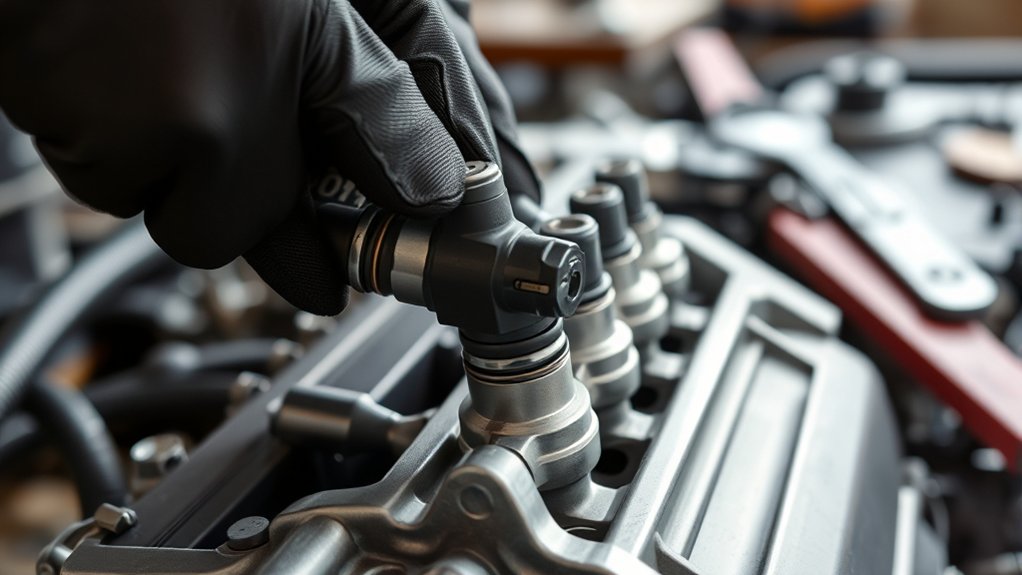
After carefully removing the old fuel injector and ensuring the injector port is clean, you’re ready to install the new unit. Start by lightly lubricating the O-rings with clean engine oil to ensure a proper seal and prevent damage during insertion.
Begin installation by lubricating the new injector’s O-rings with clean engine oil for a secure, damage-free fit.
Then, align the injector correctly with the injector port to avoid misfit or leaks. This is crucial for idea1, ensuring fuel delivery efficiency. Gently push the injector into place until it seats firmly.
Secure the injector by fastening the retaining clip or bolts, depending on your vehicle model, which is essential for idea2 to prevent movement. Finally, reconnect the electrical connector to restore fuel system communication.
- Lubricate O-rings with engine oil
- Align injector precisely with port
- Insert injector gently but firmly
- Fasten retaining clip or bolts securely
- Reconnect electrical connector carefully
How to Test Your Fuel Injector After Replacement
How can you confirm that your new fuel injector is functioning correctly? Start with injector testing by isolating the fuel system to prevent leaks or pressure drops. Disconnect the fuel pump relay and relieve system pressure before proceeding.
Use a multimeter to check the injector’s resistance against manufacturer specs. Next, perform a fuel spray test to ensure the injector atomizes fuel properly.
| Test Type | Expected Result |
|---|---|
| Resistance Check | 12-16 ohms (varies by model) |
| Fuel Spray Pattern | Fine mist, even spray |
| Leak Test | No fuel leakage |
| Electrical Signal | Pulsing voltage present |
Follow these steps methodically to verify injector performance and avoid system issues.
Common Fuel Injector Replacement Problems and How to Avoid Them
You’ll need to accurately identify faulty injectors before starting the replacement process to avoid unnecessary work. Use proper cleaning techniques to prevent contamination and ensure optimal performance. Finally, make sure you install each injector correctly to maintain system integrity and prevent leaks.
Identifying Faulty Injectors
Why does a fuel injector fail, and how can you spot the signs early? Identifying faulty injectors is critical for maintaining efficient fuel delivery and engine performance. Common causes include clogging, electrical faults, and wear.
To detect issues early, watch for:
- Engine misfires or rough idling
- Decreased fuel efficiency
- Fuel odor near the engine
- Increased emissions or failed emissions tests
- Unusual engine noises or hesitation during acceleration
Proper Cleaning Techniques
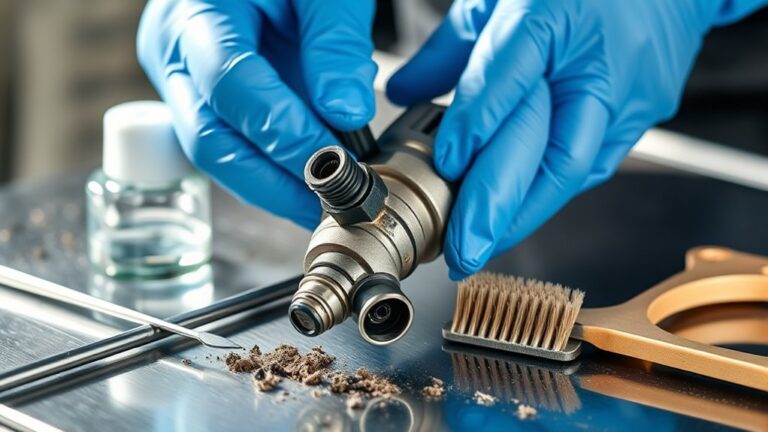
When cleaning fuel injectors, what methods ensure thorough removal of deposits without causing damage? You should adhere to strict cleaning schedules to prevent buildup and maintain performance.
Use solvents compatible with the injector materials; incompatible solvents can degrade seals or internal components. Ultrasonic cleaning combined with solvent soaking is effective for stubborn deposits. Always verify solvent compatibility with manufacturer guidelines.
| Step | Action |
|---|---|
| 1 | Remove injector carefully |
| 2 | Inspect for physical damage |
| 3 | Soak in compatible solvent |
| 4 | Apply ultrasonic cleaning |
| 5 | Dry and re-inspect thoroughly |
Following this methodical approach minimizes common problems like clogging or seal damage during fuel injector maintenance.
Ensuring Correct Installation
How do you guarantee a fuel injector fits and functions correctly after replacement? Focus on precise alignment and secure connections, avoiding common pitfalls. While unrelated topic or filler notion might distract, maintain strict attention to the injector’s seating and electrical hookups.
Avoid treating this as a placeholder concept; instead, apply methodical steps.
- Verify O-ring condition and proper lubrication to prevent leaks.
- Ensure the injector is fully seated to avoid misfires.
- Connect electrical plugs firmly without forcing to prevent damage.
- Double-check fuel rail mounting torque for secure fitment.
- Test for leaks and proper spray pattern before reassembly.
Frequently Asked Questions
How Often Should Fuel Injectors Be Replaced?
You should replace fuel injectors every 50,000 to 100,000 miles, depending on injector maintenance and fuel system chemistry. Regular cleaning ensures optimum performance, but deterioration from contaminants or wear demands timely replacement to avoid engine issues.
Can Bad Fuel Damage Fuel Injectors?
Over 30% of injector damage cases stem from bad fuel. When you use poor-quality fuel, contaminants cause injector damage.
Using fuel additives can prevent buildup, ensuring performance gains by maintaining injector efficiency and preventing costly repairs.
What Are the Benefits of Upgrading Fuel Injectors?
Upgrading fuel injectors improves fuel atomization, boosting combustion efficiency. This enhances fuel economy and engine performance.
Use discussion ideas to evaluate injector flow rates and spray patterns, ensuring precise tuning for optimal power and reduced emissions.
Are Fuel Injector Cleaners Effective?
Yes, fuel injector cleaners can be effective if you use high fuel quality. They reduce deposits, improving performance and lowering maintenance cost.
However, consistent use and proper diagnosis ensure optimal benefits without masking underlying issues.
Can I Drive With a Faulty Fuel Injector?
You can drive with a faulty fuel injector, but expect drivability concerns like misfires or poor performance. Prioritize maintenance planning to avoid engine damage, and schedule repairs promptly to maintain efficiency and prevent costly issues.
Conclusion
Now that you’ve mastered changing a fuel injector, you hold the key to smoother engine performance. Like a surgeon with a scalpel, your careful removal, installation, and testing ensure precision and reliability. Remember, using the right tools and double-checking connections prevents common pitfalls.
Follow these steps methodically, and you’ll keep your engine running efficiently, avoiding costly repairs down the road. Your hands-on approach makes complex maintenance manageable and effective.
By mastering how to change a fuel injector, you ensure your engine stays in top condition for the long haul.