How to Measure a Tonneau Cover
To measure a tonneau cover accurately, you’ll need a steel tape measure and a notepad to record exact dimensions. Start by measuring the truck bed length from the inside edge near the cab to the tailgate, ensuring the tape is straight and taut.
Next, measure the width between the inside rails, taking into account any bed liner thickness. Don’t forget to check the side rail heights as well as wheel well clearances for a precise fit.
Finally, confirm your measurements match the manufacturer’s specifications to avoid installation issues. Following detailed guidance can help you perfect these steps and ensure a proper fit.
Gather Tools: Tape Measure and More for Tonneau Covers
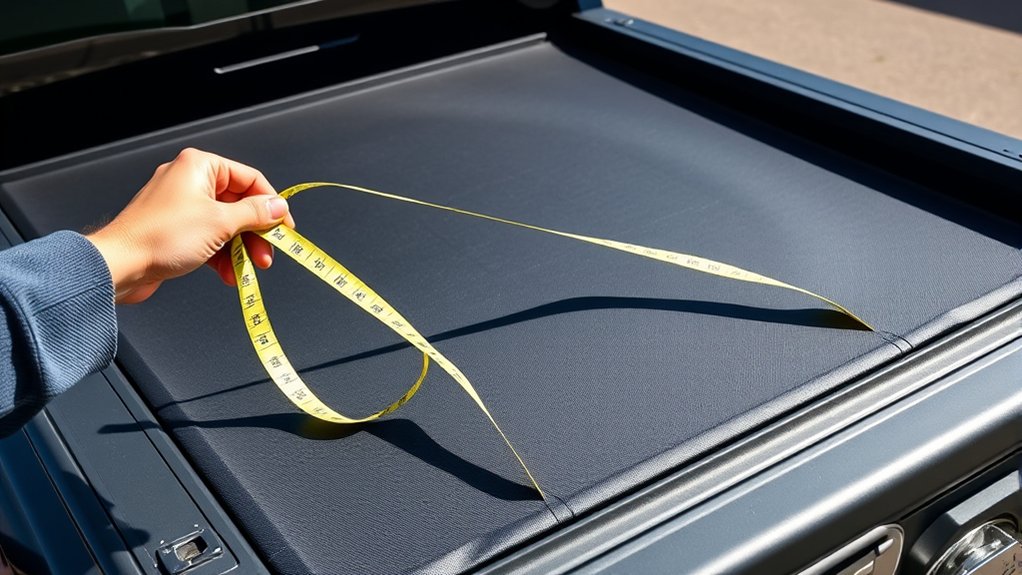
What tools do you need to measure a tonneau cover accurately? First, gather tools essential for precise measurement. You’ll require a reliable tape measure, preferably steel, for durability and accuracy.
Accurate tonneau cover measurement starts with a durable, reliable steel tape measure for precise results.
A notepad and pen are useful to record dimensions immediately, preventing errors. Consider a straight edge or ruler for verifying flat surfaces. A ladder may be necessary to reach and measure difficult areas on larger trucks.
Understanding measurement basics is crucial: always measure in inches or centimeters consistently, and ensure the tape is taut and straight. Avoid flexible or stretched tape that can distort results.
Preparing these tools before starting ensures efficiency and precision, reducing the risk of ordering an incorrect tonneau cover size. This preparation stage sets the foundation for accurate measurement and successful installation.
Measure Length of Your Truck Bed for a Tonneau Cover
Start by locating the exact edges of your truck bed to ensure precise measurement points. Use a tape measure carefully, stretching it from the inside edge near the cab all the way to the tailgate. Record this length accurately, as it determines the proper size for your tonneau cover.
Identify Truck Bed Edges
How do you accurately determine the length of your truck bed for a tonneau cover? Start by identifying bed corners, which serve as the primary reference points for measurement. Locate the front edge of the bed, where it meets the cab, and the rear edge, typically the tailgate’s inner surface.
Pay close attention to the bed rails, as precise positioning of the cover depends on these boundaries. While identifying these edges, also locate tie downs along the bed sides; their placement can affect cover fit and mounting options.
Tie downs often mark structural points that influence the bed’s usable length. By clearly recognizing these critical edges and tie down locations, you establish a reliable framework to ensure your tonneau cover measurement is exact and tailored to your truck’s specifications.
Use Measuring Tape Accurately
Where exactly should you place the measuring tape to get an accurate length of your truck bed? Position the tape at the inner edge of the bulkhead, ensuring it aligns flush with the bed’s sidewalls.
Extend the tape straight to the inner edge of the tailgate opening without slack or bends. To maintain measurement accuracy, verify your tape measure’s calibration before use; an uncalibrated tool can lead to errors affecting fit.
Hold the tape firmly and read measurements at eye level to avoid parallax distortion. Repeat the process twice to confirm consistency. Using a rigid tape measure rather than a flexible one reduces deviation.
This precise approach guarantees your tonneau cover will fit snugly, avoiding gaps or overlaps caused by inaccurate measurements.
Record Length From Tailgate
When recording the length of your truck bed from the tailgate, you’ll want to position your measuring tape carefully to capture the exact distance. Start by pulling the tape from the inside edge of the tailgate to the bulkhead or the end of the truck bed.
Ensure the tape lies flat without bends or slack to avoid measurement errors. This precise measurement reflects the design reasoning behind tonneau covers, which must fit snugly to protect your cargo.
Find Truck Bed Width for Your Tonneau Cover
To find the truck bed width for your tonneau cover, measure the inside distance between the truck rails at the widest point. If your truck has a bed liner, include its thickness in your measurement for accuracy. This guarantees your tonneau cover fits snugly without gaps or overlaps.
Measure Inside Truck Rails
How do you accurately determine the truck bed width for your tonneau cover? Start by measuring the inside rails, the metal edges running along the top sides of your truck bed. Use a tape measure to span the distance from the inside edge of one rail to the inside edge of the opposite rail.
This measurement reflects the usable width for your tonneau cover. Pay close attention to rails clearance, the space between the rails and any obstructions, like tie-downs or bed caps, since inadequate clearance can affect fit and installation.
Always measure at multiple points along the rails to confirm consistency, as some truck beds taper slightly. Recording the narrowest inside rails measurement ensures your tonneau cover will fit securely without gaps or interference.
Account For Bed Liner
After measuring the inside truck rails, you’ll need to adjust for any bed liner present. Bed liners add thickness to the truck bed walls, which can affect the fit of your tonneau cover.
To ensure accurate measurements, measure the distance between the bed liners rather than the metal rails. This step is crucial for bed liner compatibility, as some covers are designed to fit over or inside bed liners.
Failing to account for the liner’s thickness can compromise cargo protection by allowing gaps or improper sealing. When selecting your tonneau cover, verify that its specifications accommodate the added width from the bed liner.
This ensures a secure fit and maximizes protection for your cargo against weather and theft.
Check Side Rail Height for Your Tonneau Cover
Why does the side rail height matter when measuring for a tonneau cover? The side rail determines the mounting surface and affects the cover’s fit and function. You need to measure the top clearance from the side rail to ensure the cover sits flush and seals properly, preventing water or debris entry.
Use a tape measure to record the side rail height at multiple points along the bed. Here’s a quick reference:
| Location | Side Rail Height (inches) | Top Clearance (inches) |
|---|---|---|
| Front | 5.5 | 1.0 |
| Middle | 5.7 | 1.1 |
| Rear | 5.6 | 1.0 |
| Left Side | 5.6 | 1.0 |
| Right Side | 5.5 | 1.0 |
Accurate side rail and clearance measurements ensure your tonneau cover fits securely.
Measure Around Wheel Wells and Identify Bed Style
Where exactly do you need to measure around the wheel wells when preparing for a tonneau cover installation? Focus on the interior width at the narrowest point between the wheel wells, as this determines the tire spacing and the cover’s fit. Use a tape measure to capture the exact distance from inner edge to inner edge of each wheel well, ensuring you account for any wheel clearance needed to avoid contact with the cover.
Next, identify your truck bed style, whether it’s a step side, fleet side, or sport side, because this affects the shape and dimensions around the wheel wells. Accurate measurements here ensure the tonneau cover conforms properly to your bed’s contours, preventing gaps and ensuring a secure, aerodynamic fit.
Compare Your Measurements to Tonneau Cover Specs
With the interior width between the wheel wells and your truck bed style clearly noted, you can now match these measurements to the specifications provided by tonneau cover manufacturers. Begin by reviewing the product dimensions carefully, ensuring your recorded measurements align with the cover’s width, length, and fit type.
Measure interior width and bed style precisely to match tonneau cover dimensions for an optimal fit.
Prioritize measurement accuracy here; even slight deviations can affect seal integrity and overall functionality. Use ergonomic tools designed for truck bed measurements to improve precision and ease during the process.
Avoid relying solely on approximate figures or general size categories, as these can lead to ill-fitting covers. Confirm compatibility by cross-referencing your data with manufacturer charts or online configurators.
This systematic comparison guarantees a proper fit, maximizing coverage and durability for your tonneau cover.
Frequently Asked Questions
Can I Install a Tonneau Cover Myself Without Professional Help?
Yes, you can handle installing a tonneau cover yourself if you verify its DIY compatibility. Follow precise installation instructions, use proper tools, and double-check measurements to ensure a secure, professional-quality fit without professional help.
What Materials Are Tonneau Covers Typically Made From?
You’ll find tonneau covers typically crafted from materials like vinyl, aluminum, or fiberglass. When discussing materials, manufacturers rigorously test durability, ensuring your cover resists weather, wear, and tear while maintaining a sleek, protective finish.
How Do Tonneau Covers Affect Fuel Efficiency?
Tonneau covers improve your fuel efficiency by reducing wind resistance and enhancing indirect aerodynamics. They streamline airflow over your truck bed, minimizing drag and helping your vehicle consume less fuel during highway driving.
Are Tonneau Covers Weatherproof and UV Resistant?
Wondering if tonneau covers truly stand up to weatherproof testing and UV durability? Yes, most high-quality covers resist rain, snow, and harmful UV rays, ensuring long-lasting protection and preventing material degradation over time.
Can Tonneau Covers Be Locked for Security Purposes?
Yes, many tonneau covers can be locked for security purposes. You’ll find models with built-in locking mechanisms that enhance security.
With proper installation, often DIY-friendly, you can secure your truck bed effectively against theft.
Conclusion
Measuring your tonneau cover is like tailoring a suit—it needs to fit perfectly for the best performance. Just as a 1-inch misfit ruins a jacket’s look, even a small measurement error can cause gaps or poor sealing on your truck bed.
By carefully following each step, from length to wheel wells, you ensure a snug, secure cover that protects your cargo and boosts your truck’s efficiency. Precision here pays off every mile.
Accurate measurements are key to getting the right fit. Taking the time to measure properly guarantees your tonneau cover will perform as intended, providing optimal protection and durability for your truck.