Does a Tonneau Cover Improve Gas Mileage
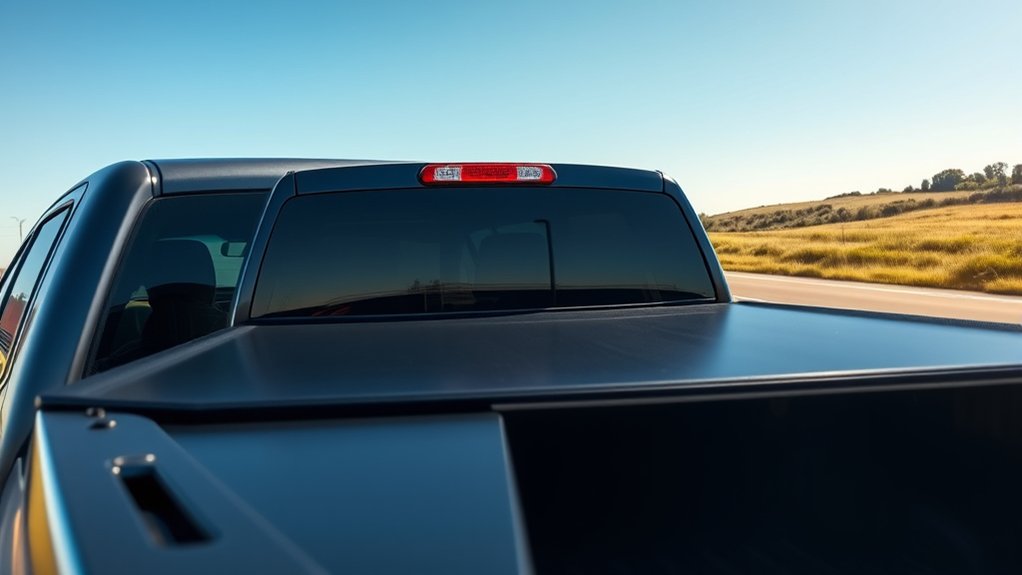
Yes, using a tonneau cover can improve your truck’s gas mileage by reducing aerodynamic drag. A hard cover with tight seals and flush edges smooths airflow over the bed, minimizing turbulence and low-pressure zones, especially at highway speeds above 50 mph.
Proper installation and fit are essential to maximize these benefits, while soft or poorly fitted covers offer less consistent savings. If you want to understand which designs perform best and installation tips, there’s more to explore.
How a Tonneau Cover Affects Your Truck’s Aerodynamics
Although it might seem like a minor accessory, a tonneau cover considerably influences your truck’s aerodynamics by reducing air drag over the open bed. When your truck bed is exposed, turbulent wind flow creates a low-pressure zone that increases aero drag, forcing your engine to work harder.
Installing a tonneau cover creates a smooth, flat surface that streamlines wind flow across the truck’s profile, minimizing turbulence and reducing drag. This reduction in aero drag improves overall aerodynamic efficiency, especially at highway speeds where wind resistance is a major factor.
Scientific Studies on Tonneau Covers and Fuel Efficiency
How much can a tonneau cover truly impact your truck’s fuel efficiency? Scientific studies utilizing aerodynamic testing have shown measurable, though modest, improvements. Researchers focus on reducing drag to enhance fuel efficiency by covering the open truck bed.
Scientific testing reveals tonneau covers modestly reduce drag to improve truck fuel efficiency.
Key findings include:
- Tonneau covers decrease aerodynamic drag by smoothing airflow.
- Fuel savings range from 2% to 8%, depending on driving conditions.
- Hard covers provide better aerodynamic benefits than soft ones.
- Gains are more noticeable at highway speeds (above 50 mph).
- Results vary based on truck model and cover design.
These studies demonstrate that tonneau covers contribute to improved fuel efficiency through aerodynamic optimization, but the exact benefits depend on multiple variables. You can expect some fuel economy gains, especially on long highway drives, supported by rigorous aerodynamic testing protocols.
Limitations of Tonneau Covers for Fuel Economy
Thus, while tonneau covers can reduce aerodynamic drag and improve fuel efficiency, their impact has inherent limitations you should consider. The degree of fuel economy improvement depends heavily on the truck’s design, driving conditions, and speed.
At lower speeds, aerodynamic drag plays a minor role, so tonneau covers provide minimal benefit. Additionally, the material and fit of the tonneau cover affect effectiveness; poorly sealed or bulky covers may increase drag, negating fuel savings.
You should also note that tonneau covers only address airflow over the truck bed, not other major fuel consumption factors like engine efficiency or vehicle weight. Therefore, while tonneau covers can contribute to better fuel economy, you shouldn’t expect them to dramatically transform your overall fuel consumption.
Real-World Tonneau Cover Fuel Savings From Truck Owners
Curious about the actual fuel savings a tonneau cover can deliver? Truck owners report varying improvements depending on factors like driving behavior and payload impact. Real-world data suggests modest gains rather than dramatic changes. Your mileage efficiency is influenced by:
Truck owners see modest fuel savings with tonneau covers, influenced by driving habits and payload weight.
- Consistent highway speeds amplify aerodynamic benefits
- Heavier payloads reduce relative fuel savings from covers
- Aggressive acceleration diminishes potential improvements
- Frequent stop-and-go driving limits aerodynamic advantage
- Proper installation ensures optimal airflow management
Which Tonneau Cover Saves the Most Gas?
Understanding the real-world fuel savings from tonneau covers sets the stage for evaluating which specific type offers the greatest aerodynamic advantage. Among hard, soft, and retractable covers, hard tonneau covers typically provide the most significant drag reduction due to their rigid, smooth surfaces that minimize turbulent airflow over the truck bed.
This improved airflow not only decreases aerodynamic drag but also contributes to notable noise reduction, enhancing driving comfort. Soft covers, while lighter and easier to install, generally offer less consistent drag reduction because their flexible materials can flap at high speeds, increasing noise and turbulence.
Retractable covers fall between these two, balancing moderate drag reduction with convenience. If your primary goal is maximizing gas mileage, selecting a hard tonneau cover will most effectively reduce drag and noise, thereby improving fuel efficiency.
Installing Tonneau Covers for Best Aerodynamics
How you install a tonneau cover directly impacts its aerodynamic effectiveness and, consequently, your truck’s fuel efficiency. Proper installation minimizes air turbulence, reducing drag and improving mileage. Focus on these critical factors:
- Ensure the cover fits snugly without gaps to prevent air leakage.
- Align the cover flush with the truck bed’s edges for smooth airflow.
- Secure all latches firmly to avoid vibrations that disrupt aerodynamics.
- Maintain a flat, even surface on the cover to streamline airflow.
- Avoid over-tightening, which can warp the cover and create drag.
These two word discussion ideas emphasize precision and fit, forming a subtopic unrelated to other H2s. By meticulously installing your tonneau cover, you optimize aerodynamic benefits, turning installation technique into a key variable for fuel economy enhancement.
Additional Methods to Improve Pickup Truck Gas Mileage
What other strategies can you employ to boost your pickup truck’s fuel efficiency beyond installing a tonneau cover? Optimizing your driving habits and maintaining vehicle components play essential roles.
Adjusting tire pressure, reducing excess weight, and minimizing idling directly improve fuel economy. Also, choosing pickup features that favor aerodynamic design and lighter materials can enhance efficiency.
| Method | Impact on Fuel Economy |
|---|---|
| Proper Tire Inflation | Reduces rolling resistance |
| Weight Reduction | Lowers energy required |
| Engine Tuning | Optimizes combustion efficiency |
| Aerodynamic Pickup Features | Decreases drag coefficient |
How to Choose the Right Tonneau Cover for Fuel Savings
You need to consider both the material type and the cover’s fit when aiming for fuel savings. Hard materials like fiberglass offer better aerodynamics but may add weight, while soft covers reduce drag with less bulk. Ensuring a tight, seamless fit minimizes air turbulence, directly impacting your truck’s gas mileage.
Material Types and Benefits
Which material you select for your tonneau cover directly impacts its aerodynamic efficiency and, consequently, your vehicle’s fuel consumption. Understanding the material types and benefits comparison is crucial when aiming for optimal fuel savings.
Each material offers distinct performance characteristics affecting weight, durability, and wind resistance.
Consider these key material options:
- Vinyl: Lightweight, flexible, and affordable; reduces drag moderately.
- Fiberglass: Rigid, smooth surface improves airflow; higher upfront cost.
- Aluminum: Durable and lightweight; resists corrosion, enhancing longevity.
- ABS Plastic: Impact-resistant and low maintenance; balances weight and strength.
- Canvas: Economical but less aerodynamic; suitable for short-term use.
Fit and Aerodynamics
How closely a tonneau cover fits your truck bed directly affects its aerodynamic performance and fuel efficiency. A snug, seamless fit minimizes air turbulence over the bed, reducing drag and improving gas mileage.
When selecting a cover, avoid models that require extensive modification or leave gaps, as these disrupt airflow and negate fuel savings. Remember, discussing unrelated topics like interior aesthetics or non-aerodynamic features is off topic here; your focus should be on fit precision.
Also, steer clear of covers that don’t conform to your truck’s dimensions, since poor fit increases drag. Prioritize covers engineered for aerodynamic efficiency with tight seals and flush edges. This approach ensures you maximize fuel savings by optimizing airflow rather than getting distracted by off topic considerations.
Frequently Asked Questions
Do Tonneau Covers Protect Cargo From Weather Damage?
Yes, tonneau covers reduce weather impact by shielding your cargo from rain, snow, and UV exposure. They create a protective barrier, enhancing cargo protection and minimizing potential damage caused by environmental elements during transport or storage.
Can Tonneau Covers Improve Truck Bed Security?
When it comes to security benefits, a tonneau cover definitely adds a layer of protection, but don’t count your chickens before they hatch, as security concerns remain. Locks can be bypassed, so it’s no foolproof solution.
Are Tonneau Covers Easy to Remove and Reinstall?
You’ll find tonneau covers offer easy install features and fast removal mechanisms, designed for tool-free operation or minimal tools. This precision engineering guarantees you can quickly secure or access your truck bed without hassle or delay.
Do Different Materials Affect Tonneau Cover Durability?
About 70% of tonneau covers use vinyl or aluminum, showing different materials impact durability notably. Vinyl offers flexibility but less resistance, while aluminum excels in durability comparison, providing superior protection against weather and wear for your truck bed.
Will a Tonneau Cover Affect Truck Bed Storage Capacity?
You won’t lose storage capacity with a tonneau cover since it sits flush over your truck bed. It adds weather protection without reducing space, letting you securely store cargo while shielding it from rain, dust, and debris.
Conclusion
If you want to turn your truck into a fuel-saving machine, a tonneau cover isn’t just an accessory—it’s a game-changer. By drastically cutting aerodynamic drag, it can squeeze extra miles out of every gallon like magic.
While it won’t single-handedly solve gas prices, combining the right cover with precise installation and other efficiency tweaks will make your truck’s gas mileage soar beyond expectations.
Don’t underestimate the power of sleek aerodynamics on your fuel economy! Ultimately, a tonneau cover can significantly improve gas mileage, making it a smart investment for any truck owner.