How to Repair Tonneau Cover
To repair your tonneau cover, first identify any damage such as tears, broken fasteners, or frame issues. Start by cleaning the affected area and trimming small tears. Then, apply a vinyl patch with weatherproof adhesive to seal the damage.
Ensure the cover has proper tension to prevent leaks. Replace broken snaps using compatible parts to restore functionality. If the cover is sagging, adjust it by tightening clamps or rails for a snug fit.
For frame damage, loosen bolts carefully before repairing or replacing bent sections. Once fixed, securely reattach all components. Regularly maintaining seals and applying protectants will help extend the cover’s life.
Following these steps sets you up to tackle more complex repairs confidently.
What Is a Tonneau Cover and How It Works?
What exactly is a tonneau cover, and why is it essential for your pickup truck? A tonneau cover is a protective shield that secures your truck bed, shielding cargo from unrelated weather conditions like rain, snow, and UV exposure.
It operates by fastening tightly over the bed, creating a sealed barrier that prevents water infiltration and debris accumulation. This functionality is crucial for maintaining cargo integrity, particularly when you rely on independent funding to transport valuable equipment or materials.
The cover’s robust design often includes durable materials such as vinyl, aluminum, or fiberglass, ensuring longevity and resistance against physical damage. By understanding its operation, you can appreciate how a tonneau cover optimizes your truck’s utility, safeguarding your investment and enhancing aerodynamics to improve fuel efficiency.
How to Identify Common Tonneau Cover Problems
Understanding how a tonneau cover functions helps you spot early signs of wear or damage before they worsen. Common problems include torn fabric, broken snaps, and warped frames, which often result from neglecting maintenance or exposure to harsh weather.
Recognizing early wear on your tonneau cover prevents costly damage from neglect and harsh weather.
Avoid concept pitfalls like assuming all covers wear similarly; different materials degrade uniquely. Check seams for fraying and ensure the frame remains rigid.
Pricing myths often lead you to overlook minor repairs, thinking replacement is always cheaper. This isn’t true if you catch issues early.
Inspect the cover’s tension and sealing to prevent water ingress, which can cause rust or mildew. By regularly assessing these technical details, you’ll identify problems accurately and save time and money on repairs.
Deciding When to Patch or Replace Your Tonneau Cover
How do you determine whether to patch a small tear or replace your entire tonneau cover? First, assess the damage size and location. Small, localized tears can often be patched effectively, especially if they don’t compromise insulation concerns or water resistance.
However, if the cover shows extensive cracking, multiple tears, or significant sun exposure damage such as fading and brittleness, replacement is usually the better option. Prolonged sun exposure weakens the material, reducing its ability to protect cargo and preserve temperature stability.
Additionally, if the compromised area is near seams or fasteners, a patch may not hold well under tension. Weigh the cost and durability: patches are cost-effective short-term fixes, but replacement ensures long-term protection and restores the cover’s structural integrity and insulation performance.
Best Tools and Materials for Tonneau Cover Repairs
You’ll need a few essential tools like a utility knife, seam roller, and heavy-duty adhesive to handle most tonneau cover repairs effectively. Choosing the right materials, such as vinyl repair patches or waterproof tape, will ensure durability and a secure fix. Preparing these tools and materials beforehand sets you up for a smooth, professional-quality repair.
Essential Repair Tools
When tackling tonneau cover repairs, gathering the right tools sets you up for success from the start. You’ll need a heavy-duty utility knife for precise trimming, a rivet gun to secure fasteners reliably, and a cordless drill with assorted bits for removing and reinstalling hardware.
A seam roller ensures tight, professional sealing of patches or adhesive materials. Don’t forget a digital tape measure for exact dimensions, which helps avoid waste and fits within your maintenance budgeting. Including a heat gun aids in softening vinyl for patch application, reducing the risk of cracks.
Keep a set of pliers and screwdrivers handy for adjustments. Using these tools efficiently can lower repair costs and may enhance your claim under insurance coverage, making your repair process both cost-effective and durable.
Recommended Repair Materials
Which materials deliver the best durability and ease of use for your tonneau cover repairs? Start with a high-quality vinyl repair kit designed specifically for automotive applications. These kits include flexible adhesive and patch material that provide durable insulation against weather elements.
For rips or holes, use reinforced vinyl patches that bond securely and maintain the cover’s structural integrity. To protect the cover’s finish during repairs, apply a paint protection film around the repair area, preventing damage from tools or adhesives.
Additionally, marine-grade thread and heavy-duty needles work best for stitching tears, ensuring long-lasting seams. Avoid general household glues, as they lack flexibility and durability. Choosing these specialized materials ensures your repair withstands stress, weather, and maintains the tonneau cover’s protective functions effectively.
Fixing Tears and Holes in Your Vinyl or Fabric Cover
First, carefully assess the type and size of the tear or hole to determine the best repair approach. Then, select appropriate patch materials that match your cover’s vinyl or fabric for optimal adhesion and durability. Finally, follow a precise step-by-step process to clean, position, and secure the patch, ensuring a watertight and long-lasting fix.
Identifying Damage Types
How can you accurately identify the type and extent of damage on your vinyl or fabric tonneau cover? Start by thoroughly inspecting the entire surface in bright, natural light to spot tears, punctures, or abrasions. Use a magnifying glass if needed to detect micro-tears or fabric fiber separation.
Evaluate whether the damage is localized or widespread, as this affects your repair approach. Check for stiffness or brittleness in vinyl, signs of UV degradation, or water saturation in fabric, which can compromise repair effectiveness.
Document all damage types with photos and notes for reference. Remember, proper identification is essential, especially if you use non vehicle maintenance routines or storage solutions that might cause subtle damage over time.
This precise assessment ensures you address every flaw before proceeding with repairs.
Choosing Repair Materials
Selecting the right repair materials is essential to restoring your vinyl or fabric tonneau cover’s integrity and appearance. Choose patches made from similar or compatible materials to maintain flexibility and durability.
Opt for weatherproof adhesives and sealants designed to withstand UV exposure, rain, and temperature fluctuations, aligning with weatherproofing concepts to ensure a long-lasting fix.
Incorporate sustainability practices by selecting eco-friendly products, such as water-based adhesives and recyclable patch materials, minimizing environmental impact.
Avoid generic tapes or non-specialized glues, which can degrade quickly or cause further damage. Prioritize materials that bond securely yet allow for the cover’s natural expansion and contraction.
Step-by-Step Patch Application
Where do you start when repairing tears or holes in your vinyl or fabric tonneau cover? First, clean the damaged area thoroughly using a mild detergent to remove dirt and stains, ensuring effective fabric care and stain removal. Let it dry completely before proceeding.
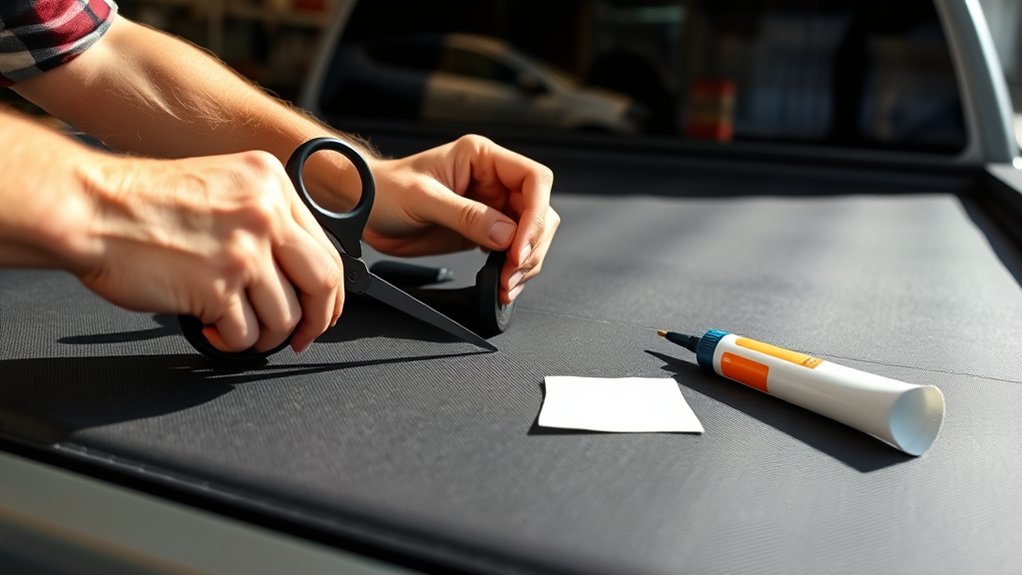
Cut a patch slightly larger than the tear, using the same material. Apply a vinyl or fabric adhesive evenly to both the patch and the cover’s underside.
Press the patch firmly onto the damaged section, smoothing out air bubbles to ensure full contact. Use a roller or flat tool to apply consistent pressure, enhancing bond strength. Allow the adhesive to cure according to manufacturer instructions.
This precise patch application restores durability and prevents further damage while maintaining your cover’s integrity.
Replacing Broken Snaps and Fasteners Made Easy
Broken snaps and fasteners can compromise the security and functionality of your tonneau cover, but replacing them is a straightforward task you can handle with basic tools. First, identify the exact type and size of the damaged snap or fastener to ensure compatibility.
Use snap pliers or a screwdriver to carefully remove the broken pieces without damaging the surrounding material. Before installing new components, clean the mounting area to ensure a secure fit. Press the replacement snaps firmly into place, verifying proper alignment and engagement.
Remember to follow safety tips by wearing gloves and eye protection during installation. Finally, check your cover’s warranty considerations; some manufacturers require professional repairs to maintain coverage. This method restores functionality efficiently without compromising the integrity of your tonneau cover.
How to Tighten or Adjust a Sagging Soft Tonneau Cover
How do you restore a sagging soft tonneau cover to its original tautness? First, inspect the tensioning mechanism. Most covers use adjustable rails or straps. Loosen the clamps, then pull the cover tight before retightening.
For quick upgrades, consider installing aftermarket tensioning kits that improve fit and durability. Regular adjustment prevents water pooling and wind damage.
| Step | Tool Needed | Purpose |
|---|---|---|
| Loosen clamps | Screwdriver/wrench | Allows cover repositioning |
| Tighten cover | Hands | Restores tautness |
| Install tension kit | Aftermarket kit | Enhances cover tension & life |
How to Repair Frame or Rail Damage on Hard Tonneau Covers
Start by carefully inspecting the frame and rails for bends, cracks, or loose connections that compromise structural integrity. Gather essential tools like a rubber mallet, adjustable wrench, replacement bolts, and metal epoxy for the repair. Follow a precise step-by-step process to straighten, secure, or reinforce damaged components and restore proper alignment.
Identifying Frame Damage
When inspecting your hard tonneau cover, focus closely on the frame and rails for any signs of bending, cracks, or misalignment. Use a flashlight to reveal subtle fractures or warped areas that could compromise structural integrity.
Pay particular attention to the joints and welds, as these are common failure points. Compare the frame’s shape to the original specifications, noting any deviations that might affect the cover’s fit and sealing.
Document your findings clearly; two word discussion ideas like “frame warping” or “rail cracking” help organize repair priorities. Identifying these defects early will guide your repair approach and prevent further damage.
Accurate diagnosis ensures you address the root cause, not just surface symptoms, maintaining your tonneau cover’s durability and performance.
Tools Needed For Repair
Which tools will you need to effectively repair frame or rail damage on your hard tonneau cover? Having the right equipment is crucial for a precise fix that restores structural integrity and ensures a proper seal.
Before starting, check if your vehicle insurance covers tonneau cover damage, as this might offset repair costs. Essential tools include:
- Socket wrench set for loosening and tightening bolts
- Rubber mallet to gently realign bent frame parts
- Drill with metal bits for reinforcing weakened areas
- Replacement rails or brackets matching your cover model
- Torque wrench to apply correct tightness without over-stressing components
Regular maintenance like tire rotation won’t fix frame damage, but it helps keep your vehicle in optimal condition. Equip yourself with these tools before proceeding to the repair process.
Step-by-Step Repair Process
Having gathered the necessary tools, begin by carefully loosening the bolts securing the damaged frame or rail using your socket wrench set. Remove the affected section and inspect it for cracks or bends.
Replace or straighten the frame piece as needed. Reattach the repaired or new part firmly, ensuring alignment with the cover’s overall structure. Avoid distractions by ignoring any irrelevant topic or random concept unrelated to your repair, focusing solely on restoring structural integrity.
| Step | Action | Tool Needed |
|---|---|---|
| 1 | Loosen bolts | Socket wrench set |
| 2 | Remove damaged frame or rail | Screwdriver |
| 3 | Inspect and repair damage | Hammer/Replacement |
| 4 | Realign frame section | Level |
| 5 | Reattach securely | Socket wrench set |
Tips for Maintaining Your Tonneau Cover to Prevent Damage
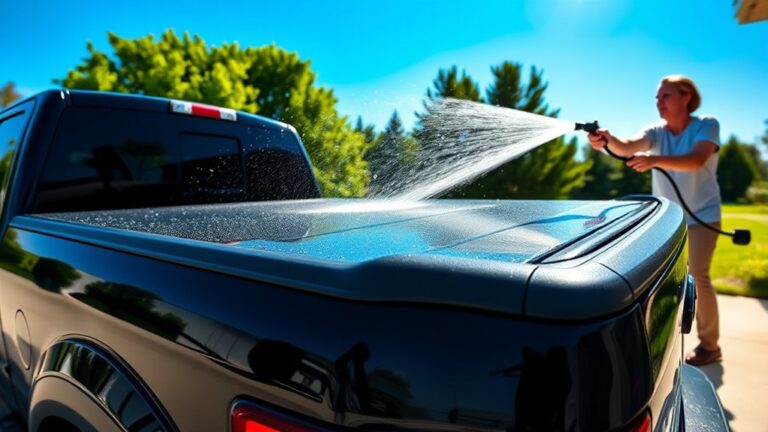
Regularly inspecting and cleaning your tonneau cover can considerably extend its lifespan and prevent costly repairs. Establish a maintenance scheduling routine to check for tears, loose fasteners, and dirt buildup.
Use weatherproofing tips like applying UV protectant sprays and silicone-based lubricants on moving parts to maintain flexibility and water resistance. Here are key practices to keep in mind:
- Clean the surface with mild soap and water, avoiding harsh chemicals.
- Inspect seams and stitching for early signs of wear.
- Tighten or replace any loose or damaged snaps and clamps.
- Store the cover properly when not in use to avoid creases.
- Ensure drainage holes are clear to prevent water pooling.
Following these steps helps you maintain structural integrity and weather resistance efficiently.
Protecting Repairs to Extend Your Cover’s Lifespan
How can you guarantee that your repairs hold up under daily wear and weather conditions? First, apply a high-quality UV-resistant sealant over stitched or patched areas to prevent cracking from sun exposure. Avoid parking under dusty rooftops where particles can abrade repaired seams, accelerating wear.
Regularly clean the cover with mild soap and water to remove debris, focusing on repaired sections. When installing or removing bicycle racks, be cautious to prevent undue stress or friction on repaired zones. Use protective padding between racks and the cover to reduce abrasion.
Store the cover properly when not in use. Fold it without sharp creases on repaired spots. Finally, inspect repairs periodically, reapplying sealant or adhesive as needed to maintain structural integrity and extend your tonneau cover’s lifespan effectively.
Frequently Asked Questions
Can I Install a Tonneau Cover Myself or Should I Hire a Professional?
You can install a tonneau cover yourself if you understand installability considerations like fit, tools, and instructions. DIY saves money, but professional installation ensures precise alignment and durability.
Weigh convenience against skill for best results.
Are Tonneau Covers Compatible With All Truck Models?
Tonneau styles aren’t universally compatible; you need to verify truck model compatibility before buying. Measure your bed size, check mounting systems, and confirm design matches your truck to ensure proper fit and secure installation.
How Does Weather Affect the Durability of Tonneau Covers?
You’ll notice weather durability varies since intense sun, rain, and snow cause material degradation. Climate impact leads to cracking or fading.
Regular maintenance and choosing UV-resistant, waterproof covers help you maximize your tonneau cover’s lifespan.
What Are the Insurance Implications of Tonneau Cover Damage?
You might be surprised, but damaged tonneau covers can impact your insurance claims. Without proper liability coverage, you risk out-of-pocket expenses.
Always check your policy to ensure it covers such damage to avoid costly surprises.
Can Tonneau Covers Improve My Truck’s Fuel Efficiency?
Yes, tonneau covers can improve your truck’s fuel efficiency by reducing aerodynamic drag. By streamlining airflow over the bed, they decrease wind resistance, leading to better gas mileage, especially at highway speeds.
Conclusion
Think of your tonneau cover like a shield—just as a small crack in a helmet can compromise safety, even tiny tears can let water and debris in, causing bigger issues. By promptly repairing tears, tightening sagging areas, or fixing frame damage, you keep your cover strong and effective.
Regular maintenance not only saves money but also extends its lifespan, ensuring your truck bed stays protected, rain or shine. Don’t wait—act now and preserve your investment. Proper care and timely repair are key to keeping your tonneau cover in top condition.