How to Work Out Wheel Offset
To work out wheel offset, start by measuring your wheel’s total width from bead seat to bead seat using a calibrated tape or caliper. Then, find the centerline by dividing this width by two. This initial step is crucial for understanding wheel offset accurately.
Next, measure the distance from the hub mounting surface to the inside edge of the wheel. Subtract half the total width from this measurement to calculate the offset. The offset is expressed in millimeters, with positive values indicating the wheel’s outer face.
Understanding how to work out wheel offset helps ensure proper fitment and handling. More details explain verifying and choosing the right offset for your vehicle’s needs.
What Is Wheel Offset and Why It Matters
Why does wheel offset play a critical role in vehicle performance and fitment? Wheel offset determines how your wheel aligns with the suspension and fender, directly affecting handling, steering response, and tire wear. If you don’t ensure proper offset compatibility, you risk clearance issues or compromised vehicle dynamics.
The offset measures the distance between the hub mounting surface and the wheel’s centerline, impacting how the load is distributed across the suspension components. Moreover, selecting a wheel with an appropriate load rating is crucial; an incorrect load rating can lead to premature failure or unsafe driving conditions.
Understanding wheel offset helps you maintain optimal contact with the road and prevents undue stress on suspension parts, ensuring your vehicle operates efficiently and safely.
Which Tools You Need to Measure Wheel Offset
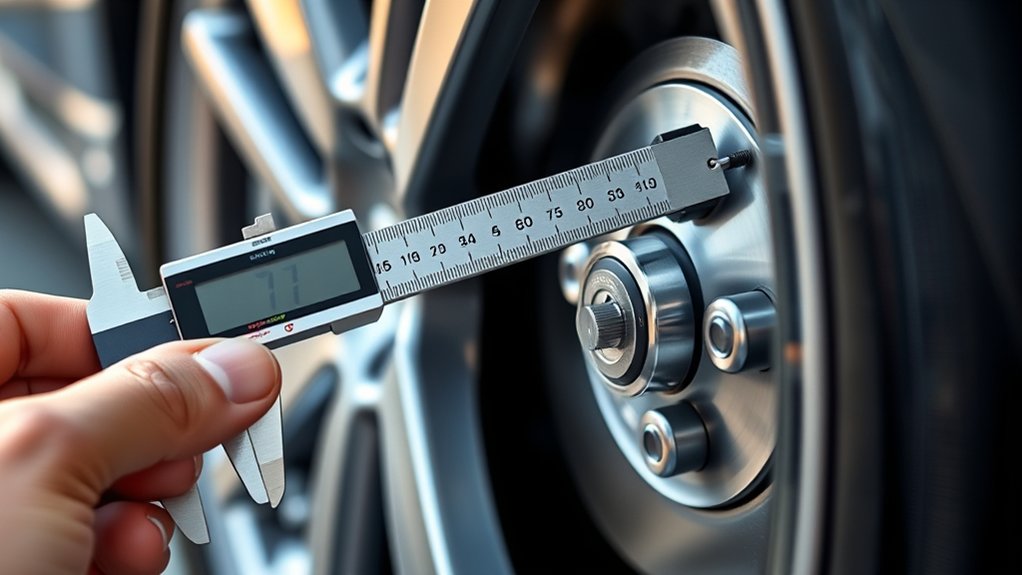
How do you accurately measure wheel offset to guarantee proper fitment? You’ll need precise tools to ensure offset compatibility and perfect hub alignment. Key instruments include a digital caliper for exact measurements, a straight edge to establish reference points, a measuring tape for diameter checks, and a flat surface to maintain alignment during measurement.
| Tool | Purpose |
|---|---|
| Digital Caliper | Measures distance from hub mounting surface |
| Straight Edge | Ensures flatness for accurate offset reference |
| Measuring Tape | Confirms wheel diameter and width |
| Flat Surface | Provides stable base for hub alignment |
Using these tools systematically helps you assess offset compatibility accurately, preventing fitment issues and ensuring performance and safety.
How to Measure Wheel Offset Yourself Step-by-Step
First, gather the necessary tools, including a straightedge, caliper, and a flat surface for accurate measurements. Next, position the wheel securely and measure from the mounting surface to the wheel’s centerline. Follow this process precisely to calculate the offset with minimal error.
Required Tools Preparation
Which tools do you need to accurately measure wheel offset? You’ll require a reliable digital caliper or a precise ruler, a flat surface for placing the wheel, and a straight edge or level. A tape measure can assist in verifying diameter measurements.
These tools ensure exact dimensional readings critical for calculating offset. Ideas about Subtopic not relevant to the Other H2s include selecting tools calibrated for millimeter accuracy and ensuring the wheel is clean and free from debris to avoid skewed measurements.
Discussion topics about Subtopic not relevant to the Other H2s emphasize tool stability. Using clamps or weights to immobilize the wheel during measurement improves accuracy. Preparing these tools properly sets a foundation for precise measurement in the next steps without introducing errors from poor equipment or setup.
Measuring Offset Process
Accurate measurement of wheel offset requires you to position the wheel flat on a stable surface and identify the mounting hub’s centerline. Start by measuring the total wheel width from bead seat to bead seat. Then, determine the centerline by dividing this width by two.
Using a straight edge, measure the distance from the mounting surface to the centerline; this distance is your wheel offset. Positive offset means the mounting surface is toward the wheel’s outer edge, while negative offset means it’s toward the inner edge, key offset terminology you must understand.
Throughout this two word discussion ideas process—“centerline measurement” and “mounting surface”—ensure your measurements are precise. By following these steps, you can confidently calculate offset yourself with technical accuracy and informed analysis.
How to Calculate Wheel Offset From Your Measurements
Now that you’ve measured the wheel’s dimensions, you’ll use those values to calculate the offset. Start by identifying the wheel’s centerline, then determine the distance from the mounting surface to that centerline. Subtracting this distance from half the wheel’s width gives you the precise offset value.
Measuring Wheel Dimensions
How do you determine the exact wheel offset using your own measurements? Begin by measuring the wheel’s total width from bead seat to bead seat, not the outer rim edges, as this affects offset compatibility.
Next, find the wheel’s centerline by dividing the total width by two. Then, measure the distance from the mounting surface to the inside edge of the wheel.
This measurement is critical because it influences tire clearance and fitment within the wheel well. Precise measurements ensure you select an offset that maintains proper tire clearance, avoiding rubbing or interference with suspension components.
Calculating Offset Value
Where do you start when calculating the wheel offset from your measurements? Begin by identifying the wheel’s mounting surface relative to its centerline. Measure the wheel’s total width, then locate the hub mounting face.
Subtract half the total width from the distance between the mounting face and the wheel’s outer edge. This difference gives you the offset value, typically expressed in millimeters. Be mindful of calibration pitfalls. Improper measuring tools or techniques can skew results significantly.
Also, consider factory tolerances; small variances in manufacturing may affect your measurements and final offset calculation. Accurate offset calculation ensures proper fitment and performance, so verify your data systematically to avoid errors.
Precision and attention to detail are critical for reliable results.
How to Check Your Wheel’s Current Offset
Why does knowing your wheel’s current offset matter? Accurate offset measurement ensures wheel safety by preventing undue stress on suspension components and maintaining proper tire contact.
To check your wheel’s offset, first remove the wheel from your vehicle and place it face down on a flat surface. Measure the wheel’s width and locate the mounting surface.
Use a straight edge to find the centerline by dividing the wheel width by two. Then, measure the distance from the mounting surface to the centerline. This distance is your offset, positive if the mounting surface is toward the wheel’s outer face, negative if it’s inward.
Maintaining correct offset complements ideal tire pressure, optimizing tire wear and handling. Accurate offset prevents alignment issues, ensuring safe, efficient operation.
Common Wheel Offset Types Explained
Once you’ve measured your wheel’s offset, understanding the common types helps you select the right fit for your vehicle’s performance and safety. There are three main offset categories: positive, zero, and negative.
Positive offset places the mounting surface closer to the wheel’s face, pushing the wheel inward, which suits most modern vehicles. Zero offset aligns the mounting surface with the wheel’s centerline, offering a neutral stance. Negative offset positions the mounting surface toward the wheel’s back, pushing the wheel outward, often seen in off-road or custom setups.
Each type affects offset compatibility differently, so you must verify that your wheel’s offset aligns with your vehicle’s specifications. Additionally, ensure the lug pattern matches precisely to maintain secure mounting and optimal handling characteristics.
How to Choose the Right Wheel Offset When Upgrading
How do you determine the correct wheel offset when upgrading your wheels? Start by evaluating offset compatibility with your vehicle’s suspension and brake components to avoid interference.
Next, assess tire clearance to ensure the new setup doesn’t cause rubbing during turns or under load. Choosing an offset too low or high can affect handling, wheel bearing stress, and aesthetics.
Use the table below as a quick guide:
| Offset Type | Effect on Tire Clearance |
|---|---|
| Positive Offset | Moves wheel inward, reduces clearance |
| Zero Offset | Wheel hub and mounting surface align |
| Negative Offset | Moves wheel outward, increases clearance |
Always verify manufacturer specs and test fit to maintain optimal offset compatibility and tire clearance when upgrading.
Frequently Asked Questions
Can Incorrect Wheel Offset Damage My Vehicle’s Suspension?
Yes, incorrect wheel offset can cause a misaligned suspension by altering load distribution and steering geometry. You’ll experience uneven tire wear and compromised handling, which stresses suspension components.
This reduces your vehicle’s safety and longevity.
How Does Wheel Offset Affect Tire Wear?
Incorrect wheel offset alters your tire contact patch, causing uneven tire wear. It disrupts wheel alignment, leading to irregular tread degradation, reduced handling performance, and increased stress on suspension components.
These effects ultimately shorten tire lifespan and reduce vehicle stability.
Does Wheel Offset Impact Fuel Efficiency?
Wheel offset subtly steers your fuel efficiency’s dance. Off road vs on road, and winter vs summer conditions, shift rolling resistance.
Misaligned offset increases drag, reducing mileage, especially in rugged or icy terrains where tire grip and drag fluctuate sharply.
Can I Use Spacers to Adjust Wheel Offset Safely?
You can use spacers to adjust wheel offset safely if you assure spacer compatibility with your hub and wheels. Always retighten lug nut torque to manufacturer specs after installation to maintain secure, balanced wheel attachment and performance.
How Does Wheel Offset Influence Vehicle Handling and Performance?
You probably think how offset barely affects handling balance, but it actually shifts load distribution and wheel alignment, directly influencing grip and steering precision.
Misjudging it can degrade performance and compromise your vehicle’s dynamic control.
Conclusion
Now that you know how to measure and calculate wheel offset, you’re equipped to ensure exceptional fitment and flawless function. By carefully choosing the correct offset, you’ll avoid alignment anomalies and optimize overall performance.
Keep tools tight, take timely measurements, and trust your technical tactics. With this knowledge, you’ll confidently conquer wheel compatibility challenges, creating a smooth, safe, and stylish setup that suits your specific needs perfectly.
Understanding how to work out wheel offset is essential for achieving the best results in your vehicle customization. This skill ensures your wheels fit precisely, enhancing both safety and style.