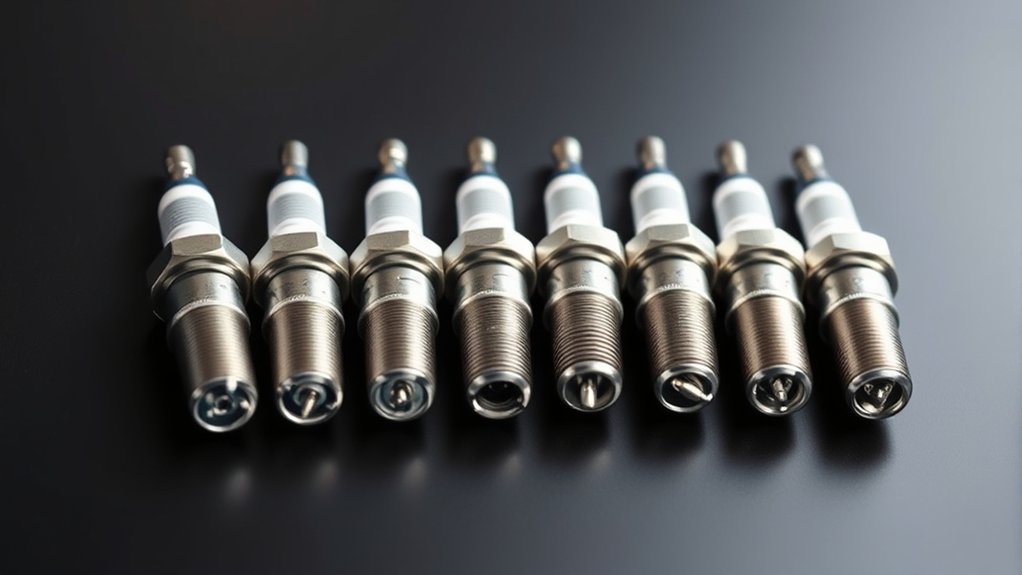
Are All Spark Plugs the Same Size
No, spark plugs aren’t all the same size. They vary in thread diameter, reach, and seat type to fit specific engine designs and ensure proper combustion and heat dissipation.
Using the wrong size can cause misfires, damage, or poor performance. You need to match thread diameter and reach precisely to your engine’s specs for durability and efficiency.
Understanding these size differences helps optimize your engine’s performance and avoid costly issues. More insights can clarify the best choices for your vehicle.
Key Takeaways
- Spark plugs vary in thread diameter, reach, and seat type to fit different engine designs.
- Common thread diameters include 10mm, 12mm, 14mm, and 18mm, not all plugs share the same size.
- Proper spark plug size ensures correct fit, combustion efficiency, and heat dissipation.
- Incorrect size can cause misfires, engine damage, or poor sealing in the cylinder head.
- Always match spark plug size to manufacturer specifications for optimal performance and durability.
What Are the Different Sizes of Spark Plugs?
How do spark plug sizes vary, and why does it matter? Spark plugs differ primarily in thread diameter, reach (thread length), and seat type. Common thread diameters range from 10mm to 14mm, while reach varies from 12mm to 26.5mm, depending on engine design.
These variations ensure proper fit and heat dissipation. You’ll find many spark plug myths about size, often confusing heat range with physical dimensions. Heat range myths suggest that larger or smaller plugs directly affect engine temperature, but in reality, heat range relates to the plug’s ability to transfer heat, not its size.
Understanding these distinctions prevents incorrect replacements that could cause pre-ignition or fouling. So, always verify the spark plug’s specifications rather than relying on myths to guarantee compatibility and optimal engine function.
Why Does Spark Plug Size Matter for Engine Performance?
Why does the size of a spark plug play a critical role in engine performance? Because the plug’s dimensions directly affect combustion efficiency, heat dissipation, and proper seating in the cylinder head.
Spark plug size is crucial for combustion efficiency, heat management, and correct fit in the cylinder head.
Using a spark plug that’s too large or too small disrupts the combustion chamber’s optimal environment, reducing power and fuel efficiency. You might encounter irrelevant topic or unrelated discussion online, but size isn’t arbitrary—it ensures the spark plug reaches the correct depth for effective ignition.
Incorrect sizing can cause misfires, overheating, or fouling, damaging engine components. By choosing the right spark plug size, you maintain stable combustion, prevent heat-related failures, and optimize engine timing.
Ignoring size leads to performance issues, so it’s essential to match plugs precisely to your engine’s specifications.
How Engine Types Affect Spark Plug Size Choices
Different engine designs demand specific spark plug sizes to ensure optimal performance and durability. When you select a spark plug, you must consider factors like combustion chamber shape, cylinder head material, and heat dissipation requirements, all of which vary by engine type.
For instance, high-compression engines often require plugs with different heat ranges and reach compared to low-compression ones. Ignoring these specifics and engaging in irrelevant or off-topic discussions about unrelated engine components won’t help you choose the right plug.
Knowing your engine’s design nuances helps prevent issues like misfires or premature wear. So, focus on the technical requirements your engine demands rather than getting distracted by unrelated details to ensure your spark plug choice aligns perfectly with your engine type.
Comparing Spark Plug Thread Diameter and Reach
You need to match the spark plug’s thread diameter to your engine’s specifications, as common sizes include 10mm, 12mm, and 14mm. Equally important is the spark plug’s reach—the length of the threaded portion—which affects how the plug seats and performs in the combustion chamber. Using the wrong thread diameter or reach can cause engine damage or poor ignition efficiency.
Common Thread Diameters
How do thread diameter and reach affect spark plug compatibility? When selecting a spark plug, thread diameter is essential because it ensures a proper fit in the cylinder head. Common thread diameters include 10mm, 12mm, 14mm, and 18mm.
Using a plug with an incorrect diameter risks damage to the engine threads or poor sealing. Thread diameter is a different parameter from reach, so mixing these up is an irrelevant topic if you want to guarantee compatibility.
Focusing solely on thread diameter without considering reach is an unrelated concept that can lead to installation issues. Always verify the manufacturer’s specifications for thread diameter to match the engine’s requirements precisely, ensuring peak performance and avoiding costly repairs.
Understanding Spark Plug Reach
Why does spark plug reach matter as much as thread diameter? Because reach determines how far the spark plug’s threaded section extends into the combustion chamber, directly affecting combustion efficiency and ignition timing.
In spark plug anatomy, reach refers to the length of the threaded portion that screws into the cylinder head. If the reach is too short or too long, it alters the spark gap’s position relative to the piston, influencing the air-fuel mixture’s ignition point.
This change can disrupt optimal ignition timing, reducing engine performance and increasing emissions. Unlike thread diameter, which ensures a proper fit in the cylinder head, correct reach ensures the electrode sits at the ideal depth.
Effects of Incorrect Size
Selecting the correct spark plug size involves more than matching thread diameter and reach; using the wrong dimensions can lead to significant engine issues. If your spark plug’s thread diameter doesn’t fit properly, you risk cross-threading or an improper seal, which can cause combustion leaks.
Incorrect reach length affects the electrode’s position within the combustion chamber, disrupting optimal spark performance. This misalignment often results in engine vibration due to incomplete combustion cycles.
Additionally, using a spark plug with incorrect reach can cause you to apply incorrect torque during installation, either overtightening or undertightening, leading to damaged threads or insufficient sealing. Both thread diameter and reach are critical for maintaining engine integrity, ensuring correct torque application, and preventing engine vibration, so always verify specifications before installation to avoid costly damages.
Understanding Spark Plug Size Standards and Codes
You’ll encounter various spark plug thread sizes that must match your engine’s specifications precisely. Knowing how to decode spark plug codes helps you identify key dimensions and heat ratings quickly. This guarantees you select the right plug for peak performance and fit.
Spark Plug Thread Sizes
How do you determine the correct thread size for a spark plug? First, you need to consult your vehicle’s OEM recommendations, as thread sizes vary by engine design.
Common thread diameters include 10mm, 12mm, 14mm, and 18mm, with pitch and reach also differing. Avoid falling for spark plug myths that suggest all plugs fit universally; incorrect thread size can damage your engine’s cylinder head or cause poor performance.
Using the proper thread size ensures a secure fit and optimal combustion. Always verify thread diameter, pitch, and reach against your manufacturer’s specifications.
Precision here matters: a mismatch can lead to stripping or combustion leaks. Stay informed and follow OEM guidelines to maintain engine integrity and performance.
Decoding Spark Plug Codes
After confirming the correct thread size for your spark plug, interpreting the alphanumeric codes stamped on the plug becomes the next step in guaranteeing compatibility. These codes aren’t an irrelevant topic; they convey essential details like heat range, thread diameter, reach, and construction.
For example, a code like “BKR5E-11” breaks down into manufacturer-specific information, thread size, and gap measurement. Avoid considering off topic information, such as unrelated vehicle specs or engine types, which don’t directly clarify size standards.
Understanding these standardized codes helps you select the exact plug your engine requires. Mastering this system prevents installation errors and performance issues caused by mismatched plugs. Decoding spark plug codes ensures you pick the right size and type for optimal engine function and longevity.
How Heat Range Affects Your Spark Plug Choice
Why does the heat range matter when selecting a spark plug? The heat range determines how quickly the spark plug dissipates heat from the combustion chamber. Choosing the correct heat range ensures optimal performance and prevents engine damage.
A plug that’s too hot can cause pre-ignition, while one that’s too cold may foul quickly. While heat range affects thermal performance, it’s crucial not to confuse it with thread diameter, which defines the physical size and fit of the spark plug in the engine’s cylinder head.
Both specifications must match your engine’s requirements precisely. By understanding how heat range influences combustion temperature and ensuring the thread diameter fits correctly, you maintain engine efficiency, longevity, and safety during operation.
How to Measure Your Spark Plug Correctly
Measuring your spark plug accurately starts with identifying key dimensions that affect fit and performance. First, measure the thread diameter with a caliper to make sure it matches your engine’s specifications.
Accurately measuring thread diameter ensures your spark plug fits perfectly and performs reliably.
Next, check the thread pitch by counting threads per inch or using a thread gauge. Thread depth is essential; measure it precisely to avoid a spark plug mismatch that can cause improper sealing or damage.
Also, note the reach, the length from the gasket seat to the spark plug tip, since an incorrect reach affects combustion chamber clearance. Finally, verify the hex size for proper socket fit during installation.
Accurate measurement prevents spark plug mismatch, ensuring your engine runs efficiently and avoids costly repairs caused by fitting errors.
What Happens If You Use the Wrong Spark Plug Size?
If you use the wrong spark plug size, your engine may misfire or run inefficiently, reducing overall performance. Incorrect sizing can also cause damage to the cylinder head or spark plug threads, leading to costly repairs. You need to guarantee the spark plug matches your engine specifications to avoid these risks.
Engine Performance Issues
How does using the wrong spark plug size affect your engine’s performance? When you install a spark plug with unrelated sizing, the gap and thread reach won’t match your engine’s specifications. This mismatch disrupts the optimal combustion process, leading to misfires, reduced power, and poor fuel efficiency.
An irrelevant comparison between spark plugs that look similar but differ in size can mislead you into choosing the wrong one. Incorrect thread length can cause improper seating, affecting the heat dissipation and causing inconsistent ignition timing.
Moreover, an incorrect spark plug may lead to incomplete combustion, resulting in rough idling and hesitation during acceleration. To maintain precise engine performance, always select spark plugs that strictly adhere to your engine manufacturer’s size and specification requirements.
Potential Damage Risks
What consequences arise when you use the wrong spark plug size in your engine? Using an incorrect size can cause severe damage, from stripped threads to poor combustion.
Misfit plugs can lead to overheating, cylinder wall scoring, or even catastrophic engine failure. Avoid treating spark plug sizing as an irrelevant topic or unrelated concept; it directly impacts engine longevity and safety.
| Damage Type | Cause | Result |
|---|---|---|
| Thread Damage | Oversized spark plug threads | Cylinder head repair needed |
| Poor Sealing | Undersized spark plug seat | Compression loss |
| Overheating | Incorrect heat range | Pre-ignition or detonation |
| Misfire | Improper electrode gap | Reduced engine efficiency |
| Engine Knock | Wrong plug reach | Internal engine damage |
Always match spark plug size precisely to your engine’s specifications.
How to Find the Right Spark Plug Size for Your Vehicle
Where do you start when selecting the correct spark plug size for your vehicle? First, consult your vehicle’s owner manual or manufacturer specifications; they specify the required thread diameter and reach.
Next, consider the spark design, as it affects combustion efficiency and fuel economy. Using the wrong size can alter spark performance, reducing fuel economy and engine power. To ensure accuracy:
- Verify thread diameter and reach measurements
- Match heat range to engine requirements
- Check electrode gap specifications
- Confirm compatibility with ignition system
Precision in spark plug size guarantees optimal combustion and durability. Don’t rely on guesswork. Accurate sizing maintains engine performance and prevents damage. By following these steps, you optimize your vehicle’s spark design and fuel economy effectively.
Tips for Installing Spark Plugs of the Correct Size
When installing spark plugs of the correct size, ensuring proper torque is vital to avoid damage or poor engine performance. Use a calibrated torque wrench to tighten plugs to the manufacturer’s specifications. Over-tightening can strip threads, while under-tightening risks poor sealing.
Before installation, check the spark plug gap with a feeler gauge and adjust if necessary. Avoid discussing irrelevant topics like unrelated angles of technology not pertinent to installation.
Check and adjust the spark plug gap before installation for proper engine performance.
Also, apply a small amount of anti-seize compound on the threads only if recommended by the manufacturer, as some plugs have coatings that negate this need. Finally, thread the plugs in by hand first to prevent cross-threading.
Following these precise steps ensures optimal performance and longevity of your correctly sized spark plugs.
When to Change Spark Plug Size for Better Performance
How do you know if changing your spark plug size will boost your engine’s performance? You’ll want to avoid irrelevant discussion and off topic ideas that don’t address your specific engine needs. Instead, focus on these key indicators:
Persistent misfires or rough idling suggesting improper spark reach
Upgrading to a higher-performance engine requiring altered combustion parameters
Manufacturer recommendations for alternative plug sizes for tuning purposes
Visible electrode wear or deposits indicating the current size isn’t ideal
Changing spark plug size isn’t about guessing; it’s a precise adjustment based on engine design and condition. Ignoring these factors leads to ineffective changes. Always consult technical specifications before making a size change to ensure improved combustion efficiency and overall engine performance.
Frequently Asked Questions
How Often Should Spark Plugs Be Replaced Regardless of Size?
You should perform spark plug replacement every 30,000 to 100,000 miles, depending on your vehicle and plug type. Regular spark plug replacement ensures optimal engine maintenance, preventing misfires and maintaining fuel efficiency.
What Are the Symptoms of a Failing Spark Plug?
You’ll notice symptom indicators like engine misfires, rough idling, and poor acceleration, signs screaming louder than a jet engine. These suggest it’s near the replacement interval, so act swiftly to maintain optimal engine performance and fuel efficiency.
Can Different Spark Plug Brands Affect Engine Performance?
Yes, different brands can affect engine response due to variations in electrode design, heat range, and materials.
You’ll notice changes in combustion efficiency, fuel economy, and throttle response when switching between quality spark plugs.
Are Iridium Spark Plugs Better Than Copper Ones?
Imagine your engine struggling after months. Iridium spark plugs boast superior iridium durability, lasting longer under stress. Copper plugs excel in copper conductivity, offering better initial performance but wearing out faster in demanding conditions.
How Does Spark Plug Gap Influence Fuel Efficiency?
You’ll find that spark gap effects directly influence fuel economy by altering combustion efficiency. A properly set gap ensures optimal spark intensity, improving fuel burn and reducing waste, which enhances overall engine performance and fuel economy.
Conclusion
You might think all spark plugs are the same size, but that’s not the case. Using the wrong size can harm your engine’s performance and longevity. Always check your vehicle’s specifications to ensure the thread diameter, reach, and heat range match perfectly.
Getting the right spark plug size isn’t just about fitting—it’s about optimizing combustion and efficiency. So, don’t guess; use precise measurements to keep your engine running smoothly and powerfully. Remember, knowing that not all spark plugs are the same size is key to maintaining your vehicle’s health.