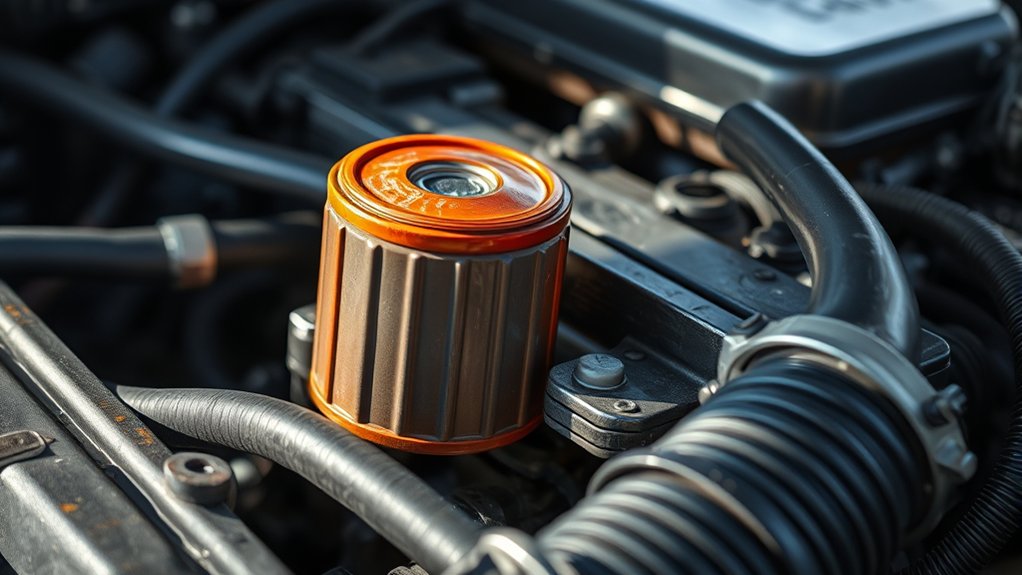
Where Is the Oil Filter
You’ll typically find the oil filter mounted near the engine block, often on its side or bottom, accessible from under the hood or beneath the vehicle. The exact location varies by vehicle type and engine design.
Passenger cars usually have smaller, spin-on filters, while trucks and SUVs use larger filters near the oil pan. European and some American models may place cartridge-style filters on top of the engine.
Knowing your make and model helps pinpoint the oil filter precisely. Careful preparation ensures smooth removal. More details can guide you through identification, removal, and replacement.
Key Takeaways
- Oil filters are typically located near the engine block, either on the side or bottom of most passenger cars.
- Trucks and SUVs often have larger spin-on filters near the oil pan or oil cooler lines.
- European models may use cartridge-style filters housed inside a plastic container on top of the engine.
- Motorcycles and small engines position the oil filter near the frame or cylinder head for easier access.
- Brand and engine design influence location; for example, Japanese cars place filters near the oil pan, while German cars may have them on top.
Common Oil Filter Locations by Vehicle Type
Where exactly is the oil filter located on your vehicle? Oil filter identification depends largely on your vehicle’s type and engine design.
Locating your oil filter varies by vehicle type and engine design, so knowing your specific setup is key.
In most passenger cars, you’ll find the oil filter near the engine block, often on the side or bottom, accessible from underneath the hood or beneath the vehicle. Trucks and SUVs commonly have larger, spin-on filters located near the oil pan or oil cooler lines.
Some European models use cartridge-style filters housed inside a plastic container on top of the engine. Motorcycles and small engines typically position the filter closer to the frame or cylinder head for compactness.
Knowing these automotive locations helps you quickly pinpoint the oil filter during maintenance or inspections, streamlining service and ensuring optimal engine performance.
How to Identify Your Oil Filter Quickly
You can identify your oil filter quickly by focusing on common locations, such as near the engine block or oil pan. Look for a cylindrical, metal canister with a textured grip or hex nut on top for visual cues. Using a flashlight and a mirror can help you spot the filter in tight or dark engine compartments efficiently.
Common Oil Filter Locations
How can you quickly identify the oil filter on your vehicle? Knowing common oil filter locations streamlines oil changes and ensures proper filter maintenance.
Filters typically reside near the engine block, but exact spots vary by model. Here’s a concise guide to help you locate yours efficiently:
| Location Description | Typical Vehicle Types |
|---|---|
| Side of Engine Block | Most passenger cars |
| Underneath Engine | Trucks, SUVs |
| Near Oil Pan | Older models |
| Rear of Engine | Some European vehicles |
| Near Timing Cover | Certain performance engines |
Visual Identification Tips
Locating the oil filter is only the first step; recognizing its distinct features helps you identify it quickly during maintenance. Most oil filters have a cylindrical shape with a metal casing and a rubber gasket at one end.
Look for a part attached near the engine block, often with hexagonal edges for wrench fitting. The filter’s surface usually bears manufacturer details and part numbers, aiding identification.
Pay attention to its size. Oil filters vary by engine type but generally measure between 3 to 5 inches in length. Knowing these visual cues lets you differentiate the oil filter from similar components.
Staying aware of your vehicle’s specific oil filters and adhering to recommended replacement intervals ensures proper engine performance and longevity.
Tools For Quick Spotting
Which tools can streamline identifying your oil filter during maintenance? You’ll want to rely on specific aids that eliminate guesswork and prevent off topic reflections or unrelated topics from distracting your focus.
| Tool Name | Purpose |
|---|---|
| Flashlight | Illuminate dark engine areas |
| Magnetic Pick-Up | Retrieve dropped fasteners |
| Oil Filter Wrench | Grip and remove filters easily |
| Inspection Mirror | View hidden filter locations |
| Smartphone Camera | Capture images for reference |
These tools help you pinpoint the filter’s exact position efficiently. For example, the inspection mirror lets you see behind engine components without dismantling unrelated parts. Using a flashlight reduces off topic reflections caused by shadows.
Together, they ensure you identify the oil filter quickly, avoiding unrelated topics that could delay your maintenance process.
How Your Car’s Make Affects Oil Filter Placement
Your car’s make directly influences where the oil filter is located, as manufacturers design engine layouts differently. Engine configurations, such as inline or V-shaped, alter filter placement to optimize accessibility and performance. Understanding brand-specific designs helps you locate the filter accurately for maintenance or replacement.
Variations Across Manufacturers
How does the make of a vehicle influence the position of its oil filter? Manufacturers design oil filter placement based on engine layout, packaging constraints, and maintenance accessibility.
For example, some European models position the filter on the engine’s front side for easier access, while certain Asian brands place it near the oil pan or firewall. This variation affects how you approach routine maintenance and challenges common oil filter myths like the idea that all filters are easy to reach.
Knowing your specific make’s design helps you plan replacement intervals accurately and avoid damage during filter changes. Always consult your vehicle’s manual to identify the exact filter location and recommended service frequency, as these factors vary significantly across manufacturers and impact the efficiency of your oil filtration system.
Engine Design Influence
Beyond manufacturer preferences, the underlying engine design plays a significant role in determining oil filter placement. You’ll find that factors like engine layout, inline, V-type, or boxer, directly influence where the oil filter sits.
For example, in a V-type engine, the filter often mounts on the outer side for easier access, optimizing maintenance without disrupting the complex fuel system arrangements. Your engine’s design also aims to maximize engine efficiency by positioning the oil filter to ensure optimal oil flow and filtration under varying operating conditions.
Additionally, space constraints created by turbochargers or direct injection components impact placement, as the oil filter must avoid interference with the fuel system and other critical parts. Understanding these design elements helps you anticipate oil filter locations tailored to your engine’s architecture.
Brand-Specific Filter Locations
Where exactly the oil filter is positioned can vary considerably depending on the car manufacturer. Each brand has its own engineering priorities, resulting in distinct, brand specific filter locations.
For example, German manufacturers like BMW often place the oil filter housing on the top of the engine for easier access, while Japanese brands such as Toyota commonly position it near the oil pan, which can require crawling under the vehicle. American cars, like those from Ford, might use a cartridge-type filter located near the front of the engine block.
Understanding these brand specific nuances helps you locate the oil filter faster, streamlining maintenance. Always consult your vehicle’s service manual to identify the precise filter location since manufacturers optimize placement based on engine layout and serviceability.
Tools You Need to Replace Your Oil Filter
What tools do you need to replace your oil filter efficiently and safely? First, grab an oil filter wrench designed to match your filter’s size and type, ensuring filter compatibility. This tool provides the necessary grip and torque to loosen or tighten the filter without damaging it.
Next, use a drain pan to catch the old oil and avoid spills. Quick accessories like a funnel help when adding new oil, and gloves protect your hands from contaminants. You’ll also need a ratchet with the correct socket size if your filter housing uses bolts.
Lastly, keep clean rags handy to wipe surfaces and prevent dirt contamination. Having these precise tools ready ensures a smooth, safe oil filter replacement process.
Tips for Removing a Stuck or Hard-to-Reach Oil Filter
Having the right tools makes removing an oil filter much easier, but sometimes filters can become stuck or are located in tight spaces that challenge even experienced mechanics. Start by applying penetrating oil around the filter’s base to loosen rust or debris.
Use a quality oil filter wrench designed for your filter’s size and shape; a strap or cap wrench often provides better grip in confined areas. Turn the filter counterclockwise with steady pressure. Avoid sudden force to prevent damage.
If space is limited, remove surrounding components for better access. Remember oil filter basics: a stuck filter often results from overtightening or prolonged use.
As troubleshooting tips, ensure the engine is warm (not hot) so oil softens deposits, and clean the mounting surface before reinstalling to avoid future issues.
How to Confirm You’ve Found the Right Oil Filter
How can you be certain the oil filter you’ve located matches your vehicle’s specifications? Start by cross-referencing the part number stamped on the filter with your vehicle’s manual or manufacturer database. Check dimensions, including diameter, height, and thread size, to ensure compatibility.
Verify the oil filter’s flow rate and pressure ratings align with your engine’s requirements to avoid performance issues. Examine the gasket type and material, as these affect sealing and durability. Confirm the filter’s brand and model meet or exceed OEM standards for reliability.
Avoid relying solely on visual cues; technical specs matter most. Two relevant discussion ideas include how different oil filter types impact engine efficiency and the role of oil filter technology advancements in modern vehicles.
Steps to Follow After Locating the Oil Filter
Once you’ve located the oil filter, the next critical step involves safely preparing your workspace and gathering the necessary tools for removal. Begin by positioning a drain pan beneath the filter to catch residual oil.
Use an oil filter wrench suited to your filter’s size to avoid damage. Don’t fall for common oil filter myths such as needing excessive force to remove it, as this can cause leaks or strip threads. Loosen the filter slowly, allowing oil to drain progressively.
Maintain filter replacement etiquette by cleaning the mounting surface thoroughly before installing a new filter, ensuring a proper seal and preventing contamination. Finally, inspect the removed filter’s rubber gasket to confirm it hasn’t stuck to the engine, which can cause leaks during reinstallation.
When and Why to Replace Your Oil Filter
Proper maintenance doesn’t stop at removing and cleaning the oil filter mounting surface. You’ll need to know exactly when and why to replace the filter to maintain engine performance. Timely filter replacement ensures contaminants don’t circulate, preventing engine wear and oil degradation.
Proper filter replacement is essential to prevent contaminants and protect engine performance.
Generally, you should replace your oil filter with every oil change to maintain optimal filtration. Consider these guidelines:
- Replace the filter at every oil change interval specified by your vehicle manufacturer.
- Change the filter immediately if you notice oil pressure drops or engine noise.
- Choose filter replacement after severe driving conditions like frequent short trips or dusty environments.
- Always use a high-quality replacement filter compatible with your engine type to ensure proper sealing and filtration.
Following these steps preserves engine longevity and maintains oil efficiency.
Frequently Asked Questions
Can I Reuse an Old Oil Filter After Cleaning It?
You shouldn’t reuse an old oil filter after cleaning it because of contamination risk and compromised filter media. A thorough inspection and replacement ensure optimal engine protection, preventing debris buildup and maintaining consistent oil flow for reliable performance.
How Does Oil Filter Quality Affect Engine Performance?
You’ll be amazed that over 90% filtration efficiency in oil filter design directly boosts engine performance by preventing abrasive particles from causing wear. This ensures smoother operation, longer engine life, and maintains optimale oil flow under varying conditions.
Are There Universal Oil Filters for All Vehicles?
You won’t find truly universal oil filters due to varying engine designs. While some offer broad compatibility, you must prioritize filter material quality to guarantee proper filtration efficiency and engine protection tailored to your specific vehicle’s requirements.
What Happens if I Install the Oil Filter Backward?
If you install the oil filter backwards, you risk oil filter failure due to improper sealing and restricted oil flow. This causes poor lubrication, increased engine wear, and potential engine damage. Always guarantee correct filter orientation during installation.
Can a Clogged Oil Filter Cause Engine Overheating?
Like a silent saboteur, a clogged oil filter can cause engine overheating by restricting oil flow, debunking oil filter myths and maintenance misconceptions.
You must ensure proper filtration to maintain optimal engine temperature and performance.
Conclusion
Now that you know where to find your oil filter and how to identify it, you’re practically a mechanic wizard! With the right tools and techniques, removing even the most stubborn filter becomes manageable.
Always double-check you’ve got the correct part before replacement, and follow post-removal steps meticulously to avoid engine damage.
Remember, neglecting timely oil filter changes can wreck your engine faster than a lightning strike—so don’t delay this essential maintenance task of knowing where is the oil filter.