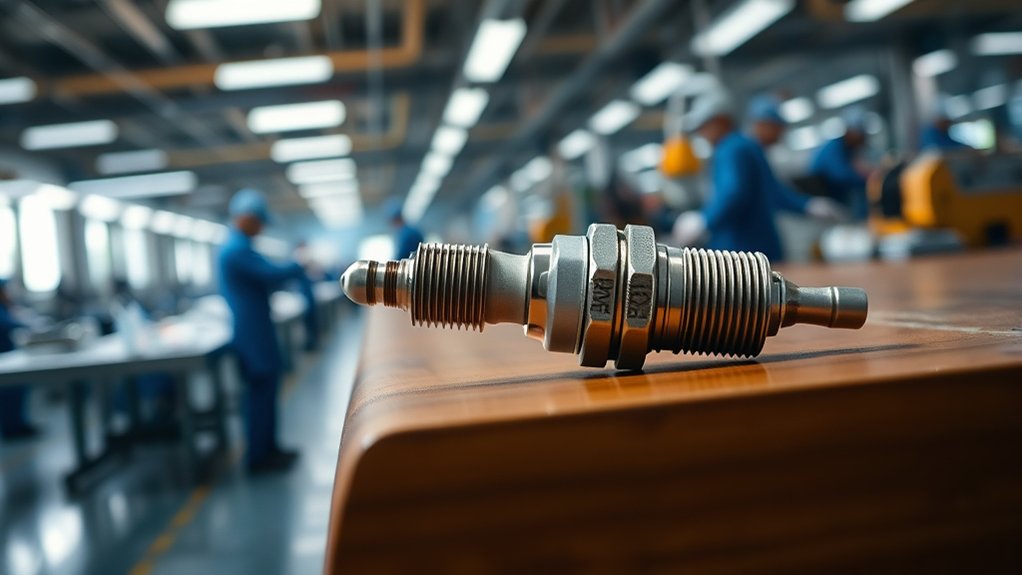
Where Are Ngk Spark Plugs Made
You’ll find NGK spark plugs made across several global sites, with the core precision manufacturing based in Japan. Production also occurs in Asia—Thailand, Indonesia, and China—as well as specialized plants in the United States and Germany.
NGK places facilities near major markets and raw material sources, ensuring consistent quality through advanced technologies and stringent controls. This global footprint enhances supply chain resilience and performance uniformity.
Detailed insights reveal how location and technology drive their manufacturing excellence.
Key Takeaways
- NGK spark plugs are primarily manufactured in Japan, known for advanced ceramic technologies and stringent quality controls.
- Additional production sites exist in China, Thailand, Indonesia, and the United States to support regional automotive markets.
- European manufacturing facilities in Germany and the United States focus on specialized production adhering to NGK’s global standards.
- All global sites use standardized processes, automation, and rigorous testing to ensure consistent spark plug quality worldwide.
- Manufacturing locations are chosen for proximity to raw materials, skilled labor, and key automotive markets to optimize supply chains.
Where Are NGK Spark Plugs Made Worldwide?
Where exactly are NGK spark plugs manufactured around the globe? You’ll find production sites strategically placed to optimize location benefits and reinforce supply chain efficiency. NGK positions manufacturing facilities near major automotive markets and key raw material sources, reducing transit times and costs.
This global footprint ensures you receive consistent quality and timely delivery, regardless of your region. The location benefits include proximity to skilled labor and advanced technological infrastructure, which support NGK’s strict quality standards.
Additionally, having multiple production points enhances supply chain resilience, allowing NGK to quickly adapt to demand fluctuations and mitigate risks such as geopolitical disruptions. By understanding this, you can appreciate how NGK leverages worldwide manufacturing locations to maintain reliability and meet diverse market needs.
NGK’s Production Facilities in Japan and Beyond
You’ll find NGK’s core manufacturing operations in Japan, where stringent quality controls ensure precision and performance. The company also operates multiple production sites worldwide to meet global demand while maintaining consistent standards. Understanding the distribution of these facilities helps clarify how NGK balances expertise with international reach.
Japan Manufacturing Excellence
Although NGK’s reputation for high-quality spark plugs is global, the company’s manufacturing excellence is deeply rooted in its advanced production facilities in Japan. Here, you’ll find a rigorous focus on precision engineering, automated quality controls, and proprietary ceramic technologies that ensure consistent performance.
NGK minimizes nonessential branding elements, emphasizing product integrity over flashy packaging. This approach reduces overhead, allowing for nonexistent pricing distortions often caused by excessive marketing. The Japanese plants utilize cutting-edge robotics and real-time inspection systems to maintain strict tolerances and material purity.
Global Production Locations
How does NGK maintain its quality standards across diverse manufacturing sites? NGK operates multiple production facilities beyond Japan, including locations in China, Thailand, and the United States. Each site adheres to stringent manufacturing protocols to ensure consistent spark plug sourcing quality.
These facilities integrate advanced automation and testing technologies, mirroring Japan’s standards. NGK’s global footprint supports optimized regional supply chains, reducing lead times and enhancing responsiveness to market demands.
By localizing production, NGK minimizes logistical complexities while maintaining tight control over material sourcing and assembly processes. You can trust NGK’s regional plants to deliver spark plugs that meet rigorous performance and durability criteria, reflecting the company’s commitment to technical excellence worldwide.
This networked approach allows NGK to balance cost efficiency with uncompromised quality across global markets.
How NGK Chooses Locations for Spark Plug Manufacturing
When you examine NGK’s manufacturing strategy, you’ll see they select factory locations based on key factors like proximity to major markets, supply chain efficiency, and access to skilled labor. They analyze regional economic stability and infrastructure to ensure consistent production quality. Understanding these criteria helps explain why NGK maintains facilities across diverse global regions.
Strategic Global Site Selection
Why does NGK select certain locations over others for spark plug manufacturing? The company prioritizes strategic global site selection by analyzing how each site integrates with its supply chain and branding strategies.
You’ll find NGK targets regions offering proximity to key raw materials and robust infrastructure, ensuring efficient logistics. This approach reduces transportation costs and enhances responsiveness to regional markets.
Additionally, locations are chosen based on their ability to support NGK’s quality control standards and technological capabilities, which are critical for maintaining product consistency.
You’ll also see NGK aligning manufacturing sites with its branding strategies to reinforce local market presence and customer trust.
Factors Influencing Factory Placement
Where do NGK’s priorities lie when selecting factory sites for spark plug manufacturing? You’ll find that NGK evaluates multiple critical factors to optimize factory setup and operational efficiency.
First, labor costs heavily influence location decisions; NGK targets regions where skilled labor is both available and affordable to maintain high production standards without inflating expenses. Additionally, proximity to raw materials and logistics infrastructure ensures streamlined supply chains and reduced transportation costs.
The company also assesses local regulatory environments and political stability to minimize operational risks. You’ll see NGK prioritizes advanced manufacturing capabilities, enabling precise quality control essential for spark plug performance.
Advanced Technologies Behind NGK Spark Plug Production
How does NGK maintain its reputation for durable and efficient spark plugs? You’ll find it in their integration of advanced manufacturing technologies like precision laser welding and automated electrode assembly. These techniques ensure consistent spark plug performance while minimizing material waste.
NGK’s supply chain leverages real-time data analytics to optimize raw material sourcing, reducing lead times and cutting environmental impact by lowering emissions during transport. You’ll also notice their use of eco-friendly production processes, including energy-efficient furnace systems and water recycling technologies, which further reduce their carbon footprint.
How NGK Ensures Quality Control Across Factories
You’ll find NGK maintains stringent quality control by implementing standardized manufacturing processes across all its factories. Each spark plug undergoes rigorous testing protocols to ensure consistent performance and reliability. This systematic approach minimizes variability and upholds NGK’s global quality standards.
Standardized Manufacturing Processes
What guarantees the consistent quality of NGK spark plugs regardless of their production location? NGK employs standardized manufacturing processes across all its facilities to ensure uniformity. These processes include strict control over the supply chain, where every component meets precise material specifications before assembly.
You’ll find that each factory adheres to identical production protocols, leveraging automated systems to minimize human error. Regulatory compliance is integral, with all plants following international standards such as ISO certifications and local regulations, ensuring product safety and environmental responsibility.
Rigorous Testing Protocols
Where exactly does NGK guarantee every spark plug meets its strict quality standards? It enforces rigorous testing protocols across all factories, combining automated and manual inspections to ensure consistency.
Each spark plug undergoes electrical performance tests, verifying ignition efficiency and resistance parameters. Additionally, mechanical durability is assessed through stress and vibration simulations that replicate real-world conditions.
NGK also integrates environmental impact considerations by monitoring emissions during production and using sustainable materials where possible. Quality standards extend to continuous process audits and real-time data analysis to detect deviations promptly.
How NGK Maintains Consistent Spark Plug Performance Globally
Although NGK operates manufacturing facilities worldwide, it ensures consistent spark plug performance through rigorous quality control protocols and standardized production processes. You’ll find that every plant follows identical manufacturing steps, using calibrated machinery and uniform materials.
NGK maintains uniform spark plug quality worldwide through standardized processes and precise quality control.
Quality control begins with raw material inspection, continues through in-process monitoring, and concludes with final product testing. NGK’s centralized supply chain management guarantees that components meet strict specifications, minimizing variability.
By integrating data analytics and feedback loops, NGK promptly identifies deviations and implements corrective actions. This systematic approach maintains tight tolerances and electrical performance across all locations.
When you use NGK spark plugs, you benefit from a globally harmonized production framework that delivers reliable ignition, durability, and efficiency regardless of where the spark plug was made.
How Manufacturing Location Affects NGK Spark Plug Quality
How does the manufacturing location influence the quality of NGK spark plugs? The place where NGK spark plugs are made directly impacts material sourcing, production techniques, and quality control standards. While unrelated fashion or unrelated cuisine trends have no bearing here, regional expertise and industrial infrastructure do.
You’ll find consistent performance due to NGK’s stringent protocols, but subtle variations arise from:
- Access to advanced manufacturing technology
- Skilled labor specialization
- Local supply chain reliability
- Environmental regulations affecting production conditions
- Cultural emphasis on precision engineering
These factors shape the micro-level manufacturing environment, influencing tolerances, component integrity, and ultimately, spark plug longevity and reliability. Understanding this helps you appreciate why NGK’s global plants maintain high standards despite geographic differences.
Why Knowing the Origin of NGK Spark Plugs Matters
Why does the origin of your NGK spark plugs matter? Knowing where your spark plugs are made helps ensure you receive components that meet NGK’s stringent quality standards. This is essential for engine performance and durability. It also ties directly into global branding efforts. NGK maintains consistent quality across manufacturing sites to uphold its reputation worldwide.
Additionally, origin impacts aftermarket legality. Certain regions have strict regulations on automotive parts, and sourcing from authorized locations guarantees compliance.
| Aspect | Importance |
|---|---|
| Global Branding | Consistent quality across markets |
| Aftermarket Legality | Compliance with regional regulations |
| Performance | Ensures genuine materials and specs |
Understanding origin helps you avoid counterfeit or substandard parts, protecting your engine and investment.
Verifying NGK Spark Plug Authenticity and Origin
Ensuring you have genuine NGK spark plugs requires verifying both their authenticity and origin, as this directly affects performance and compliance. Counterfeit products can lead to engine damage or regulatory issues.
To confirm authenticity, avoid unrelated topic distractions or off-topic ideas while checking critical details:
- Examine packaging for holograms and security seals unique to NGK.
- Verify the part number and manufacturing codes on the plug body.
- Cross-reference the origin country with official NGK documentation.
- Use authorized dealers or NGK’s online verification tools.
- Inspect physical characteristics like electrode design and finish consistency.
NGK Spark Plug Production in Europe and North America
Where exactly are NGK spark plugs produced within Europe and North America? NGK maintains specialized manufacturing facilities in Germany and the United States to serve these critical markets. These plants implement rigorous quality control protocols throughout production, ensuring each spark plug meets strict performance and durability standards.
You’ll find that supplier audits are a key component, verifying that raw materials and components comply with NGK’s exacting requirements. This systematic oversight minimizes variability and defects, supporting consistent product reliability.
Additionally, these facilities leverage advanced machinery and precision engineering techniques tailored to regional automotive industry demands. By situating production close to the end users, NGK reduces lead times and enhances responsiveness.
NGK’s Manufacturing Plants Across Asia (Excluding Japan)
How does NGK maintain its production standards across Asia outside Japan? The company ensures consistent quality through rigorous process controls and adherence to strict supplier ethics. NGK’s plants in countries like Thailand, Indonesia, and China balance design variability to meet diverse market demands while preserving core performance criteria.
NGK ensures consistent quality across Asia through rigorous controls and balancing design with core performance standards.
They implement advanced manufacturing technologies and continuous staff training to uphold precision.
Key aspects include:
- Standardized quality assurance protocols across all sites
- Stringent supplier ethics audits ensuring material integrity
- Adaptation to regional design variability without compromising function
- Integration of automated inspection systems for defect reduction
- Continuous improvement programs aligned with global NGK standards
Frequently Asked Questions
What Types of Engines Are Compatible With NGK Spark Plugs?
You’ll find NGK spark plugs compatible with various types of engines, including gasoline, diesel, motorcycles, and marine engines. Their spark plug compatibility ensures optimal ignition performance across diverse engine designs and operating conditions.
How Often Should NGK Spark Plugs Be Replaced for Optimal Performance?
A stitch in time saves nine. Replace NGK spark plugs every 30,000 to 60,000 miles based on spark plug longevity and vehicle specs. Following recommended replacement intervals ensures ideal engine performance and fuel efficiency.
Are NGK Spark Plugs Suitable for High-Performance Racing Vehicles?
Yes, NGK spark plugs suit high-performance racing vehicles by enhancing engine reliability and optimizing spark timing. Their precise construction guarantees consistent ignition, supporting intense engine demands and maintaining peak performance under extreme conditions.
What Materials Are Used in NGK Spark Plug Construction?
You’ll find NGK ceramic insulators for excellent heat resistance and durability, paired with advanced electrode metallurgy like iridium or platinum alloys, enhancing conductivity and wear resistance. These features are key for consistent ignition performance in various engine conditions.
How Do NGK Spark Plugs Impact Fuel Efficiency and Emissions?
Like a maestro conducting combustion, NGK spark plugs manufacturing ensures precise ignition timing, boosting fuel efficiency and reducing emissions. They optimize fuel burn, minimizing waste and pollutants, so you get cleaner, more efficient engine performance every time.
Conclusion
When you choose NGK spark plugs, you’re tapping into a global network of precision engineering, from Japan’s cutting-edge plants to skilled factories across Asia, Europe, and North America. Like a finely tuned engine, their production lines hum with advanced technology and strict quality control.
Knowing where your spark plug originates isn’t just trivia—it’s the spark that guarantees performance and authenticity, fueling your vehicle with reliability you can trust every mile of the way.
Understanding where NGK spark plugs are made helps ensure you get genuine quality and durability, making it an important factor when selecting the right spark plug for your engine.