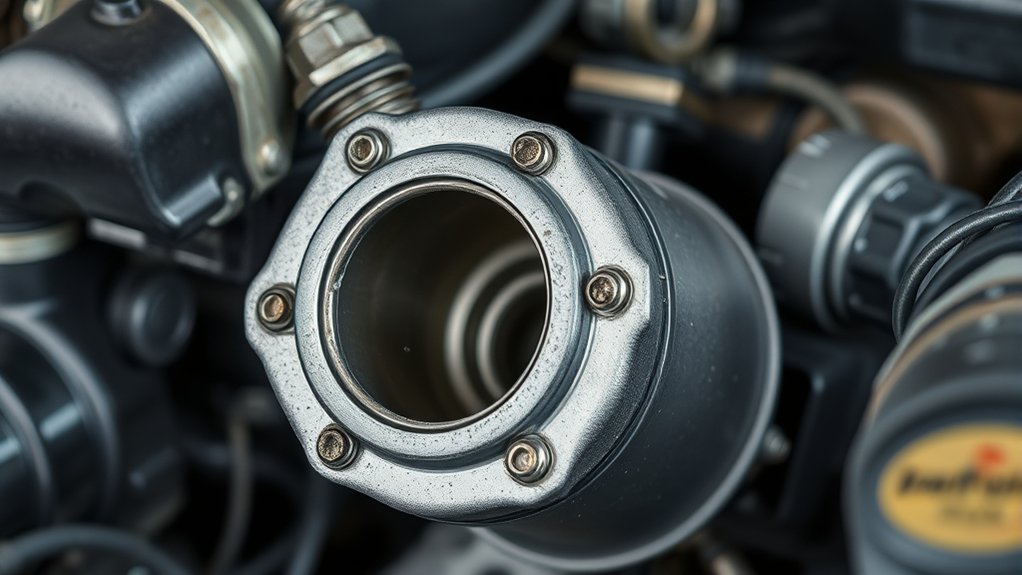
What Doe the Engine Oil Filter Housing Do
The engine oil filter housing secures your oil filter firmly to the engine, ensuring a sealed environment that controls oil flow precisely through the filter media. This crucial component helps maintain proper engine lubrication by directing oil to be filtered efficiently. It plays a vital role in protecting your engine from contaminants.
The housing is designed to withstand high temperatures and pressures, preventing leaks and maintaining consistent oil pressure. It also contains bypass valves that manage oil flow in case the filter becomes clogged. This feature ensures continuous oil circulation, even under adverse conditions.
Additionally, the oil filter housing allows for easy filter replacement, making maintenance straightforward. The choice of materials for the housing impacts its durability and the integrity of the seals. Overall, this component safeguards engine health by ensuring clean oil is always circulating properly.
Key Takeaways
- Secures the oil filter to the engine, ensuring a sealed environment for efficient oil filtration.
- Directs engine oil through the filter media to remove contaminants and maintain oil cleanliness.
- Regulates oil flow and pressure to support consistent engine lubrication and performance.
- Houses bypass valves to allow oil circulation if the filter becomes clogged, preventing engine damage.
- Made from durable materials like aluminum or reinforced plastic to withstand high temperatures and pressure.
What Is an Engine Oil Filter Housing?
What exactly is an engine oil filter housing, and why does it matter? The oil filter housing is a critical component that secures the oil filter to your engine, ensuring a sealed environment for proper oil flow. It’s not an irrelevant topic or something to dismiss as mere automotive nostalgia.
This housing must withstand high temperatures and pressure while preventing leaks. You’ll find it constructed from durable materials like aluminum or reinforced plastic, designed for precise fitment with the engine block. Its role extends beyond holding the filter. It channels oil efficiently through the filter media, maintaining engine lubrication integrity.
Understanding this component helps you appreciate why neglecting it can lead to contamination, poor oil circulation, or even engine damage.
How Your Oil Filter Housing Works
How does your oil filter housing manage the flow and filtration of engine oil? It directs the oil through a precise pathway, ensuring contaminants are trapped while maintaining optimal pressure. Within the housing, oil enters via an inlet, passes through the filter media, and exits cleanly to lubricate engine components.
This process excludes any irrelevant topic or unrelated concept that might confuse the oil’s purpose.
Key functions include:
- Sealing the oil filter securely to prevent leaks.
- Regulating oil flow to maintain consistent pressure.
- Housing bypass valves that allow oil circulation if the filter clogs.
- Facilitating easy replacement of the oil filter element.
Your oil filter housing is a critical, engineered component that guarantees efficient oil filtration without interference from irrelevant topic or unrelated concept.
Why the Engine Oil Filter Housing Matters for Engine Health
Regularly maintaining a properly functioning engine oil filter housing is essential for preserving your engine’s longevity and performance. This component ensures oil flows efficiently through the filter, trapping contaminants that would otherwise cause wear.
Ignoring its role is an unrelated topic or irrelevant discussion when diagnosing engine health issues. Understanding this housing’s significance helps you avoid premature engine damage.
| Function | Impact on Engine | Consequence if Neglected |
|---|---|---|
| Oil filtration control | Maintains purity | Increased wear and tear |
| Seal integrity | Prevents leaks | Oil pressure drop |
| Structural support | Holds filter firmly | Filter misalignment |
| Heat resistance | Prevents deformation | Compromised oil flow |
| Material durability | Ensures longevity | Frequent replacements |
You must prioritize housing upkeep for optimal engine operation.
Signs Your Engine Oil Filter Housing Is Damaged
If you notice visible oil leaks around the engine oil filter housing, it’s a clear indication of potential damage or seal failure. You might also experience engine overheating due to compromised oil flow and pressure. These signs require immediate inspection to prevent further engine wear or failure.
Visible Oil Leaks
Where exactly is that oil leak coming from? In modern engine design, the oil filter housing plays a critical role in oil filtration, ensuring contaminants don’t circulate through the engine. When this housing is damaged, you might notice visible oil leaks around the engine bay.
These leaks often appear as:
- Oil pooling beneath the vehicle near the filter housing area
- Dark, oily residue on the engine block or surrounding components
- Wetness or dripping oil around the filter cap or housing seals
- A strong burnt oil smell indicating oil is escaping and contacting hot surfaces
Such leaks compromise oil pressure and filtration efficiency, risking engine wear. Inspecting the housing and seals promptly helps maintain proper oil flow and prevents further engine damage.
Engine Overheating Signs
How can you tell if a damaged engine oil filter housing is causing your engine to overheat? The engine oil filter housing maintains oil flow and pressure, crucial for engine cooling. A crack or failure disrupts this flow, reducing oil circulation and causing excessive heat buildup.
| Sign | Cause | Effect on Engine |
|---|---|---|
| Rising temperature gauge | Oil flow restriction by damaged housing | Overheating and potential engine damage |
| Burning oil smell | Oil leaks near filter housing | Oil level drop, poor lubrication |
| Engine warning light | Pressure loss in engine oil system | Reduced cooling efficiency |
| Engine noise | Insufficient oil reaching components | Increased friction and heat |
Monitoring these signs helps you detect filter housing damage early, preventing severe engine damage.
What Happens If the Oil Filter Housing Fails?
If your oil filter housing fails, you risk significant engine damage due to inadequate oil circulation and filtration. You’ll likely encounter oil leaks that reduce lubrication efficiency and can contaminate other engine components. Addressing housing failure promptly is critical to maintaining engine integrity and preventing costly repairs.
Engine Damage Risks
What consequences arise when the oil filter housing fails? You risk severe engine damage due to disrupted oil flow, which compromises oil pressure and reduces fuel efficiency. When the housing malfunctions, filtered oil circulation becomes irregular, leading to inadequate lubrication. This causes metal components to wear prematurely.
Key engine damage risks include:
- Rapid wear of bearings and camshafts from insufficient lubrication
- Overheating due to increased friction and reduced oil pressure
- Contaminants bypassing the filter, accelerating internal engine corrosion
- Decreased fuel efficiency caused by increased engine load and friction
Ignoring these risks can result in costly repairs or complete engine failure. Maintaining the integrity of your oil filter housing is optimal to preserving critical oil flow, protecting engine components, and ensuring reliable performance.
Oil Leakage Issues
Oil leakage from a compromised oil filter housing poses immediate threats to engine performance and safety. When the housing fails, oil leaks occur, resulting in insufficient lubrication, increased friction, and accelerated wear of engine components.
You might notice oil spots beneath your vehicle or a sudden drop in oil pressure, signaling a potential housing crack or seal failure. Ignoring these oil leaks can lead to severe engine damage or complete failure.
To prevent this, follow maintenance tips such as regularly inspecting the housing for cracks, ensuring the filter is correctly installed, and replacing seals during oil changes. Promptly addressing oil leakage issues not only safeguards your engine but also maintains optimal performance and avoids costly repairs down the line.
Common Materials Used for Engine Oil Filter Housings
Which materials best withstand the demanding conditions inside an engine’s oil filter housing? You need materials that resist high temperatures, pressure fluctuations, and chemical exposure, ensuring consistent oil viscosity and optimal filter capacity. Commonly, manufacturers select from:
- Aluminum: Lightweight, excellent heat dissipation, and corrosion-resistant, ideal for maintaining oil viscosity.
- Steel: Offers superior strength and durability, handling high pressure without deformation.
- Composite Plastics: Resistant to corrosion and chemical breakdown, contributing to stable filter capacity.
- Cast Iron: Extremely robust, often used in heavy-duty engines requiring enhanced structural integrity.
Each material balances mechanical strength and chemical resistance differently, impacting the housing’s longevity and performance. Choosing the right material ensures your engine oil filter housing supports efficient filtration under varying operating conditions without compromising oil flow or filtration accuracy.
Should You Replace or Repair Your Oil Filter Housing?
When should you consider replacing rather than repairing your engine oil filter housing? If the housing shows visible cracks, warping, or corrosion that compromises the seal integrity, replacement is necessary to prevent oil leaks and engine damage.
Replace your engine oil filter housing if cracks, warping, or corrosion threaten seal integrity and cause leaks.
Minor issues like clogged passages or dirt accumulation can often be resolved through thorough cleaning filters and housing components. Conduct a cost comparison: if repair expenses, including labor and parts, approach or exceed a new housing’s price, replacement is more economical.
Additionally, repeated repairs indicate underlying material fatigue, making replacement the prudent choice. Prioritize component integrity over short-term fixes to maintain optimal oil flow and filtration efficiency.
Your decision should balance cost, durability, and the housing’s role in protecting engine performance.
How to Inspect and Maintain Your Oil Filter Housing
Ensuring your oil filter housing remains in peak condition requires regular inspection and maintenance to prevent potential failures. Follow maintenance scheduling aligned with factory specifications to maintain optimal performance.
During inspections, focus on these critical areas:
- Check for visible cracks or corrosion on the housing surface.
- Inspect the sealing gasket for wear, deformation, or leaks.
- Verify that mounting bolts are torqued to factory-specified values.
- Examine oil passages for blockages or contamination.
Tips for Choosing the Right Engine Oil Filter Housing
How do you select the right engine oil filter housing for your vehicle? First, focus on compatibility: ensure the housing matches your engine model and oil filter specifications. Check material quality; aluminum or high-grade plastic offer durability and heat resistance.
Avoid irrelevant topic distractions like brand popularity or unrelated features. Prioritize precise fitment to prevent leaks and maintain optimal oil pressure. Review OEM standards and certifications rather than off topic ideas such as aesthetic preferences.
Also, consider ease of installation and maintenance access, which affect service efficiency. Finally, verify that the housing supports your engine’s oil flow rate to prevent performance issues. By concentrating on these technical parameters, you’ll choose an engine oil filter housing that ensures reliability and longevity without being sidetracked by irrelevant topic details.
Frequently Asked Questions
Can I Use a Universal Oil Filter Housing on Any Car Model?
You can’t rely on universal compatibility for oil filter housings because brand compatibility and specific engine designs vary. Always check manufacturer specifications to ensure proper fit, sealing, and performance for your car model.
How Often Should the Oil Filter Housing Gasket Be Replaced?
You shouldn’t wait forever. Replace the oil filter housing gasket every 50,000 miles or at every oil change if using universal fit parts. Aftermarket reliability varies, so stick to manufacturer’s replacement intervals for ideal sealing and performance.
Does Engine Oil Filter Housing Affect Fuel Efficiency?
Yes, a damaged engine oil filter housing can reduce engine efficiency by causing oil leaks or pressure loss, leading to increased maintenance costs.
Keeping it well-maintained guarantees optimal lubrication, preserving fuel efficiency and engine performance.
Are Aftermarket Oil Filter Housings Reliable Compared to OEM?
You’ll find some aftermarket oil filter housings reliable, but many can increase induction noise or cause turbo lag due to inferior design or materials.
OEM parts generally assure consistent performance and durability under precise engine conditions.
Can a Faulty Oil Filter Housing Cause Engine Overheating?
Like a faulty dam disrupting a river’s flow, a defective oil filter housing can spike engine temperature by impairing oil pressure. This hinders lubrication and causes your engine to overheat and suffer critical damage if not addressed promptly.
Conclusion
Now that you understand the vital role your engine oil filter housing plays, don’t let it be the weak link in your engine’s chain. This component ensures your oil stays clean, protecting your engine’s intricate parts from wear and tear. Regular inspections and timely replacements keep your engine purring smoothly.
Remember, neglecting it is like leaving a gate unguarded—problems will sneak in and cause costly damage. Stay proactive for optimal engine health by paying close attention to your engine oil filter housing.