Are Front and Rear Brake Pads the Same
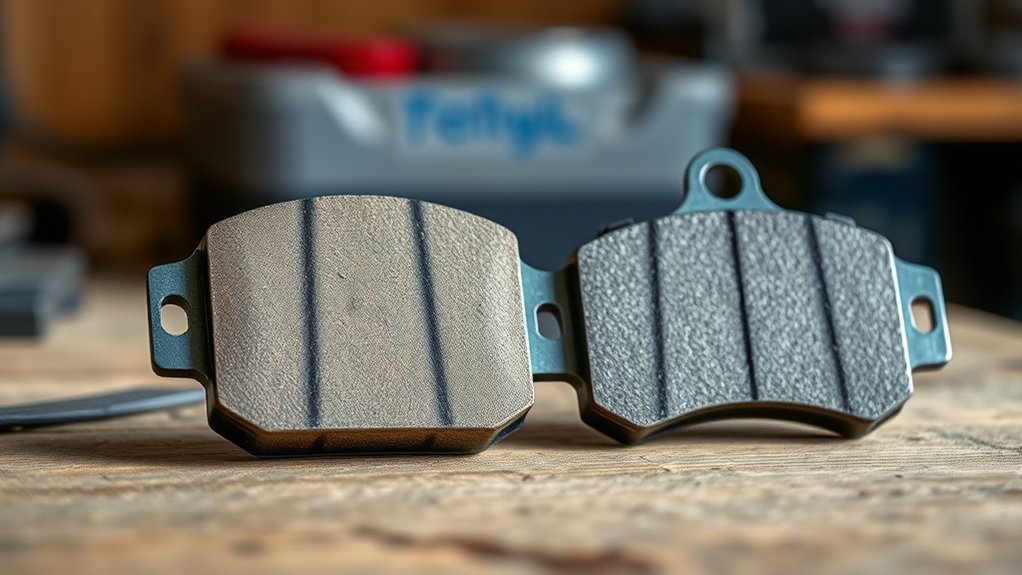
You can’t use front and rear brake pads interchangeably because they serve different roles and face distinct stresses. Front and rear brake pads are designed to handle different braking demands, so using them incorrectly can cause issues.
Front pads handle more braking force, requiring a larger size, higher heat resistance, and materials like semi-metallic or ceramic. Rear pads are smaller and designed for less heat and wear, often using quieter organic compounds.
Swapping pads risks poor fit, increased wear, and compromised safety. Understanding these differences ensures proper selection and maintenance to maximize braking performance and longevity.
Key Takeaways
- Front and rear brake pads differ significantly in size, shape, and material composition to match distinct braking roles and caliper designs.
- Front pads handle greater braking force with heat-resistant semi-metallic or ceramic compounds, while rear pads use quieter, durable organic materials.
- Front pads wear faster due to higher stress, requiring more frequent replacement than rear pads optimized for lower heat and wear.
- Swapping front and rear pads compromises safety, fitment, and braking performance and is not recommended without compatibility verification.
- Always follow manufacturer specifications for pad material, thickness, and position to ensure proper brake function and vehicle safety.
What Are the Key Differences Between Front and Rear Brake Pads?
How do front and rear brake pads differ in design and function? You’ll find that front vs rear brake pads vary primarily due to their roles in vehicle braking dynamics.
Front brake pads handle more braking force since weight shifts forward during deceleration, so they’re generally larger and made from materials designed to withstand higher temperatures and friction. Rear brake pads are smaller and often use different brake pad materials optimized for less heat and wear, reflecting their reduced braking load.
Front pads typically utilize semi-metallic or ceramic compounds for durability and heat dissipation, while rear pads may incorporate organic materials for quieter operation. Understanding these distinctions helps you appreciate why front and rear brake pads aren’t interchangeable, as their design and material composition suit specific braking demands.
Is It Safe to Swap Front and Rear Brake Pads?
Why should you avoid swapping front and rear brake pads? The primary reason is front/rear compatibility. Front and rear pads are engineered differently to accommodate distinct braking forces and heat dissipation requirements.
Swapping them compromises pad swapping safety, as rear pads placed in front may overheat or wear prematurely, while front pads in the rear could cause inadequate braking. Additionally, differences in pad size, shape, and material affect performance and fitment.
Using the correct pads ensures optimal contact with rotors, maintaining braking efficiency and vehicle control. Ignoring these design specifics risks uneven wear, reduced stopping power, and potential brake failure.
To guarantee pad swapping safety, always use brake pads specified for their designated front or rear position, adhering strictly to manufacturer recommendations and vehicle specifications.
When to Replace Front vs Rear Brake Pads
When should you replace your front and rear brake pads to maintain optimal vehicle safety and performance? Front brake pads typically wear faster due to handling most of the braking force, so monitor their thickness regularly.
Rear pads last longer but require timely replacement to prevent uneven wear and ensure balanced braking. Avoid a front/rear swap without verifying pad compatibility, as differences in size and material affect performance.
Inspect pads for thickness below 3mm or uneven wear patterns. Also, listen for squealing or grinding noises, indicating pad degradation.
Replacing front and rear pads based on manufacturer guidelines and actual wear ensures consistent stopping power and prevents damage to rotors. Proper timing in replacement preserves brake system integrity and maintains vehicle stability under braking.
Design Differences Between Front and Rear Brake Pads
You’ll notice front and rear brake pads differ markedly in material composition, tailored to their specific performance demands. Their size and shape also vary to fit distinct caliper designs and mounting positions. Additionally, front pads often incorporate enhanced heat dissipation features to handle greater thermal loads during braking.
Material Composition Variations
How do front and rear brake pads differ in their material composition? Front specific brake pads usually feature a higher concentration of friction modifiers and heat-resistant compounds to manage the greater thermal stress generated during braking. These materials ensure efficient heat dissipation and consistent friction performance under high loads.
Conversely, rear specific brake pads often use formulations optimized for lower heat exposure and longer wear life, as rear brakes handle less braking force. You’ll find rear pads incorporate materials that balance durability with quieter operation and reduced dust production.
Understanding these material composition variations helps you select the appropriate pads that match the distinct functional demands of front and rear braking systems, ensuring optimal safety and performance tailored to each axle’s operational requirements.
Size And Shape Differences
Why do front and rear brake pads differ in size and shape? The variations stem from their distinct functional demands and mechanical constraints. The front pad is generally larger and thicker because it handles more braking force, while the rear pad is smaller, reflecting its secondary role.
Consider these key points when comparing front and rear pads:
- Front pads have a broader surface area to maximize friction and stopping power.
- Rear pads are often more compact to fit within limited spatial confines.
- The shape of the front pad accommodates larger calipers and rotors.
- Rear pads are designed for lighter loads, influencing their contour and thickness.
Understanding these design differences helps you select the right brake pads, ensuring optimal performance and safety.
Heat Dissipation Design
Where does the heat go when you brake hard? Front brake pads absorb and dissipate significantly more heat than rear pads due to their primary braking role. Their design incorporates advanced materials and larger surface areas to manage thermal loads effectively, preventing fade and maintaining performance.
In contrast, rear pads experience less intense heat cycles, so their heat dissipation design is less robust, reflecting lower thermal demands and contributing to longer rear wear intervals. This non heat discussion highlights how rear pads prioritize durability over aggressive cooling.
Understanding these differences helps you appreciate why front and rear brake pads aren’t interchangeable. Their heat management capabilities directly influence braking efficiency and lifespan, with front pads engineered to handle higher thermal stress while rear pads focus on sustained wear resistance.
Material Differences in Front vs Rear Brake Pads
You’ll notice front and rear brake pads use different materials tailored to their roles. Front pads generally contain compounds designed for higher heat resistance due to greater braking force. Rear pads prioritize durability and consistent wear since they handle less intense braking loads.
Composition Variations Explained
How do material differences between front and rear brake pads affect their performance? The composition differences directly influence how each pad manages friction, wear, and heat.
Front brake pads typically contain higher carbon content or semi-metallic compounds to optimize stopping power and heat dissipation due to greater braking loads. Rear pads, conversely, use formulations prioritizing durability and quieter operation, often with more organic materials.
Key factors in composition variations include:
- Friction coefficient tailored to load distribution
- Particle size and binder type influencing wear rates
- Inclusion of fillers to modulate noise and dust
- Material density affecting heat management efficiency
Understanding these differences helps you select pads designed for their specific braking roles, ensuring balanced performance and safety.
Heat Resistance Differences
Material composition directly impacts the heat resistance capabilities of front and rear brake pads, affecting their performance under varying thermal conditions. Front pads typically endure higher temperatures due to greater braking force, so their materials are engineered for superior front pad heat resistance.
Rear pads experience lower heat levels, allowing for less heat-resistant compounds. Understanding these differences helps you select the right pads for optimal thermal performance.
| Brake Pad Position | Typical Operating Temperature | Heat Resistance Material |
|---|---|---|
| Front | 300°C – 500°C | High-carbon, ceramic composites |
| Rear | 150°C – 300°C | Semi-metallic, organic blends |
| Heat Exposure | High (front pad heat) | Moderate (rear pad heat) |
This table clarifies how material choices correlate with heat demands in front and rear brake pads.
Wear and Durability
Why do front and rear brake pads wear at different rates? It mainly comes down to load distribution and material design. The front pads handle more braking force, demanding higher durability and heat resistance, while rear pads experience less stress.
When considering front rear compatibility, you must remember that materials differ to optimize performance and longevity.
Key factors affecting wear and durability include:
- Friction material composition tailored to front or rear demands
- Heat dissipation capabilities influencing pad squeal causes
- Mechanical load variations during braking
- Pad thickness and backing plate design
Using mismatched pads can accelerate wear or cause squealing noises. Always select brake pads engineered for their specific axle to ensure optimal durability and quiet operation.
How to Choose the Right Brake Pads for Your Car
When selecting brake pads, what factors should you prioritize to ensure optimal performance and safety? First, verify front compatibility and rear applicability specific to your vehicle model. Choose pads with materials that match your driving style: ceramic for quiet, stable wear or semi-metallic for better heat dissipation. Also, consider manufacturer specifications for thickness and fit to avoid premature wear or brake failure.
| Factor | Importance |
|---|---|
| Front Compatibility | Ensures correct fit and performance |
| Rear Applicability | Matches rear brake system requirements |
| Material Type | Affects heat resistance and noise |
| Thickness | Influences durability and safety |
Tips for Maintaining Front and Rear Brake Pads
How can you extend the lifespan of your front and rear brake pads while maintaining peak braking performance? Proper maintenance is key. Avoid performing a front rear swap without confirming pad compatibility, as improper pad substitution can cause uneven wear or reduced efficiency.
Monitor pad thickness regularly and replace pads before they reach the minimum thickness specified by the manufacturer. Ensure your brake fluid is clean and topped up to support consistent pad engagement.
- Inspect pads for uneven wear patterns indicating a potential front rear swap issue
- Clean calipers and sliders to prevent binding and uneven pad wear
- Check rotor condition to avoid premature pad degradation after pad substitution
- Use manufacturer-approved pads for front and rear to maintain braking balance
Following these steps ensures safe, reliable braking and prolongs pad life.
Common Mistakes to Avoid When Replacing Brake Pads
What common pitfalls should you watch out for when replacing brake pads? First, never assume front brake and rear brake pads are interchangeable; they have distinct sizes and compositions tailored for their positions. Using the wrong pads can compromise braking efficiency.
Second, avoid neglecting to clean the caliper and rotor surfaces before installation. Dirt or debris can cause uneven wear or noise. Third, don’t forget to properly lubricate the caliper slides. Dry slides lead to uneven pad contact and premature wear.
Fourth, always check the rotor condition. Installing new pads on warped or excessively worn rotors reduces performance. Finally, ensure you torque all bolts to manufacturer specifications. Over- or under-tightening can lead to brake system failures or noises.
Avoid these mistakes to maintain safe, effective braking.
Frequently Asked Questions
How Do Brake Pad Noises Differ Between Front and Rear Brakes?
You’ll notice front brake noises often sound louder and sharper due to higher pressure and heat, while rear brake noises tend to be quieter, sometimes squealing or grinding. This reflects different wear patterns and braking forces on each axle.
Can Brake Pad Wear Affect ABS Performance?
You might think front brake wear and rear brake wear only affect stopping power, but they also impact ABS performance. Uneven wear can confuse sensors, causing delayed or erratic ABS activation, compromising your vehicle’s safety systems.
What Is the Average Lifespan of Brake Pads in Wet Climates?
In wet climates, brake pad materials typically last 25,000 to 40,000 miles due to increased moisture and corrosion.
You should monitor wear indicators closely, as they signal when pads require timely replacement to maintain braking performance.
Do Electric Vehicles Use Different Brake Pads Than Gasoline Cars?
EV brake pads differ because regenerative braking reduces wear, so they’re often softer and designed for lower heat.
You’ll find EV brake pads engineered to optimize lifespan and performance under these unique braking conditions.
How Does Brake Pad Dust Impact Wheel Cleaning?
Brake pad dust, mainly from front pad wear, accumulates on wheels, making cleaning tougher.
Rear pad material often produces less dust, so you’ll notice less residue, simplifying wheel maintenance and preserving finish quality longer.
Conclusion
Now that you know front and rear brake pads differ in design, material, and function, you might wonder—can you really swap them without consequences? The answer lies in understanding each pad’s unique role and wear patterns. Ignoring these differences could compromise your braking efficiency and safety.
Ready to dive deeper? Stay tuned, because mastering brake pad selection and maintenance is essential for keeping your vehicle performing at its best—and your safety intact. Remember, choosing the right front and rear brake pads is crucial for optimal braking performance.