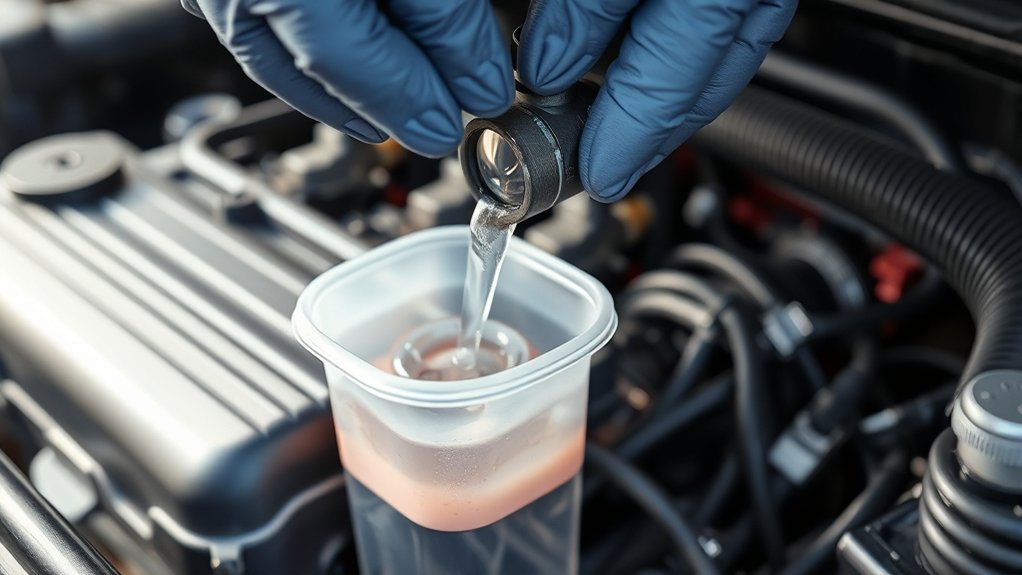
How to Flush Coolant
To flush your coolant, first ensure the engine is cool to avoid burns or damage. Then, drain the old fluid via the radiator valve into a proper container for safe disposal.
Close the valve securely, fill the system with water or a cleaner solution, and run the engine to circulate the fluid thoroughly. After circulation, drain the system again safely to remove contaminants.
Refill the system with a 50/50 coolant mix, then bleed any trapped air using the bleeder valve. Confirm the temperature is stable and the coolant color looks clean.
Proper flushing prevents overheating and corrosion, maintaining the integrity of the cooling system. For detailed steps and common errors, explore further guidance.
How to Tell If Your Coolant Needs a Flush
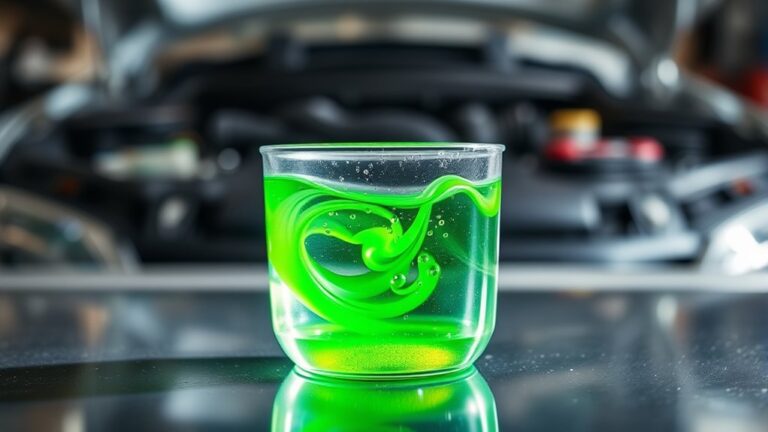
How can you determine if your coolant needs a flush? Start by inspecting its color and consistency. Fresh coolant typically appears bright green, orange, or pink, depending on the type.
If you notice rust, brown discoloration, or debris, this signals contamination requiring a flush. Additionally, test the coolant’s pH and freezing point using a hydrometer or test strips to detect degradation.
Avoid engaging in irrelevant topic or off topic discussion about unrelated engine components when diagnosing coolant condition. Focus solely on coolant quality indicators.
Also, monitor your vehicle’s temperature gauge; frequent overheating may suggest compromised coolant effectiveness. Regular maintenance schedules, as outlined in your owner’s manual, provide essential timelines for flushing.
Why Flushing Your Coolant Prevents Engine Damage
Why does flushing your coolant play a critical role in preventing engine damage? Over time, coolant degrades and loses its ability to prevent rust and corrosion inside the engine’s cooling system. By flushing old coolant, you remove contaminants and deposits that cause rust buildup, which can block coolant flow and lead to overheating.
This process helps maintain optimal heat transfer and protects metal components from corrosion-related wear.
Additionally, flushing coolant supports battery maintenance indirectly. A clean cooling system prevents overheating, which can strain your battery and reduce its lifespan.
Contaminated coolant can cause the engine to run hotter, forcing the battery to work harder. Regular flushing ensures your engine runs efficiently and your battery remains in good condition, preventing costly repairs down the line.
What Tools and Materials You Need to Flush Coolant
You’ll need specific tools like a radiator wrench, drain pan, and funnel to flush your coolant effectively. Selecting the correct coolant type for your vehicle is essential to prevent corrosion and maintain performance. Don’t forget to wear safety gear such as gloves and goggles to protect yourself during the process.
Essential Tools Overview
What tools and materials do you need to flush your vehicle’s coolant effectively? Start with a basic mechanic’s toolset including screwdrivers, pliers, and a wrench set to open the radiator drain plug and remove hose clamps. Use a drain pan to collect old coolant, preventing spills that cause environmental disposal issues.
Have a funnel on hand to add new coolant without contamination. Gloves and safety goggles are essential to avoid insufficient safety risks from exposure to toxic fluids. Additionally, a garden hose can help flush the system thoroughly, while rags or shop towels assist with quick cleanups.
Finally, ensure you have access to a proper coolant disposal container to comply with environmental regulations and avoid improper waste handling. With these tools, you’ll perform a safe, efficient coolant flush.
Coolant Types Selection
After gathering the necessary tools and materials, selecting the correct type of coolant becomes the next priority. Focus on coolant chemistry, as different formulations, such as ethylene glycol, propylene glycol, or organic acid technology (OAT), offer specific corrosion protection and heat transfer properties.
Check your vehicle compatibility by consulting the owner’s manual or manufacturer specifications. Using the wrong coolant can cause corrosion, clogging, or diminished performance.
Ensure the coolant matches both the recommended type and concentration, typically a 50/50 mix with distilled water. Avoid mixing incompatible coolants, which can degrade protective additives.
Accurate coolant selection maximizes system longevity and thermal efficiency, making it essential to verify compatibility and chemistry before you begin the flushing process.
Safety Gear Requirements
Because flushing coolant involves handling hot fluids and potentially hazardous chemicals, wearing appropriate safety gear is essential to protect yourself from burns, spills, and toxic exposure. Always use chemical-resistant gloves, safety goggles, and long sleeves to prevent skin and eye contact.
Avoid improper PPE, such as standard work gloves or regular glasses, which won’t provide adequate protection. Use a face shield if splashing is likely.
Selecting the correct tools is equally important; using the wrong tool can lead to leaks or damage, increasing exposure risks. Ensure your tools are specifically designed for coolant system maintenance, like radiator wrenches and drain pans resistant to chemical corrosion.
Prioritize safety by inspecting your gear and tools before starting, and never substitute with inadequate equipment or improper PPE to maintain a safe working environment.
How to Safely Drain Old Coolant
When you’re ready to drain old coolant, start by ensuring the engine is completely cool to prevent burns or injury. Next, position a drain pan beneath the radiator’s drain valve or petcock. Open the valve carefully, allowing the coolant to flow out fully.
Avoid spilling coolant on the ground, as it’s toxic and harmful to the environment. Use gloves and safety glasses as part of your car maintenance routine to protect your hands and eyes. While waiting, check your tire care essentials. Proper tire pressure complements overall vehicle health.
After draining, close the valve securely to prevent leaks. Dispose of the old coolant according to local regulations. Following these steps ensures a safe, clean process and sets the stage for an effective coolant flush.
Steps to Flush Your Coolant System With Water or Cleaner
Begin flushing your coolant system by filling the radiator with water or a recommended cooling system cleaner. Make certain the engine is cool before opening the radiator cap to prevent injury.
Start flushing your coolant system by filling the radiator with water or a suitable cleaner when the engine is cool.
After filling, replace the radiator cap securely and start the engine. Let it run until it reaches normal operating temperature, allowing the cleaner or water to circulate thoroughly through the system.
Turn off the engine and let it cool completely to avoid burns during the next step. Next, drain the radiator and heater core by opening the drain plug or petcock at the radiator’s bottom.
Properly dispose of the contaminated fluid according to local regulations. This procedure is essential for effective vehicle maintenance and ensures your system is free of contaminants, enhancing engine efficiency while following essential DIY safety practices.
How to Refill Your Cooling System With Fresh Coolant
How do you properly refill your cooling system with fresh coolant to ensure optimal engine performance? First, consult your vehicle’s manual to select the correct coolant type, avoiding misleading labeling that can cause you to buy incompatible fluids.
Use a 50/50 mixture of antifreeze and distilled water unless the product specifies a pre-mixed formula. Slowly pour the coolant into the radiator or the reservoir tank until it reaches the recommended level. Avoid overfilling, which can cause pressure issues.
After refilling, securely tighten the cap. Remember to dispose of old coolant responsibly by taking it to a recycling center or hazardous waste facility; never pour it down drains or onto the ground. Proper coolant disposal prevents environmental contamination and complies with regulations.
How to Bleed Air From Your Cooling System
Why is it essential to remove air trapped in your cooling system? Air pockets reduce coolant capacity and hinder efficient heat transfer, potentially causing engine overheating.
Removing air from your cooling system prevents overheating by ensuring efficient heat transfer and full coolant capacity.
To bleed air, start with the engine cool and the radiator cap off. Locate the bleeder valve, often near the thermostat housing or radiator.
Open the valve slowly while filling the system with coolant until you see a steady flow without bubbles. This process expels trapped air and restores full coolant capacity.
Keep the system topped off during bleeding to prevent new air from entering. Once you’ve bled the air, close the valve securely and replace the radiator cap.
Run the engine until it reaches operating temperature, then recheck coolant levels. Proper bleeding ensures optimal cooling system performance and protects your engine from damage.
Signs Your Coolant Flush Worked
You’ll know your coolant flush worked when your engine maintains a stable temperature without overheating or fluctuations. Also, check the coolant reservoir for clear, brightly colored fluid instead of murky or rusty liquid. These signs indicate the cooling system is properly cleaned and functioning efficiently.
Temperature Stability
When should you expect your engine’s temperature to stabilize after a coolant flush? Typically, temperature stability should occur within a few driving cycles once the new coolant materials circulate fully through the cooling system.
Monitor your engine’s temperature gauge closely; consistent readings within the manufacturer’s normal operating range indicate effective heat transfer and system balance. If the temperature fluctuates erratically or rises excessively, it may signal air pockets or incompatible coolant materials.
Ensure you use coolant materials specified for your vehicle to maintain proper thermal conductivity and corrosion inhibition. Avoid premature judgments; give the system time to purge trapped air. Achieving temperature stability confirms that your coolant flush successfully restored the cooling system’s efficiency and prevents engine overheating or thermal stress.
Clear Coolant Appearance
How can you tell if your coolant flush was successful by its appearance? Clear coolant is a primary indicator. After flushing, the fluid should look bright and transparent, free from rust, debris, or discoloration.
If your coolant appears cloudy, murky, or contains particles, it suggests the flush was incomplete or contaminated. Avoid confusing this assessment with irrelevant topic discussions like engine noise or unrelated maintenance issues; focus strictly on the coolant’s visual clarity.
An off topic discussion about unrelated symptoms can mislead your evaluation. Properly flushed coolant will maintain a consistent, clear color, typically green, orange, or pink depending on type, without sediment.
Verifying this clarity ensures the cooling system is clean and functioning optimally, preventing overheating and corrosion.
How Often to Flush Your Coolant
How often should you flush your coolant to maintain peak engine performance? Typically, manufacturers recommend flushing every 30,000 to 50,000 miles or every 2 to 5 years, depending on your vehicle and coolant type. Check your owner’s manual for precise intervals.
Regular flushing prevents corrosion, sediment buildup, and overheating. When considering two word discussion ideas like “coolant lifespan” or “engine maintenance,” remember that unrelated topic factors such as driving conditions and climate also influence the frequency.
Severe environments, like extreme heat or stop-and-go traffic, may require more frequent flushing. Monitor coolant quality and system performance regularly. By adhering to the recommended schedule and adjusting for conditions, you ensure your engine’s cooling system operates efficiently, extending its longevity and avoiding costly repairs.
Mistakes to Avoid When Flushing Your Coolant
When flushing your coolant, avoid using the incorrect coolant type, as it can cause corrosion and reduce system efficiency. Don’t skip the proper system bleed, or you’ll risk air pockets that lead to overheating. Paying attention to these details guarantees your cooling system functions correctly after the flush.
Using Incorrect Coolant Type
Selecting the wrong coolant type can cause severe damage to your engine’s cooling system. Different engines require specific coolant formulations to maintain optimal temperature and prevent corrosion.
Using an incompatible coolant can lead to chemical reactions that degrade seals and gaskets, potentially contaminating engine oil and compromising the fuel system. Avoid mixing coolant types; always flush the old coolant thoroughly before adding the new one.
Check your owner’s manual or manufacturer specifications to confirm the correct coolant type, including the proper mixture ratio of antifreeze and water. Incorrect coolant can cause overheating, reduce heat transfer efficiency, and promote rust buildup inside the radiator and engine block.
Skipping Proper System Bleed
Why does proper system bleeding matter after flushing your coolant? Skipping the bleed procedure can trap air pockets within the cooling system, causing overheating and inefficient coolant circulation.
After flushing, you must execute the bleed procedure meticulously to expel all trapped air. Begin by filling the radiator or reservoir with coolant, then run the engine at idle with the heater on maximum to circulate fluid.
Open bleed valves or use designated bleed screws to allow air to escape. Monitoring coolant levels during this process is crucial to prevent introducing new air.
Finally, perform a pressure test to ensure the system seals correctly and no leaks or air remain. Neglecting these steps compromises cooling performance and risks engine damage.
Always follow the bleed procedure thoroughly for optimal results.
Frequently Asked Questions
Can I Flush Coolant Myself or Should a Professional Do It?
You can flush coolant yourself if you prioritize DIY safety and choose proper tools. However, a professional vs DIY decision depends on your skill level.
Pros ensure thorough flushing and prevent damage if you’re uncertain or lack equipment.
What Types of Coolant Are Compatible With My Vehicle?
You should use the coolant specified in your vehicle’s manual to avoid engine warning issues. Using the wrong coolant can cause corrosion or overheating.
Always check compatibility, especially between conventional, OAT, and HOAT types.
How Do I Dispose of Old Coolant Safely and Legally?
You’ll want to gently retire your old coolant by taking it to authorized recycling centers. Never pour it down drains; it’s hazardous waste.
Follow local regulations to ensure safe, eco-friendly disposal and legal compliance.
Can Using the Wrong Coolant Damage My Engine?
Yes, using the wrong coolant can cause engine damage by corroding components or disrupting heat transfer. Avoid risks by performing a DIY flushing carefully or seeking professional help to insure the correct coolant is used.
What Are Common Symptoms of a Failing Radiator?
You might notice your radiator’s subtle sighs: overheating, coolant leaks, or discolored fluid. These misleading symptoms often mask hidden causes like clogged passages or corrosion. Regular inspections help you pinpoint and resolve these technical issues effectively.