How to Charge Lawnmower Battery With Battery Charger
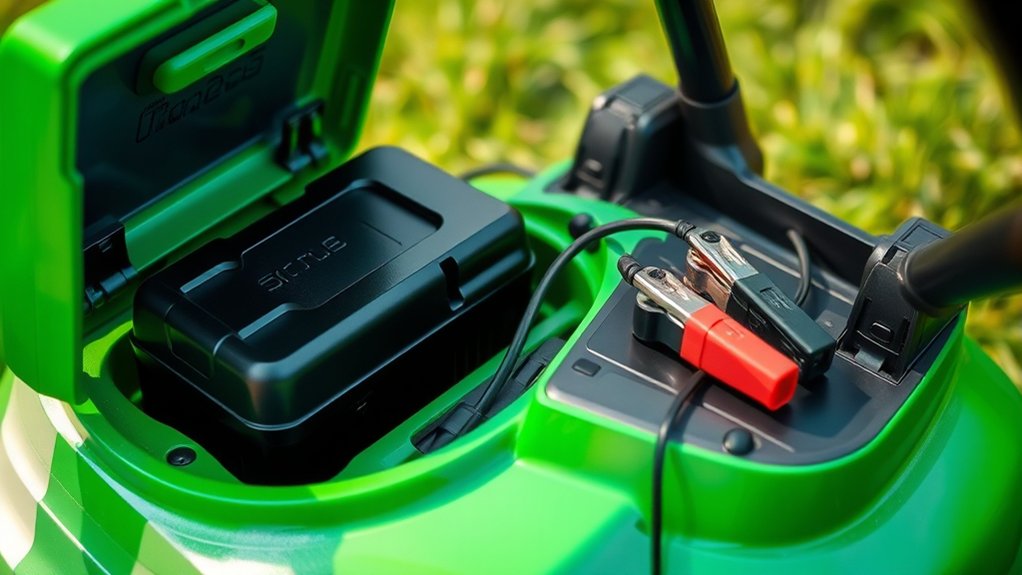
To charge your lawnmower battery with a battery charger, first disconnect the battery from the mower to protect the electrical system.
Identify whether the battery is lead-acid or lithium-ion, then select a compatible charger set to the appropriate voltage and amp settings.
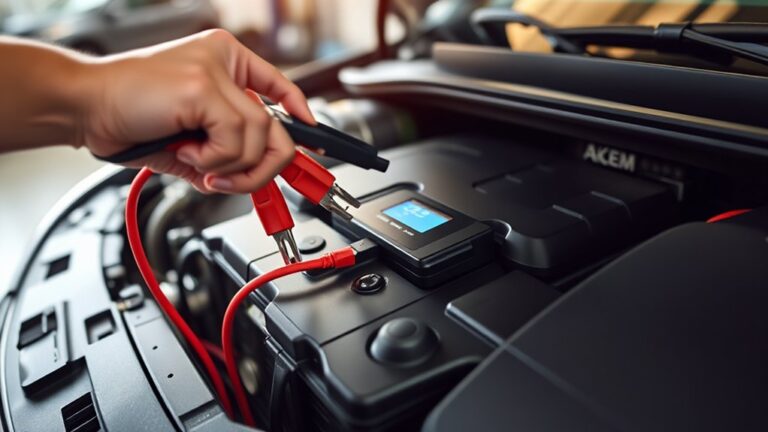
Connect the charger clamps with the correct polarity, ensuring a secure connection.
Monitor the battery’s voltage and temperature throughout the charging process to avoid overheating or damage.
Avoid overcharging by following the manufacturer’s recommended charging time.
Once the battery is fully charged, verify its voltage using a multimeter.
Following these steps helps prevent damage and extends the battery’s lifespan.
Keep reading for detailed tips on safe and efficient charging.
Key Takeaways
- Remove the battery from the lawnmower and wear safety gloves and glasses before charging.
- Identify battery type (lead-acid or lithium-ion) to select a compatible charger and charging protocol.
- Connect charger clamps correctly: red to positive and black to negative, ensuring connection integrity and correct polarity.
- Use a smart charger appropriate for the battery chemistry, monitor voltage with a multimeter, and avoid overcharging.
- After charging, verify full charge voltage (12.6–12.8 V for 12V batteries) and store battery in a cool, dry place.
Identify Your Lawnmower Battery Type
Before you charge your lawnmower battery, you need to identify its type. Start by checking the battery label or manual to identify battery chemistry. Common types include lead-acid (flooded or sealed) and lithium-ion. Each chemistry requires specific charging protocols to prevent damage or reduce lifespan.
Next, determine charging environment parameters such as temperature and ventilation, since some batteries are sensitive to heat or require well-ventilated areas to avoid gas buildup. Confirm whether your battery supports slow or fast charging to select appropriate settings later.
Proper identification ensures you apply the right voltage and current, optimizing performance and safety. Skipping this step risks overcharging or undercharging, which can impair battery efficiency or cause hazards during the charging process.
Essential Tools and Chargers for Lawnmower Battery Charging
You’ll need the right battery charger type—usually a smart or trickle charger—to safely restore your lawnmower battery. Along with the charger, essential accessories include insulated clamps and a multimeter to monitor voltage. Having these tools guarantees efficient and secure charging every time.
Types Of Battery Chargers
Choosing the right type of battery charger is essential for efficiently charging your lawnmower battery. Understanding charging basics helps you select between standard, trickle, and smart chargers.
Standard chargers deliver a steady current but require monitoring to avoid overcharging, which can damage your battery. Trickle chargers provide a low, continuous charge, ideal for maintaining battery health over time.
Smart chargers adjust the charging rate automatically, preventing overcharge and extending battery life. When choosing, consider safety considerations such as built-in protections against short circuits, reverse polarity, and overheating.
These features minimize risks during charging and ensure consistent performance. By matching the charger type to your battery’s needs, you optimize charging efficiency and maintain battery longevity without compromising safety.
Necessary Charging Accessories
What tools do you need to charge your lawnmower battery safely and effectively? You’ll require a reliable battery charger compatible with your battery type, safety gloves to protect against acid leaks, and a pair of insulated pliers for secure connections.
Additionally, a voltmeter helps monitor voltage levels during charging. Proper battery storage is essential before and after charging to avoid damage. Below is a quick reference for necessary accessories:
| Accessory | Purpose |
|---|---|
| Battery Charger | Provides controlled current |
| Safety Gloves | Protects hands from acid |
| Insulated Pliers | Ensures safe terminal contact |
| Voltmeter | Monitors battery voltage |
These tools support two word discussions like “charge rate” and “power output” to improve your charging process. Always prepare your workspace for safe battery storage.
Step-by-Step Charging Guide for Lead-Acid Lawnmower Batteries
Although lead-acid lawnmower batteries require careful handling, charging them with a proper battery charger is straightforward. First, remove the battery from the mower, ensuring you wear gloves and safety glasses.
Clean the terminals to prevent corrosion that might affect charging efficiency. Connect the charger clamps, red to positive and black to negative.
Set the charger to the appropriate voltage and amp setting for your battery. Begin charging, monitoring the process to avoid overcharging.
Disconnect once fully charged, typically indicated by the charger’s automatic shutoff. Proper battery maintenance after activities like tree pruning helps prevent soil erosion by ensuring your mower operates efficiently.
Regular charging extends battery life and supports consistent performance, keeping your lawn healthy and well maintained.
How to Safely Charge Lithium-Ion Lawnmower Batteries
You need to use a charger specifically designed for lithium-ion batteries to ensure safe and efficient charging. Monitor the battery temperature closely, as overheating can damage the cells or cause safety hazards. Stick to the recommended charging times to maintain battery health and prevent overcharging.
Proper Charger Selection
How do you ensure your lithium-ion lawnmower battery charges safely and efficiently? Start by selecting a charger designed specifically for lithium-ion battery chemistry. These chargers regulate voltage and current precisely, preventing overcharging and thermal runaway.
Avoid generic chargers, as they may not match your battery’s charging profile, risking damage or reduced lifespan. Look for chargers with built-in safety features like automatic shutoff and short-circuit protection.
Confirm the charger’s output voltage and current align with the battery manufacturer’s specifications to maintain charging safety. Using a charger compatible with your battery’s chemistry ensures stable charge cycles, preserves capacity, and minimizes hazards.
Proper charger selection is the foundation of safe, effective lithium-ion battery maintenance for your lawnmower.
Temperature Monitoring Importance
Selecting the right charger sets the stage for safe lithium-ion battery maintenance, but monitoring temperature during charging is equally important to prevent damage. You should use a charger with built-in temperature monitoring or place an external sensor on the battery housing.
Excessive heat indicates overcharging or internal faults, which can degrade battery life or cause safety hazards. Keep an eye on temperature thresholds specified by the manufacturer, typically around 45°C (113°F). If the battery gets too hot, immediately stop charging and allow it to cool.
These safety reminders help you avoid thermal runaway and maintain optimal battery performance. By actively monitoring temperature during charging, you ensure longevity and reduce risks associated with lithium-ion batteries in your lawnmower.
Charging Time Guidelines
When should you stop charging your lithium-ion lawnmower battery to maximize its lifespan and safety? Understanding the battery chemistry is essential. Lithium-ion batteries require precise charging times to avoid overcharging, which can reduce battery life or cause safety hazards.
Use a charger designed for lithium-ion chemistry to guarantee charger safety features like automatic shutoff and temperature monitoring are active.
| Battery Capacity (Ah) | Recommended Charging Time | Charging Current (A) |
|---|---|---|
| 2 | 1-2 hours | 1 |
| 4 | 2-3 hours | 2 |
| 6 | 3-4 hours | 2-3 |
| 8 | 4-5 hours | 3 |
| 10 | 5-6 hours | 3-4 |
Stop charging when full to prevent damage and preserve long battery life.
How to Tell When Your Lawnmower Battery Is Fully Charged
Wondering how to confirm that your lawnmower battery is fully charged? The most reliable method is to use a multimeter to check the voltage. A fully charged 12-volt battery typically reads around 12.6 to 12.8 volts.
Charging beyond this point risks overcharging, so avoid relying on irrelevant topics like visual inspection of the charger light alone, which can be misleading. Also, don’t confuse unrelated concepts such as engine performance with battery charge status.
Some chargers have automatic shutoff or indicator lights that turn green when charging is complete. Use these features if available, but verify with a voltage test for accuracy. By focusing on voltage measurement and charger indicators, you’ll precisely know when your lawnmower battery is ready for use.
Avoid Common Lawnmower Battery Charging Mistakes
One of the most common mistakes you can make while charging your lawnmower battery is neglecting to disconnect it from the mower before charging. This prevents electrical damage and guarantees accurate charging. Avoid irrelevant topics like overcomplicating charging with unnecessary tools.
Focus on two word discussion ideas such as “connection integrity” and “charge rate.” Also, don’t use a charger incompatible with your battery voltage. Ensure correct polarity to prevent short circuits or battery damage.
| Mistake | Consequence |
|---|---|
| Connected during charge | Electrical system damage |
| Incorrect charger | Battery failure |
| Reversed polarity | Short circuit |
Stick to these practical guidelines to avoid common pitfalls and charge your lawnmower battery safely and effectively.
Maintain Your Lawnmower Battery for Longer Life
Proper charging practices set a solid foundation, but maintaining your lawnmower battery guarantees it delivers reliable power season after season. To extend battery life, focus on these key steps:
- Regular Inspection: Check terminals for corrosion and clean them to maintain optimal conductivity. Inspect casing for cracks that could affect performance or increase noise levels.
- Proper Storage: Store the battery in a cool, dry place during off-season to prevent self-discharge and sulfation, which degrade capacity.
- Battery Recycling: When the battery reaches end-of-life, dispose of it responsibly through battery recycling programs to avoid environmental harm and recover valuable materials.
Following these steps helps you sustain battery efficiency, reduce maintenance noise, and ensure your lawnmower starts reliably for years.
Frequently Asked Questions
Can I Charge My Lawnmower Battery With a Car Battery Charger?
Yes, you can charge your lawnmower battery with a car battery charger, but ensure battery compatibility and follow charging safety guidelines.
Use the correct voltage and charger settings to avoid damage or hazards during the process.
How Long Does a Typical Lawnmower Battery Charge Take?
Charging your lawnmower battery typically takes 4 to 8 hours, like watching a slow sunrise. Prioritize charging safety and battery maintenance to prolong life: avoid overcharging, use the correct charger, and keep terminals clean for optimal performance.
What Should I Do if My Battery Won’t Hold a Charge?
If your battery won’t hold a charge, test its voltage and connections first. Avoid unrelated topics like random ideas; focus on replacing the battery or checking the charger, as a faulty battery often can’t be revived effectively.
Can Extreme Weather Affect Lawnmower Battery Charging?
Yes, extreme weather can affect your lawnmower battery’s charging efficiency. Cold reduces capacity, while heat accelerates degradation.
Always prioritize charging safety by avoiding charging in extreme temperatures and using a charger with temperature compensation features.
Is It Safe to Charge a Frozen Lawnmower Battery?
Charging a frozen lawnmower battery is like wrestling an icy dragon—dangerous! You shouldn’t charge frozen primers directly; first, thaw the battery completely to ensure battery safety and prevent damage or potential hazards during charging.
Conclusion
Properly charging and maintaining your lawnmower battery can extend its life by up to 50%. By identifying your battery type and using the right charger, you avoid damage and ensure peak performance.
Following safe, step-by-step charging methods prevents common errors that reduce battery efficiency. Always monitor charging progress to know when it’s full.
With these practical steps, you’ll keep your mower ready and avoid costly replacements, saving time and money in the long run. Charging your lawnmower battery with a battery charger is essential for maintaining its longevity and reliability.