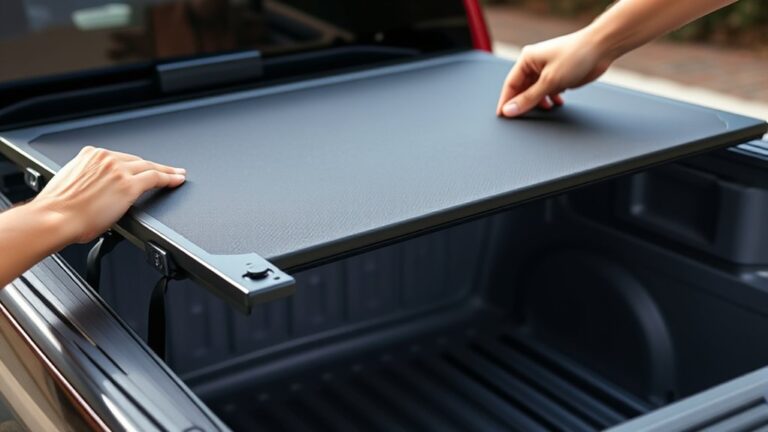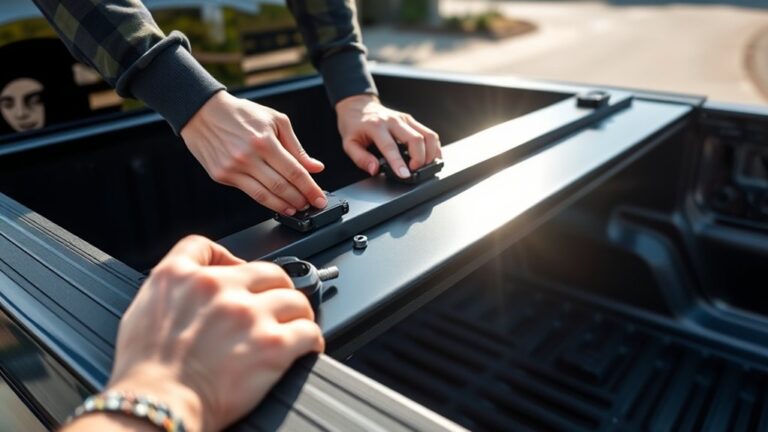
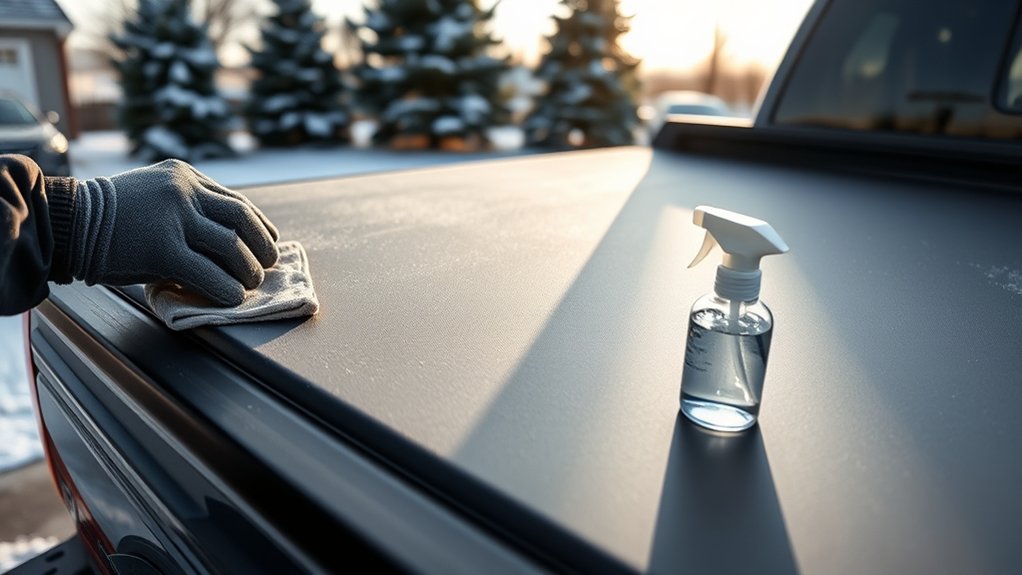
How to Keep Tonneau Cover From Freezing
To keep your tonneau cover from freezing, regularly clean it with mild detergent and dry it thoroughly to remove moisture that causes ice buildup.
Applying water-repellent sprays designed for rubber and vinyl creates a protective barrier, especially on seals and hinges. This helps reduce frost accumulation and keeps the cover functioning smoothly.
Use anti-corrosive lubricants on metal parts to prevent rust and avoid oil-based products that can attract dirt. Choosing covers made from weather-resistant materials with foam backing offers better insulation against cold temperatures.
Consistently maintaining these habits before winter helps prevent ice formation and extends the cover’s lifespan.
Additional steps can further improve frost management and ensure safer storage during freezing conditions.
How to Prevent Your Tonneau Cover From Freezing This Winter
How can you effectively prevent your tonneau cover from freezing during winter? Start by applying a silicone-based lubricant to the seal and hinges; this two word idea1 reduces moisture adhesion and prevents ice buildup.
Next, use a protective spray designed for vinyl or fabric tonneau covers to create a water-repellent barrier, a two word idea2 that minimizes freezing risks. Always ensure your cover is clean and dry before storage or overnight to avoid trapped moisture freezing.
Additionally, consider using a breathable tonneau cover to prevent condensation accumulation. When parking, avoid areas prone to frost accumulation, such as shaded or low-lying spots. These practical steps will help you maintain the cover’s functionality and prevent the inconvenience of a frozen tonneau cover throughout the winter months.
Why Tonneau Covers Freeze and How Ice Builds Up
Why does your tonneau cover freeze despite your best efforts? Ice formation occurs primarily because moisture migrates from the air and the truck bed onto the cover’s surface. When temperatures drop below freezing, this moisture condenses and solidifies, creating a layer of ice.
Moisture migration happens through condensation and trapped humidity under the cover, especially if the cover or truck bed isn’t fully sealed. Additionally, temperature fluctuations cause repeated cycles of freezing and thawing, which worsen ice buildup.
Understanding this process helps you recognize that ice isn’t just from external precipitation but also internal moisture trapped and migrating onto the cover. Preventing moisture accumulation is key to controlling ice formation on your tonneau cover during cold weather.
Preparing Your Tonneau Cover for Winter Protection
Before winter hits, you need to clean your tonneau cover thoroughly to remove dirt and moisture that cause freezing. Next, apply a protective lubricant to seals and moving parts to prevent ice buildup. Finally, store the cover properly when not in use to maintain its condition throughout the cold months.
Clean Cover Thoroughly
A thorough cleaning of your tonneau cover is essential to prevent ice buildup and guarantee proper sealing during winter. To clean cover effectively, start by removing loose debris with a soft brush or cloth. Use a mild detergent mixed with water to scrub the surface gently, focusing on seams and edges where dirt and moisture accumulate.
Ensure thorough removal of grime, salt, and residues that contribute to freezing. Avoid harsh chemicals or abrasive tools that could damage the material. Rinse the cover completely with clean water to eliminate all soap traces.
After washing, dry the cover fully to prevent moisture from freezing overnight. This clean cover maintenance step reduces ice adhesion, preserving the flexibility and sealing function critical for winter protection.
Apply Protective Lubricant
How can you enhance your tonneau cover’s resistance to freezing and wear during harsh winter conditions? Applying a protective lubricant is key. This process improves insulation efficiency by preventing moisture intrusion and reducing friction on moving parts.
Choose a silicone-based lubricant to maintain flexibility without attracting dirt. Apply it evenly along seams, hinges, and latches after cleaning.
| Lubricant Type | Benefit |
|---|---|
| Silicone-based | Enhances insulation efficiency |
| PTFE-based | Reduces friction |
| Graphite powder | Prevents freezing |
Consistent lubricant application prevents ice buildup and extends your cover’s lifespan. Avoid over-application to prevent residue. This step ensures your tonneau cover remains functional and protected throughout winter.
Store Cover Properly
Where should you store your tonneau cover to maximize its protection during winter? The best practice is to remove the cover and store it in a dry, temperature-controlled environment. Avoid leaving it exposed to freezing temperatures or moisture, which can cause cracking, warping, or mold growth.
Before storing, clean the cover thoroughly and ensure it’s completely dry. Use a soft cloth to prevent scratches and apply a protective conditioner if recommended by the manufacturer.
When you store cover panels, place them flat or vertically supported to maintain their shape and prevent stress points. Proper storage minimizes material degradation, making winter maintenance more effective and extending your cover’s lifespan.
Following these guidelines ensures your tonneau cover stays functional and ready for use when temperatures rise.
Best Tonneau Cover Materials to Reduce Ice Build-Up
You’ll want a tonneau cover made from weather-resistant materials like vinyl or aluminum to minimize ice build-up. These materials repel moisture and reduce frost formation by limiting water retention on the surface. Additionally, covers with insulating properties help maintain temperature balance, preventing freezing conditions from developing underneath.
Weather-Resistant Cover Materials
Why do some tonneau covers resist ice buildup better than others? The key lies in their weather-resistant materials. Covers made from high-grade vinyl or PVC offer superior waterproofing, preventing moisture penetration during winter storage.
These materials maintain flexibility in freezing temperatures, reducing the risk of cracks where ice can form. Similarly, aluminum and composite panels provide durable, non-porous surfaces that shed snow and ice efficiently, ideal for a snowy climate.
When selecting a cover, prioritize those treated with UV and mildew-resistant coatings, as these enhance longevity and performance under harsh conditions. By choosing materials engineered to repel moisture and withstand cold, you ensure your tonneau cover remains ice-free and functional throughout winter storage, minimizing maintenance and protecting your truck bed effectively.
Insulating Properties Of Covers
Although weather-resistant materials prevent moisture intrusion, the insulating properties of a tonneau cover play a pivotal role in reducing ice buildup by limiting heat transfer between the truck bed and the external environment. When choosing your cover, focus on insulation comparison, particularly the presence of foam backing, which substantially enhances thermal resistance.
| Material Type | Insulation Rating |
|---|---|
| Vinyl (no foam) | Low |
| Vinyl (foam) | Moderate |
| Aluminum | Low |
| Fiberglass | Moderate |
| Composite w/ foam | High |
Foam-backed covers provide a barrier that minimizes cold air infiltration and retains truck bed warmth, decreasing condensation and ice formation. Prioritize these materials to effectively reduce freezing issues.
Daily Habits to Keep Your Tonneau Cover Ice-Free
How can you prevent ice from forming on your tonneau cover every morning? Start by developing daily habits that minimize moisture accumulation, which leads to freezing and mold growth. After exposure to rain or dew, dry the cover thoroughly using a microfiber cloth to prevent residual water from freezing overnight.
Regularly inspect the cover for dirt and debris, as these can trap moisture and promote mold growth. Ensure proper ventilation beneath the cover to reduce condensation buildup. Additionally, park your vehicle where the cover receives indirect sunlight to mitigate UV damage, which can degrade materials and reduce flexibility, making ice removal harder.
Protective Sprays and Lubricants to Prevent Freezing
Maintaining dryness and cleanliness on your tonneau cover lays a solid foundation, but adding protective sprays and lubricants can further reduce the risk of freezing. Apply a silicone-based spray lubrication specifically designed for rubber and vinyl surfaces to create a water-repellent barrier. This barrier minimizes moisture accumulation and prevents ice formation.
Focus on seals, hinges, and locking mechanisms where water tends to collect. Use a spray lubricant with anti-corrosive properties to protect metal components as well. Avoid oil-based products that attract dirt and degrade materials.
Regularly reapply these treatments, especially before winter or after heavy rain. By integrating these protective sprays and lubricants into your maintenance routine, you enhance ice prevention and extend your tonneau cover’s functional lifespan, ensuring smooth operation even in freezing conditions.
Safe Ways to Remove Ice From Your Tonneau Cover
When ice forms on your tonneau cover, what’s the safest way to remove it without causing damage? Prioritize gentle ice removal methods to maintain winter safety and protect the cover’s surface. Avoid sharp tools that can scratch or puncture. Instead, use controlled melting techniques combined with soft tools.
| Method | Description |
|---|---|
| Warm Water Spray | Apply lukewarm water to gently melt ice. |
| Plastic Scraper | Use a soft plastic scraper to lift softened ice. |
| De-icing Spray | Apply a commercial de-icer formulated for covers. |
These approaches minimize damage risk and maintain cover integrity during winter. Always test products on a small area first. Use caution to prevent refreezing and ensure safe, effective ice removal.
Storing Your Tonneau Cover During Heavy Snow
After safely clearing ice from your tonneau cover, consider how heavy snow accumulation can affect its condition. Proper winter storage minimizes damage and simplifies snow removal later.
Follow these steps for optimal winter storage during heavy snow:
- Detach the cover carefully, avoiding strain on hinges and latches.
- Clean and dry it thoroughly to prevent mold and mildew growth.
- Store the tonneau cover in a climate-controlled area, away from direct moisture or freezing temperatures.
- Use a protective cover or tarp to shield it from dust and accidental impacts.
When to Call a Professional for Frozen Tonneau Covers
How do you know if your frozen tonneau cover requires professional help? If you encounter persistent ice buildup despite regular ice freeways maintenance or notice damage during thawing attempts, it’s time to consult an expert. Professionals use specialized tools and techniques, ensuring effective thawing without harming your cover.
| Symptom | Possible Cause | Recommended Action |
|---|---|---|
| Ice buildup persists | Inadequate maintenance | Schedule professional thawing |
| Cover material cracks | Frozen brittle cover | Seek repair or replacement |
| Hinge or latch frozen | Ice obstruction | Professional lubrication |
| Cover won’t seal properly | Warping or damage | Expert inspection needed |
Don’t risk damage by forcing solutions. Use these two word ideas: ice freeways maintenance and professional assistance to guide your decision.
Frequently Asked Questions
Can a Tonneau Cover Improve My Truck’s Fuel Efficiency?
Yes, you can improve your truck’s fuel efficiency by using a tonneau cover. It helps keep alive cooling by reducing engine strain and minimizes wind resistance, which lowers drag and enhances overall aerodynamic performance effectively.
Are Tonneau Covers Compatible With Bed Liners?
Yes, most tonneau covers offer tonneau compatibility with bed liners. You’ll need to evaluate bed liner thickness and mounting style to ensure secure fitment and prevent damage.
Focus on bed liner considerations for proper installation and function.
How Do I Clean My Tonneau Cover Without Damaging It?
You should remove dust accumulation gently using a soft brush or microfiber cloth. Use mild soap and water for cleaning techniques, avoiding harsh chemicals.
Rinse thoroughly and let it air dry to prevent damage to your tonneau cover.
Can I Install a Tonneau Cover by Myself?
Yes, you can install a tonneau cover by yourself. Installing solo is feasible with proper tools and instructions.
Follow the manufacturer’s guidelines carefully for a smooth DIY installation, ensuring secure fitment and optimal function without assistance.
Do Tonneau Covers Affect My Truck’s Warranty?
You won’t face major compatibility concerns if you choose a tonneau cover designed for your truck. However, warranty implications may arise if installation damages your vehicle, so always follow manufacturer guidelines to protect your warranty.
Conclusion
Think of your tonneau cover like a car windshield—neglected, it freezes solid and becomes a daily hassle. By prepping it with protective sprays and adopting simple daily habits, you’ll keep ice at bay, ensuring smooth operation all winter. Just as a windshield wiper prevents frost build-up, your care prevents damage and frustration.
Stay proactive, and you’ll save time, avoid costly repairs, and keep your cover functioning perfectly through freezing months. With the right approach, you can easily keep your tonneau cover from freezing and enjoy hassle-free use all winter long.