How Hot Does It Get Under a Tonneau Cover
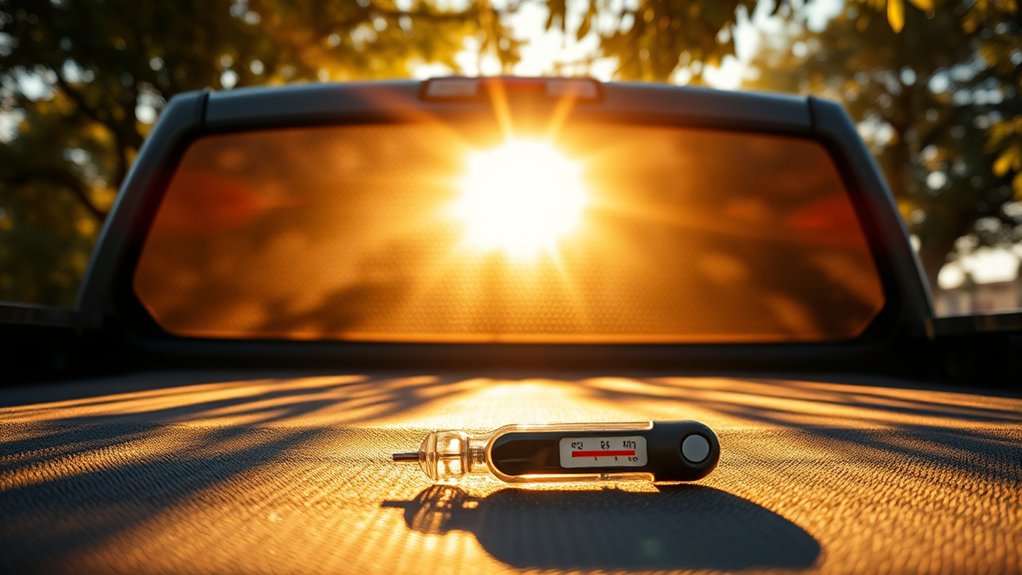
You can expect temperatures under a tonneau cover to rise about 20 to 30 degrees Fahrenheit above ambient air due to trapped solar radiation and limited airflow.
The enclosed space forms a microenvironment where heat accumulates, influenced by your cover’s material, color, ventilation, and exposure to sunlight.
Covers with reflective surfaces and vents manage heat best, while soft or vinyl types tend to trap more heat.
Exploring these factors reveals how to optimize temperature control for your cargo.
How Hot Can It Get Under a Tonneau Cover?
How hot can it actually get under a tonneau cover? When you analyze temperature data, you’ll find that the enclosed space can reach levels considerably higher than the ambient air temperature, often 20 to 30 degrees Fahrenheit hotter.
This rise results from solar radiation trapping heat beneath the cover, creating a microenvironment. It’s important to avoid unrelated topics like comparing this to a car’s interior temperature, as that’s an off topic comparison; the materials and ventilation differ substantially.
Instead, focus on the direct thermal effect caused by the tonneau’s surface absorbing and re-radiating heat. Understanding this helps you anticipate potential impacts on cargo sensitive to heat, as the confined space lacks the airflow necessary to dissipate accumulated warmth effectively.
What Factors Influence Temperature Under a Tonneau Cover?
Which variables most significantly affect the temperature under a tonneau cover? Primarily, material composition, ventilation, and the cover’s fit dictate heat retention. Different materials possess distinct thermal conductivities, influencing heat absorption and dissipation rates.
Ventilation controls airflow, directly impacting temperature regulation. A tight seal minimizes air exchange, potentially raising heat levels inside. While you might encounter unrelated topics or hidden meanings in casual discussions about tonneau covers, focus strictly on these physical factors for clarity.
The bed’s color beneath the cover also matters, as darker surfaces absorb more heat. Additionally, insulation properties within the cover can either trap or release heat. Understanding these technical variables helps you accurately predict temperature behavior under your tonneau cover without confusion from extraneous information.
How Do Sunlight and Weather Affect Your Truck Bed’s Heat?
Beyond material and ventilation, environmental conditions like sunlight intensity and weather patterns play a to consider role in determining your truck bed’s temperature under a tonneau cover. You need to consider how these factors interact with airflow dynamics and shade strategies to manage heat build-up effectively. Specifically:
- Direct sunlight increases radiant heat absorption, raising the internal temperature significantly, especially during peak hours.
- Weather variations such as cloud cover reduce solar radiation, lowering temperature spikes and altering airflow dynamics by affecting external air movement.
- Employing shade strategies, like parking under trees or structures, minimizes direct solar exposure, improving natural ventilation and reducing heat accumulation.
How Do Different Tonneau Cover Materials Impact Heat Build-Up?
Why does the material composition of a tonneau cover profoundly influence heat retention in your truck bed? Different materials alter the dynamics of airflow and thermal transfer significantly.
For instance, vinyl covers, being dense and less permeable, restrict airflow beneath, trapping heat more effectively. Conversely, fabric covers, with porous structures, facilitate better ventilation, reducing heat buildup.
Additionally, materials with reflective coatings can deflect infrared radiation, minimizing heat absorption and lowering internal temperatures. Hard covers like fiberglass or aluminum generally conduct heat faster but may incorporate reflective layers to offset this effect.
Understanding these material properties helps you predict how your tonneau cover will impact the temperature inside your truck bed, ensuring you select a cover aligned with your heat management needs.
How Long Does Heat Stay Trapped Under a Tonneau Cover?
You’ll notice that heat retention under a tonneau cover depends on material properties and environmental conditions, affecting how long temperatures remain elevated. Factors like insulation, cover thickness, and ambient airflow directly influence heat trapping duration. Understanding the cooling time after sun exposure is key to managing interior temperatures effectively.
Heat Retention Duration
How long does heat remain trapped under a tonneau cover once the sun sets or the ambient temperature drops? You’ll find the heat retention duration largely depends on the cover’s material and the surrounding conditions. To avoid irrelevant topic or unrelated discussion, focus solely on this thermal behavior.
- Initial Cooling Rate: Within the first hour after sunset, temperatures under the cover drop rapidly due to heat dissipation.
- Insulation Effect: Covers with better insulation slow cooling, retaining heat for 2 to 4 hours.
- Equilibration Phase: After several hours, temperatures stabilize near ambient levels as heat escapes through conduction, convection, and radiation.
Understanding this duration helps you anticipate temperature changes but avoid mixing this with unrelated factors affecting heat trapping.
Factors Affecting Heat Trapping
The duration heat remains trapped under a tonneau cover depends on several key factors that influence thermal retention. You need to consider the cover’s material properties, including thermal conductivity and thickness, which directly affect temperature dynamics.
A thicker, low-conductivity cover slows heat dissipation, prolonging trapped heat. Ambient conditions, such as air temperature, humidity, and solar radiation intensity, also play critical roles by impacting the rate at which heat transfers from the cover to the surrounding environment.
Additionally, the truck bed’s surface color and material influence how much heat is absorbed and retained. Air circulation beneath the cover further modifies heat dissipation; restricted airflow increases thermal buildup.
Cooling Time After Exposure
When does the heat trapped under a tonneau cover begin to dissipate, and how long does it linger afterward? The cooling time depends on several factors related to the intensity and duration of heat exposure.
Once direct sunlight stops, heat starts to release, but the trapped air and materials slow the process. You should consider these key points:
- Material Conductivity: Covers made from low-conductivity materials retain heat longer, extending cooling time.
- Ambient Conditions: Cooler air temperatures and wind speed accelerate heat dissipation by convective heat transfer.
- Duration of Heat Exposure: Longer exposure increases the thermal mass of the cover and underlying surfaces, prolonging the cooling period.
Understanding these factors helps predict how long heat stays trapped under your tonneau cover after exposure ends.
What Happens to Heat-Sensitive Cargo Under a Tonneau Cover?
Why should you be concerned about storing heat-sensitive cargo under a tonneau cover? Because the cover alters the thermal environment inside the truck bed, potentially exposing your cargo to elevated temperatures that can degrade its quality or functionality.
It’s important to focus strictly on the direct thermal impact rather than engage in irrelevant discussion or off topic ideas, such as aesthetics or waterproofing, which don’t affect heat retention. Under the cover, heat accumulates due to limited airflow and solar radiation absorption by the cover material, raising internal temperatures significantly above ambient levels.
This elevated heat can accelerate chemical reactions, cause warping, or spoil perishables. Understanding these effects helps you mitigate risks and select appropriate storage or cooling strategies to protect sensitive cargo effectively.
How Do Temperature Levels Compare: Covered vs. Open Truck Beds?
You’ll notice that temperature levels under a tonneau cover differ considerably from those in an open truck bed due to variations in heat retention and airflow. Covered beds tend to trap heat, increasing internal temperatures, while open beds allow for more ventilation and heat dissipation. Understanding these factors will help you evaluate how each setup affects cargo temperature.
Temperature Differences Explained
How much cooler does a covered truck bed stay compared to an open one? The temperature difference hinges on several key factors influencing cooling efficiency and material aesthetics. You’ll find:
- Solar Radiation Blockage: A tonneau cover reduces direct sunlight exposure, lowering heat absorption drastically compared to an open bed.
- Airflow Restriction: Covered beds limit convective heat exchange, moderating internal temperature rise despite some heat buildup beneath the cover.
- Material Properties: The cover’s surface reflectivity and thermal conductivity affect heat retention, with lighter, reflective materials enhancing cooling efficiency.
Heat Retention Factors
When comparing temperature levels between covered and open truck beds, several heat retention factors come into play that directly influence the thermal environment. A tonneau cover limits heat migration by restricting direct solar radiation and reducing convective heat loss compared to an open bed.
However, cover ventilation significantly affects internal temperatures; poor ventilation traps hot air, increasing heat retention beneath the cover. Conversely, open truck beds allow heat to dissipate more freely, resulting in lower surface temperatures overall.
The material and color of the cover further influence heat absorption and radiation rates. Understanding these dynamics helps you predict temperature variations accurately. Covered beds tend to retain heat longer due to restricted airflow and reduced heat migration, whereas open beds experience more rapid cooling despite greater solar exposure.
What Are the Best Ways to Reduce Heat Under Your Tonneau Cover?
Why does heat build up so rapidly under a tonneau cover, and what practical steps can you take to mitigate it? Heat accumulates due to trapped solar radiation and limited airflow. To reduce this, consider these three strategies based on data visualization and user testimonials:
- Enhance Ventilation: Install vented covers or add small vents to promote air circulation, reducing temperature buildup.
- Use Reflective Materials: Apply reflective sprays or liners inside the bed to deflect solar heat, lowering thermal absorption.
- Create Shade: Park strategically under shade or use auxiliary shading devices to minimize direct sunlight exposure.
Each method addresses heat retention from a physical and material perspective, ensuring you keep your truck bed cooler without compromising cover integrity. Implementing these steps reduces heat efficiently and extends the lifespan of items stored under your tonneau cover.
Which Tonneau Covers Keep Your Truck Bed the Coolest?
Which tonneau covers actually keep your truck bed coolest under intense sunlight? You’ll find that hard folding and retractable covers made from aluminum or fiberglass with reflective coatings excel at minimizing heat buildup.
These materials reflect solar radiation better than vinyl or soft covers, which absorb heat and trap it underneath. However, covers with venting systems improve airflow, reducing internal temperatures.
Avoid considering irrelevant or off-topic ideas like aesthetics or ease of installation when focusing on cooling performance. Instead, prioritize thermal conductivity, reflectivity, and ventilation features.
Low-profile hard covers with light-colored finishes typically outperform others in heat reduction. By selecting a cover with these technical attributes, you ensure the coolest environment possible for your truck bed under harsh sunlight conditions.
Frequently Asked Questions
Can a Tonneau Cover Protect My Truck Bed From Rain?
Yes, a tonneau cover provides effective rain prevention by creating a canopy insulation barrier over your truck bed. It reduces water exposure, keeps contents dry, and prevents moisture buildup.
This ensures reliable protection during wet conditions.
How Does a Tonneau Cover Affect Fuel Efficiency?
A tonneau cover improves your fuel efficiency by reducing aerodynamic drag on your truck bed. By smoothing airflow, it decreases resistance, especially at highway speeds.
This allows your engine to work less and consume less fuel overall.
Are Tonneau Covers Easy to Install and Remove?
You’ll find tonneau covers offer install ease through straightforward mounting brackets and clamps. Removal steps typically involve loosening these clamps and detaching the cover, making both processes efficient and manageable without specialized tools or expertise.
Will a Tonneau Cover Prevent Theft of Items in My Truck Bed?
Like a locked briefcase deters opportunistic thieves, a tonneau cover offers theft deterrence by concealing your cargo. While not foolproof, its security benefits markedly reduce theft risk by limiting visibility and access to your truck bed.
Do Tonneau Covers Require Regular Maintenance or Cleaning?
Yes, tonneau covers require regular maintenance. You should follow a cleaning schedule, using mild soap and water, and apply maintenance tips like lubricating hinges and checking seals to ensure durability and optimal performance over time.
Conclusion
You’ve seen how a tonneau cover can turn your truck bed into a solar oven, trapping heat like a greenhouse on steroids. Factors like material, sunlight, and weather play key roles in this thermal dance.
To keep your cargo safe and cool, choosing the right cover and managing exposure is essential. Think of your tonneau cover as both shield and trap—mastering that balance keeps temperature spikes in check.
Understanding how hot it gets under a tonneau cover is crucial for protecting what matters most during your travels.