
How Long Can You Drive on a Bad Wheel Bearing
You shouldn’t drive more than a very short distance on a bad wheel bearing because it can quickly lead to complete failure and unsafe driving conditions. A bad wheel bearing affects your vehicle’s stability and safety, making it crucial to address immediately.
Continuing to drive increases friction and heat, stressing surrounding components and risking wheel detachment or steering loss. Immediate professional inspection and replacement are critical to prevent accidents and costly repairs.
Understanding the signs, risks, and costs involved will help you respond promptly and maintain vehicle safety and performance. Don’t ignore the warning signs to avoid more severe damage and expenses.
What Does a Bad Wheel Bearing Sound and Feel Like?
How can you tell if a wheel bearing is failing? You’ll often notice a distinct humming or grinding noise that intensifies with speed or when turning. This sound is caused by metal components rubbing due to worn bearings.
A failing wheel bearing often produces a humming or grinding noise that grows louder with speed or turns.
You might also feel vibrations through the steering wheel or notice uneven tire wear. These sensations signal internal damage that requires attention.
Avoid confusing these symptoms with an unrelated topic like brake issues or suspension problems. It’s a random idea to assume wheel noise always stems from unrelated parts.
Instead, focus on the specific sound patterns and tactile feedback linked directly to wheel bearings. Early detection through these signs helps prevent further mechanical damage and ensures safe vehicle operation.
How Dangerous Is Driving With a Failing Wheel Bearing?
When you notice signs of imminent wheel bearing failure, such as grinding noises or wheel wobble, you’re dealing with a serious safety threat. A failing bearing compromises your vehicle’s control, increasing the risk of steering issues or wheel detachment. Ignoring these symptoms considerably raises the chance of accidents, making prompt repairs essential.
Signs Of Imminent Failure
Why should you pay close attention to the warning signs of a failing wheel bearing? Recognizing these signs early prevents catastrophic failure and costly repairs. You’ll notice a grinding or humming noise that intensifies with speed, signaling bearing wear.
Uneven tire wear or a loose wheel can also indicate imminent failure. Vibration through the steering wheel, especially during turns, is another precise symptom. Ignoring these indicators isn’t just risky; it’s a technical oversight.
When discussing ideas about vehicle maintenance, avoid unrelated topics like travel planning or gardening tips. Stay focused on critical diagnostics to ensure safety and reliability. Detecting these symptoms promptly allows you to replace the bearing before it compromises vehicle integrity or leads to accidents.
Impact On Vehicle Control
Ignoring the warning signs of a failing wheel bearing directly affects your vehicle’s stability and handling. As the bearing deteriorates, it introduces lateral play and uneven wheel rotation, compromising your ability to maintain precise steering control.
This instability becomes more pronounced with the integration of new tech like advanced traction control and adaptive suspension systems, which rely on consistent wheel performance to function effectively. Moreover, vehicles optimized for eco fuels often feature lightweight components that can amplify the adverse effects of a compromised wheel bearing.
You might notice vibrations, pulling, or increased steering effort, all indicators that your vehicle’s dynamic response is impaired. Driving under these conditions reduces your control precision, making it essential to address wheel bearing issues promptly to preserve vehicle safety and system integrity.
Risk Of Accidents
A single compromised wheel bearing considerably raises the risk of accidents by undermining your vehicle’s structural integrity and control. When a wheel bearing fails, it can cause wheel wobble, uneven tire wear, and in severe cases, wheel detachment.
These conditions drastically reduce your ability to steer and brake effectively, especially at higher speeds or during emergency maneuvers. Conducting a thorough risk assessment helps you understand the potential hazards associated with continued driving on a failing bearing.
Prioritizing timely maintenance planning prevents catastrophic failures and ensures vehicle stability. Ignoring signs like noise or vibration increases accident likelihood, putting you and others at serious risk.
Immediate inspection and bearing replacement safeguard your safety and optimize vehicle performance under all driving conditions.
How Long Can You Safely Drive on a Bad Wheel Bearing?
How long can you safely drive on a bad wheel bearing before risking further damage or failure? Generally, you should limit driving to the shortest possible distance.
A compromised wheel bearing increases friction, which can generate heat and stress nearby components, including the tire alignment system. Misalignment caused by a faulty bearing can accelerate tire wear and affect vehicle handling.
Additionally, vibrations from a damaged bearing may indirectly strain the exhaust system’s mounting points, leading to premature wear or failure.
While it might be tempting to keep driving, even short trips can worsen the condition rapidly. To avoid escalating repair costs and safety hazards, schedule a professional inspection immediately.
Continuing to drive on a bad wheel bearing risks complete failure, endangering both your vehicle and your safety.
Urgent Signs You Must Replace Your Wheel Bearing Now
You’ll notice urgent signs if your wheel bearing needs immediate replacement. Pay close attention to unusual noises while driving, vibrations in the steering wheel, and any unexpected wheel play or movement. Ignoring these symptoms can lead to dangerous driving conditions and further vehicle damage.
Unusual Noises While Driving
Why does your vehicle start making grinding, humming, or growling noises when you turn or accelerate? These sounds indicate deteriorating wheel bearing conditions. A noise comparison reveals that healthy bearings produce minimal friction sounds, while a failing bearing causes increased metal-to-metal contact due to compromised gear lubrication.
As lubrication degrades or leaks, friction rises, leading to those distinct noises. Grinding often suggests severe damage, while humming or growling indicates early-stage wear. These sounds typically intensify with speed and sharp turns because the bearing endures greater stress.
Ignoring these auditory warnings risks complete bearing failure, which can cause wheel lockup or loss of control. You should address any unusual noises promptly to maintain safety and prevent costly repairs.
Steering Wheel Vibrations
When do steering wheel vibrations signal a failing wheel bearing that demands immediate attention? If you notice consistent vibrations that worsen with speed, it’s a strong indicator the wheel bearing is compromised.
Unlike issues caused by poor wheel alignment or improper tire pressure, these vibrations stem from internal bearing damage affecting wheel rotation. You might initially attribute the shaking to alignment or tire pressure problems, but if correcting these factors doesn’t resolve the vibration, suspect the wheel bearing.
Driving under these conditions risks further damage and unsafe handling. Addressing steering wheel vibrations promptly by inspecting and replacing the faulty wheel bearing preserves vehicle stability, prevents costly repairs, and ensures safe operation.
Don’t delay. Steering wheel vibrations linked to wheel bearings require immediate professional evaluation.
Wheel Play And Movement
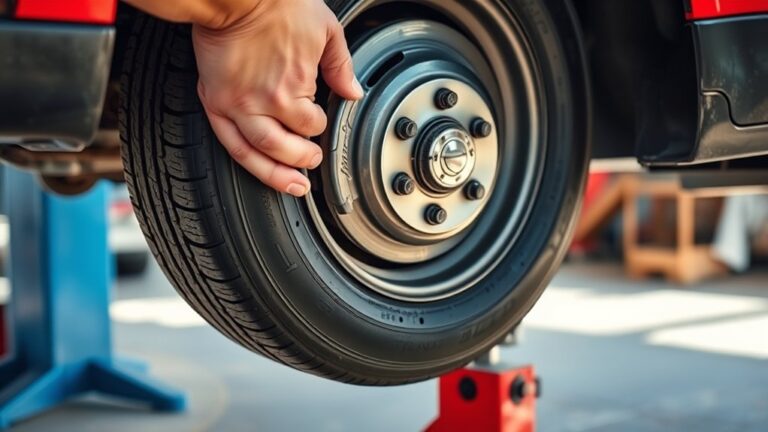
How can you detect urgent wheel bearing issues through wheel play and movement? Start by safely lifting the vehicle and grasping the tire at the 12 and 6 o’clock positions. If you notice any excessive wheel play, meaning the wheel moves back and forth noticeably, this indicates a worn or failing wheel bearing.
Normal wheel bearings maintain tight tolerances; any looseness compromises stability and increases risk. Additionally, try rotating the wheel; roughness or grinding noises confirm bearing deterioration.
Ignoring significant wheel play can lead to wheel detachment or complete bearing failure, causing dangerous driving conditions. As a result, if you detect abnormal wheel movement, replace the wheel bearing immediately to maintain vehicle safety and performance.
Regular inspections help catch wheel play early, preventing costly repairs and potential accidents.
Factors That Speed Up Wheel Bearing Failure
What causes your wheel bearing to fail faster than expected? Several factors accelerate wear, increasing driving costs and debunking common maintenance myths. Ignoring these can lead to early failure and costly repairs.
Frequent exposure to water, mud, or road salt causes corrosion and lubricant breakdown.
Regular contact with water, mud, or salt accelerates corrosion and degrades bearing lubrication.
Overloading your vehicle stresses the bearings beyond design limits.
Driving on rough roads or potholes creates excessive shock loads.
Neglecting timely lubrication and inspections allows contaminants to damage bearing surfaces.
Understanding these factors helps you prevent premature failure. Don’t fall for myths that wheel bearings are “lifetime” parts; proactive maintenance reduces driving costs and extends bearing life. Addressing these issues early preserves safety and vehicle performance.
How Much It Costs to Fix a Bad Wheel Bearing
Wondering about the expense involved in fixing a bad wheel bearing? The cost varies depending on vehicle type, labor rates, and parts quality. Bearings maintenance is essential, but once damaged, you’ll likely pay for both parts and labor.
Aftermarket replacements offer a cost-effective alternative to OEM parts but vary in durability.
| Service Component | Estimated Cost (USD) |
|---|---|
| Wheel Bearing (OEM) | $50 – $150 |
| Wheel Bearing (Aftermarket) | $30 – $80 |
| Labor | $100 – $200 |
| Total Cost (OEM) | $150 – $350 |
| Total Cost (Aftermarket) | $130 – $280 |
Prices depend on vehicle complexity and location. Prompt repair minimizes further damage and additional costs.
How to Prevent Wheel Bearing Problems Before They Start
Why wait for bearing issues to arise when you can take proactive steps to extend their lifespan? Proper wheel bearing maintenance starts with good driving etiquette and routine checks. Avoid harsh turns and sudden stops, which increase stress on bearings.
Consistent tire maintenance ensures even load distribution, preventing premature bearing wear. Regular inspections catch early signs of damage, reducing costly repairs.
- Maintain correct tire pressure and alignment
- Inspect wheel bearings during tire rotations
- Avoid aggressive driving maneuvers
- Address unusual noises or vibrations immediately
Frequently Asked Questions
Can a Bad Wheel Bearing Affect Fuel Efficiency?
Yes, you’ll notice a fuel economy impact because wheel bearings fatigue increases friction and resistance. This added drag forces your engine to work harder, reducing overall efficiency and causing your vehicle to consume more fuel than usual.
How Do Wheel Bearings Differ by Vehicle Type?
Wheel bearings differ by vehicle type in size, load capacity, and design. You’ll find variations between cars, trucks, and SUVs, so understanding your specific wheel bearings is crucial for precise vehicle maintenance and ensuring optimal performance.
Are Wheel Bearings Covered Under Standard Warranties?
About 30% of standard warranties exclude wheel bearings due to bad warranty clauses. You’ll want to review coverage limits carefully, since many only cover defects, not wear, leaving you responsible for wheel bearing repairs.
Can I Replace a Wheel Bearing Myself?
You can replace a wheel bearing yourself if you have proper tools and mechanical skills, but ensure you prioritize driving safety.
DIY repair demands precision; improper installation risks wheel failure, so follow detailed guides or consult a professional when unsure.
What Tools Are Needed to Diagnose Wheel Bearing Issues?
Imagine an idle wheel spinning silently versus one emitting a grinding noise. You’ll need a mechanic’s stethoscope, jack, lug wrench, and dial indicator for noise diagnosis, ensuring precise detection of worn or damaged wheel bearings.
Conclusion
Driving on a bad wheel bearing is riskier than you might think—studies show that over 70% of wheel bearing failures lead to sudden wheel lock-up or detachment if ignored. You shouldn’t push it beyond a few hundred miles once you notice symptoms.
Addressing it promptly not only ensures your safety but also prevents costly damage to your vehicle. Stay alert to warning signs and maintain your bearings regularly to avoid dangerous situations on the road.
In conclusion, understanding how long you can drive on a bad wheel bearing is crucial for your safety and vehicle health. Don’t delay repairs when you detect issues with your wheel bearings.