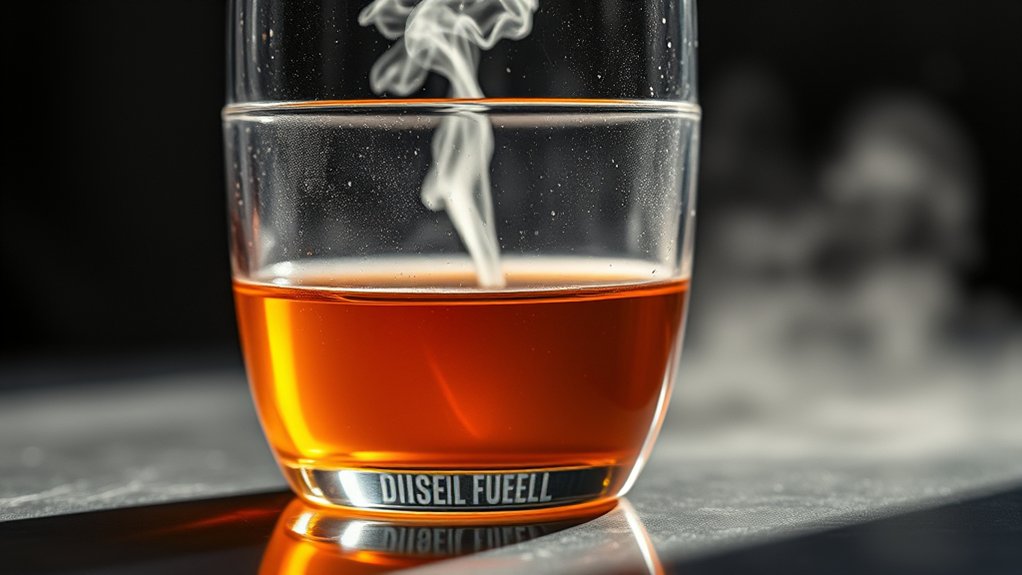
Does Diesel Fuel Evaporate
Yes, diesel fuel does evaporate, but it does so much more slowly than gasoline due to its higher boiling point and greater molecular weight. You won’t see rapid vapor formation because diesel’s longer hydrocarbon chains reduce its volatility and evaporation rate.
This slow evaporation affects engine ignition and safety by limiting combustible vapor buildup at ambient temperatures. Understanding these characteristics is essential for proper storage and handling.
More detailed factors and implications will be discussed in the next section.
Does Diesel Fuel Evaporate? The Quick Answer
How quickly does diesel fuel evaporate? You’ll find that diesel’s evaporation rate is significantly lower than many other fuels due to its higher boiling point and molecular weight. When analyzing diesel ignition, you must consider that its evaporation rate influences the formation of combustible vapor mixtures.
Diesel fuel comprises longer hydrocarbon chains, which evaporate more slowly, reducing vapor concentration in the air under normal conditions. This slower evaporation rate means diesel doesn’t readily form flammable vapor clouds at ambient temperatures, affecting ignition risks.
Therefore, while diesel fuel does evaporate, it does so at a gradual pace, which directly impacts the dynamics of diesel ignition in engines and safety scenarios. Understanding this evaporation behavior is crucial for handling and combustion system design.
How Does Diesel Fuel Evaporate Compared to Gasoline?
Why does diesel fuel evaporate much more slowly than gasoline? The key lies in their chemical composition and volatility. Diesel consists of longer hydrocarbon chains with higher molecular weights, resulting in a higher boiling point and lower vapor pressure compared to gasoline.
Gasoline’s shorter chains evaporate quickly, making it more volatile. When you operate diesel engines, this slower evaporation reduces vapor lock risks but influences diesel pricing due to storage and handling considerations.
You should note that diesel’s lower volatility means it emits fewer vapors under normal conditions, affecting evaporative emissions regulations differently than gasoline. Understanding this evaporation disparity is crucial if you’re managing fuel systems, as it impacts fuel performance, storage protocols, and overall efficiency in engines optimized for diesel’s physical properties.
What Factors Affect How Fast Diesel Fuel Evaporates?
Several key factors consistently influence the rate at which diesel fuel evaporates, each impacting its volatility and behavior under different conditions. Temperature plays a critical role; as it rises, the kinetic energy of diesel molecules increases, accelerating evaporation.
Surface area also matters. A larger exposed surface allows more molecules to escape into the air. Airflow affects evaporation by removing vapor molecules, maintaining a concentration gradient.
Pressure influences volatility, with lower pressure facilitating faster evaporation. Importantly, factors like humidity or unrelated subject matter such as unrelated chemical properties of gasoline are irrelevant topics when assessing diesel evaporation rates.
You should focus solely on physical and environmental parameters directly tied to diesel’s evaporation. Avoid mixing in irrelevant topics that don’t affect diesel’s behavior, ensuring your analysis remains precise and technically sound.
Why Does Diesel’s Slow Evaporation Matter for Safety?
You need to understand that diesel’s slow evaporation reduces immediate fire risks but prolongs environmental contamination if spilled. Its persistence means fuel can accumulate and seep into soil or water, increasing long-term hazards. Recognizing these factors is essential for effective safety and cleanup protocols.
Fire Hazard Considerations
How does diesel’s slow evaporation influence fire hazards? Diesel fuel’s reduced volatility means it produces fewer flammable vapors at ambient temperatures compared to gasoline. This characteristic directly impacts fire risk by lowering the likelihood of vapor ignition in open-air scenarios.
You might encounter evaporation myths suggesting diesel is highly flammable like gasoline, but its chemical composition and evaporation rate refute those claims. Because diesel evaporates slowly, it forms less explosive vapor concentrations, reducing the probability of sudden ignition.
However, you must still handle diesel with caution since it can ignite if exposed to sufficiently high temperatures or open flames. Understanding diesel’s slow evaporation helps you assess fire hazards accurately, improving safety protocols when storing, transporting, or using diesel fuel in industrial and commercial settings.
Environmental Impact Risks
Why does diesel’s slow evaporation matter for environmental safety? Because unlike volatile fuels, diesel’s low evaporation rate limits vapor release, reducing airborne pollution risks. However, diesel’s persistence in soil and water poses contamination hazards.
When spilled, it seeps into ecosystems, affecting flora and fauna over extended periods. You might encounter discussions on irrelevant topics or unrelated themes, such as diesel’s odor or color, but these don’t address its environmental impact.
Instead, focus on diesel’s chemical stability and low volatility, which mean spills require immediate containment to prevent long-term soil and groundwater contamination. Understanding these environmental impact risks helps you prioritize proper handling and spill response, ensuring safety beyond fire hazards and addressing diesel’s unique contamination potential efficiently.
Environmental Risks From Diesel Fuel Vapors and Spills
You need to recognize that diesel fuel vapors can pose respiratory risks and other health hazards when inhaled. Additionally, spills lead to soil contamination, disrupting microbial activity and potentially entering groundwater systems. Understanding these effects is essential for managing environmental and public health impacts effectively.
Health Effects of Vapors
Where do diesel fuel vapors pose the greatest health risks? They mainly affect confined or poorly ventilated areas where vapors concentrate. You should recognize the diesel odor as a warning sign of potential exposure.
Prolonged inhalation of these vapors can cause respiratory irritation, headaches, dizziness, and in severe cases, neurological effects. The presence of polycyclic aromatic hydrocarbons (PAHs) in diesel vapors raises concerns about long-term carcinogenic risks.
Consumer labeling on diesel containers is critical. It informs you about hazards and necessary precautions to minimize inhalation risks. Always follow label instructions and ensure adequate ventilation during diesel handling.
Understanding these health effects helps you reduce exposure and protect yourself from the harmful consequences of diesel vapors in environmental or occupational settings.
Impact of Soil Contamination
How does diesel fuel contamination affect soil ecosystems and environmental health? When diesel storage leaks or spills occur, the fuel evaporation process only partially reduces soil contamination, leaving hazardous residues. You should recognize these key impacts:
- Toxic hydrocarbons infiltrate soil, disrupting microbial communities essential for nutrient cycling.
- Contaminants reduce soil fertility, harming plant growth and altering ecosystem balance.
- Persistent pollutants can leach into groundwater, posing risks to drinking water sources.
- Fuel evaporation releases volatile organic compounds (VOCs), contributing to localized air pollution and further environmental degradation.
Best Ways to Store Diesel Fuel and Prevent Evaporation
Why does proper storage matter when dealing with diesel fuel? Because improper storage accelerates evaporation and contamination, undermining diesel engine maintenance and operational efficiency. To prevent evaporation, store diesel in sealed, airtight containers made of approved materials that resist corrosion and vapor permeability.
Keep storage tanks in cool, shaded areas to minimize temperature fluctuations, which increase evaporation rates. Implement fuel handling best practices by regularly inspecting tanks for water ingress and sediment buildup, as these compromise fuel quality.
Use additives designed to stabilize diesel and reduce volatility. Additionally, avoid frequent opening of storage containers to limit exposure to air. By controlling environmental factors and adhering to strict storage protocols, you maintain diesel integrity, optimizing engine performance and extending maintenance intervals effectively.
Common Myths and Facts About Diesel Fuel Evaporation
What misunderstandings have you encountered regarding diesel fuel evaporation? Diesel fuel is often misinterpreted due to misleading diesel advertising claims and fluctuating diesel price trends. Here are four key myths and facts to clarify:
1. Myth: Diesel evaporates quickly like gasoline.
Fact: Diesel has a higher boiling point, so it evaporates much slower.
2. Myth: Evaporation significantly affects diesel price trends.
Fact: Price fluctuations result mainly from crude oil costs and refining, not evaporation losses.
3. Myth: Leaving diesel exposed causes rapid volume loss.
Fact: Diesel’s low volatility limits volume loss unless exposed for extended periods.
4. Myth: Additives prevent all evaporation.
Fact: Additives help stabilize fuel but don’t eliminate evaporation entirely.
Understanding these distinctions helps you make informed decisions about diesel storage and usage.
Frequently Asked Questions
Can Diesel Fuel Freeze in Cold Temperatures?
Yes, diesel fuel can freeze in cold temperatures due to wax crystallization, despite minimal diesel fuel evaporation. You’ll notice diesel gel forming, which impairs flow, so using additives helps prevent cold temperature freezing effectively.
Is Diesel Fuel Biodegradable?
When push comes to shove, diesel fuel is biodegradable, but only slowly. You’ll rely on microbial breakdown to achieve diesel biodegradation, as specific microorganisms enzymatically degrade hydrocarbons under controlled environmental conditions.
How Long Does Diesel Fuel Last Before Going Bad?
You’ll find diesel stability generally lasts about 6 to 12 months under ideal conditions. Beyond this storage duration, diesel degrades, causing reduced performance and increased risk of contamination, so monitor its quality carefully over time.
Can Diesel Fuel Be Mixed With Gasoline?
Mixing diesel and gasoline is like blending oil and water; you shouldn’t do it. Diesel compatibility with gasoline is poor, causing engine damage and inefficient combustion.
Avoid fuel mixing to maintain optimal engine performance and prevent costly repairs.
What Are the Signs of Contaminated Diesel Fuel?
You’ll notice diesel fuel contamination through clogged filters, engine misfires, and reduced fuel efficiency. These signs indicate fuel quality degradation caused by water, microbes, or particulates compromising diesel’s performance and damaging your engine’s components.
Conclusion
Diesel fuel evaporates much slower than gasoline, losing only about 20% of its volume over a year under typical conditions. This slow evaporation rate reduces fire hazards but increases environmental risks from prolonged vapor presence and spills.
You should store diesel in airtight containers to minimize evaporation and contamination. Proper storage helps maintain fuel quality and prevents costly losses.
Understanding these factors helps you manage diesel safely and efficiently, preventing both financial loss and environmental harm. Don’t underestimate evaporation’s role in diesel fuel handling to ensure safety and sustainability.