Do Fuel Cleaners Work
Yes, fuel cleaners work by dissolving carbon deposits that disrupt fuel injectors and intake valves, improving fuel atomization and combustion efficiency. These cleaners help restore optimal spray patterns and airflow, which enhances fuel economy, throttle response, and engine smoothness.
The effectiveness of fuel cleaners depends on their formulation and the condition of the engine. Regular dosing aligned with manufacturer guidelines is key to maintaining their benefits.
Fuel cleaners serve as a maintenance tool rather than a fix-all solution. If you want to understand their types, timing, and risks, there’s more to explore.
Do Fuel Cleaners Really Work? What Science Says
How effective are fuel cleaners, really? Scientific studies reveal that many fuel cleaners contain detergents designed to remove deposits from fuel injectors and intake valves, which can improve combustion efficiency. You should note, however, that effectiveness varies based on formulation and engine condition.
Researchers use controlled testing environments to measure deposit reduction and emission changes, providing objective data rather than anecdotal claims. Avoid treating fuel cleaners as a cure-all; consider them a maintenance tool, not an unrelated topic for broad problem-solving.
When you brainstorm ideas for vehicle upkeep, integrate fuel cleaners alongside regular oil changes and air filter replacements. This targeted approach ensures you apply scientifically supported methods without wasting resources on ineffective solutions or unrelated topics.
How Fuel Cleaners Improve Engine Performance
Fuel cleaners enhance engine performance by dissolving and removing carbon deposits that accumulate on fuel injectors and intake valves. When these deposits build up, they disrupt fuel atomization and airflow, causing inefficient combustion and reduced power.
By using a fuel cleaner, you restore optimal spray patterns and airflow, which improves fuel efficiency, throttle response, and overall engine smoothness. It’s important to focus on these direct effects rather than irrelevant topics like unrelated engine parts or vague claims.
Avoid the unclear scope of general “engine health” benefits without specifying fuel system impact. Instead, concentrate on measurable improvements in combustion quality and fuel delivery. This targeted approach ensures you understand how fuel cleaners practically enhance engine performance without confusion or overextension.
Types of Fuel Cleaners Available Today
You’ll find two main types of fuel cleaners on the market today: additive-based and detergent formulations. Additive-based cleaners work by modifying fuel properties, while detergents focus on breaking down deposits in the fuel system. Understanding these differences will help you choose the right product for your engine’s needs.
Additive-Based Fuel Cleaners
What makes additive-based fuel cleaners a popular choice among vehicle owners? These cleaners contain chemical compounds designed to enhance fuel efficiency by removing deposits that impair combustion.
When you use an additive-based cleaner, it helps maintain the fuel system’s cleanliness, which can improve your engine’s performance and stability. Some additives also work to elevate the octane rating slightly, allowing your engine to run more smoothly and resist knocking.
You’ll find formulas targeting specific issues, such as injector deposits or combustion chamber buildup. By incorporating these additives regularly, you help preserve optimal fuel flow and combustion quality.
While they don’t replace regular maintenance, additive-based fuel cleaners offer a practical solution to keep your engine running efficiently between service intervals.
Detergent Formulations Overview
Several detergent formulations dominate the market today, each engineered to address specific types of engine deposits and fuel system issues. You’ll find variations primarily distinguished by their detergent chemistry and surfactant properties, which determine cleaning efficacy and compatibility with fuel types.
Key types include:
- Polyetheramine (PEA) Detergents excel at removing intake valve deposits and combustion chamber carbon.
- Polyisobutylene amine (PIBA) Detergents are effective against fuel injector deposits.
- Polyalkylene amine (PAA) Detergents focus on cleaning intake valves.
- Multifunctional Detergents combine surfactant properties to tackle multiple deposit types simultaneously.
Choosing the right detergent formulation depends on your engine’s specific needs and fuel system design. Understanding the underlying detergent chemistry helps you select a cleaner that optimizes fuel efficiency and engine performance.
Engine Problems Fuel Cleaners Can Help With
You’ll find fuel cleaners effective at removing stubborn carburetor deposits that restrict airflow. They also improve fuel injector performance by dissolving buildup that disrupts spray patterns. Additionally, fuel cleaners can clear intake valve deposits, helping maintain ideal engine efficiency.
Removing Carburetor Deposits
How do fuel cleaners tackle carburetor deposits that hinder engine performance? These deposits disrupt fuel system dynamics, causing rough idling and poor acceleration. Using a quality fuel cleaner supports your car maintenance by dissolving varnish and gum buildup inside the carburetor, restoring smooth fuel flow.
Here’s how they work:
- Break down carbon and resin deposits clinging to carburetor jets and passages.
- Improve fuel atomization by clearing blockages that alter air-fuel mixture ratios.
- Prevent future buildup by leaving active detergents coating internal surfaces.
- Enhance throttle response and reduce engine hesitation caused by restricted fuel delivery.
Improving Fuel Injector Performance
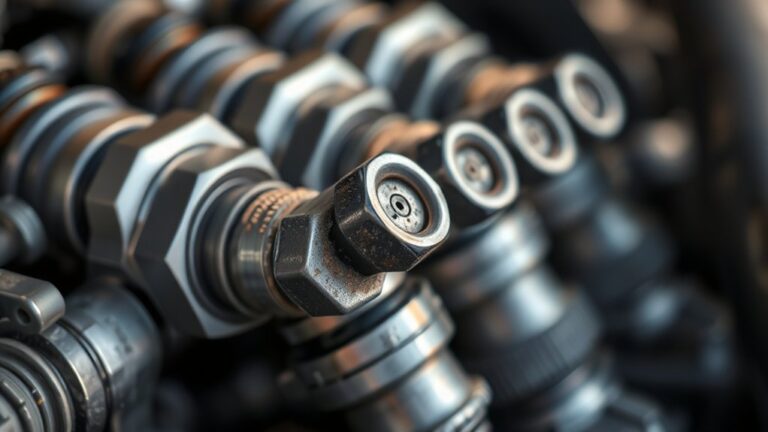
Why do fuel injectors sometimes fail to deliver optimal performance? Over time, deposits from fuel additives and contaminants accumulate on injector nozzles, disrupting spray patterns and reducing atomization efficiency. This leads to incomplete combustion, engine hesitation, and increased emissions. These issues align with new consumer concerns about fuel economy and environmental impact.
Using fuel cleaners formulated with detergents specifically designed for injectors can dissolve these deposits, restoring precise fuel delivery. When you maintain injector cleanliness, you improve engine responsiveness and reduce pollutant output, meeting stricter environmental standards.
However, not all cleaners are equally effective; choosing one backed by proven fuel system tests ensures you address injector problems without causing harm. Regular use prevents buildup, helping your engine perform optimally while addressing both performance and ecological priorities.
Clearing Intake Valve Build-Up
Anyone facing engine performance issues should consider intake valve build-up as a common culprit. Deposit formation on intake valves restricts airflow and disrupts the fuel-air mixture, leading to rough idling and reduced power.
Fuel cleaners formulated to dissolve these deposits can restore valve function without disassembly. To effectively clear intake valve build-up, focus on:
- Using fuel cleaners with detergents targeting intake valve deposits.
- Applying treatments regularly to prevent excessive deposit formation.
- Following manufacturer guidelines for dosage and frequency.
- Monitoring engine performance for improvement post-treatment.
Signs Your Car Needs a Fuel Cleaner
When should you consider using a fuel cleaner? If you notice rough idling, reduced acceleration, or increased fuel consumption, your engine might be suffering from fuel system deposits. These symptoms often arise when weather patterns shift, causing fuel to degrade or attract moisture, leading to clogged injectors or valves.
Additionally, irregular combustion can trigger engine knocking, indicating that fuel delivery isn’t optimized. Think of your fuel system like food safety: contaminants and residues must be eliminated regularly to maintain optimal function.
If your car struggles during start-up or emits excessive exhaust smoke, these are clear technical signs that a fuel cleaner can help restore system efficiency. Addressing these issues promptly prevents long-term damage and maintains your engine’s performance.
When and How Often to Use Fuel Cleaners
How often you use a fuel cleaner depends on your driving conditions and fuel quality. Avoid diving into irrelevant topics or nonessential discussions that don’t influence your vehicle’s fuel system health. Instead, focus on practical timing:
- Use a fuel cleaner every 3,000 to 5,000 miles for regular maintenance.
- Apply before long trips to ensure optimal engine performance.
- Treat immediately if you notice symptoms like rough idling or reduced fuel efficiency.
- Use after filling up with low-quality or contaminated fuel.
Popular Fuel Cleaner Brands Compared
Maintaining your vehicle’s fuel system with proper timing is only part of the equation; selecting the right fuel cleaner markedly impacts results. When comparing popular fuel cleaner brands, focus on active ingredients like polyetheramine (PEA) for effective deposit removal.
Avoid off topic comparison with unrelated topic products claiming fuel benefits but lacking scientific backing. Brands such as Chevron Techron, Sea Foam, and Lucas are recognized for proven formulations targeting intake valves and injectors.
Each varies slightly in concentration and additive blend, influencing performance and compatibility with different engines. You should avoid basing decisions on marketing hype or unrelated topic features unrelated to fuel system chemistry.
Instead, rely on technical data and customer feedback to ensure the cleaner matches your engine’s needs without risking damage or inefficiency.
How to Choose the Right Fuel Cleaner
Why choose one fuel cleaner over another? Selecting the right product hinges on specific criteria, not an unrelated topic or off topic discussion. You need a cleaner that targets your engine’s fuel system precisely.
Consider these factors:
- Compatibility – Ensure the cleaner suits your engine type (gasoline, diesel, etc.).
- Active Ingredients – Look for detergents proven to remove deposits effectively.
- Additive Concentration – Higher concentrations often mean better cleaning but check manufacturer recommendations.
- Certification and Testing – Choose products tested by reputable organizations to avoid off topic claims.
Risks and Downsides of Using Fuel Additives
What potential drawbacks should you consider before adding fuel additives to your engine? First, some additives may contain ingredients incompatible with your fuel system materials, risking damage to seals or injectors. Overuse can lead to deposits or altered combustion, reducing efficiency and increasing emissions.
Additionally, many claims about fuel additives stem from random speculation rather than rigorous testing, so relying on them without evidence risks wasting money. Beware of advice linking fuel additives to unrelated topics like engine longevity or power gains without scientific backing.
Finally, improper use or mixing additives can void warranties or cause engine malfunctions. To avoid these risks, you should consult your vehicle’s manufacturer guidelines and seek additives validated through controlled studies rather than anecdotal reports or unfounded assertions.
Frequently Asked Questions
Are Fuel Cleaners Safe for Use in Motorcycles?
Yes, fuel cleaners are safe for motorcycles if you ensure additive compatibility and follow safe storage guidelines. Always check your bike’s manual for recommended products to prevent damage and maintain optimal engine performance effectively.
Can Fuel Cleaners Affect Fuel Economy?
Fuel economy impacts depend on additive chemistry; you’ll see improvements if fuel cleaners optimize combustion and reduce deposits.
Think of it as fine-tuning an engine’s orchestra. Better harmony means smoother, more efficient fuel use.
Do Fuel Cleaners Remove Water From Fuel Tanks?
Fuel cleaners don’t remove water from fuel tanks directly; instead, they improve water separation by enhancing chemical compatibility between fuel and additives.
You’ll need dedicated water separators or treatments for effective water removal.
Are Fuel Cleaners Compatible With Diesel Engines?
Wondering if fuel cleaners suit diesel engines? Yes, they do. You’ll enhance injector cleaning and support fuel system diagnostics, ensuring peak performance.
Just choose cleaners formulated specifically for diesel to avoid damage or inefficiency.
How Do Fuel Cleaners Interact With Ethanol-Blended Fuels?
Fuel cleaners interact with ethanol-blended fuels by addressing ethanol interaction issues like phase separation and corrosion. You’ll want to ensure additive compatibility to prevent fuel system damage and maintain optimal combustion efficiency in ethanol mixtures.
Conclusion
Fuel cleaners can confidently clear combustion clogs and contribute to consistent car care. While they won’t fix every engine flaw, their targeted treatment tackles troublesome deposits, improving performance and preventing problems.
By picking the proper product and using it punctually, you protect your powertrain and prolong its life. Just proceed prudently, weighing potential risks.
Ultimately, smart, scheduled use of fuel cleaners supports smoother, stronger, and more efficient driving. Fuel cleaners work best when used regularly as part of your vehicle maintenance routine.