
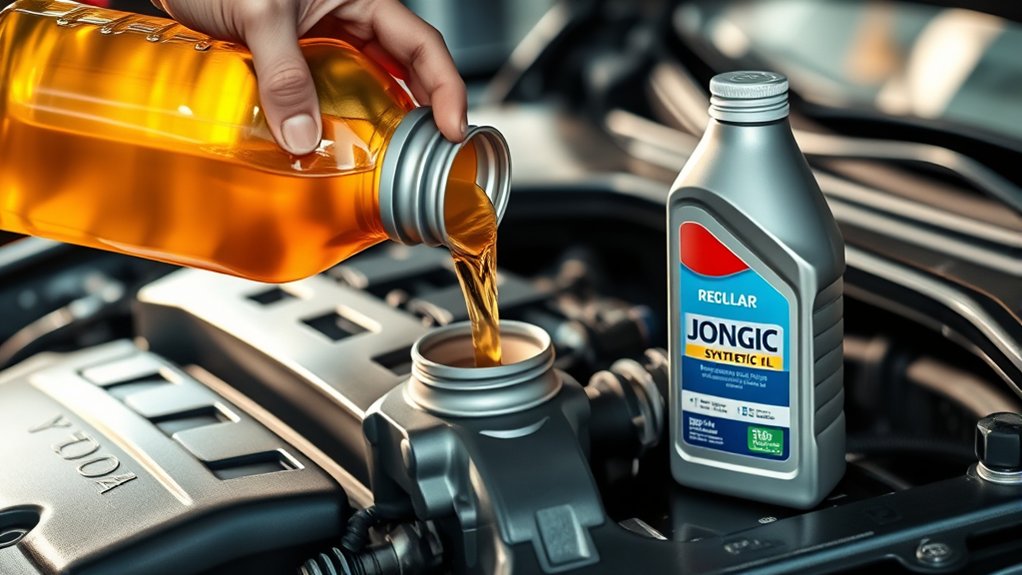
Can I Change From Synthetic to Regular Oil
You can change from synthetic to regular oil if your engine supports it and you match the recommended viscosity and specifications.
Regular oil is generally cheaper but may offer less protection, degrade faster, and require more frequent changes to avoid engine wear and deposits.
Modern engines often rely on synthetic oil’s stability and additives, so it is important to check your manufacturer’s guidelines carefully before making the switch.
Maintaining proper oil change intervals and ensuring compatibility is critical for both performance and warranty safety.
More details can help clarify when and how to make this change safely.
Always follow the recommendations specific to your vehicle to avoid potential issues.
What’s the Difference Between Synthetic and Regular Oil?
How do synthetic and regular oils differ in composition and performance? Synthetic oils are chemically engineered to provide uniform molecular structures, enhancing stability and reducing friction. Regular oils, or conventional oils, derive from crude oil refining and contain more impurities.
Synthetic blends combine the strengths of both, offering improved protection at a lower cost than full synthetics. When you consider oil viscosity, synthetics maintain consistent viscosity over a broader temperature range, ensuring better engine lubrication during cold starts and extreme heat.
Regular oils tend to thicken or thin more noticeably under temperature fluctuations, potentially compromising performance. By understanding these distinctions, you can better evaluate which oil type suits your engine’s requirements, balancing cost, protection, and operating conditions effectively.
Can Switching From Synthetic to Regular Oil Harm Your Engine?
You need to assess your engine’s compatibility before switching from synthetic to regular oil, as not all engines tolerate the change well. While regular oil can reduce costs, it may offer less protection against wear and heat compared to synthetic formulations. Understanding these factors helps you weigh the potential risks and benefits for your specific vehicle.
Engine Compatibility Considerations
When considering a switch from synthetic to regular oil, understanding your engine’s compatibility is essential to avoid potential damage. Modern engines often require oils with specific viscosity stability and additive packages, which synthetic oils typically provide.
You might encounter engine oil myths suggesting all oils are interchangeable, but that’s not true. Regular oils can lack the thermal and shear stability of synthetics, potentially leading to inadequate lubrication under stress.
If your engine was designed with synthetic oil in mind, switching might affect performance and wear protection. Always consult your vehicle’s manual or manufacturer recommendations to confirm oil specifications.
Matching the oil’s viscosity grade and formulation to your engine’s requirements ensures optimal function and longevity, preventing issues linked to incompatible oil types.
Potential Risks And Benefits
What risks might arise from switching your engine oil from synthetic to regular? While it may seem like an irrelevant topic in casual discussions, the decision carries technical weight. Here’s what you should consider:
- Lubrication Efficiency: Synthetic oils maintain viscosity better under extreme temperatures, so regular oil might not protect as well in harsh conditions.
- Engine Wear: Regular oil can increase friction and engine wear over time due to less effective additives, impacting engine longevity.
- Deposit Formation: Synthetic oils resist sludge buildup better; switching might lead to increased deposits, affecting engine performance.
However, the benefits include lower cost and easier availability. Avoid approaching this from an unrelated angle. Focus on your specific vehicle’s requirements, as some engines tolerate this switch without harm, while others don’t.
When Is It Safe to Switch From Synthetic to Regular Oil?
Before switching from synthetic to regular oil, you need to verify your engine’s compatibility with conventional oils. Pay close attention to the timing of your oil change intervals to avoid contamination or performance issues. Also, review your vehicle manufacturer’s recommendations to ensure the switch won’t void warranties or affect engine health.
Engine Compatibility Check
How do you determine if your engine can safely handle a switch from synthetic to regular oil? Start with a precise engine compatibility check to avoid common oil myths. Follow these steps:
- Consult Manufacturer Specifications: Review your owner’s manual for recommended oil types and viscosity grades tailored to your engine’s design.
- Assess Engine Condition: Engines with high mileage or wear may rely on synthetic oil’s superior protection; switching without caution risks lubrication issues.
- Evaluate Operating Environment: Extreme temperatures or heavy-duty usage often necessitate synthetic oil’s enhanced stability.
This two word discussion ideas approach “engine compatibility” helps clarify misconceptions and guides your decision. By adhering to these technical criteria, you ensure your engine maintains optimal performance and longevity when switching oils.
Oil Change Interval Timing
Determining the right oil change interval is essential when switching from synthetic to regular oil to maintain engine health. Synthetic oils typically allow for longer intervals between changes due to their enhanced stability and resistance to breakdown.
When you revert to regular oil, you need to shorten the interval to match its lower performance characteristics. Ignoring this adjustment can lead to increased engine wear. It’s important to focus on this timing rather than engage in irrelevant topics or off topic discussions about oil brands or additives, which don’t affect interval timing.
Generally, if synthetic oil changes occur every 7,500 to 10,000 miles, you should reduce the interval to about 3,000 to 5,000 miles with regular oil. This ensures proper lubrication and prevents premature engine issues.
Manufacturer Recommendations Review
Adjusting your oil change interval is only part of the equation when switching from synthetic to regular oil. You need to carefully review manufacturer recommendations to ensure engine longevity and performance. Here’s how to approach it:
- Consult Manual: Always start with your vehicle’s owner manual. It provides precise guidance on oil types compatible with your engine.
- Understand Warranty Terms: Switching oil types might affect warranty coverage. Clarify any two word ideas like “warranty void” or “service requirements” with your dealer to avoid unrelated topics.
- Assess Engine Conditions: Manufacturers may specify conditions under which switching is safe, such as mileage thresholds or engine wear levels.
Following these steps helps you safely transition without risking damage or voiding warranties. Ignoring manufacturer advice can lead to costly engine issues and performance loss.
How to Safely Switch From Synthetic to Conventional Oil
Wondering what steps to take when switching from synthetic to conventional oil? First, drain the existing synthetic oil completely to prevent mixing, which can affect oil viscosity and performance.
Replace the oil filter to ensure contaminants from the synthetic oil don’t compromise the new conventional oil’s efficacy. Choose the conventional oil grade that matches your vehicle manufacturer’s specifications, focusing on correct oil viscosity for optimal engine protection.
Avoid shortcuts like partial oil changes; a full drain is essential for a clean transition. After adding conventional oil, monitor fluid levels closely during the initial period to confirm stability.
What to Watch for After Switching Oil Types
How will you know if your engine responds well after switching oil types? Monitor for subtle changes to avoid confusing irrelevant topics like unrelated item malfunctions. Focus on these three key indicators:
- Engine Noise: Listen for increased knocking or ticking sounds, which may signal insufficient lubrication from conventional oil compared to synthetic.
- Oil Pressure: Use a gauge to ensure pressure remains within manufacturer specs; fluctuations can indicate oil breakdown or incompatibility.
- Fuel Efficiency: Track mileage closely. A sudden drop might suggest increased friction or poor oil film strength.
How Oil Change Intervals Differ When Switching Oils
After monitoring engine performance following a switch from synthetic to regular oil, the next factor to contemplate is the impact on oil change intervals. Regular oil typically requires more frequent changes due to its lower resistance to breakdown under high temperatures and stress compared to synthetic variants.
You’ll need to consider the oil viscosity, as conventional oils may thicken or thin more rapidly, affecting lubrication efficiency. Additionally, batch variability in regular oils can lead to inconsistent performance, making strict adherence to recommended intervals essential.
Unlike synthetics, which maintain stable properties longer, regular oils degrade faster, accelerating sludge and deposit formation. Therefore, shortening your oil change intervals after switching ensures optimal engine protection and longevity, preventing wear caused by degraded oil properties.
Will Switching Oils Affect Your Vehicle’s Warranty?
Does switching from synthetic to regular oil affect your vehicle’s warranty? Generally, it doesn’t, provided you meet manufacturer specifications. Here’s what you should keep in mind:
- Follow Manufacturer Guidelines: Use oils meeting the recommended viscosity and certification standards. Deviating can void warranties.
- Maintain Service Records: Document oil changes accurately. Lack of proof may cause disputes unrelated to oil type.
- Avoid Unapproved Products: Using oils with additives or qualities outside OEM specs introduces a random concept that can be considered grounds for warranty denial.
How Switching From Synthetic to Regular Oil Impacts Engine Performance and Fuel Economy
What changes should you expect in engine performance and fuel economy when you switch from synthetic to regular oil? Technically, regular oil has a higher viscosity and fewer additives, which can slightly reduce engine efficiency under extreme conditions.
Switching to regular oil may slightly reduce engine efficiency due to higher viscosity and fewer additives.
You might notice marginally increased engine friction, leading to a subtle dip in fuel economy and responsiveness. However, for many everyday driving scenarios, this difference remains minimal.
Discussions framing this switch as a significant performance downgrade often become an irrelevant topic or random debate lacking empirical support. Your engine’s design and maintenance frequency play more critical roles in performance than the oil type alone.
Hence, while synthetic oils optimize lubrication and protection, switching to regular oil won’t drastically impair engine function or fuel economy if you maintain proper oil change intervals.
Cost Implications of Switching From Synthetic to Regular Oil
How much can you save by switching from synthetic to regular oil? The cost comparison reveals regular oil is generally cheaper per quart, but you’ll use more frequent oil changes. Consider these factors:
- Oil Price: Regular oil costs about 30-50% less than synthetic, reducing upfront expenses.
- Change Frequency: Regular oil requires changes every 3,000-5,000 miles, increasing labor and oil volume costs.
- Oil Disposal: More frequent changes mean more used oil to dispose of, potentially raising disposal fees.
While synthetic oil’s higher price is offset by longer intervals and better protection, switching to regular oil lowers immediate out-of-pocket costs. However, you must factor in increased oil disposal and service frequency to understand the total cost implications accurately.
Frequently Asked Questions
Can I Mix Synthetic and Regular Oil in My Engine?
Yes, you can mix synthetic and regular oil, but you shouldn’t. Mixing oils may affect engine compatibility and performance, reducing synthetic oil’s benefits.
For optimal protection, stick to one oil type matching your engine’s specifications.
Does Synthetic Oil Have Environmental Benefits Over Regular Oil?
You might think synthetic oil’s environmental impact is negligible, but it actually reduces lifecycle emissions thanks to longer intervals between changes and better engine efficiency. This cuts waste and pollution compared to regular oil’s frequent replacements.
How Do Oil Additives Differ Between Synthetic and Regular Oils?
You’ll find synthetic oils use advanced oil additives and viscosity improvers for superior stability and performance, while regular oils rely on more basic additives. They offer less consistent protection under extreme temperatures and stress conditions.
Can Synthetic Oil Prevent Engine Sludge Better Than Regular Oil?
Yes, synthetic benefits include superior resistance to engine sludge due to enhanced detergents and thermal stability. You’ll see less sludge buildup, maintaining cleaner engine components and improving overall engine performance compared to regular oil.
Are Synthetic Oils Better for Extreme Weather Conditions?
You’ll find synthetic oils perform 30% better in extreme weather due to superior oil viscosity stability. They flow smoothly in freezing cold and resist thinning in heat, protecting your engine far better than regular oils.
Conclusion
Switching from synthetic to regular oil isn’t a decision to take lightly. While it can be safe under the right conditions, you’ll need to monitor your engine closely and adjust maintenance habits. The impact on performance, fuel economy, and warranty might surprise you—sometimes for better, sometimes worse.
Before you make the change, weigh the cost savings against potential risks. Ready to find out if your engine can handle the switch? The answer might not be what you expect.
If you’re considering this change, understanding whether you can change from synthetic to regular oil is crucial for your vehicle’s longevity and performance.