
How Do I Test a Fuel Gauge
To test your fuel gauge, start by checking for erratic needle movements or a stuck needle, which signal faults. These initial observations can help determine if the issue is with the gauge itself or elsewhere in the system.
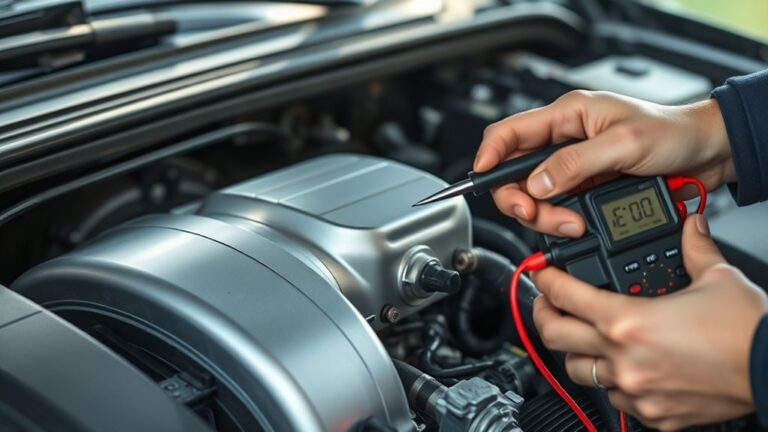
Use a digital multimeter and test light to measure voltage, resistance, and continuity in the sender unit, gauge cluster, and wiring. Simulate sender resistance with a variable resistor to observe how the gauge responds under different conditions.
Verify wiring integrity and ground connections according to your vehicle’s wiring diagram. If problems persist beyond basic fixes, deeper diagnostics might be necessary—explore detailed steps to pinpoint and resolve issues.
Signs of a Faulty Fuel Gauge
How can you tell if your fuel gauge is malfunctioning? You’ll notice erratic readings, such as the needle fluctuating between full and empty without refueling. This inconsistency can indicate issues with sensor calibration, causing inaccurate fuel level data.
Another sign is a gauge that remains stuck at one position, which may result from a faulty sending unit or wiring problems. Malfunctioning gauges can disrupt your fuel economy monitoring, leading to inefficient fuel use or unexpected runouts.
If your vehicle’s fuel economy suddenly declines without changes in driving habits, the gauge may not be providing reliable information. Identifying these symptoms early helps you maintain precise fuel level readings and avoid costly errors in fuel management.
Tools Needed to Test Your Fuel Gauge
Accurately testing your fuel gauge requires a specific set of diagnostic tools designed to evaluate electrical components and signal integrity. To develop proper testing awareness, you’ll need a digital multimeter to measure voltage, resistance, and continuity within the fuel gauge circuit.
A test light can help verify power flow, while a wiring diagram is essential for identifying correct terminals and wire colors. Additionally, a scan tool or OBD-II reader may assist in reading fuel level sensor data and detecting related fault codes.
For precise gauge calibration, a variable resistor or potentiometer simulates sender unit resistance values, enabling you to confirm gauge response accurately. Using these tools systematically ensures you isolate faults effectively and maintain the fuel gauge’s operational accuracy.
Testing the Fuel Gauge Sender Unit
Once you have gathered the necessary tools, the next step involves evaluating the fuel gauge sender unit itself. Testing sender functionality is crucial for accurate fuel calibration.
Begin by disconnecting the sender from the fuel tank and inspecting it for corrosion or damage. Next, use a multimeter to measure resistance across the sender terminals while moving the float arm slowly through its range. You should note:
- Baseline resistance at empty and full positions.
- Consistent, smooth resistance changes corresponding to float movement.
- Absence of erratic jumps or open circuits.
- Resistance values matching manufacturer specifications for proper calibration.
If the resistance readings deviate significantly or fluctuate irregularly, the sender unit likely requires replacement or recalibration to ensure accurate fuel level reporting.
Testing the Fuel Gauge Cluster and Wiring
Where should you begin when diagnosing issues beyond the fuel sender unit? Start by focusing on the fuel gauge cluster and associated wiring. Perform a systematic testing systems approach by consulting the vehicle’s wiring diagram to identify correct color codes for the fuel gauge circuit.
Use a multimeter to verify voltage continuity along these wires, paying close attention to any breaks or corrosion. Evaluate wiring diagnosis by checking for shorts, opens, and proper connection points.
Ensure ground integrity by confirming that the fuel gauge cluster’s ground wire provides a solid, resistance-free path to chassis ground. Accurate wiring diagnosis and cluster testing help isolate faults outside the sender unit, allowing you to pinpoint failures in the gauge’s electrical system efficiently and precisely.
Common Fuel Gauge Problems and Fixes
After verifying the fuel gauge cluster and wiring integrity, you can narrow down the potential sources of malfunction to specific common issues. Address these systematically to restore accurate readings:
- Faulty fuel sender calibration. Check and recalibrate the sender unit to ensure it matches the tank’s fuel level accurately.
- Corroded or loose connections. Inspect connectors for corrosion or looseness that disrupt signal transmission.
- Gauge illumination troubleshooting. Test bulbs or LEDs illuminating the gauge; replace any faulty components affecting visibility.
- Mechanical wear in the float arm. Examine the float mechanism for damage or binding that skews fuel level reporting.
When to Call a Mechanic for Fuel Gauge Problems
How do you determine when a fuel gauge issue requires professional intervention? If you’ve ruled out simple fixes, like checking the fuse or wiring, and the gauge still malfunctions, it’s time to consult a mechanic.
Persistent erratic readings or a completely non-responsive gauge often indicate faulty sensors or a damaged instrument cluster, which need specialized diagnostic tools. Ignoring these problems can compromise safety by causing unexpected fuel depletion, increasing the risk of breakdowns.
Additionally, inaccurate fuel measurement may lead to overfilling or leaks, raising environmental impact concerns. If you notice fuel odors or suspect leaks alongside gauge issues, seek professional help immediately.
Frequently Asked Questions
Can a Faulty Fuel Gauge Affect My Vehicle’s Fuel Efficiency?
A faulty fuel gauge can indirectly impact your fuel economy by causing you to misjudge fuel levels, leading to inefficient refueling habits. This unpredictability also compromises driving safety, as you might unexpectedly run out of fuel.
How Often Should I Calibrate My Fuel Gauge?
You should calibrate your fuel gauge every 12 months or 12,000 miles to prevent gauge drift. Adjusting calibration frequency depends on vehicle use and environment.
Ensuring accurate fuel readings helps avoid inconsistent fuel level indications.
Are Fuel Gauge Issues Covered Under Vehicle Warranty?
Warranty coverage dances to a precise tune. Fuel gauge issues usually qualify if caused by defects, not wear or unrelated topics. Don’t treat this as a random question; check your vehicle’s warranty terms for exact, technical clarity.
Can Extreme Weather Impact Fuel Gauge Accuracy?
Yes, extreme weather can impact fuel gauge accuracy by affecting the fuel sender unit’s resistance and electrical connections. Temperature fluctuations may cause sensor errors, leading you to see inaccurate fuel level readings under harsh conditions.
Is It Safe to Drive With a Malfunctioning Fuel Gauge?
Think it’s safe to drive without a working fuel gauge? You shouldn’t. Prioritize testing the fuel sender and wiring inspection to avoid unexpected fuel loss or breakdowns.
Ensuring accurate fuel level readings helps maintain safe driving conditions.
Conclusion
If your fuel gauge isn’t cooperating, don’t panic like the world’s ending—it’s rarely that dramatic. Testing the sender unit, cluster, and wiring with the right tools will pinpoint the exact glitch.
Remember, a tiny loose wire won’t bring your whole car to a halt, but ignoring it might. So, stay sharp, troubleshoot methodically, and only call a mechanic when the problem defies your diagnostic precision.
You’ve got this under control! When in doubt, follow these steps to test a fuel gauge and keep your vehicle running smoothly.