
How Do I Know if My Fuel Injectors Are Clogged
You’ll know your fuel injectors are clogged if your engine idles roughly, hesitates when accelerating, or if you notice a drop in fuel efficiency. These issues happen because deposits restrict fuel flow and disrupt spray patterns.
You can start diagnosing by listening for misfires, checking for uneven spark plug deposits, or performing a fuel injector balance test. Using specialized diagnostic tools helps confirm the problem.
Understanding these steps will guide you toward effective fixes.
What Are Fuel Injectors? Why Do They Get Clogged?
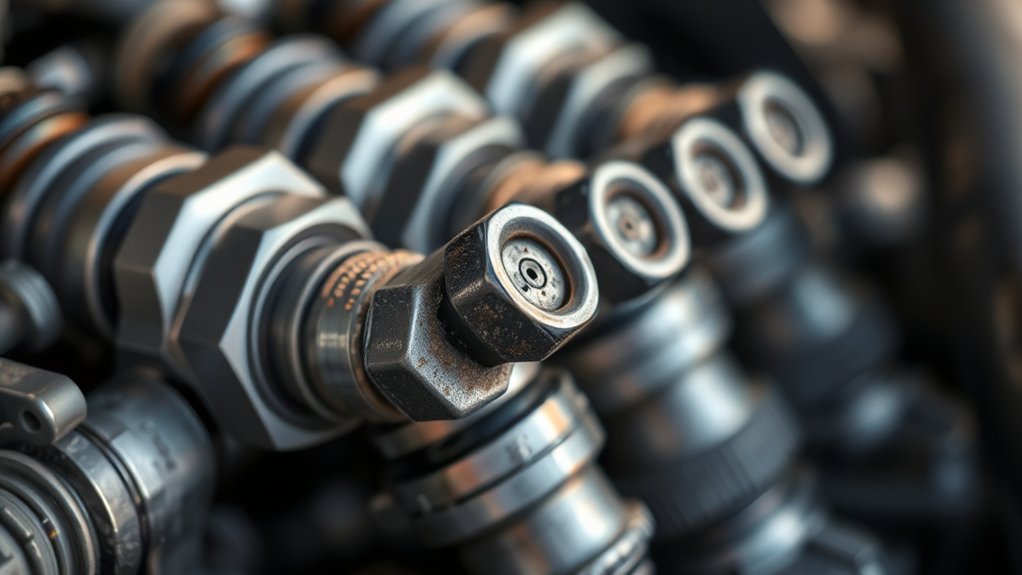
What exactly are fuel injectors, and why do they sometimes get clogged? Fuel injectors are precision components that spray fuel into your engine’s combustion chamber in a fine mist, ensuring optimal air-fuel mixture for efficient burning.
Fuel injectors deliver precise fuel sprays for efficient engine combustion and optimal performance.
Over time, contaminants from fuel, such as dirt, varnish, and carbon deposits, accumulate inside the injector nozzles. This buildup restricts fuel flow, disrupting spray patterns and reducing combustion efficiency.
When injectors clog, your engine struggles to maintain ideal fuel delivery, negatively impacting fuel economy. To address this, specialized cleaning solvents dissolve deposits and restore injector function without disassembly.
Regular maintenance using appropriate cleaning solvents can prevent clogging, ensuring your fuel injectors operate at peak performance and maintain fuel economy. Diagnosing injector clogging early helps avoid costly repairs and preserves engine efficiency.
What Are the Common Symptoms of Clogged Fuel Injectors?
You’ll notice engine performance issues like hesitation or misfires when fuel injectors are clogged. Fuel efficiency will drop as the engine struggles to get the right fuel-air mix. Additionally, rough idling often signals injector problems that disrupt consistent fuel delivery.
Engine Performance Issues
Recognizing clogged fuel injectors early can prevent extensive engine damage and costly repairs. When you perform routine engine maintenance or engage in fuel system diagnostics, keep an eye out for these key engine performance issues that typically signal clogged injectors:
- Rough Idling and Misfires: Inconsistent fuel delivery causes the engine to idle unevenly or misfire, indicating injector blockages.
- Reduced Acceleration Response: You’ll notice sluggish throttle response because clogged injectors limit fuel flow, impairing combustion efficiency.
- Engine Stalling Under Load: The engine may stall or hesitate during acceleration or when climbing hills due to insufficient fuel supply.
Fuel Efficiency Drops
How can you tell if your fuel injectors are clogged by observing changes in fuel efficiency? A noticeable decline in fuel economy is a primary indicator.
When injectors are partially blocked, they disrupt the optimal fuel spray pattern, causing uneven combustion. This inefficiency forces your engine to consume more fuel to maintain power output.
If you track your vehicle’s miles per gallon and notice a consistent drop despite unchanged driving habits, clogged injectors might be the cause. Ignoring this symptom can lead to increased emissions and higher fuel costs.
To prevent this, adhere strictly to your vehicle’s maintenance schedule, which includes periodic fuel system cleaning. Diagnosing fuel efficiency drops early helps preserve engine performance and avoid costly repairs linked to fuel delivery problems.
Rough Idling Symptoms
When does your engine feel unstable or uneven at idle? Rough idling often signals clogged fuel injectors disrupting fuel flow. You might notice these diagnostic symptoms:
- Engine vibrations or shaking during idle, caused by inconsistent fuel delivery.
- Fluctuating RPMs, reflecting uneven combustion due to injector blockages.
- Difficulty maintaining a steady idle speed, indicating fuel mixture imbalance.
Fuel filter relevance is critical here; a clogged fuel filter can exacerbate injector clogging by restricting fuel flow, worsening rough idling. To accurately diagnose, inspect both the fuel injectors and fuel filter.
Addressing clogged injectors restores proper atomization and consistent fuel supply, eliminating rough idling symptoms. If you ignore these signs, engine performance and emissions will decline, so prompt attention is essential for reliable operation.
How Do Clogged Fuel Injectors Affect Car Performance?
What symptoms should you watch for if your fuel injectors are clogged? Expect reduced engine power, hesitation during acceleration, and poor fuel economy. Clogged injectors disrupt the precise fuel spray pattern, causing inefficient combustion.
This imbalance leads to misfires, rough idling, and even increased emissions. You might also notice a noticeable drop in throttle response.
Many believe that simple cleanup tips or over-the-counter additives can resolve injector issues, but maintenance myths often delay proper diagnosis. Ignoring clogged injectors can strain your catalytic converter and damage engine components over time.
Understanding these performance impacts helps you prioritize timely repairs and avoid costly damage. Stay alert to these signs, and don’t rely solely on myths or quick fixes when addressing fuel injector problems.
How to Diagnose Clogged Fuel Injectors Yourself
Recognizing the symptoms of clogged fuel injectors is only the first step; pinpointing the issue requires specific diagnostic techniques. To diagnose clogged fuel injectors yourself, follow these steps:
- Listen for engine misfires or rough idling; these may indicate inconsistent fuel spray patterns.
- Perform a fuel injector balance test by briefly disconnecting each injector and noting RPM drops. Uneven drops suggest blockages.
- Inspect spark plugs for uneven carbon deposits which reflect irregular fuel delivery.
Avoid jumping to conclusions with insufficient data or veering into an unrelated topic like general engine faults. Focus strictly on injector-specific indicators. This precise approach helps isolate clogged injectors without misdiagnosing other fuel system components.
If you detect anomalies in these tests, clogged injectors are likely the cause, warranting further professional cleaning or replacement.
What Tools Do Mechanics Use to Diagnose Fuel Injectors?
You’ll find mechanics rely on specific diagnostic equipment like fuel pressure gauges and multimeters to assess injector function accurately. They also use electronic scan tools to read error codes and monitor injector performance in real time. Understanding these tools helps you grasp how professionals pinpoint clogged fuel injectors.
Common Diagnostic Equipment
How can you accurately identify clogged fuel injectors without the right tools? Mechanics rely on specific diagnostic equipment to evaluate fuel delivery systems, bridging knowledge from carburetor basics to modern diesel injection technology.
To pinpoint injector issues, you’ll typically use:
- OBD-II Scanner – Reads error codes related to fuel system irregularities, essential for modern vehicles.
- Fuel Pressure Gauge – Measures pressure in the fuel rail, helping detect blockages or leaks.
- Injector Pulse Tester – Verifies the electrical signal to each injector, confirming proper operation.
These tools give you precise data to assess injector performance, ensuring you distinguish clogged injectors from other engine problems. Without them, you risk misdiagnosis, as symptoms often overlap with ignition or air intake faults, rooted in older carburetor basics or advanced diesel injection systems.
Fuel Injector Testing Methods
Accurate diagnosis of fuel injector issues depends on applying specific testing methods that reveal injector performance under operating conditions. To evaluate fuel delivery, mechanics often use a fuel pressure gauge to verify system pressure consistency.
A noid light tests injector electrical pulses, ensuring proper signal delivery. For flow rate and spray pattern analysis, a specialized injector cleaning and testing machine simulates engine conditions, measuring injector volume and atomization quality.
Ultrasonic cleaning tools assist in injector maintenance by removing deposits without damaging internal components. Additionally, multimeters check coil resistance to detect internal faults.
Combining these methods allows you to pinpoint clogging or malfunction precisely, ensuring effective injector maintenance and restoring optimal fuel delivery. These diagnostic tools provide a comprehensive understanding of injector health beyond basic visual inspection.
Electronic Scan Tools
Where do mechanics turn when pinpointing fuel injector issues with precision? They rely on electronic scan tools, which provide detailed diagnostic scans and real-time data. These tools go beyond basic code readers by accessing the engine control unit (ECU) for specific fuel injector parameters.
When you use electronic scan tools, you can:
- Retrieve trouble codes related to injector performance, such as misfires or flow irregularities.
- Monitor fuel injector pulse width and voltage to assess injector operation.
- Perform active tests to command injectors to open or close, verifying their responsiveness.
Using these tools, you’ll quickly identify clogged or malfunctioning injectors, enabling accurate repairs. Electronic scan tools streamline diagnostics, saving time and preventing guesswork in fuel system troubleshooting.
How to Clean or Replace Fuel Injectors Without Damage
When was the last time you inspected your fuel injectors for buildup or wear? Performing DIY diagnostics can help you decide between cleaning vs. replacement.
Start by removing the injectors carefully to avoid damage to seals or electrical connectors. For cleaning, use a pressurized injector cleaning kit with appropriate solvents to dissolve deposits without harming internal components.
Ultrasonic cleaning is effective for stubborn buildup but requires specialized equipment. If injectors show cracks, leaks, or inconsistent spray patterns during testing, replacement is necessary.
Always use OEM or high-quality aftermarket injectors to ensure compatibility. When reinstalling, apply new O-rings and torque mounting bolts to manufacturer specifications to prevent leaks.
Following these precise steps will help you maintain injector function without causing damage, ensuring optimal engine performance.
Frequently Asked Questions
How Often Should Fuel Injectors Be Professionally Inspected?
You should have your fuel injectors professionally inspected every 30,000 miles as part of your maintenance strategies. Regular inspections help identify issues early, improve performance, and prevent costly repairs. These are key topic ideas for effective vehicle care.
Can Bad Fuel Quality Cause Injector Clogging?
Yes, bad fuel quality can cause injector clogging by leaving deposits inside the fuel injectors. If you consistently use poor fuel, expect reduced spray efficiency, leading to engine misfires, rough idling, and decreased performance.
Are Certain Car Models More Prone to Clogged Injectors?
Yes, certain car models with complex fuel systems can experience clogged injectors more often.
You’ll notice idle roughness and fluctuating fuel system pressure, indicating partial blockage affecting fuel delivery and engine performance.
What Is the Cost Range for Fuel Injector Replacement?
You’ll find cost estimates for fuel injector replacement range from $150 to $600, depending on replacement timing and fuel ingredients used.
Utilize diagnostic options like scan tools to pinpoint issues and optimize your repair decision.
Can Clogged Injectors Affect Fuel Economy Significantly?
Yes, clogged injectors can markedly reduce your fuel economy by disrupting optimal fuel delivery.
Regular injector cleaning restores precise spray patterns, improves combustion efficiency, and helps you regain lost mileage effectively.
Conclusion
Think of your fuel injectors as the heart’s arteries, delivering fuel precisely where it’s needed. If they clog, your engine’s performance suffers, much like a blocked artery disrupts blood flow.
By recognizing symptoms early and using proper diagnostic tools, you can pinpoint the issue before it worsens. Whether you choose to clean or replace them, acting promptly ensures your engine runs smoothly and efficiently.
Taking care of clogged fuel injectors early helps you avoid costly repairs down the road and keeps your vehicle performing at its best. Knowing how to identify if your fuel injectors are clogged is key to maintaining optimal engine health.