How to Open a Roll up Tonneau Cover
To open your roll-up tonneau cover, first unlock the latches on both sides to release tension. This initial step is crucial for a smooth operation.
Next, lift the cover gently from the tailgate and roll it forward smoothly toward the truck cab. Ensure it folds evenly to avoid damaging the seal. Watch the track system closely to prevent any obstructions.
Once rolled up, secure the clamps or straps firmly to keep it in place. Understanding these basics sets the foundation for maintaining and troubleshooting your cover effectively.
What Is a Roll-Up Tonneau Cover and How Does It Work?
A roll-up tonneau cover is a flexible, retractable bed cover designed to protect your truck bed from weather and theft. You’ll find it made of durable vinyl or aluminum slats that roll neatly toward the cab, allowing easy access.
When closed, it forms a secure seal that keeps moisture and debris out, enhancing underbody insulation by reducing airflow beneath the bed. This insulation helps maintain consistent cargo temperatures and can contribute to improved fuel efficiency by minimizing aerodynamic drag.
Operating the cover involves releasing the latches at the tailgate, then rolling it forward. Its design balances convenience with security, making it a practical solution for truck owners who want efficient protection without compromising access or vehicle performance.
How to Prepare Your Truck Bed Before Opening Your Roll-Up Tonneau Cover
Before opening your roll-up tonneau cover, why is it essential to prepare the truck bed properly? Proper preparation ensures you avoid installation restraints and prevents damage to both the cover and cargo.
Start by clearing debris and securing loose items to maintain a smooth surface. Check cargo dimensions carefully; oversized or improperly arranged loads can interfere with the cover’s operation.
Confirm that your cargo height does not exceed the bed rails, as this may strain the cover’s sealing mechanism. Inspect side rails and latches for obstructions or damage that could hinder opening.
Finally, ensure any installed accessories, like bed liners or tie-downs, do not restrict cover movement. These steps optimize functionality and longevity, preventing complications when you open your roll-up tonneau cover.
How to Open Your Roll-Up Tonneau Cover Step-by-Step
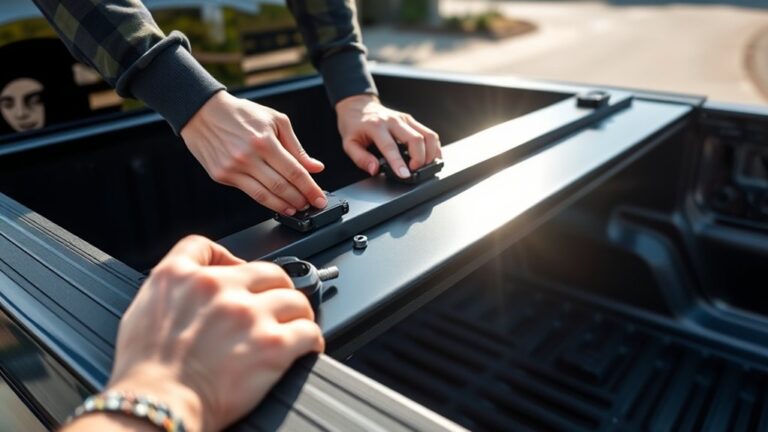
Once your truck bed is clear and all components are checked, you’re ready to open your roll-up tonneau cover. Start by unlocking the latches on both sides of the cover to release the tension.
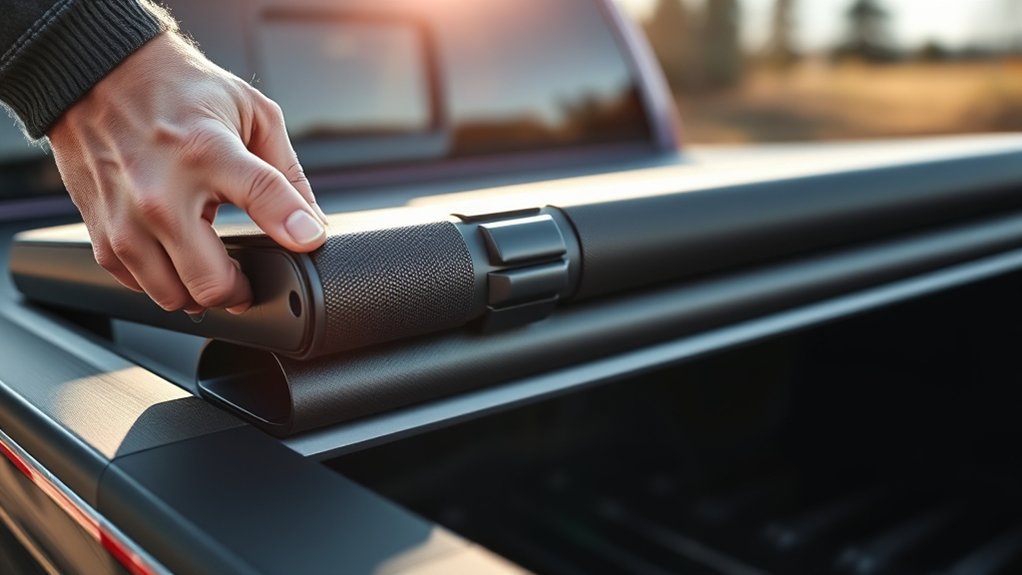
Then, carefully lift the cover from the tailgate, rolling it toward the cab in smooth, controlled motions. Make sure the cover folds evenly to prevent damage to the seals.
As you roll, keep an eye on the track system to ensure it moves freely without obstruction. This method mirrors open source principles, simple, transparent, and effective, allowing you to maintain your cover with ease, much like tending a garden.
Just as gardening requires attention and care, regularly inspect your cover for debris or wear to prolong its lifespan and performance.
How to Secure Your Roll-Up Tonneau Cover When Rolled Up
How do you guarantee your roll-up tonneau cover stays securely in place when rolled up? First, latch the built-in clamps or straps firmly to prevent wind damage. This step ensures both maintenance of the cover’s integrity and preserves aesthetics by avoiding unwanted sagging or wrinkling.
Follow this table for optimal securing:
| Step | Action |
|---|---|
| 1. Engage clamps | Firmly lock the clamps |
| 2. Use straps | Secure straps tightly |
| 3. Check alignment | Ensure even rolling, no folds |
Regularly inspect these securing points during maintenance to extend cover life and maintain a sleek appearance. By doing so, you keep your tonneau cover functional and visually appealing.
How to Handle Different Types of Roll-Up Tonneau Covers
Why does the type of roll-up tonneau cover matter when handling it? Different designs require specific techniques to ensure longevity and maintain performance, especially regarding silent functioning and weatherproofing considerations.
- Soft roll-up covers: Handle these gently to avoid tearing the vinyl or fabric. Roll evenly to maintain tension, ensuring silent functioning and preventing water pooling.
- Hard roll-up covers: Use smooth, controlled motions to avoid damaging hinges or locking mechanisms. Proper alignment preserves weatherproof seals and quiet operation.
- Hybrid covers: Combine techniques from both types. Pay special attention to locking points and fabric tension, as improper handling can compromise weatherproofing and introduce noise.
Common Mistakes When Opening Your Tonneau Cover
Don’t force the cover open, as this can damage the material and locking system. Always disengage the lock mechanism before rolling the cover back. Also, ensure the cover aligns properly to prevent wear and ensure smooth operation.
Forcing The Cover
Applying excessive force when opening your roll-up tonneau cover can cause irreversible damage to the hinges, latches, and fabric. Instead of forcing it, follow these maintenance tricks to ensure smooth operation, especially if your truck is kept in outdoor storage.
First, regularly clean and lubricate all moving parts to prevent stiffness. Second, inspect the fabric for debris or ice buildup that might obstruct rolling. Third, check for proper alignment of the latches and hinges before opening.
Forcing the cover stresses components, leading to costly repairs or replacements. By integrating these steps into your routine, you’ll extend the life of your tonneau cover and maintain optimal function without unnecessary strain or damage.
Ignoring Lock Mechanism
A properly engaged lock mechanism is essential for safely opening your roll-up tonneau cover. Ignoring it leads to damage and security risks. Avoid releasing myths like “forcibly pulling the cover without disengaging locks,” which cause strain on locking components.
Maintenance myths, such as “lubrication isn’t necessary,” can result in lock failure. Always verify the lock’s status before rolling the cover back.
| Mistake | Consequence | Correct Action |
|---|---|---|
| Skipping lock check | Damage to locking mechanism | Always disengage lock first |
| Believing unlocking myths | Increased wear and tear | Follow manufacturer guidelines |
| Ignoring maintenance myths | Corrosion and jamming | Regularly lubricate lock parts |
| Forcing cover open | Security compromise | Ensure lock fully disengaged |
Respect the lock system to prolong your tonneau cover’s lifespan and ensure safe operation.
Overlooking Proper Alignment
How exactly should you align your roll-up tonneau cover before opening it? Proper alignment prevents damage and ensures smooth operation. Avoid common two word ideas like “just guess” or “eyeball it,” which lead to costly errors.
Focus strictly on these technical steps:
- Center the cover evenly across the truck bed rails, ensuring parallel edges.
- Engage the locking mechanism only after confirming that the cover lays flat without tension.
- Check that the latches align with their receiving points before rolling the cover back.
Don’t fall into subtopic detours or unrelated focus such as worrying about weather conditions at this stage. Precision in alignment is essential; overlooking it causes wear and functional issues.
Always prioritize alignment over speed to maintain your tonneau cover’s longevity.
How to Maintain Your Roll-Up Tonneau Cover for Smooth Operation
Even if your roll-up tonneau cover is designed for durability, regular maintenance guarantees it operates smoothly and lasts longer. Start by inspecting the dusty assembly, removing debris with a soft brush or compressed air to prevent abrasion and ensure seamless rolling.
Clean the cover surface using a mild, non-abrasive cleaner that preserves the color coordination between the cover and your truck. Avoid harsh chemicals that could degrade materials or fade colors.
Lubricate the hinges and locking mechanisms with a silicone-based spray to reduce friction without attracting dust. Finally, check the tension and adjust it if necessary to maintain proper roll-up function.
Performing these steps routinely safeguards your cover’s integrity and functionality, preventing premature wear and operational issues.
Troubleshooting Tips for Stuck or Hard-to-Open Covers
Why does your roll-up tonneau cover sometimes stick or resist opening? Usually, it’s due to dirt buildup, damaged seals, or improper tension. Here’s how to troubleshoot effectively:
- Inspect and Clean Tracks: Dirt or debris can hinder smooth movement. Perform regular weatherproofing maintenance by clearing tracks and applying a silicone-based lubricant to reduce friction.
- Check Seals and Latches: Damaged or misaligned seals cause sticking. Replace worn parts promptly to maintain proper closure and prevent water intrusion.
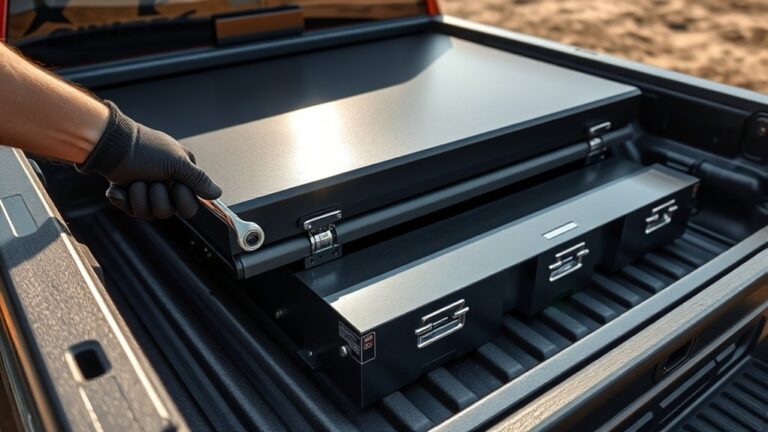
- Adjust Tension and Hardware: Incorrect tension or loose bolts can cause resistance. Tighten mounting hardware and adjust the cover’s tension mechanism according to manufacturer specs.
These steps not only resolve sticking but also contribute to cosmetic upgrades and prolong your cover’s functionality without compromising its weatherproofing maintenance.
Bonus Tips for Maximizing Your Roll-Up Tonneau Cover’s Lifespan
What steps can you take to extend the life of your roll-up tonneau cover beyond routine maintenance? Focus on preventive care and environmental protection. Use covers with UV-resistant materials if your small business operates in sunny regions or near solar power setups, where prolonged sun exposure can degrade fabric.
Clean the cover regularly using mild detergents and avoid harsh chemicals. Lubricate moving parts to prevent rust and stiffness.
| Aspect | Action | Benefit |
|---|---|---|
| UV Exposure | Use UV-resistant covers | Prevents fabric deterioration |
| Cleaning | Mild detergent, routine wash | Maintains flexibility |
| Moving Parts | Lubricate hinges and rails | Ensures smooth operation |
Applying these tips maximizes durability and performance, saving you repair costs.
Frequently Asked Questions
Can a Roll-Up Tonneau Cover Improve My Truck’s Fuel Efficiency?
Yes, a roll-up tonneau cover can improve your truck’s fuel efficiency by reducing aerodynamic drag.
You’ll tap into the tonneau potential for better roll-up efficiency, lowering wind resistance and enhancing overall mileage during drives.
Are Roll-Up Tonneau Covers Compatible With All Truck Models?
Roll-up tonneau covers aren’t universally compatible; you need to check roll-up compatibility for your specific truck model. Most covers are model-specific, designed to fit exact bed dimensions and mounting points, ensuring secure installation and optimal performance.
What Materials Are Roll-Up Tonneau Covers Typically Made From?
You know what they say: “The devil’s in the details.” Roll-up tonneau covers feature materials composition like vinyl, aluminum, and fiberglass, chosen through rigorous manufacturing processes to balance durability, weight, and weather resistance effectively.
Can I Install a Roll-Up Tonneau Cover by Myself or Need a Professional?
You can install roll-up tonneau covers yourself using detailed instructions, but professional install options ensure precise fit and warranty compliance.
Weigh DIY convenience against expert accuracy and potential time savings before deciding.
How Weather-Resistant Are Roll-Up Tonneau Covers in Extreme Conditions?
You’ll find roll-up tonneau covers offer solid weather durability, resisting rain, snow, and UV damage well. However, in extreme conditions like heavy hail or intense heat, their material may degrade faster, requiring regular maintenance for best protection.
Conclusion
Now that you know how to open your roll-up tonneau cover like a pro, you’re ready to tackle any load with ease—no need for a pocket watch or telegram to remind you. Proper preparation, secure rolling, and regular maintenance keep your cover functioning smoothly.
Avoid common mistakes and troubleshoot promptly to extend its lifespan. With these precise steps, your tonneau cover will serve you reliably, making every haul effortless and efficient.
By following these guidelines, you ensure your roll-up tonneau cover remains in top condition, providing convenience and protection whenever you need it.