What’s the Difference Between 4 Wheel Drive and Awd
You’ll rely on 4WD when you need manual control over power distribution for extreme off-road or deep snow conditions, as it engages all wheels equally via a transfer case.
Understanding the difference between 4 wheel drive and AWD is crucial for choosing the right system for your vehicle.
AWD, however, automatically adjusts torque to optimize traction on varied surfaces without your input, enhancing fuel efficiency and everyday drivability.
Each system suits different needs—whether rugged terrain or balanced road handling—and understanding their operation can help you make the best choice for your driving demands.
What’s the Difference Between 4WD and AWD?
How do 4WD and AWD systems differ in functionality and application? When comparing 4WD vs AWD, you’ll notice that 4WD typically employs a transfer case allowing the driver to manually engage or disengage power to all four wheels. This system excels in rugged terrains and severe off-road conditions.
Conversely, AWD automatically distributes torque to all wheels without driver input, optimizing traction on varied surfaces. In terms of snow performance, AWD offers consistent power distribution, improving stability on slippery roads, while 4WD’s manual control can be advantageous in deep snow or uneven terrain.
Understanding these distinctions lets you select the appropriate drivetrain based on your driving environment and performance needs, especially in winter conditions where traction control is critical.
How Do 4WD and AWD Work in Different Conditions?
Both 4WD and AWD systems adapt their power delivery to enhance traction, but they operate differently under varying conditions. When you engage 4WD, power is distributed equally to all four wheels, optimizing torque for challenging terrains like deep snow or mud.
This maximizes snow traction, but it can negatively impact fuel economy because the system often runs full-time in a locked mode. AWD, on the other hand, continuously monitors wheel slip and automatically adjusts power between the front and rear axles.
This dynamic response improves grip on slippery surfaces without the driver’s input, providing better fuel economy by engaging all wheels only when necessary. Understanding these operational differences helps you anticipate how each system performs under specific driving scenarios.
When Should You Choose 4WD or AWD?
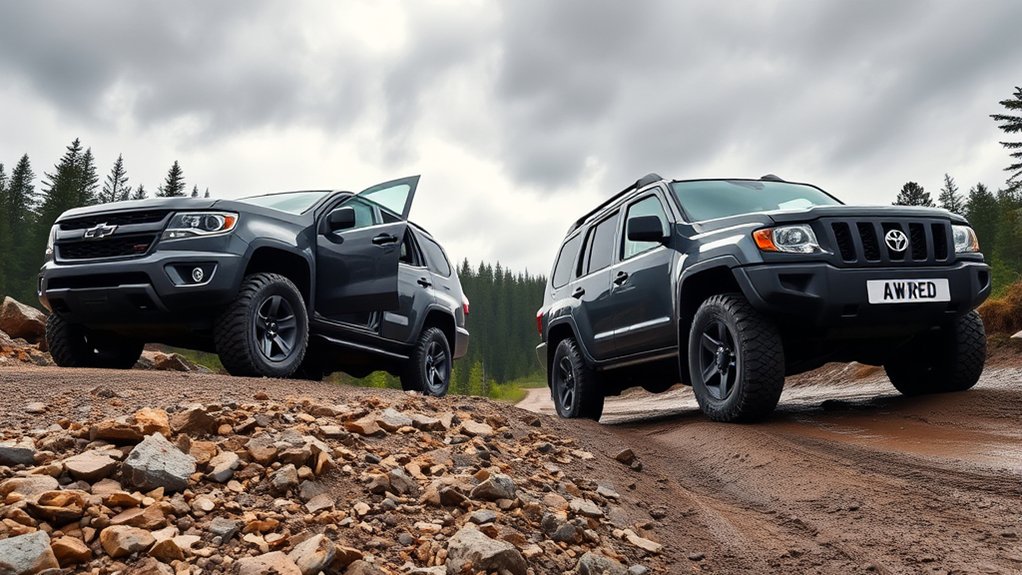
While AWD systems excel in everyday driving and moderate off-road conditions, you should opt for 4WD if you regularly tackle rugged terrain, deep snow, or mud. 4WD provides superior torque distribution and mechanical locking capabilities that enhance traction in extreme environments, making it the preferred choice for serious off-road enthusiasts and those who require maximum drivetrain control.
AWD suits drivers prioritizing consistent off-road grip with minimal intervention, especially on paved or mildly uneven surfaces, offering better fuel efficiency due to its lighter, more automated system. Conversely, 4WD’s robust design sacrifices some fuel efficiency for durability and enhanced traction under harsh conditions.
Ultimately, your choice hinges on balancing daily drivability and fuel economy against the need for uncompromising off-road performance and control.
Pros and Cons of 4WD and AWD
What factors should you weigh when deciding between 4WD and AWD? First, consider balanced traction needs. AWD systems provide continuous power to all wheels, enhancing grip on varied surfaces without driver input. This makes them ideal for everyday driving and light off-road conditions.
Conversely, 4WD offers superior traction in extreme terrains by allowing you to manually engage all four wheels. However, it’s less suited for pavement and can cause drivetrain binding.
Fuel efficiency is another critical factor. AWD systems typically consume less fuel due to lighter components and automatic operation. In contrast, 4WD’s robust hardware adds weight and mechanical drag, reducing efficiency.
Ultimately, if you prioritize consistent balanced traction with better fuel economy, AWD suits you. If you require maximum off-road capability and don’t mind fuel trade-offs, 4WD is preferable.
Frequently Asked Questions
Can 4WD or AWD Improve Fuel Efficiency?
You shouldn’t expect 4WD or AWD to improve fuel efficiency; fuel economy myths persist despite off road tuning benefits. These systems increase drivetrain drag and weight, typically reducing fuel economy rather than enhancing it in everyday driving.
How Does Maintenance Differ Between 4WD and AWD Systems?
Like tuning a complex orchestra, your maintenance basics differ: 4WD demands frequent checks due to off-road limitations, while AWD requires less intensive upkeep but needs attention to its continuous engagement system for optimal performance.
Are There Insurance Cost Differences for 4WD Vs AWD Vehicles?
You’ll often pay higher insurance premiums for 4WD due to greater liability risk linked to off-road suitability. AWD vehicles, designed for city use, typically incur lower premiums reflecting reduced risk and less aggressive terrain exposure.
Can AWD or 4WD Systems Be Added to an Existing Vehicle?
Like retrofitting a classic car with modern tech, you can add on conversions or aftermarket upgrades to install AWD or 4WD systems.
However, expect complex mechanical integration and significant costs demanding expert analysis and precise customization.
Do 4WD and AWD Affect Vehicle Resale Value?
You’ll see mixed effects on resale value; a 4WD conversion might lower it due to potential reliability concerns. AWD benefits often enhance value by improving safety and drivability, appealing to a broader range of buyers.
Conclusion
Now that you’ve dissected the differences between 4WD and AWD, you’re equipped to choose the right system for your drive—whether you’re tackling rocky terrain like a knight jousting or cruising city streets.
Remember, 4WD excels off-road with manual control, while AWD offers seamless traction for everyday conditions. Understanding their mechanics helps you optimize safety and performance, ensuring your vehicle meets your specific driving demands without unnecessary complexity or compromise.
In conclusion, knowing the difference between 4 wheel drive and AWD is key to selecting the best drivetrain system for your needs, enhancing both capability and confidence on the road.