How Long Does It Take to Install a Tonneau Cover
You can typically install a tonneau cover yourself in 20 to 60 minutes, depending on the type. Roll-up covers are the quickest, taking about 20-30 minutes to install, while retractable covers require closer to an hour due to integrated rails and locks.
Installing folding or hard covers usually falls between 30 and 45 minutes, as they demand precise alignment and hardware. With basic tools and proper preparation, you’ll streamline the process.
Explore further to understand each cover’s installation nuances and time breakdown. This knowledge will help you choose the right cover and prepare accordingly for a smooth installation experience.
Types of Tonneau Covers and Their Installation Complexity
Although tonneau covers come in various styles, each type presents a distinct level of installation complexity that affects the time and tools required. When selecting a cover, you need to understand the types of accessories involved, such as clamps, rails, or snap buttons, which influence installation steps.
Roll-up covers typically require minimal tools and feature clamp-on accessories, ensuring broad tools compatibility. Folding covers often demand precise alignment of hinges and brackets, sometimes necessitating specialized tools.
Roll-up covers are easy to install with clamps, while folding covers need precise alignment and sometimes special tools.
Retractable covers involve integrated rails and locking mechanisms, increasing complexity and requiring compatible screwdrivers or drills. Hard covers usually come with pre-installed hardware, but you must verify tools compatibility for secure mounting.
Knowing these differences helps you prepare the right tools and anticipate the installation challenges each tonneau cover type presents.
How Long Does Installation Take for Each Tonneau Cover Type?
How long does it take to install each type of tonneau cover? Installation myths often exaggerate time requirements, but actual durations depend on cover type and tool compatibility. Here’s a practical breakdown:
Roll-up covers: Typically 20-30 minutes. They use clamps and require minimal tools, debunking myths about complex setups.
Folding covers: Around 30-45 minutes. They involve hinge assembly and aligning panels but remain straightforward.
Retractable covers: Usually 45-60 minutes. These need precise rail installation and may require specific tools, so tool compatibility is essential.
Snap-on covers: The quickest, about 15-25 minutes. They snap into place with basic hand tools, making installation simple.
Understanding these times helps you plan efficiently and avoid unnecessary concerns about complicated setups.
Essential Tools and Skills for Tonneau Cover Installation
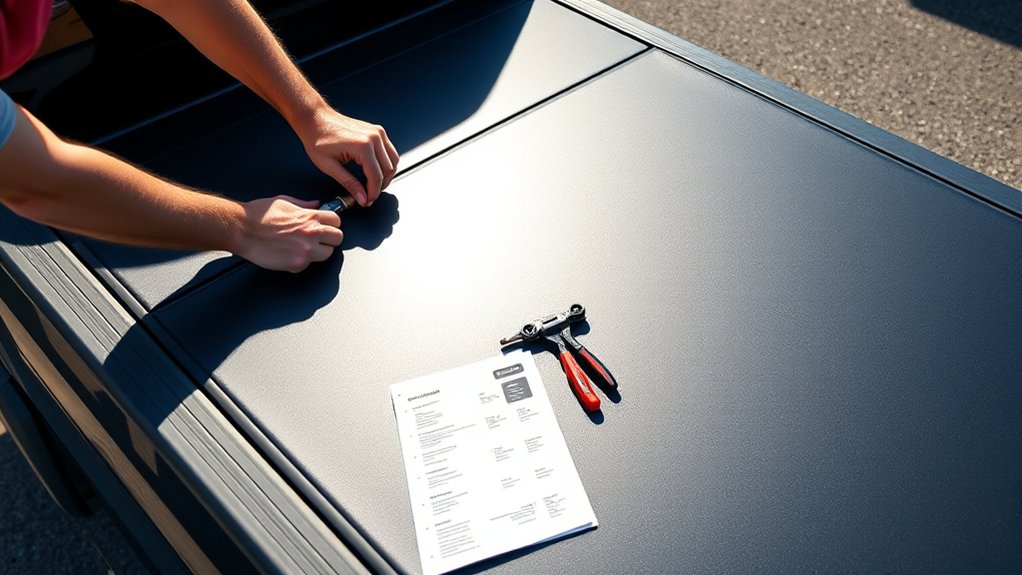
What tools and skills do you need to install a tonneau cover efficiently? First, you’ll require basic hand tools such as a socket wrench, screwdriver set, and measuring tape. Precision is key, so ensure your tools have good ergonomics to reduce fatigue during installation challenges like aligning clamps or tightening bolts in tight spaces.
Skill-wise, you should be comfortable reading technical instructions and performing minor adjustments. Familiarity with your truck’s bed dimensions helps prevent errors. Patience and steady hands are essential when securing components to avoid damaging the cover or paint.
Understanding torque specifications ensures fasteners are neither under- nor over-tightened. By combining proper tools with focused skills, you can tackle installation challenges effectively, making the process smoother and more reliable.
Installation Time Breakdown: Step-by-Step Guide for Popular Covers
When installing a tonneau cover, how long should you expect each step to take? Understanding the installation time step by step helps you plan effectively. Here’s a practical breakdown for popular covers:
Preparation and alignment (10-15 minutes): Position the cover and adjust rails precisely.
Attaching clamps or brackets (10-20 minutes): Secure mounting hardware firmly to the truck bed.
Installing the cover (15-25 minutes): Attach the cover panels or roll-up system, ensuring proper fit.
Final adjustments and testing (5-10 minutes): Check for tightness, functionality, and seal integrity.
Each step varies by cover type, but this step-by-step discussion idea outlines a typical 40 to 70-minute installation time. Staying methodical during each phase ensures a secure, professional outcome.
Tips to Speed Up Installation and Avoid Common Delays
Where can you save time during tonneau cover installation? Start by thoroughly reading the manufacturer’s instructions to ensure easy installation and avoid common pitfalls like misaligned clamps or incorrect panel placement.
Prepare all tools and parts beforehand to prevent interruptions. Use a magnetic screwdriver to keep screws handy and avoid dropping them in tight spaces.
When attaching clamps, apply consistent pressure rather than overtightening, which can cause delays due to adjustments. Test the cover’s fit before final tightening to catch alignment issues early.
If your cover includes weatherproof seals, clean the truck bed edges first to ensure proper adhesion and avoid leaks. Following these practical steps helps you speed up installation while steering clear of common delays and errors.
Frequently Asked Questions
Can I Install a Tonneau Cover by Myself Without Professional Help?
Yes, you can install a tonneau cover yourself. Use DIY install tips like reading instructions carefully, gathering necessary tools such as screwdrivers and wrenches, and working patiently to ensure proper alignment and secure fastening without professional help.
Are Tonneau Covers Compatible With Bed Liners or Bed Mats?
About 70% of truck owners consider bed liner compatibility essential. You’ll find most tonneau covers work well with bed liners, but check bed mat thickness and fastening methods to guarantee a proper seal and avoid damage or gaps.
How Do Weather Conditions Affect Tonneau Cover Installation?
Weather conditions impact installation challenges considerably; moisture or extreme temperatures can cause material expansion or contraction, leading to alignment issues.
You shouldn’t overlook unlisted concerns like wind or dust, which may complicate the process but aren’t non relevant topics.
Will Installing a Tonneau Cover Affect My Truck’s Fuel Efficiency?
Installing a tonneau cover can slightly improve your truck’s fuel efficiency by reducing aerodynamic drag.
Given the installation ease, it’s a practical upgrade that enhances fuel economy without complicating your vehicle maintenance or daily use.
Can a Tonneau Cover Installation Be Reversed Without Damage?
You can reverse tonneau cover installation without damage if you use the correct installation tools. For example, a mechanic carefully removed clamps and screws, addressing reversibility concerns by avoiding tool slippage or frame marks, ensuring perfect restoration.
Conclusion
Installing a tonneau cover takes time tailored to the type, tools, and technique you tackle. Whether you’re fitting a folding, roll-up, or retractable cover, staying sharp and skilled speeds setup considerably.
By mastering measurements, managing materials methodically, and minimizing missteps, you’ll cut costs and complications. Remember, preparation and precision pave the path to a perfect, professional installation.
So, stay steady, stay smart, and secure your cover swiftly and successfully. Keeping these tips in mind will help you understand how long it takes to install a tonneau cover with ease and confidence.