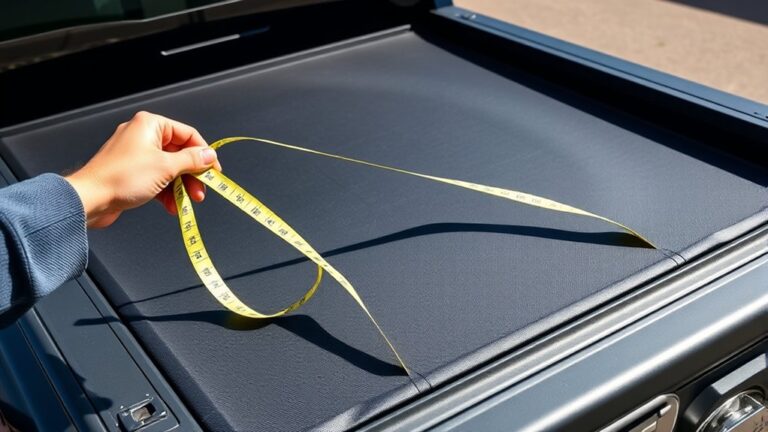

How to Roll up a Tonneau Cover
To roll up a tonneau cover, first clear and clean the truck bed. Remove any debris and make sure the rails and latches operate smoothly.
Next, unfasten the clamps or latches securing the cover. If you have a soft cover, roll it evenly from the tailgate toward the cab without creating creases.
For a hard or tri-fold cover, fold it carefully along its hinges.
Finally, secure the rolled cover with built-in straps or cords to prevent shifting. Proper preparation and fastening help protect both your tonneau cover and cargo.
For detailed tips on maintenance and troubleshooting, keep exploring.
How to Roll Up Your Tonneau Cover: Step-by-Step Guide
To roll up your tonneau cover properly, start by unfastening any clamps or latches securing it in place. Next, position yourself so the roll ergonomics minimize strain; use both hands evenly to maintain control.
Begin rolling from the front edge towards the cab, ensuring the cover folds neatly without wrinkles. Focus on balanced load distribution across your hands and arms to prevent uneven tension that could damage the material.
Keep the roll tight but avoid excessive force that might deform the cover. Once fully rolled, engage any straps or fasteners designed to secure the cover in its rolled state. This method preserves the cover’s integrity and facilitates smooth deployment when you need it next.
Tools and Supplies You Need to Roll Up Your Tonneau Cover
After you’ve unfastened and neatly rolled your tonneau cover, having the right tools and supplies on hand will make the process smoother and protect your cover from damage. Avoid distractions like unrelated topic discussions or random chatter that can lead to mishandling.
Equip yourself with essentials that ensure safety and efficiency.
| Tool/Supply | Purpose | Key Feature |
|---|---|---|
| Soft Cloth | Cleaning before rolling | Lint-free, non-abrasive |
| Protective Gloves | Prevents scratches | Durable, flexible |
| Storage Bag | Safe storage post-roll | Waterproof, padded |
These tools minimize wear, keep your cover clean, and streamline the rolling process without unnecessary complications.
Preparing Your Truck Bed Before Rolling Up Your Tonneau Cover
How should you prepare your truck bed before rolling up the tonneau cover? First, remove any debris, dirt, or cargo that might obstruct the cover’s movement. Clean the bed surface thoroughly to prevent scratches or damage during rolling.
Ensure the bed rails and latches are free from obstructions and operate smoothly. Avoid off topic discussion such as irrelevant topic details about unrelated truck maintenance or accessories not tied to the cover’s function.
Focus strictly on the truck bed’s readiness to maintain cover integrity and ease of operation. This preparation minimizes wear and tear and ensures the cover rolls up evenly without snagging. Proper groundwork here sets the stage for a smooth rolling process, avoiding complications later on.
How to Roll a Soft Tonneau Cover
Wondering where to start when rolling up your soft tonneau cover? Begin by loosening any clamps or fasteners securing the cover. Maintain a steady rolling cadence, folding the cover evenly from the tailgate toward the cab.
Start rolling your soft tonneau cover by loosening clamps and folding evenly from tailgate to cab.
This ensures smooth, compact rolls that prevent creases or material damage. Avoid rushing, as inconsistent rolling cadence can lead to uneven tension and wear.
Once fully rolled, secure the cover with built-in straps or clamps to maintain its shape. For storage safety, place the rolled cover in a clean, dry area away from direct sunlight or extreme temperatures, which can degrade the material.
Following this method preserves your soft tonneau cover’s integrity and ensures it’s ready for easy redeployment when needed.
How to Roll a Hard Folding or Tri-Fold Tonneau Cover
What’s the best way to roll a hard folding or tri-fold tonneau cover without causing damage? Start by clearing any debris or dust, especially after driving on dusty roads, to prevent scratches.
Lift the cover gently from the tailgate, folding each section carefully along the hinges. Avoid forcing folds, as this can weaken joints or scratch the paint protection on your truck bed edges.
When folding, keep the cover aligned to maintain seal integrity and avoid warping. Make sure you roll or fold the cover smoothly, not abruptly, to preserve the structural components.
Handling the cover with clean hands or gloves also prevents oil or dirt transfer. Following these steps ensures your hard folding tonneau cover remains functional, maintains its paint protection benefits, and withstands rough environmental conditions.
Tips for Securing the Rolled Tonneau Cover Safely
Where should you focus to secure your rolled tonneau cover effectively? Concentrate on anchoring the cover firmly to prevent shifting during transit. Use built-in straps or heavy-duty bungee cords, ensuring tight, even tension across the roll.
Avoid slack, which invites damage or unrolling. Secure connection points must be checked regularly for wear or loosening. Don’t get distracted by irrelevant chatter or random tangents about aesthetics or non-technical aspects; your priority is mechanical stability.
Additionally, position the roll evenly along the tailgate or bed rails to maintain balance. If your cover has locking mechanisms, engage them fully to enhance security. These targeted measures will guarantee the rolled tonneau cover stays safe, stable, and functional without risk of damage or detachment while driving.
Common Mistakes to Avoid When Rolling Your Tonneau Cover
How can you avoid damaging your tonneau cover during rolling? First, resist common maintenance myths like over-tightening or using harsh cleaners, which can degrade materials. Always clean the cover gently before rolling to prevent dirt abrasion.
Avoid forcing the cover if you encounter resistance; this often damages the lock mechanisms or the cover’s frame. Ensure the lock mechanisms are fully disengaged before rolling to prevent strain or breakage. Don’t roll the cover unevenly, as this causes creases and weakens the fabric over time.
Finally, never ignore signs of wear or damage. Address these promptly to maintain functionality. By steering clear of these mistakes, you’ll extend your tonneau cover’s lifespan and ensure smooth, damage-free operation every time you roll it up.
When to Roll Up Your Tonneau Cover vs. Taking It Off
When should you roll up your tonneau cover instead of removing it entirely? Opt to roll it up when you need quick access to your truck bed without compromising vehicle aesthetics or exposing the bed to elements for extended periods. Rolling preserves the cover’s structure and protects the rollers from unnecessary wear, easing roller maintenance.
Removing the cover suits long-term storage or when carrying oversized loads that exceed the cover’s dimensions. Frequent removal increases risks of damaging mounting hardware and misaligning the cover, affecting fit and appearance.
Rolling up keeps the cover secured, maintains a streamlined look, and reduces time spent reinstalling. Choose rolling for convenience and protection; reserve removal for special cases demanding full bed access or cover storage.
How to Maintain Your Tonneau Cover After Rolling
Although rolling up your tonneau cover offers convenience, you need to perform regular maintenance to guarantee its longevity and functionality. Start by following a maintenance checklist: inspect for tears, clean dirt and debris with mild soap and water, and lubricate hinges or latches using recommended products.
Avoid harsh chemicals that can degrade materials. After cleaning, dry the cover completely to prevent mold or mildew growth. For storage, roll the cover loosely to avoid creases and store it in a cool, dry area away from direct sunlight.
Use storage tips like covering it with a breathable fabric to protect from dust and UV exposure. Regularly check fasteners and seals to maintain a secure fit. Consistent upkeep ensures your tonneau cover performs optimally and lasts longer.
Troubleshooting Stuck or Difficult Tonneau Covers
If your tonneau cover sticks or resists rolling, it’s usually due to dirt buildup, damaged seals, or misaligned rails. You’ll want to inspect these areas carefully and clear any debris obstructing movement. Applying targeted release techniques, like gentle pressure or lubricant in key spots, can restore smooth operation.
Common Causes of Sticking
Tonneau covers often stick or become difficult to roll due to common mechanical or environmental factors. You might face residue buildup, damaged seals, or frame misalignment. Addressing these issues improves stain prevention and weatherproofing.
Regular cleaning removes dirt and debris that cause sticking.
| Cause | Effect | Solution |
|---|---|---|
| Dirt & debris | Sticky surface | Clean regularly |
| Seal damage | Poor weatherproofing | Inspect & replace seals |
| Frame misalignment | Difficult rolling | Realign frame components |
You should apply weatherproofing tips, such as lubricating moving parts and protecting seals from UV damage. Staying proactive prevents sticking and maintains smooth operation.
Effective Release Techniques
How do you quickly free a tonneau cover that’s stuck or resistant to rolling? First, avoid getting distracted by unrelated topics or off topic ideas that don’t address the mechanical issue.
Focus on the cover’s latches and hinges; apply a lubricant specifically designed for automotive parts to release any seized components. If the cover remains difficult, gently lift the edges to relieve tension, ensuring you don’t force it and cause damage.
Inspect for debris or misaligned tracks, common culprits often ignored in random discussions about unrelated subjects. If necessary, manually adjust the tension springs or clamps according to the manufacturer’s instructions.
Avoid improvising with unrelated tools or concepts, as this can worsen the problem. Staying methodical ensures an effective release without risking damage or prolonging the issue.
What Is a Tonneau Cover and Why Roll It Up?
A tonneau cover protects your truck bed from weather and debris while improving aerodynamics. Rolling it up lets you access the full bed quickly without removing the entire cover. You’ll maintain cargo flexibility and keep the cover secure when not in use.
Purpose Of Tonneau Covers
Why should you consider using a tonneau cover on your truck bed? Primarily, it protects your cargo from environmental factors like rain, dust, and debris, which is crucial during activities such as soil testing in remote locations.
A tonneau cover also improves aerodynamics, reducing drag and enhancing fuel efficiency. These benefits align with the efficiency goals in urban planning projects where trucks frequently transport equipment.
Furthermore, it secures your load, preventing theft or accidental loss while driving. By covering your truck bed, you maintain the integrity of sensitive materials and tools, ensuring accurate results when conducting soil testing or related fieldwork.
Understanding the purpose of a tonneau cover helps you appreciate why rolling it up is necessary for accessibility without compromising protection.
Benefits Of Rolling Up
When do you need quick access to your truck bed without fully removing the tonneau cover? Rolling up your tonneau cover offers practical benefits beyond mere convenience. Instead of irrelevant topic detours or random brainstorming, focus on these key advantages:
- Swift cargo access: Roll up to load or unload without hassles.
- Enhanced versatility: Use your truck bed for oversized items without cover removal.
- Weather protection: Maintain partial coverage to shield cargo from elements.
- Space efficiency: Rolled covers occupy minimal space, preserving bed utility.
Rolling up the cover ensures you retain security and weather resistance while optimizing accessibility. This method surpasses fully detaching the cover, which can be time-consuming and cumbersome. Mastering this technique streamlines your work process, making your tonneau cover a flexible asset rather than a rigid barrier.
Frequently Asked Questions
Can I Leave My Tonneau Cover Rolled up During Heavy Rain?
You shouldn’t leave your tonneau cover rolled up during heavy rain. Rolling maintenance ensures material durability, but prolonged exposure to water can cause damage, mold, or warping.
Always unroll it to protect your truck bed effectively.
Will Rolling My Tonneau Cover Affect My Truck’s Fuel Efficiency?
Wondering if rolling your tonneau cover affects rolling efficiency and fuel impact? Yes, rolling it up can slightly increase drag, reducing fuel efficiency.
Keeping it closed optimizes aerodynamics, improving your truck’s fuel efficiency on the road.
How Do I Clean the Tonneau Cover Material Before Rolling It Up?
You’ll clean vinyl by rinsing with water, then gently scrubbing dirt removal areas using a soft brush and mild soap. Avoid harsh chemicals, rinse thoroughly, and dry completely before rolling to prevent damage and maintain durability.
Are There Specific Brands Known for Easier Rolling Tonneau Covers?
About 70% of users find brands like BAK and Lund offer easier rolling tonneau covers.
Remember brand reminders and roll tips: keep the cover clean, roll tightly, and secure fasteners to ensure smooth operation and longevity.
Can Rolling up the Cover Cause Warranty Issues?
You won’t usually face warranty implications if you follow the manufacturer’s guidelines when rolling up the cover. However, improper rolling risks damaging components, which could void your warranty, so always handle the cover carefully and as instructed.
Conclusion
Rolling up your tonneau cover is like mastering a well-tuned instrument—precision and care ensure it performs flawlessly. Whether soft or hard, following these steps keeps your cover functional and your truck bed protected.
Remember, timely maintenance prevents stubborn jams and extends life.
So, next time you need extra space or easy access, confidently roll up your cover, knowing you’ve handled it with expert care and technical know-how. Proper technique is key when learning how to roll up a tonneau cover.