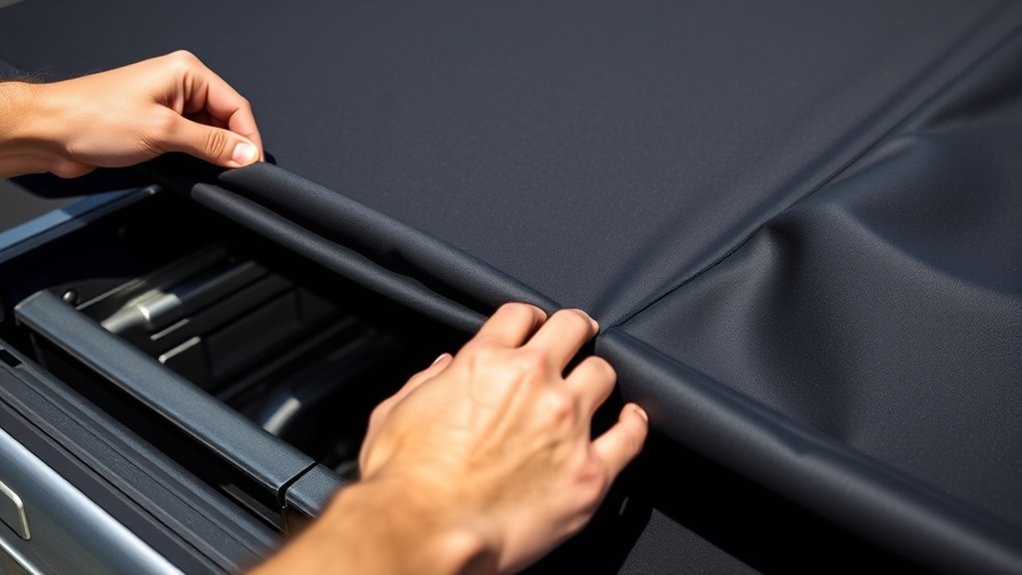
How to Stretch a Tonneau Cover
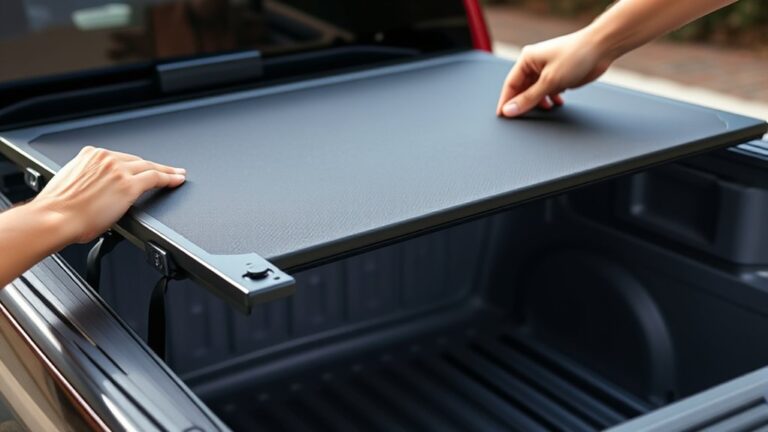
To stretch a tonneau cover properly, start by clearing and cleaning your truck bed and cover thoroughly. This preparation is essential to ensure a smooth and secure fit.
Next, loosen all fasteners and gently apply even heat using a heat gun or hairdryer to soften the material. This makes the cover more pliable and easier to stretch evenly.
Secure clamps or snaps evenly along the edges, then tighten straps or ratchets incrementally to achieve uniform tension without wrinkles. Check corners and center for consistent tautness, adjusting as needed.
Following these steps ensures a durable, smooth fit—exploring further will help you master advanced tensioning and maintenance techniques.
Why Stretching Your Tonneau Cover Is Important
A properly stretched tonneau cover guarantees a secure fit, preventing water, dust, and debris from entering your truck bed. When you stretch the cover correctly, it maintains tension across the fabric, which avoids sagging and flapping during travel.
This tension preserves the cover’s durability and enhances weather resistance, extending its lifespan. From a marketing angle, manufacturers emphasize the importance of proper stretching to demonstrate product quality and customer satisfaction.
In an opinion piece, you might argue that neglecting this step compromises protection and increases maintenance costs. By ensuring your tonneau cover is taut, you uphold both functional performance and aesthetic appeal.
Tools and Materials Needed to Stretch Your Tonneau Cover
Before you begin stretching your tonneau cover, gather the essential tools and materials to guarantee a smooth and efficient process. Having everything ready prevents interruptions caused by unrelated topic distractions or random brainstorm moments.
Prepare all necessary tools beforehand to ensure a smooth, uninterrupted tonneau cover stretching process.
You’ll need precise instruments and durable materials tailored for tension adjustments.
Here’s what you’ll require:
- A high-quality heat gun or hairdryer for softening the cover material
- Heavy-duty clamps to secure the cover firmly
- A rubber mallet for gentle tapping without damage
- A tensioning system or ratchet straps for controlled stretching
- Protective gloves to maintain grip and safety
Each item plays a specific role in achieving an even stretch and avoiding material damage. Preparing these tools ensures you maintain control and accuracy throughout the procedure.
Preparing Your Truck Bed and Tonneau Cover for Stretching
Here is the ORIGINAL TEXT rewritten with contextually relevant alternative words replacing ONLY the words “ensure” and “optimal”:
How should you prepare your truck bed and tonneau cover to guarantee an effective stretching process? First, clear all cargo and debris to secure smooth surface contact, critical for proper cargo organization. Next, clean both the truck bed and tonneau cover thoroughly to remove dust and grime, supporting prime car maintenance. Inspect the cover for damage or wear before stretching. Finally, loosen any clamps or fasteners to allow fabric flexibility.
| Step | Action Detail |
|---|---|
| 1. Clear Truck Bed | Remove all objects and debris |
| 2. Clean Surfaces | Use mild soap and water, dry completely |
| 3. Inspect Cover | Check for tears, holes, or weakened areas |
| 4. Loosen Fasteners | Release clamps, snaps, or Velcro strips |
| 5. Organize Cargo | Plan cargo placement for balanced tension |
How to Stretch a Soft Tonneau Cover: Step-by-Step
First, make sure your truck bed and soft tonneau cover are clean and properly aligned. Then, apply heat evenly across the cover to increase its flexibility without causing damage. Finally, secure the cover tightly and make necessary adjustments to achieve the desired tension.
Prepare Cover And Bed
Where should you begin when preparing to stretch a soft tonneau cover? Start by thoroughly cleaning both the cover and the truck bed to ensure proper adhesion and avoid damage during stretching. Use high water pressure to remove dirt, debris, and residues.
Avoid prolonged sun exposure during cleaning to prevent premature material degradation.
Focus on these preparation steps:
- Rinse the cover and bed with a high-pressure water stream
- Inspect the cover for tears or weak spots
- Dry both surfaces completely with a microfiber cloth
- Remove all accessories or clamps attached to the bed
- Position the truck in a shaded, well-ventilated area to maintain material integrity
Proper preparation guarantees a more effective and even stretch when you proceed.
Apply Heat Evenly
Why is applying heat evenly essential when stretching your soft tonneau cover? Uniform heat transfer ensures consistent fabric elasticity across the entire surface, preventing weak spots or overstretched areas.
Begin by using a heat gun or a hairdryer set to medium heat. Maintain a steady distance of 6 to 8 inches from the fabric to avoid damage. Move the heat source slowly in overlapping, circular motions to distribute heat evenly.
Focus on one section at a time, ensuring the temperature is optimal for softening the vinyl or fabric fibers without causing burns. Avoid concentrating heat in a single spot to prevent fabric distortion.
Even heat application allows the material to stretch uniformly, promoting a tight, wrinkle-free fit essential for a durable, professional finish.
Secure And Adjust
How do you guarantee your tonneau cover stays taut after heating? You secure and adjust it systematically. Begin by fastening all clamps and snaps evenly, ensuring uniform tension. Use a ratchet strap if available, tightening gradually to avoid overstretching.
Check the cover’s edges for consistent alignment, correcting any slack immediately. Once secured, fold excess material neatly for compact storage, preventing creases. Maintain tool organization by keeping clamps, straps, and heat sources in a dedicated kit for easy access.
Evenly fastened clamps along cover edges
Gradual ratchet strap tightening
Aligned cover edges with no slack
Neatly folded excess material for compact storage
Organized toolkit for clamps and straps
This method guarantees a taut, durable fit post-heating.
How to Stretch Hard and Folding Tonneau Covers
To stretch hard and folding tonneau covers effectively, start by preparing the cover to ensure it’s clean and free of debris. Then, apply controlled heat to soften the material without causing damage. Finally, use the cover’s tightening and securing mechanisms to achieve a firm, wrinkle-free fit.
Preparing the Cover Properly
When preparing a hard or folding tonneau cover for stretching, you’ll need to assure the surface is clean and free of debris to prevent damage during the process. Start by inspecting the cover for any dirt, dust, or foreign particles that could cause stretching inconsistencies or scratches. Also, consider storage considerations; improper storage can cause warping or creases, complicating the stretching.
Follow these steps to prepare effectively:
- Remove the cover carefully from the vehicle.
- Clean the surface with mild soap and water.
- Dry the cover completely to avoid moisture damage.
- Lay the cover flat on a smooth, stable surface.
- Check all seals and hinges for damage or wear.
These precautions assure uniform stretching and maintain the cover’s integrity.
Applying Heat Techniques
Why is applying heat essential for stretching hard and folding tonneau covers? Heat softens the cover’s material, making it pliable enough to stretch evenly without damage. Think of it like plant care: just as warmth helps plants grow, controlled heat helps your cover ‘relax’ and extend.
Avoid overheating to prevent warping or weakening.
| Heat Source | Temperature Range | Application Time |
|---|---|---|
| Heat Gun | 120°F – 150°F | 2-3 minutes per area |
| Hair Dryer | 100°F – 130°F | 3-5 minutes per area |
| Warm Water (Rare) | ~100°F | 5-7 minutes soak |
| Infrared Heater | 110°F – 140°F | 3-4 minutes per area |
Funny anecdotes often involve overheating, like melting a cover while distracted. Stay focused like you would when watering delicate plants.
Tightening and Securing Mechanisms
Engage the tightening and securing mechanisms methodically to ensure your hard or folding tonneau cover fits snugly and maintains tension. Begin by aligning clamps or latches evenly along the cover’s edges, avoiding uneven pressure that compromises installation aesthetics.
Use adjustable tension straps or ratchets where applicable, tightening incrementally to prevent material deformation. Confirm that locking mechanisms engage fully to prevent slippage during vehicle operation.
Regularly inspect seals and fasteners as part of vehicle maintenance to maintain functionality and prolong cover lifespan.
- Evenly spaced clamps for uniform tension
- Ratchet straps tightened incrementally
- Fully engaged locking latches
- Smooth, wrinkle-free surface appearance
- Seals checked for wear and alignment
This precise approach ensures a durable fit while preserving your vehicle’s sleek look.
Checking and Adjusting Tonneau Cover Tension After Stretching
After stretching your tonneau cover, you’ll want to check the tension at several key points to guarantee even tightness across the surface. Use proper stretching etiquette by applying gradual, controlled force with ergonomic tools to avoid damage. Inspect corners, edges, and the center for uniform tension. Adjust tension incrementally, rechecking after each modification.
| Location | Ideal Tension | Adjustment Tip |
|---|---|---|
| Corners | Firm, no slack | Tighten clamps moderately |
| Edges | Consistent | Use ratchet evenly |
| Center | Slightly taut | Pull evenly from center |
Maintaining balanced tension prevents wrinkles and extends cover lifespan. Always prioritize tool ergonomics to reduce strain and ensure precise adjustments.
Common Tonneau Cover Stretching Problems and How to Fix Them
Once you’ve checked and adjusted the tension on your tonneau cover, you might encounter common issues that affect its fit and function. Address these promptly to maintain performance and durability. Stubborn wrinkles often result from uneven stretching; carefully re-tension the cover, focusing on problem areas.
Perform thorough weatherproofing checks to ensure seals remain tight and prevent leaks. Here are typical problems and how to fix them:
- Persistent sagging in the middle: tighten side rails incrementally.
- Wrinkles near corners: apply gentle heat and re-stretch.
- Loose snaps or clamps: replace or reposition for secure fastening.
- Water pooling: inspect drain channels and clear debris.
- Frayed edges: trim and seal with fabric adhesive.
Frequently Asked Questions
How Often Should I Stretch My Tonneau Cover?
You should perform stretch timing every three months, ensuring your tonneau cover maintains best tension.
Conduct tension checks monthly to prevent sagging or damage, adjusting the cover promptly to keep a secure, tight fit throughout its use.
Can Weather Affect the Longevity of a Stretched Tonneau Cover?
Weather can make or break your cover’s durability by accelerating material aging through UV exposure, moisture, and temperature swings.
You’ll need regular maintenance to counteract these effects and preserve your tonneau cover’s stretched fit.
Are Tonneau Covers Compatible With Bed Liners?
Yes, most tonneau covers are compatible with bedliners, but you’ll need to verify tonneau compatibility with your specific bedliner type.
Ensure proper fitment and secure attachment points to maintain durability and prevent damage.
Will Stretching a Tonneau Cover Void Its Warranty?
Don’t bite off more than you can chew: if you stretch your tonneau cover improperly, you risk warranty voiding. Always check your manufacturer’s guidelines to ensure stretching won’t void the warranty or compromise cover integrity.
How Do I Clean and Maintain a Stretched Tonneau Cover?
You should follow a regular cleaning schedule, using mild soap and water compatible with your tonneau cover’s material. Avoid harsh chemicals, rinse thoroughly, and dry completely to maintain elasticity and prevent damage over time.
Conclusion
Stretching your tonneau cover properly can extend its life by up to 50%, saving you money and maintaining your truck’s sleek look. By following precise steps and regularly checking tension, you prevent damage and guarantee a tight, secure fit.
Remember, even small adjustments can make a big difference in performance. Stay proactive—your cover’s durability depends on consistent care and correct stretching techniques.
Don’t let slackness reduce your cover’s efficiency or protection. Properly stretching your tonneau cover is essential to keep it functioning at its best.