Can Diesel Fuel Freeze
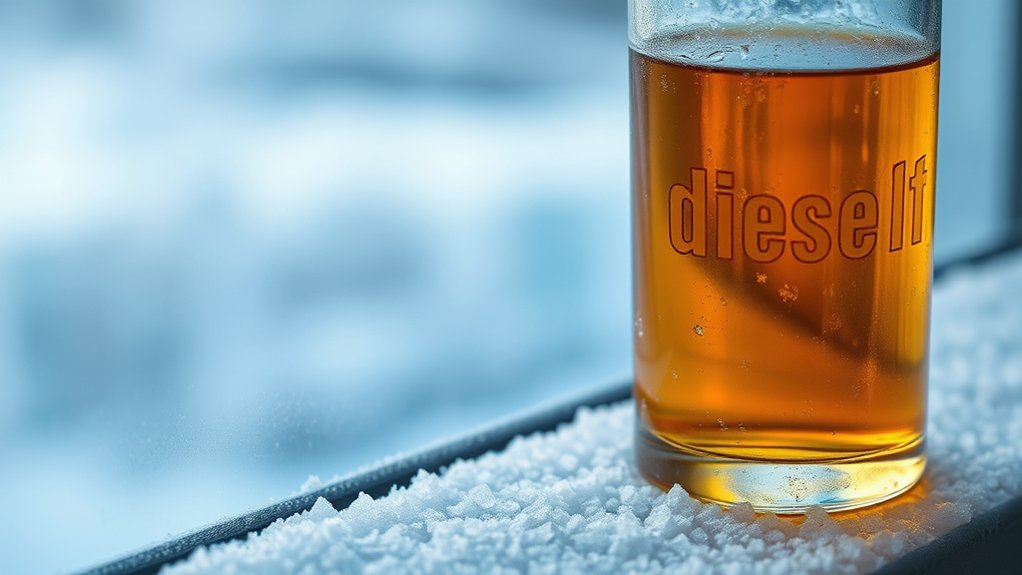
Diesel fuel doesn’t technically freeze but gels as temperatures drop, causing wax crystals to form and thicken the fuel. This increased viscosity can block filters and fuel lines, disrupting engine performance.
Contaminants and water accelerate this gelling risk by promoting crystal buildup and microbial growth. You can prevent issues with proper additives that lower the cold filter plugging point and disperse wax crystals effectively.
Understanding these processes helps you maintain reliable diesel function in cold climates.
Can Diesel Fuel Freeze or Gel in Cold Weather?
How does diesel fuel behave in freezing temperatures? When exposed to cold, diesel fuel can thicken or gel, impacting flow and engine performance.
In diesel storage, maintaining fuel purity is crucial because contaminants and water presence accelerate gelling risks. You need to monitor temperature closely since diesel doesn’t freeze solid like water but forms wax crystals that obstruct filters and lines.
Proper handling, including using additives and controlling storage conditions, helps preserve fuel quality. You should understand that even slight temperature drops can cause viscosity changes, so managing fuel purity and storage environment is vital to prevent operational issues in cold climates.
What Causes Diesel Fuel to Gel?
Why does diesel fuel gel when temperatures drop? Diesel contains paraffin wax, which crystallizes as it cools. These crystals cluster, thickening the fuel until it gels, restricting flow. This process is purely physical and shouldn’t be confused with freezing or any unrelated topic, avoiding off topic discussion.
| Factor | Description | Impact on Gelling |
|---|---|---|
| Paraffin Content | Amount of wax in fuel | Higher wax increases gel risk |
| Temperature | Ambient temperature | Lower temps promote crystals |
| Fuel Additives | Anti-gel agents | Reduce wax crystallization |
Understanding these factors helps you anticipate and prevent gelling, ensuring diesel performance in cold conditions.
How to Tell If Your Diesel Fuel Is Gelled or Cloudy
You can identify gelled or cloudy diesel fuel by closely examining its visual appearance for cloudiness or wax crystals. Pay attention to temperature fluctuations, as drops near or below diesel’s cold filter plugging point often trigger these changes. Additionally, watch for fuel flow disruptions, which signal that gel formation is affecting system performance.
Visual Appearance Changes
When does diesel fuel start to show visible signs of gelling or cloudiness? You’ll notice these changes as the temperature approaches the fuel’s cold filter plugging point, where winter chemistry causes paraffin wax crystals to form.
These wax deposits alter the fuel aesthetics, turning clear diesel into a cloudy or milky substance. The cloudiness signals that wax crystals have begun to precipitate, impairing fuel flow and filtration.
If you observe your diesel becoming hazy or showing gel-like clumps, it indicates that gelling has initiated. This visual transformation results from molecular changes in the fuel composition under cold conditions, which can precede more severe operational issues.
Monitoring these visual cues allows you to identify early-stage fuel degradation without relying solely on temperature measurements.
Temperature Impact Signs
How does temperature directly influence the physical state of diesel fuel? As temperatures drop, diesel undergoes physical changes due to wax crystal formation, leading to gelling or cloudiness.
You’ll notice diesel fuel stored under inadequate diesel storage conditions becomes cloudy or hazy when wax particles begin to precipitate. This change signals compromised cold weather handling, as gelled fuel thickens and loses fluidity.
When diesel appears cloudy rather than clear, it indicates that the temperature has approached or fallen below the fuel’s cloud point. Recognizing these temperature impact signs early helps you manage fuel quality and prevents operational issues.
Monitoring fuel clarity during cold spells ensures you address gelling before it impairs performance, maintaining optimal diesel functionality throughout harsh winter conditions.
Fuel Flow Issues
Why does diesel fuel sometimes fail to flow properly in cold conditions? It’s primarily due to diesel fuel mixing with wax crystals that form as temperatures drop. These crystals increase fuel viscosity, causing it to gel or appear cloudy.
When your fuel looks cloudy or you notice sluggish engine response, it’s a clear sign the fuel flow is compromised. This gelled fuel restricts proper diesel fuel mixing within the injection system, leading to uneven combustion and reduced efficiency.
Additionally, inadequate engine cooling can exacerbate these issues by allowing the fuel temperature to remain low, further encouraging wax formation. To diagnose, check the fuel filter and lines for cloudiness or gel deposits, indicating your diesel fuel isn’t flowing optimally and may need treatment or heating to restore proper function.
Fixing Gelled Diesel Fuel: What You Need to Know
What steps can you take to restore diesel fuel that has gelled in cold conditions? First, understand that common gelling misconceptions might lead you to assume simple filtration solves the problem, but filtration myths persist. Filters alone won’t liquefy gelled fuel.
Instead, use controlled heating methods to raise the fuel temperature above its pour point, typically between 32°F and 50°F, depending on the blend. Employ a fuel heater or warm the fuel tank gradually to avoid thermal shock.
After warming, circulate the fuel to ensure uniform temperature and prevent localized gel pockets. Avoid rapid temperature changes that may cause condensation and contamination.
Finally, consider adding cold flow improvers or anti-gel additives before cold exposure to minimize future gelling. These steps ensure reliable restoration without relying on ineffective filtration alone.
How Cold Weather Affects Diesel Fuel and Engine Performance
When temperatures drop, diesel fuel undergoes physical changes that can substantially impact engine performance and reliability. As wax crystals form, fuel viscosity increases, leading to impaired flow and clogged filters. You’ll notice these effects primarily in:
Cold temperatures cause wax crystal formation in diesel, increasing viscosity and clogging filters.
- Reduced fuel filtration efficiency, causing strain on the filtration system.
- Increased risk of injector nozzle blockage, disrupting combustion.
- Higher potential for diesel engine wear due to abrasive particle accumulation.
- Difficulty starting and maintaining consistent engine operation.
These changes force the fuel pump and injectors to work harder, accelerating mechanical degradation. Understanding how cold weather alters diesel fuel’s physical properties helps you anticipate performance issues and protect your engine’s longevity.
Keeping an eye on fuel filtration systems during cold spells is essential to minimize wear and ensure reliable operation.
Tips to Prevent Diesel Fuel Problems This Winter
You’ll need to winterize your diesel fuel to maintain ideal flow and prevent gelling in low temperatures. Using the correct fuel additives can lower the fuel’s pour point and inhibit wax crystal formation. Let’s examine the best practices for selecting and applying these treatments effectively.
Winterizing Diesel Fuel
How can you guarantee your diesel engine runs smoothly during harsh winter conditions? Proper winterizing is essential to avoid fuel separation and other cold-weather issues. When preparing for winter storage, you must take specific steps to maintain fuel integrity.
- Drain water from the fuel filter and tank to prevent ice formation.
- Use a clean, dry tank to minimize condensation that causes fuel separation.
- Store diesel indoors or in insulated tanks to reduce temperature fluctuations.
- Regularly inspect fuel for gelled wax crystals and remove contaminated fuel promptly.
Following these steps helps maintain diesel quality, preventing clogging and engine damage. By controlling moisture and temperature, you minimize the risk of wax crystal formation and fuel separation, ensuring reliable engine performance throughout winter.
Fuel Additive Recommendations
A well-chosen fuel additive can markedly enhance diesel performance and prevent common cold-weather issues such as gelling, wax crystal formation, and microbial growth. When preparing for winter, you should select additives specifically designed for diesel storage and fuel stabilization.
These additives lower the fuel’s cold filter plugging point (CFPP), guaranteeing flow even at subzero temperatures. Additionally, biocides inhibit microbial contamination that thrives in damp storage conditions.
You must measure and mix additives accurately to maintain fuel integrity and avoid engine damage. Regularly treating stored diesel prevents degradation and sediment buildup, which can impair injector performance.
Top Diesel Fuel Additives for Cold Weather Protection
Why do diesel fuel additives play a critical role in cold weather performance? Understanding diesel fuel thermodynamics reveals that fuel gel points rise as temperature drops, risking blockages in cold weather infrastructure. You need additives to modify these properties, ensuring reliable flow and combustion.
Top diesel fuel additives for cold weather protection include:
- Cold Flow Improvers Lower the pour point, preventing wax crystal formation.
- Anti-Gel Additives Disperse wax crystals to stop fuel from gelling.
- Cetane Boosters Enhance ignition quality in cold conditions.
- Corrosion Inhibitors Protect fuel system components from moisture-induced damage during freeze-thaw cycles.
Using these additives optimizes diesel’s cold weather resilience, safeguarding engine performance and infrastructure integrity.
Frequently Asked Questions
Can Diesel Fuel Freeze in Extremely Low Temperatures?
Yes, diesel fuel can freeze at extremely low temperatures due to its higher freezing points compared to gasoline. You’ll notice wax crystals forming, which clog filters and impair engine performance.
You should use additives to lower freezing points effectively.
How Long Does It Take for Diesel Fuel to Gel?
You might expect diesel to gel instantly, but it usually takes several hours in freezing temperatures. For disaster preparedness and cold weather fueling, monitor fuel additives and storage conditions closely to prevent operational failures during extended cold exposure.
Is Gelled Diesel Fuel Harmful to My Engine?
Gelled diesel fuel poses a gelation risk, potentially clogging fuel filters and injectors, harming your engine. You should use fuel additives to lower the gel point, ensuring smooth flow and preventing damage during cold conditions.
Can Adding Gasoline Prevent Diesel Fuel From Gelling?
Like attempting to stop winter’s chill with a thin blanket, adding gasoline won’t effectively prevent diesel gelling.
It disrupts energy density, causing displacing energy issues and risks 冬季燃料ショック, undermining fuel performance in cold conditions.
What Storage Conditions Help Avoid Diesel Fuel Gelling?
You should maintain a stable storage temperature above diesel’s cloud point, use chemical additives to extend shelf life, and apply heating strategies during cold periods to prevent gelling, ensuring fuel quality and optimal engine performance.
Conclusion
You now know diesel fuel can freeze or gel in cold weather, causing engine troubles. When temperatures drop, wax crystals form, clogging filters and fuel lines—throwing a wrench in your engine’s performance.
By recognizing gelled fuel early and using additives or heaters, you can keep your diesel running smoothly. Don’t let winter’s bite catch you off guard; staying proactive ensures your fuel system operates like a well-oiled machine, no matter the chill.
Understanding that diesel fuel can freeze helps you take the right steps to protect your engine and maintain reliable performance throughout the cold season.