Can You Use a Tonneau Cover With a Backrack
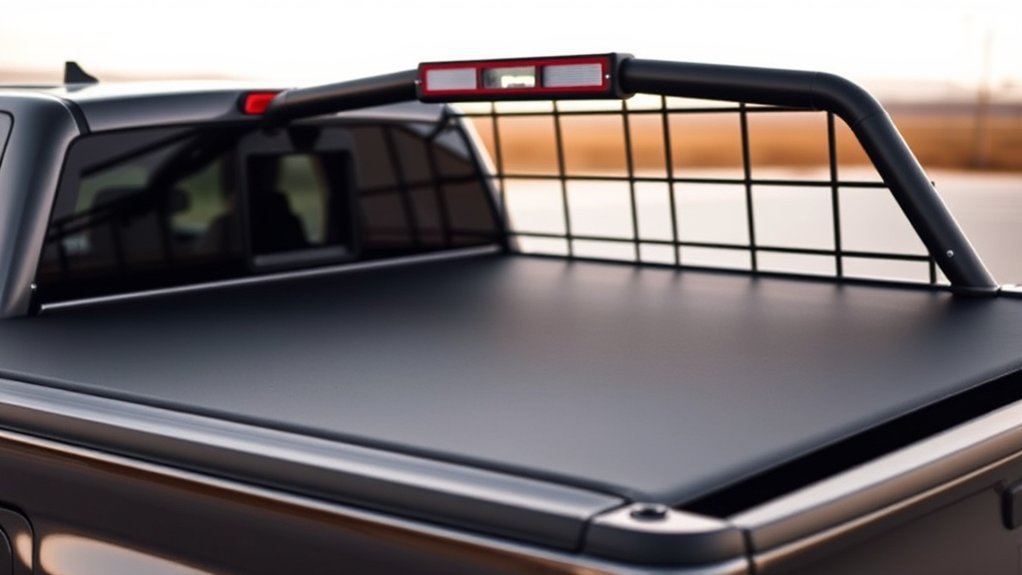
Yes, you can use a tonneau cover with a backrack by selecting covers specifically designed to fit around or mount partially on your truck bed rails without interfering with the rack.
Accurate measurements of your bed and backrack clearance are essential to guarantee a secure, weather-tight fit.
You’ll want a cover with flexible edges or adjustable clamps to maintain sealing and accessibility. Proper installation balances cargo protection and backrack function.
Exploring this setup further will uncover key tips and best practices.
Can You Use a Tonneau Cover With a Backrack?
How do you use a tonneau cover with a backrack without compromising functionality? First, you need to ensure aftermarket compatibility between the tonneau cover and the backrack. Many manufacturers design covers specifically to fit around or attach to backracks, so choosing one that aligns with your truck’s setup is crucial.
Next, consider weather considerations. Your cover should seal properly to protect your cargo from rain, dust, and debris, even with the backrack in place. Some covers feature flexible edges or adjustable clamps to accommodate the backrack’s frame, maintaining a tight fit.
Installing the cover carefully, following both product guidelines, helps preserve accessibility while maximizing protection. With the right combination and proper installation, you can effectively use both without losing utility or weather resistance.
What a Backrack Changes About Your Truck Bed
What impact does a backrack have on your truck bed’s overall function and layout? Installing a backrack transforms the truck bed by adding a protective barrier behind the cab, which enhances safety by preventing cargo from shifting forward.
It also provides additional anchor points for securing loads and can serve as a mounting base for accessories like lights or toolboxes. However, the presence of a backrack alters the bed’s usable space and may interfere with certain cargo configurations.
While exploring compatibility with tonneau covers is relevant, discussing specific cover types is an irrelevant topic here and outside scope. Instead, focus on how the backrack’s structure changes access, storage options, and load management. Understanding these changes helps you optimize your truck bed setup effectively.
Types of Tonneau Covers Compatible With Backracks
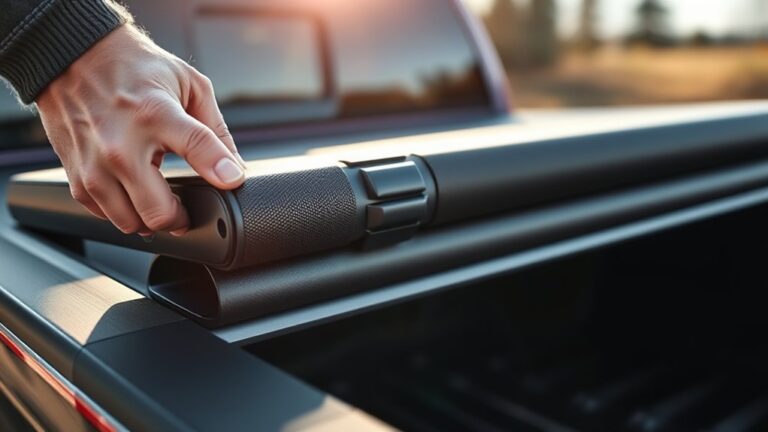
You can choose between soft and hard tonneau covers that work well with backracks. Soft covers, like roll-up or folding types, offer flexibility and easy access while fitting around the backrack. Hard covers provide more security and durability but require careful measurement to ensure compatibility with your truck’s backrack.
Soft Tonneau Cover Options
When considering soft tonneau covers for use with a backrack, compatibility depends largely on the design and attachment method of the cover. Soft tonneau covers that use a clamp-on or snap-on system typically offer the best backrack compatibility, as they can be secured without interfering with the rack’s structure.
Roll-up and fold-up soft tonneau covers are popular choices since they provide flexibility in how much of the bed is covered and can be easily adjusted around the backrack. You’ll want to avoid covers that attach directly to the bed rails in a way that conflicts with the backrack mounting points.
Choosing a soft tonneau with adjustable or removable clamps ensures you maintain full access and functionality of both the cover and the backrack.
Hard Tonneau Cover Choices
How do hard tonneau covers fit into setups with backracks? If you want durability and security, hard covers are a solid choice. Tri-fold and retractable hard tonneau covers typically work well with backracks because they can be installed in a way that leaves room for the backrack’s frame.
This compatibility makes them ideal for recreational hauling, as you can easily load gear without removing the cover. Hard covers also enhance truck aesthetics by providing a sleek, polished look that complements the rugged design of backracks. However, you’ll need to ensure proper measurements and mounting points to avoid interference.
Folding hard covers offer versatility, while retractable models provide quick access. Both maintain the balance between protection and utility when paired with backracks.
Compatibility Issues With Tonneau Covers and Backracks
Why do compatibility issues arise between tonneau covers and backracks? The main challenge lies in backrack clearance. Backracks often extend over the truck bed’s front edge, reducing the space needed for some tonneau covers to retract or seal properly.
If the backrack is too tall or wide, it can interfere with cover operation or prevent it from closing fully. Additionally, tonneau seals may not align correctly when a backrack is installed, compromising the cover’s weatherproofing and allowing dust or water to enter.
You need to consider how the backrack design affects the cover’s fit and function. Understanding these factors helps you avoid compatibility problems and ensures your tonneau cover and backrack work seamlessly together.
Measuring Your Truck Bed for a Cover and Backrack Combo
Start by measuring the width of your truck bed accurately to ensure both the backrack and tonneau cover will fit properly. Next, assess the compatibility of your backrack with the bed dimensions and mounting points. Finally, verify that the tonneau cover you choose accommodates the backrack without interfering with its installation or function.
Measure Truck Bed Width
Where exactly should you measure to ensure your truck bed width accommodates both a tonneau cover and a backrack? Start by measuring the inside width of the truck bed between the wheel wells, as this is the narrowest point. Avoid irrelevant tangents or unrelated topics like overall truck width that don’t impact your fit.
Also, measure at the top rails since some covers and backracks attach there.
| Measurement Point | Tool Needed | Notes |
|---|---|---|
| Inside width | Tape measure | Between wheel wells |
| Top rail width | Tape measure | Outer edges of bed rails |
| Bed length | Tape measure | From bulkhead to tailgate |
| Bed height | Tape measure | From bed floor to top rail |
| Clearance height | Ruler or level | For backrack clearance |
Accurate width measurement is vital for a secure, compatible fit.
Assess Backrack Compatibility
How do you determine if your backrack will work with a tonneau cover on your truck? Start by measuring the exact height and width of your backrack in relation to your truck bed.
Pay close attention to tonneau clearance, the space between the backrack and the truck bed’s surface, since insufficient clearance can prevent the cover from closing properly.
Consider backrack aesthetics as well; ensure the style and design don’t interfere with how the cover lays flat or locks in place.
Use a tape measure to record distances accurately, including any protrusions or mounting points. This detailed assessment helps avoid compatibility issues and ensures a seamless fit between your backrack and tonneau cover, maintaining both functionality and appearance.
Check Tonneau Cover Fit
When measuring your truck bed to guarantee a proper fit for both a tonneau cover and backrack, you’ll need to take precise measurements of the bed’s length, width, and sidewall height. Start by measuring from the bulkhead to the tailgate to get an accurate length.
Then, measure the bed’s width at multiple points to account for any narrowing. Don’t forget to measure the sidewall height to ensure the cover sits flush without interfering with the backrack.
Accurate measurements help avoid installation issues linked to concerned safety and weatherproofing concerns. A poorly fitting cover may leave gaps, exposing cargo to elements or compromising security.
Taking the time to measure thoroughly ensures your tonneau cover and backrack combo fits snugly, maintaining protection and functionality.
Mounting Tonneau Covers Around Backracks
Mounting tonneau covers around backracks requires careful consideration to ensure a secure fit without compromising functionality. You’ll need to measure the space between the backrack and the truck bed edges precisely, as this affects how the cover will lay flat.
Some backrack alternatives offer better compatibility with certain tonneau cover types, especially those designed with adjustable mounting points. When selecting a cover, think about tonneau aesthetics; a sleek, low-profile cover can complement or clash with the rugged look of your backrack.
You must also check if the mounting hardware interferes with the backrack’s structure or accessories. Properly aligning clamps or bolts ensures the cover stays taut and weatherproof, maintaining both protection and appearance. This balance is key to maximizing utility without sacrificing style.
How to Install a Tonneau Cover When You Have a Backrack
Wondering what steps to take to install a tonneau cover with a backrack in place? Start by ensuring your truck bed and backrack configuration to assess compatibility. Since randomized testing of different setups can reveal the best fit, consider experimenting with mounting points.
Focus on aligning the cover’s rails without letting the backrack interfere, avoiding an unrelated focus on unrelated accessories.
Key steps include:
- Measure the clearance between backrack and tailgate
- Select a tonneau cover designed for partial rail mounting
- Use clamps or custom brackets to secure rails around the backrack
- Check for a snug, watertight fit without obstructing the backrack
Following these steps lets you install effectively, balancing protection and utility without compromising either component.
Pros and Cons of Using Both a Tonneau Cover and a Backrack
Why choose to use both a tonneau cover and a backrack on your truck? Combining these accessories offers enhanced cargo protection and improved security. The tonneau cover shields your bed from weather and theft, while the backrack adds structural support and prevents shifting loads.
However, you should consider some drawbacks. Installation can be tricky, and not all tonneau covers fit smoothly with every backrack, requiring careful budget planning for compatible models. You might also experience limited access to cargo near the cab.
To make the most of both, follow friendly tips like measuring precisely and choosing modular designs that work well together. By weighing these pros and cons, you can decide if this combination suits your needs and budget effectively.
Tips for Maintaining Your Tonneau Cover With a Backrack
Once you’ve chosen the right tonneau cover and backrack combination, keeping both in good condition will extend their lifespan and maintain their functionality. Avoid mixing maintenance tips from an irrelevant topic or unrelated concept, as that can cause damage or reduce efficiency.
Focus on these key practices:
- Regularly clean the tonneau cover and backrack with mild soap and water to prevent buildup.
- Inspect mounting points and fasteners for rust or loosening, tightening as needed.
- Lubricate hinges or moving parts to ensure smooth operation without forcing.
- Store the tonneau cover properly when removing it to avoid warping or tears.
Frequently Asked Questions
Will a Tonneau Cover Affect My Truck’s Fuel Efficiency?
A tonneau cover can improve your truck’s fuel efficiency by reducing drag. When combined with a backrack, guarantee tonneau compatibility to maintain backrack durability while benefiting aerodynamics and saving fuel on longer drives.
Can a Backrack Support Heavy Loads Without Damaging the Tonneau Cover?
Think of your backrack and tonneau cover as dance partners; with proper backrack compatibility and tonneau compatibility, your backrack can support heavy loads without damaging the cover. This ensures both work together smoothly and securely every time.
Are Tonneau Covers With Backracks Theft-Resistant?
You won’t find full theft resistance, but backrack compatibility often enhances tonneau security by providing extra anchor points. Using locks with your tonneau cover alongside a sturdy backrack improves protection against theft considerably.
How Do Weather Conditions Impact Tonneau Covers on Trucks With Backracks?
You’ll notice weather durability varies with materials; heavy rain and UV rays can degrade some covers. Wind resistance matters too. Strong gusts may loosen or damage covers.
Choose high-quality, weatherproof covers for reliable protection with backracks.
Can I Use Accessories Like Bike Racks With a Tonneau Cover and Backrack?
You can use bike racks and cargo nets with a tonneau cover and backrack, but you’ll need to guarantee they fit securely without damaging the cover. Choose compatible accessories designed for combined use to avoid interference or wear.
Conclusion
Using a tonneau cover with a backrack can work smoothly if you choose the right type and measure carefully—like fitting puzzle pieces together. You’ll need to contemplate compatibility and mounting methods to avoid issues.
While it adds protection and style, keep maintenance in mind to extend both your cover’s and backrack’s lifespan.
With the right approach, you’ll enhance your truck bed’s functionality without sacrificing convenience or durability. Using a tonneau cover with a backrack is definitely achievable when planned correctly.