How Do I Dispose of Diesel Fuel
You shouldn’t pour diesel fuel down drains or on the ground because it’s hazardous and can contaminate soil and water. Proper diesel fuel disposal is essential to protect the environment and public health.
Instead, keep it in approved, tightly sealed, clearly labeled containers designed for diesel. Store these containers in a cool, dry place away from heat or ignition sources.
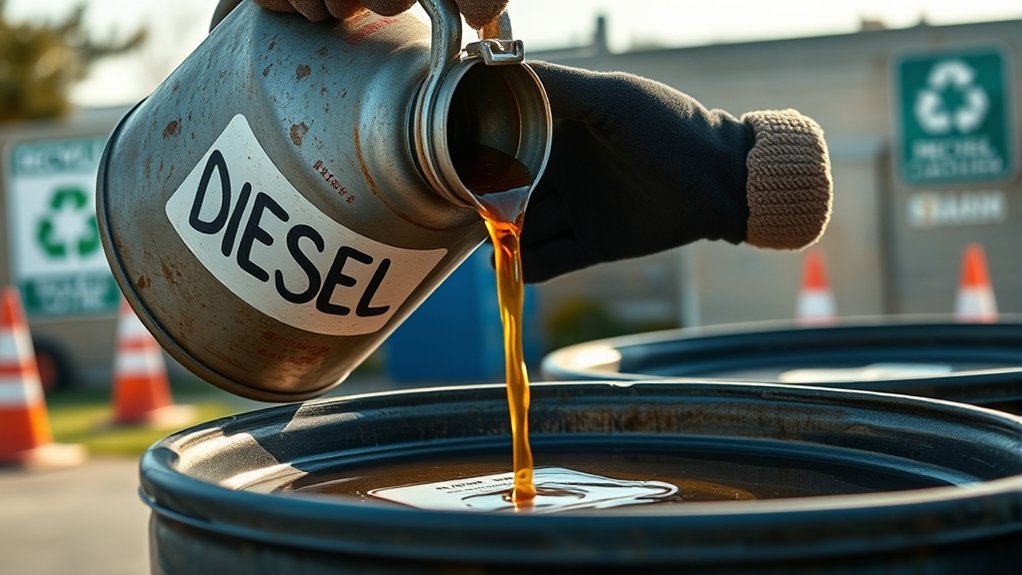
When ready, take the fuel to authorized hazardous waste collection centers for proper disposal. Handling it this way protects the environment and keeps you legal.
There’s more to learn about safe storage, transport, and compliance.
Why You Can’t Just Throw Away Diesel Fuel
Because diesel fuel is a hazardous substance, you can’t simply throw it away like regular trash. Improper disposal poses serious risks to the environment and human health. You must follow strict regulations governing storage compliance to prevent leaks or spills that contaminate soil and water.
Additionally, diesel fuel requires hazardous transport procedures when moved to disposal or recycling facilities. This ensures safe handling and minimizes accident risks during transit. Ignoring these rules can result in legal penalties and environmental damage.
Always treat diesel fuel disposal with caution, recognizing that it demands specialized handling beyond typical waste management. Understanding why you can’t discard diesel fuel casually is crucial for responsible and lawful disposal practices.
How to Store Diesel Fuel Safely Before Disposal
You should store diesel fuel in an approved, airtight container designed for flammable liquids to prevent leaks and contamination. Keep the container in a cool, well-ventilated area away from direct sunlight and heat sources. Proper storage helps maintain fuel quality and reduces safety risks before disposal.
Proper Container Selection
Where should you store diesel fuel to guarantee safety before disposal? The key lies in careful container selection. You should always use containers specifically designed for diesel fuel, typically made of high-density polyethylene or metal with proper sealing lids. These containers minimize leakage and reduce the risk of spills.
Avoid using old or repurposed containers that may degrade or fail. Ensure the container is clearly labeled to prevent accidental misuse. Proper container selection plays a crucial role in spill prevention, protecting both your environment and property.
Additionally, choose containers with secure, tight-fitting caps to prevent vapor release and contamination. By selecting the right container, you’ll maintain safety and compliance, making the storage phase before disposal much more manageable and responsible.
Ideal Storage Conditions
After selecting the right container, maintaining proper storage conditions helps ensure diesel fuel remains stable and safe before disposal. Keep your diesel storage container in a cool, dry, and well-ventilated area, away from direct sunlight and sources of heat or sparks.
Avoid extreme temperature fluctuations, as they can degrade fuel quality and increase safety risks. Make sure the container is tightly sealed to prevent contamination and evaporation. Label the container clearly to avoid accidental misuse.
Regularly inspect the storage area for leaks or damage. These diesel storage practices minimize hazards and support disposal safety. Following these guidelines helps you handle diesel fuel responsibly, reducing environmental impact and protecting your health before you proceed with proper disposal methods.
What to Do With Small Amounts of Diesel Fuel
How should you handle small amounts of diesel fuel safely and responsibly? First, store the fuel in a tightly sealed, clearly labeled container designed for diesel.
When transporting it, ensure safe transport by securing the container upright in a well-ventilated area of your vehicle, avoiding heat sources. Always carry spill containment materials, like absorbent pads or kitty litter, to address any accidental leaks immediately.
If you need to dispose of the fuel, never pour it down drains or onto the ground. Instead, take it to a local hazardous waste collection site or a facility that accepts small quantities of diesel.
Understanding Local Diesel Fuel Disposal Laws
Why do local regulations matter when disposing of diesel fuel? Because these laws ensure environmental safety and public health, you must follow them carefully.
Disposal regulations vary by location, so you need to check your city or county’s specific rules before proceeding. Some areas require you to complete hazardous waste paperwork to track and manage the safe disposal of diesel fuel.
Ignoring these regulations can result in fines or environmental harm. You should also be aware that diesel is classified as hazardous waste in many jurisdictions, which means you cannot simply pour it down drains or throw it in the trash.
Finding a Hazardous Waste Collection Center Near You
Where can you safely dispose of your diesel fuel? The best option is to locate a hazardous waste collection center near you. These centers handle flammable liquids like diesel, ensuring safe disposal that complies with environmental regulations.
Start by checking your local government’s website or environmental agency for authorized collection sites. Some fuel vendors also offer take-back programs or can direct you to nearby centers. Before dropping off your diesel, call ahead to confirm their acceptance policies and hours.
Never dump diesel fuel in regular trash or drains, as this poses serious health and environmental risks. Using a hazardous waste collection center guarantees your diesel is managed responsibly, protecting both you and the community from potential harm.
Recycling Options for Used or Leftover Diesel Fuel
When you have used or leftover diesel fuel, consider recycling it to minimize waste and environmental impact. Diesel reuse and fuel recycling help conserve resources and prevent pollution. Before recycling, ensure the fuel is uncontaminated and stored properly.
Recycle leftover diesel fuel to reduce waste, conserve resources, and protect the environment.
Here are some recycling options to explore:
- Return to suppliers offering diesel reuse programs
- Deliver to authorized fuel recycling facilities
- Use in approved industrial applications if regulations permit
- Filter and treat for reuse in compatible engines
- Donate to farms or businesses that can safely use leftover diesel
Always verify local regulations and facility guidelines before proceeding. Proper handling during diesel reuse and fuel recycling is essential to avoid hazards and maintain environmental safety. Taking these steps supports responsible diesel fuel management.
Is It Safe to Dilute Diesel Fuel Before Disposal?
How safe is it to dilute diesel fuel before disposal? Generally, you should avoid dilution as a disposal method. While diluting might seem like a way to reduce concentration, it doesn’t eliminate the hazards associated with diesel fuel.
Safe dilution is tricky because mixing diesel with water or other substances can still pose a significant fire risk. Diesel is combustible, and diluted mixtures can ignite if not handled properly.
Additionally, improper dilution might lead to environmental contamination if spilled or disposed of incorrectly. Instead of diluting, focus on approved disposal methods that meet local regulations.
This approach minimizes fire risk and environmental harm, ensuring you dispose of diesel fuel responsibly and safely without relying on unsafe dilution practices.
How Pros Handle Large Amounts of Diesel Fuel
When you’re managing large amounts of diesel fuel, safe storage is critical to prevent leaks and hazards. Professionals use specialized containers and follow strict regulations to keep fuel secure. They also rely on licensed disposal services to handle removal responsibly and legally.
Safe Storage Practices
Properly storing diesel fuel requires strict attention to safety protocols and environmental regulations. To ensure safe storage, you must prioritize container choice and maintain conditions that prevent leaks or contamination. Use containers specifically designed for diesel, made from materials resistant to corrosion and approved by regulatory agencies.
Keep these key points in mind for safe storage:
- Store diesel in clearly labeled, sealed containers.
- Place containers in well-ventilated, cool, and dry areas.
- Avoid exposure to direct sunlight or heat sources.
- Regularly inspect containers for damage or leaks.
- Keep storage away from ignition sources and incompatible materials.
Following these guidelines helps you minimize risks, protect the environment, and comply with safety standards when handling diesel fuel in large quantities.
Professional Disposal Services
Professional disposal services are the right choice for handling large quantities of diesel fuel. Managing unused engine fuel in bulk involves complex disposal logistics that require expertise and proper equipment.
Professionals follow strict environmental regulations to prevent contamination and hazards. When you hire these services, they assess the fuel’s condition, determine if it can be recycled or must be treated as hazardous waste, and arrange safe transportation to certified facilities.
They also provide documentation to ensure compliance with legal requirements, protecting you from liability. Attempting to dispose of large amounts on your own risks spills, fines, and environmental damage.
Trusting experts ensures the fuel is managed responsibly and efficiently, giving you peace of mind while safeguarding public health and the environment.
Common Mistakes to Avoid When Disposing Diesel Fuel
How can you guarantee safe and responsible disposal of diesel fuel? Avoiding common mistakes is essential to protect the environment and comply with regulations. Don’t confuse diesel disposal with unrelated gardening or cooking tips. They require totally different handling.
Here are key mistakes to avoid:
- Dumping diesel fuel on soil or down drains
- Mixing diesel with household waste or other chemicals
- Storing diesel in unapproved containers
- Ignoring local hazardous waste disposal guidelines
- Attempting to burn diesel fuel to get rid of it
Tips to Prevent Diesel Waste in the Future
To prevent diesel waste in the future, you’ll need to focus on proper storage techniques to keep fuel stable and uncontaminated. Regular equipment maintenance is essential to avoid leaks and inefficient fuel use. Additionally, using fuel efficiently helps minimize waste and saves money over time.
Proper Storage Techniques
A secure and well-maintained storage system plays an essential role in preventing diesel fuel waste. By storing diesel properly, you reduce risks linked to disposal myths and avoid costly fuel spill cleanup. Follow these crucial tips:
- Use approved containers designed for diesel storage.
- Keep storage areas cool, dry, and away from direct sunlight.
- Seal containers tightly to prevent contamination and evaporation.
- Label containers clearly to avoid mixing fuels or improper disposal.
- Inspect storage regularly for leaks or damage.
Adhering to these practices helps you manage diesel responsibly, prevents accidental spills, and ensures fuel quality over time. Avoid shortcuts that lead to misunderstandings about disposal myths, and always prepare for quick fuel spill cleanup if needed. Proper storage is your first step toward efficient, safe diesel use.
Regular Equipment Maintenance
Why should you prioritize regular equipment maintenance when managing diesel fuel? Proper upkeep helps prevent leaks and malfunctions that can lead to fuel waste and environmental harm. Regularly inspect fuel lines, tanks, and filters for signs of wear or damage.
Promptly address any issues to reduce the risk of spills, supporting pollution prevention efforts. Maintaining your equipment ensures optimal fuel handling and minimizes contamination risks.
It also extends the lifespan of your machinery, saving costs over time. By staying proactive, you avoid unnecessary diesel disposal and protect the environment.
Efficient Fuel Usage
How can you maximize diesel fuel efficiency and reduce waste in your operations? Improving fuel economy and engine efficiency is key. By adopting smart practices, you prevent diesel fuel waste and save costs.
Consider these tips to enhance your fuel usage:
- Monitor and maintain proper tire pressure to reduce engine load
- Avoid idling for long periods to conserve fuel
- Use high-quality fuel filters to maintain engine efficiency
- Plan routes to minimize unnecessary driving and stops
- Perform regular engine tune-ups to optimize combustion
Implementing these practices helps you use diesel fuel more efficiently, minimizing waste and environmental impact. Staying proactive ensures your equipment runs smoothly while protecting your investment in fuel.
Frequently Asked Questions
What Are the Environmental Impacts of Improperly Disposed Diesel Fuel?
Improper disposal of diesel fuel causes serious environmental risk by contaminating soil and water. You must follow cleanup protocols and guarantee regulatory compliance to prevent long-term damage and costly remediation efforts in your community.
Can Diesel Fuel Be Used as a Cleaning Agent?
You might be surprised, but diesel fuel can clean some tough grime yet it’s risky. Always consider diesel fuel alternatives and perform fuel contamination testing first, since improper use can damage surfaces and harm the environment. Use cautiously.
How Long Does Diesel Fuel Remain Usable Before It Degrades?
You’ll find diesel fuel remains usable for about 6 to 12 months if stored properly.
Pay close attention to fuel storage safety and diesel fuel odors, which can signal degradation or contamination.
Are There Any DIY Methods to Safely Neutralize Diesel Fuel?
You might think DIY disposal means simple fuel neutrality, but diesel’s toxic nature demands caution. Instead, you should avoid neutralizing it yourself and contact hazardous waste professionals to ensure safe, compliant disposal without risking harm.
What Personal Protective Equipment Is Recommended When Handling Diesel Fuel?
You should wear gloves, safety goggles, and long sleeves as handling PPE when working with diesel fuel.
For spill response, use absorbent materials and ensure proper ventilation to protect yourself from fumes and skin contact.
Conclusion
Disposing of diesel fuel isn’t like tossing away yesterday’s leftovers—it demands care and respect. Just as you wouldn’t pour poison into a garden, you shouldn’t dump diesel carelessly. Store it safely, follow local laws, and use proper disposal sites.
When handling large quantities, think like a professional to avoid hazards. By acting responsibly now, you’ll protect your environment and prevent future headaches. Proper disposal of diesel fuel turns a potential wildfire into a well-tended flame.