How to Start Car With Bad Fuel Filter
If your car won’t start due to a bad fuel filter, there are a few steps you can take to try and get it running. One method is to cycle the ignition on and off several times to help prime the fuel system. This can encourage fuel to move past partial blockages temporarily.
You can also gently tap the fuel filter to loosen debris that might be causing the blockage. Starting the car in neutral or park reduces engine load, which improves your chances of getting the engine to turn over.
These steps allow fuel to flow around partial blockages just long enough to start the engine. For detailed checks, fixes, and prevention tips, you’ll find essential guidance ahead.
Impact of a Bad Fuel Filter on Starting Your Car
A bad fuel filter restricts the flow of fuel to your engine, making it difficult or even impossible to start your car. When debris clogs the filter, it reduces fuel pressure and volume, disrupting the proper air-fuel mixture needed for ignition.
During start up troubleshooting, you’ll notice symptoms like extended cranking time, engine sputtering, or stalling shortly after ignition. Fuel system diagnostics often reveal low fuel pressure readings or inconsistent fuel delivery, confirming filter obstruction.
If your car struggles to start or runs roughly at startup, the fuel filter’s condition should be a primary focus. Addressing this component promptly ensures efficient fuel flow, preventing further engine performance issues and facilitating smoother starts.
Quick Checks to Confirm a Faulty Fuel Filter
When your car exhibits starting issues linked to fuel delivery, confirming whether the fuel filter is at fault requires targeted checks. Avoid getting sidetracked by irrelevant topics or unrelated ideas like battery or ignition problems at this stage. Focus strictly on fuel flow and pressure diagnostics.
| Check Type | What to Look For |
|---|---|
| Fuel Pressure Test | Low or inconsistent fuel pressure |
| Visual Inspection | Dirt, rust, or clogging in filter |
| Engine Response | Sputtering or stalling on startup |
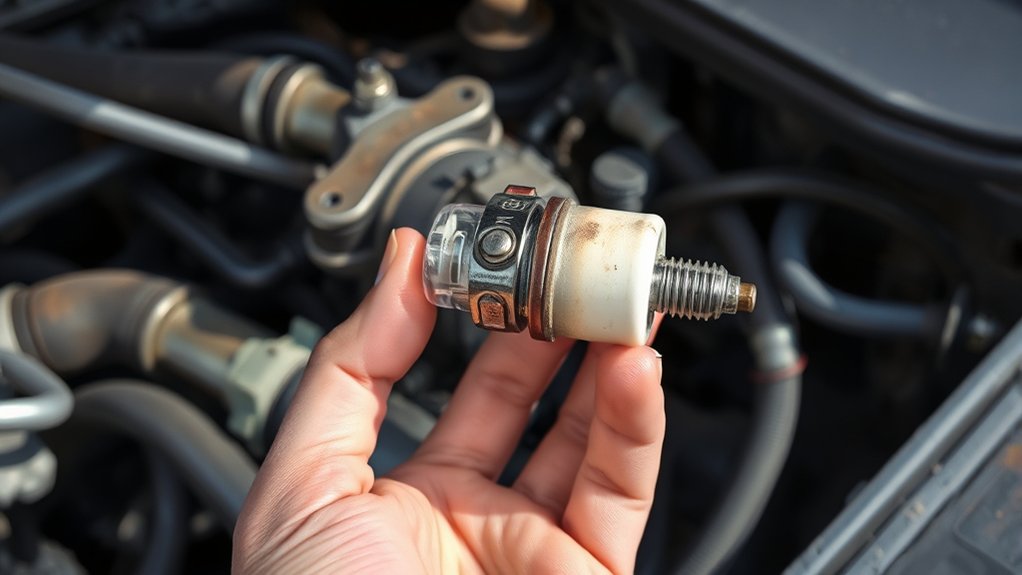
Perform a fuel pressure test using a gauge to verify adequate flow. Inspect the fuel filter for physical blockages or discoloration. Also, note engine response; hesitation or sputtering during startup often points to a clogged filter. These practical checks will help you quickly isolate a faulty fuel filter without veering into unrelated ideas.
Quick Tricks to Start Your Car When the Fuel Filter’s Clogged
How can you get your car started despite a clogged fuel filter? First, try turning the ignition on and off several times without starting the engine. This primes the fuel system, increasing pressure and helping fuel bypass partial blockages temporarily.
Next, gently tap the fuel filter with a small tool to loosen debris restricting fuel flow. Avoid excessive force to prevent damage. You can also try starting the car in neutral or park to reduce engine load, making it easier for fuel to reach the engine.
How Fuel Additives Can Help Your Car Start
You can use fuel additives designed to clean injectors, improve combustion, and dissolve deposits that hinder fuel flow. These additives help your engine start more reliably by enhancing fuel quality and reducing clogging effects from a bad filter. Make sure to follow the product’s instructions carefully to avoid damaging your system.
Types Of Fuel Additives
Why does your car struggle to start with a bad fuel filter? The clogged filter restricts fuel flow, causing poor engine performance. To counter this, you can use fuel additives that improve fuel quality and flow.
There are mainly three types: fuel system cleaners, octane boosters, and stabilizers. Fuel system cleaners remove deposits, helping fuel pass through a clogged filter. Octane boosters enhance combustion efficiency but won’t fix mechanical blockages.
Stabilizers prevent fuel degradation, useful if you face budget concerns delaying immediate repairs. However, before using additives, check warranty considerations; some manufacturers might void coverage if additives cause damage.
Using the right additive type can temporarily aid starting issues but won’t replace the need to replace your fuel filter promptly for lasting performance.
Benefits For Engine Starting
Improving your car’s starting performance often hinges on maintaining ideal fuel flow and combustion quality. Fuel additives play an essential role in delivering start up benefits by enhancing fuel system cleanliness and improving ignition efficiency.
When dealing with a bad fuel filter, these additives can help mitigate restricted fuel flow, supporting smoother engine startup.
You’ll notice these key advantages when using fuel additives:
- Dissolve contaminants clogging fuel lines and injectors
- Boost combustion by stabilizing fuel mixtures
- Reduce engine hesitation during ignition
Proper Usage Guidelines
How exactly do fuel additives enhance your car’s starting ability despite a bad fuel filter? Fuel additives improve fuel combustion by cleaning injectors and dissolving deposits, ensuring better fuel flow through a partially clogged filter.
To use additives properly, first select one compatible with your fuel type and vehicle. Add the recommended dosage directly into the fuel tank before refueling to allow thorough mixing. Avoid overuse, as excess additives can harm engine components or cause sensor malfunctions.
Emergency Guide: When and How to Bypass a Fuel Filter
When do you need to bypass a fuel filter? Use emergency troubleshooting and fuel system bypass only when your car won’t start due to a clogged or faulty fuel filter, and you need a quick fix to get moving. This is a temporary solution. Don’t rely on it long-term.
To bypass the fuel filter safely:
- Locate the fuel filter along the fuel line and identify inlet/outlet fittings.
- Disconnect the fuel lines carefully, avoiding spills and pressure release.
- Use a fuel line connector or hose to create a direct path, bypassing the filter.
Ensure all connections are secure to prevent leaks. This emergency fuel system bypass restores flow, letting your engine start. Remember, this is a stopgap; replace the fuel filter promptly for a lasting fix.
How to Replace Your Fuel Filter for a Lasting Fix
Why wait for a complete breakdown when you can replace your fuel filter now to ensure reliable engine performance? Start by relieving fuel system pressure to avoid spills.
Locate the fuel filter, usually along the fuel line or near the fuel tank. Use proper tools to disconnect the fuel lines carefully, noting their positions for reassembly. Remove the old filter and inspect for corrosion or damage.
Install the new fuel filter in the correct flow direction, securing all connections tightly. After replacement, prime the fuel system by turning the ignition on and off a few times without starting the engine. This prevents airlocks and ensures proper fuel flow.
Following these maintenance tips helps restore efficient fuel delivery and prolongs fuel system life, providing a lasting fix for your vehicle.
Preventing Fuel Filter Issues With Regular Maintenance
Regular maintenance keeps your fuel filter functioning at its best and prevents costly clogs or failures. To extend the filter’s lifespan, focus on these key practices:
- Use high-quality fuel to reduce contaminants entering the filter.
- Maintain proper fuel storage habits by avoiding prolonged storage of fuel in the tank, which can degrade fuel quality and clog the filter.
- Schedule routine inspections and replacements based on your vehicle’s maintenance guide or if you notice symptoms like engine hesitation.
Frequently Asked Questions
Can a Bad Fuel Filter Cause Engine Misfires?
Yes, a bad fuel filter can cause engine misfires by restricting fuel flow.
You might mistake these misleading symptoms for other issues, so stick to proper maintenance timing to avoid performance problems and costly repairs.
How Often Should a Fuel Filter Be Replaced?
You don’t want your car’s fuel filter auditioning for a clogging contest. Replace it every 20,000 to 30,000 miles to ace car maintenance and fuel system diagnostics, keeping your engine running smooth and efficient.
Are There Specific Fuel Types Better for Clogged Filters?
You won’t find specific fuel types that improve clogged filters, but using high-quality fuel guarantees better fuel compatibility and reduces poor air mixture issues.
Regular maintenance remains the best way to avoid performance problems linked to clogged filters.
Can a Bad Fuel Filter Damage the Fuel Pump?
Yes, a bad fuel filter can strain your fuel pump, causing damage over time. Picture dirty fuel struggling through a clogged filter, forcing your pump to work harder. This compromises fuel safety and overall system performance.
Is It Safe to Drive With a Clogged Fuel Filter?
You shouldn’t drive with a clogged fuel filter; it restricts fuel flow, causing engine stalling or damage.
Avoid fuel filter misconceptions that claim it’s safe. This unrelated topic leads to costly repairs and unsafe conditions.
Conclusion
Dealing with a bad fuel filter is like maneuvering through a clogged pipe—it restricts flow and hinders performance. By quickly identifying symptoms and using tricks like fuel additives or bypassing the filter temporarily, you can get your car started.
However, for a reliable fix, replacing the fuel filter is essential. Regular maintenance prevents these issues, ensuring smooth fuel delivery and engine function every time you turn the key.
Don’t wait—act promptly to keep your car running efficiently. Knowing how to start a car with a bad fuel filter can save you time and trouble until you can make a proper repair.