Can You Mix Coolant Colors
You shouldn’t mix coolant colors because different formulations, like green inorganic and orange organic types, can react and reduce corrosion protection. Mixing coolant colors may also cause sludge or gels to form, which can block passages and impair cooling.
Color alone isn’t a reliable guide; chemistry compatibility is key. Always follow manufacturer specs and flush the system completely before switching colors.
Doing this protects your engine and cooling system’s efficiency. Understanding these details helps ensure you maintain optimal coolant performance and avoid costly damage.
What Do Different Coolant Colors Mean?
Anyone working with vehicle maintenance should understand that different coolant colors indicate specific chemical compositions and additives. Manufacturers use color coding to help identify these formulations quickly.
Different coolant colors reveal unique chemical formulations essential for proper vehicle maintenance and identification.
For example, green coolants typically contain inorganic additive technology (IAT), while orange or red often signify organic acid technology (OAT). However, you should be aware of mixed myths surrounding coolant colors. Color alone doesn’t guarantee compatibility or performance.
Some manufacturers use similar colors for different formulations, which can lead to confusion. Always consult technical data or manufacturer specifications rather than relying solely on color coding.
Knowing what each color represents helps you choose the right coolant and avoid damaging your engine’s cooling system. Understanding this prevents common mistakes related to mixing incompatible coolants.
Why Is Mixing Coolants Risky?
You shouldn’t mix coolants because their chemical formulations can clash, causing harmful reactions. This incompatibility can lead to engine damage by forming deposits or corrosion inside the cooling system. Additionally, mixing reduces the coolant’s effectiveness, compromising your engine’s temperature regulation.
Chemical Compatibility Issues
Why does mixing different coolant colors pose a chemical risk? Different coolant formulations often contain distinct additives and inhibitors that influence chemical stability. When you mix coolants of varying colors, you’re effectively combining different chemical bases, which can disrupt this stability.
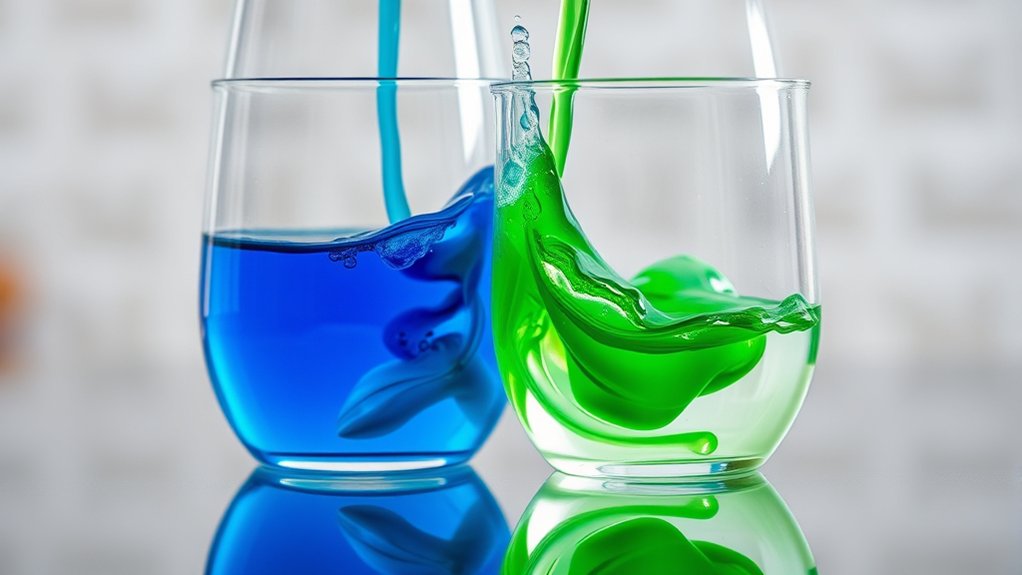
Color miscibility doesn’t guarantee chemical compatibility, so the resulting mixture may react unpredictably.
Here’s why it’s risky:
Additive Neutralization: Incompatible additives can cancel each other out, reducing corrosion protection.
Precipitate Formation: Mixing can cause solids or gels to form, blocking coolant passages.
pH Imbalance: The mixture’s pH may shift, accelerating corrosion or degradation.
Potential Engine Damage
How can mixing different coolant colors lead to engine damage? Color symbolism in coolants often indicates distinct chemical formulations designed for specific engine types. When you mix these colors, you risk triggering adverse chemical reactions that compromise the coolant’s protective properties.
This can accelerate corrosion risks inside your engine’s cooling system, damaging metal components like the radiator, water pump, and cylinder heads. Corrosion leads to pitting and leaks, reducing the longevity and reliability of your engine.
Additionally, incompatible coolants can create sludge and scale deposits, further impairing heat transfer and causing overheating. By ignoring color symbolism and mixing coolants indiscriminately, you jeopardize the engine’s structural integrity and performance.
Consequently, it’s vital to adhere to manufacturer recommendations and avoid combining different coolant types.
Reduced Coolant Efficiency
When coolant colors are mixed, their chemical compositions often clash, leading to reduced coolant efficiency. This coolant incompatibility disrupts the formulation’s ability to regulate temperature and prevent corrosion effectively.
You might notice that combining coolants with different dye differentiation not only alters color but also signals incompatible additives. These clashes hinder the coolant’s performance, causing:
- Decreased heat transfer efficiency, risking engine overheating
- Formation of sludge or gel, obstructing coolant flow
- Accelerated corrosion due to neutralized inhibitors
Can You Mix Green and Orange Coolants Safely?
You shouldn’t mix green and orange coolants because their chemical compositions differ substantially, which can reduce corrosion protection and lead to engine damage. Mixing them may cause chemical reactions that compromise the coolant’s effectiveness and clog your cooling system. Always follow your vehicle manufacturer’s recommendations to avoid these potential risks.
Chemical Composition Differences
Why does the chemical composition of coolants matter when mixing green and orange types? Each coolant color represents different chemical formulations designed for specific engine materials and performance.
Green coolants typically use inorganic additive technology (IAT), while orange coolants rely on organic acid technology (OAT). Mixing these can cause mixed symptoms like gel formation, reduced corrosion protection, and impaired heat transfer.
Here’s what you should consider:
- Incompatible additives: IAT and OAT inhibitors can react negatively, compromising coolant stability.
- Alternative coolants: Using a hybrid or extended-life coolant may avoid issues, but check manufacturer specifications.
- Chemical balance disruption: Mixing alters pH and additive concentration, risking component damage.
Understanding these chemical differences helps you decide if mixing green and orange coolants is safe for your engine.
Potential Engine Risks
How safe is it to mix green and orange coolants in your engine? Combining these two can lead to chemical reactions that reduce corrosion inhibitors, jeopardizing your cooling system’s integrity.
The resulting mixture may form sludge or gels, impairing coolant flow and heat transfer. This compromises engine temperature regulation, increasing the risk of overheating and potential damage.
Beyond performance, coolant aesthetics are affected as colors blend unpredictably, masking contamination or depletion signs. While racecar trivia might suggest mixing fluids for quick fixes, in practical terms, it’s risky.
You risk voiding warranties and causing costly repairs. To maintain optimal engine health, avoid blending green and orange coolants, keeping your system free from chemical incompatibilities and ensuring consistent protection against corrosion and overheating.
Manufacturer Recommendations
Manufacturers provide specific guidelines regarding coolant compatibility to ensure weathering engine performance and longevity. When mixing green and orange coolants, it’s crucial to follow these recommendations closely to avoid discoloration risks and enzyme contamination, which can degrade coolant effectiveness. Ignoring these guidelines can lead to compromised corrosion protection and potential engine damage.
Consider these key points from manufacturers:
- Use only approved coolant types specified for your vehicle to prevent chemical reactions.
- Avoid mixing organic acid technology (OAT) coolants like orange with traditional green coolants unless explicitly allowed.
- Regularly flush the cooling system if you plan to switch coolant colors to minimize contamination and maintain optimal performance.
Following these steps helps you maintain coolant integrity and protects your engine from premature wear or failure.
What Happens When You Mix Organic and Inorganic Coolants?
What occurs when you combine organic and inorganic coolants? The answer lies in coolant chemistry: these two types use different corrosion inhibitors and additives. Mixing them disrupts the chemical balance, causing incompatible reactions that form sludge or precipitates.
This contamination can block passages and reduce heat transfer efficiency. Color coding might suggest compatibility, but it’s unreliable since manufacturers use varied dyes for marketing, not chemistry.
When you mix organic and inorganic coolants, you risk neutralizing corrosion inhibitors, leading to accelerated engine wear and potential overheating. To maintain optimal system performance, always adhere to one coolant type.
Understanding this two-word discussion, coolant chemistry and color coding, helps you avoid costly engine damage and ensures your cooling system operates reliably.
How Does Coolant Type Affect Engine Cooling?
Why does the type of coolant you use matter for your engine’s cooling performance? Different coolant formulations directly impact how well your engine stays protected and runs efficiently. Using the right coolant ensures optimal radiator efficiency and minimizes engine wear by maintaining proper heat transfer and corrosion control.
Poor coolant choice can reduce system performance and increase component degradation.
Here’s how coolant type affects engine cooling:
- Thermal conductivity: Some coolants transfer heat better, enhancing radiator efficiency.
- Corrosion inhibitors: Proper formulations prevent engine wear by protecting metal surfaces.
- Additive compatibility: Mixing incompatible coolants can cause sludge, reducing cooling effectiveness.
Choosing the correct coolant type is crucial for maintaining your engine’s longevity and efficient temperature regulation.
How to Identify the Right Coolant for Your Vehicle
You’ll need to identify the correct coolant type by checking your vehicle manufacturer’s recommendations, usually found in the owner’s manual. Always read coolant labels carefully to match specifications like additive chemistry and compatibility. Using the right coolant guarantees optimal engine protection and prevents damage.
Coolant Type Identification
How can you quickly determine the right coolant type for your vehicle? Understanding coolant type identification hinges on recognizing coolant chemistry and color safety. Different formulations use specific chemicals to prevent corrosion, overheating, and freezing, so picking the wrong type can harm your engine.
Check these to identify your coolant:
- Coolant Labeling: Look for details on the container specifying organic acid technology (OAT), inorganic additive technology (IAT), or hybrid formulations.
- Color Coding: While color aids identification, it’s not foolproof; colors vary by brand and chemistry.
- Coolant Documentation: Refer to your vehicle’s service manual or coolant specifications to match chemistry requirements precisely.
Always prioritize coolant chemistry compatibility over color to ensure optimal performance and safety.
Vehicle Manufacturer Recommendations
Knowing the exact coolant chemistry is only part of the equation; your vehicle manufacturer’s recommendations provide the definitive guide for selecting the right coolant. Manufacturers design cooling systems to manage specific engine heat levels, so using the recommended coolant ensures optimal thermal performance and corrosion protection.
You should always consult your owner’s manual or manufacturer’s specifications to identify compatible coolant types. While color coding offers a quick visual reference, it’s not a reliable indicator of chemical composition or compatibility.
Different manufacturers may use similar colors for distinct formulations, so relying solely on color coding can lead to mixing incompatible coolants, risking engine overheating or damage. Following your vehicle’s prescribed coolant type maintains system integrity and ensures efficient heat dissipation under operating conditions.
Reading Coolant Labels
Where can you find the critical details that ensure the coolant matches your vehicle’s requirements? Start by carefully reading the coolant label. It provides essential information about compatibility, composition, and performance standards.
Look for these key points:
- Vehicle compatibility: Check if the coolant meets your manufacturer’s specifications.
- Chemical type: Identify whether it’s ethylene glycol, propylene glycol, or organic acid technology (OAT).
- Disposal guidelines and storage tips: Follow recommended methods to safely store unused coolant and dispose of old fluid to prevent environmental harm.
Reading these labels precisely helps you avoid mixing incompatible coolants, which can damage your engine’s cooling system. Always verify label details before purchase or use, ensuring the coolant aligns exactly with your vehicle’s requirements to maintain optimal performance and longevity.
How to Flush Old Coolant Before Adding New
Before adding new coolant, you need to thoroughly flush the old coolant to prevent contamination and ensure the best possible system performance. Start by draining the radiator completely, then flush the system with distilled water to remove residual coolant and debris.
Use a radiator flush product if necessary, following the manufacturer’s instructions precisely. After flushing, drain all fluid again and refill with the appropriate new coolant type, paying close attention to compatibility to avoid issues with coolant mixing.
This two word discussion coolant mixing highlights the importance of avoiding chemical reactions or deposits that could impair cooling efficiency. Proper flushing ensures the system remains clean, prevents corrosion, and maintains optimal thermal transfer, safeguarding your engine’s longevity and performance.
What Are the Signs of Cooling System Problems From Mixed Coolants?
How can you tell if mixing different coolant colors has caused problems in your cooling system? When coolant compatibility is compromised, you may notice subtle but critical signs indicating system distress. Since color coding helps identify coolant types, mixing them without regard to compatibility can lead to chemical reactions that impair performance.
Watch for these key indicators:
Rust and corrosion buildup: Mixed coolants can destabilize corrosion inhibitors, causing metal parts to degrade.
Sludge formation: Chemical incompatibility may create thick deposits, clogging passages and reducing heat transfer.
Overheating engine: Ineffective coolant mixtures lower thermal efficiency, triggering temperature spikes.
Recognizing these symptoms early helps prevent severe damage and costly repairs linked to improper coolant mixing.
How to Add Coolant Without Mixing Colors
Identifying the signs of cooling system problems caused by mixed coolants highlights the importance of maintaining proper coolant compatibility. To add coolant without mixing colors, first check your vehicle’s service manual to confirm the recommended coolant type and color chemistry.
Always use coolant that matches the existing color to ensure chemical compatibility and prevent reactions that compromise coolant safety. Before adding, clean the reservoir and inspect it for contamination or sludge, which can affect performance.
Use a clean funnel to avoid introducing debris or foreign substances. If you’re topping off, avoid overfilling, as this can cause pressure issues. When in doubt, perform a full flush and refill with the correct coolant type rather than mixing different colors, preserving the cooling system’s integrity and longevity.
When to See a Mechanic for Coolant Problems
You should promptly consult a mechanic if you notice persistent overheating, coolant leaks, or unusual odors coming from your vehicle’s cooling system. These signs often indicate underlying issues like uneven cooling or slight corrosion, which can compromise system efficiency and lead to costly damage.
Seek professional diagnosis if you experience:
- Coolant reservoir levels dropping without visible leaks
- Engine temperature fluctuations or uneven cooling during operation
- Evidence of slight corrosion around radiator caps or hose connections
A mechanic can perform pressure tests and inspect for blockages or compromised seals. Catching these problems early prevents overheating and engine failure, ensuring your cooling system functions optimally. Don’t delay repairs, as ignoring symptoms may exacerbate corrosion and uneven coolant flow, ultimately affecting engine performance and longevity.
Frequently Asked Questions
How Long Does Mixed Coolant Last Before Needing Replacement?
You should replace mixed coolant every 2 to 3 years, as coolant color can fade, making it hard to track with a coolant wheel.
Regular testing ensures it maintains proper corrosion protection and freeze points.
Can Coolant Color Fade Over Time?
Yes, coolant color can fade over time, which might hint at deteriorating additives. You should consider color compatibility and viscosity impact to ensure your engine stays protected and your coolant performs effectively without unexpected failures.
Are Coolant Additives Necessary When Mixing Colors?
You don’t always need additives when mixing coolants, but you must exercise mixing cautions to ensure additive compatibility.
Incompatible additives can reduce corrosion protection and cause system damage, so always verify product specifications before combining.
Does Coolant Color Affect Environmental Disposal Methods?
Like sorting recyclables, coolant color affects disposal methods since different formulations demand specific handling.
When considering coolant compatibility, you must engage in two word discussion ideas like “environmental impact” and “waste regulations” to comply properly.
Can Mixing Coolants Impact Heater Performance?
Yes, mixing coolants with incompatible formulations can reduce heater efficiency by causing chemical reactions that impair coolant flow and heat transfer.
Ensuring coolant compatibility maintains optimal heater performance and prevents corrosion or blockages within the system.