How to Clean Spark Plugs With wd40
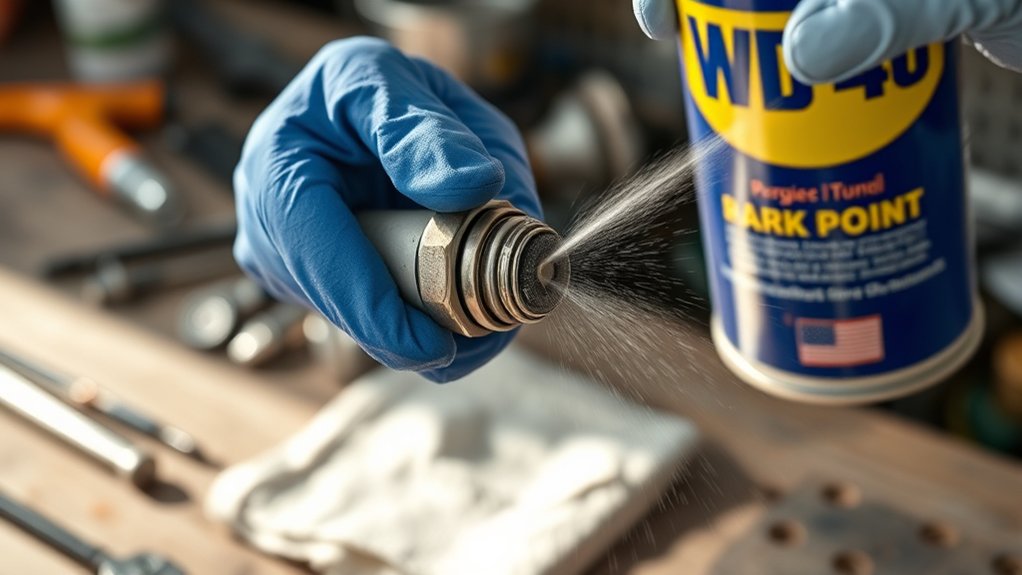
To clean spark plugs with WD-40, first ensure the engine is cool before carefully removing the spark plugs. Spray WD-40 on the electrodes and insulators to help dissolve deposits and buildup.
Let the WD-40 soak for 10–15 minutes, then gently scrub the plugs with a wire brush to remove any loosened residue. After scrubbing, wipe the plugs clean and dry them thoroughly.
Inspect the spark plugs for any signs of damage or wear before reinstalling. Apply anti-seize compound to the threads and torque the plugs to the manufacturer’s specifications for reliable performance.
You’ll find detailed steps and safety tips to optimize the cleaning process next.
Key Takeaways
- Spray WD-40 on the electrode and insulator to penetrate and loosen carbon and oil deposits.
- Let WD-40 soak for 10-15 minutes, extending in 5-minute increments if buildup persists.
- Use a stiff-bristle wire brush to gently scrub away loosened deposits and wipe clean with a rag.
- Dry the spark plug thoroughly, using compressed air if available, before reinstalling.
- Inspect for damage, ensure no WD-40 residue remains on threads or seating surfaces before reinstalling.
How WD-40 Helps Clean Spark Plugs
How exactly does WD-40 help clean spark plugs? WD-40’s solvent properties penetrate carbon deposits and oil residues that accumulate on spark plugs due to combustion and spark plug chemistry. By dissolving these contaminants, WD-40 loosens stubborn buildup, allowing you to wipe or brush the plugs clean efficiently.
Its water-displacing ability also prevents moisture-related corrosion on the metal parts of the plug. While WD-40 is effective, you should know there are WD-40 alternatives, such as dedicated carburetor cleaners or specialized spark plug cleaners, that may offer stronger solvents tailored specifically for spark plug chemistry.
However, WD-40 remains a convenient, multipurpose option widely accessible for routine maintenance without requiring specialized tools or chemicals.
What You Need to Clean Spark Plugs With WD-40
What tools and materials should you gather before cleaning spark plugs with WD-40? You’ll need a can of WD-40, a stiff-bristle wire brush, a clean rag, and a spark plug socket with a ratchet for removal. Additionally, consider alternatives to WD 40 like specialized carburetor cleaners or brake cleaner if you prefer.
Always wear safety goggles and gloves to protect yourself from chemical exposure. Ensure you work in a well-ventilated area to avoid inhaling fumes. Follow safe usage tips by avoiding excessive spray near ignition components and allowing the WD-40 to penetrate for several minutes before scrubbing.
Having a compressed air source is helpful to blow away loosened debris after cleaning. Preparing these tools will streamline the cleaning process efficiently and safely.
Removing Spark Plugs Safely From Your Engine
Once you’ve gathered your WD-40, wire brush, and necessary tools, start by disconnecting the spark plug wire carefully to avoid damaging the boot. Use a proper tip selection on your spark plug socket to ensure a secure grip without slipping.
Before removal, verify the engine is cool to protect the fuel system and avoid disturbing engine lubrication. Note the maintenance timing recommended in your vehicle’s manual to prevent premature wear or damage.
Ensure the engine is cool and follow your vehicle’s maintenance schedule to prevent damage and premature wear.
Unscrew the spark plug gently, turning counterclockwise with steady pressure to prevent thread stripping. Keep the spark plug perpendicular to the cylinder head to avoid cross-threading.
Removing plugs carefully maintains engine integrity, ensuring optimal combustion and fuel efficiency. Proper removal sets the stage for effective cleaning and prolongs spark plug life.
Step-by-Step Guide to Cleaning Spark Plugs With WD-40
Begin by spraying a generous amount of WD-40 directly onto the spark plug’s electrode and insulator areas. Next, use a soft wire brush or abrasive pad to remove carbon deposits, applying controlled deburring techniques to avoid damaging the electrode.
After cleaning, wipe the plug with a clean rag to remove residue. Inspect the electrode gap and adjust if necessary. Finally, apply anti seize usage sparingly on the threads to facilitate future removal without contamination.
| Step | Key Action |
|---|---|
| 1 | Spray WD-40 on electrode/insulator |
| 2 | Use wire brush with deburring techniques |
| 3 | Wipe residue clean |
| 4 | Inspect and adjust electrode gap |
| 5 | Apply anti seize on threads |
Letting WD-40 Soak: Duration Tips
You should let WD-40 soak on the spark plug for about 10 to 15 minutes to break down carbon deposits effectively. Watch for visible loosening of grime and a slight sheen indicating penetration. If buildup remains stubborn, you can extend soaking in 5-minute increments, but avoid over-soaking to prevent residue buildup.
Optimal Soaking Time
How long should you let WD-40 soak on your spark plugs for crucial cleaning? Based on spark plug chemistry, a soaking time of 10 to 15 minutes is ideal.
This duration allows the WD-40’s solvent properties to penetrate carbon deposits and oily residues effectively without risking damage. Extended exposure can degrade the ceramic insulator or metal electrodes, so solvent safety is critical.
Avoid soaking for more than 30 minutes to prevent compromising spark plug integrity. After soaking, gently agitate with a brush to dislodge loosened deposits.
Always work in a well-ventilated area to handle WD-40 safely. By adhering to this optimal soaking window, you maximize cleaning efficiency while preserving spark plug performance and longevity.
Signs WD-40 Effectiveness
Although the soaking time is essential, recognizing signs that WD-40 is effectively cleaning your spark plugs guarantees you don’t over- or under-soak. You’ll notice the spark plug’s surface becoming visibly cleaner, with carbon deposits loosening and starting to dissolve.
The cleaning solvents in WD-40 work by breaking down grime and buildup without damaging the ceramic insulator or metal components, which is crucial for engine safety. If the plug still appears heavily soiled after the initial soak, extend the duration in increments of five minutes, checking progress regularly.
Avoid soaking too long to prevent solvent residue buildup, which can impair ignition. Monitor changes closely, ensuring the spark plug regains a near-original clean surface before proceeding with drying and reinstallation.
Removing Carbon and Oil Deposits After Soaking
Where do stubborn carbon and oil deposits go once your spark plugs have soaked in WD-40? The solvent action of WD-40 loosens these contaminants, breaking down the carbon deposits and oil buildup that impair performance.
To remove them, take a small wire brush or a specialized spark plug cleaner and gently scrub the electrodes and insulator. Focus on areas with thick carbon deposits, applying steady pressure without damaging the ceramic.
For oil buildup, use a clean cloth or paper towel to wipe excess residue away. Avoid harsh scraping, which can harm the spark plug’s surface. This process ensures the deposits loosened by WD-40 are effectively eliminated, restoring the spark plug’s efficiency and preparing it for the next cleaning steps.
Drying and Inspecting Spark Plugs Before Reinstalling
Before reinstalling, make sure your spark plugs are completely dry to prevent misfires or damage. Inspect each plug carefully for cracks, worn electrodes, or corrosion that could affect performance. Replace any spark plugs that show visible damage to ensure reliable engine operation.
Ensuring Complete Spark Plug Dryness
How long you allow your spark plugs to dry after cleaning directly affects their performance and longevity. After applying WD-40 and wiping off residues, set your spark plugs in a well-ventilated area for at least 30 minutes to ensure complete evaporation of moisture and solvents.
Use compressed air to blow out lingering moisture from crevices, focusing on the electrode and insulator tip. During this drying phase, practice safe handling by wearing gloves and avoiding contact with contaminants that can compromise spark plug maintenance.
Before reinstalling, visually inspect for any remaining dampness or residues, as even slight moisture can cause misfires or corrosion. Ensuring thorough dryness guarantees optimal electrical conductivity and prevents premature wear, ultimately supporting reliable engine function.
Checking For Visible Damage
Once your spark plugs are completely dry, you’ll want to carefully examine each one for visible damage that could affect engine performance. Inspect the ceramic insulator for cracks or chips, as these can cause misfires and reduce combustion efficiency.
Check the electrodes for excessive wear, corrosion, or deposits, which indicate poor combustion and can hinder an efficient engine. Look for bent or broken electrodes that compromise the spark gap, essential for proper ignition.
During spark plug testing, use a gap gauge to confirm the electrode spacing matches manufacturer specifications. Replace any spark plug showing significant damage or abnormal wear to ensure reliable engine operation.
Proper inspection before reinstalling guarantees the spark plugs function optimally, maintaining your vehicle’s power and fuel efficiency.
Essential Tips for Reinstalling Spark Plugs Correctly
Why does correct spark plug reinstallation matter? Proper reinstallation ensures optimal spark plug chemistry performance and prevents engine misfires or damage.
First, inspect the threads and electrodes for debris or damage. Apply a thin layer of anti-seize compound on the threads to avoid galling but avoid excessive amounts, which can alter torque readings.
Inspect threads and electrodes for damage; apply a thin anti-seize layer to prevent galling without affecting torque.
Use a torque wrench to tighten the spark plug to the manufacturer’s specified torque. This prevents over-tightening, which can crack the plug or cylinder head.
If you’ve used WD 40 or WD 40 alternatives for cleaning, ensure the plugs are dry and free from residue before reinstalling.
Finally, reconnect the spark plug wires or ignition coils securely to maintain proper electrical contact. Following these steps preserves engine efficiency and longevity.
When to Replace Spark Plugs After WD-40 Cleaning
When should you replace spark plugs after cleaning them with WD-40? Replace them immediately if you notice any physical damage, excessive wear, or heavy corrosion that WD-40 cleaning cannot remove.
Inspect the electrodes for pitting or erosion, and check the insulator for cracks. Even after cleaning, compromised spark plugs can cause misfires or inefficient combustion.
Use safety precautions by wearing gloves and ensuring the engine is cool before inspection. WD-40 helps with corrosion prevention, but it’s not a permanent fix for damaged plugs.
If the spark plug’s gap has widened beyond manufacturer specifications or if performance issues persist after cleaning, replacement is necessary. Regularly assess spark plugs during maintenance to maintain engine efficiency and avoid potential damage.
Frequently Asked Questions
Is WD-40 Safe for Use on All Types of Spark Plugs?
WD-40’s cleaning methods suit most spark plugs, but safety considerations require caution with ceramic or high-performance types.
You shouldn’t rely solely on WD-40; always check manufacturer guidelines to avoid damage or reduced spark efficiency.
Can WD-40 Damage the Spark Plug’s Ceramic Insulation?
WD-40 won’t damage the spark plug’s ceramic insulation if used sparingly. However, improper cleaning methods can increase corrosion risks.
Always apply WD-40 carefully and avoid prolonged exposure to maintain the spark plug’s integrity.
How Often Should Spark Plugs Be Cleaned Versus Replaced?
You shouldn’t wait a million years to check spark plugs! Follow maintenance intervals: clean them every 30,000 miles if in good shape.
Replace plugs around 60,000 miles or sooner if performance drops, prioritizing replacement over cleaning.
Can WD-40 Improve Spark Plug Performance or Just Clean Them?
WD-40 primarily enhances spark plug cleaning efficiency by loosening grime and corrosion. It doesn’t improve performance directly.
Guarantee chemical safety by avoiding internal combustion contact; use it only for external cleaning and drying before reinstalling your spark plugs.
Are There Environmental Concerns When Disposing of WD-40 Used Spark Plug Residue?
Think of WD-40 residue like a cautious traveler needing proper guidance. You’ve got to follow environmental policy and use local recycling programs to dispose of it safely, preventing contamination and ensuring responsible spark plug residue management.
Conclusion
Cleaning spark plugs with WD-40 is like giving your engine a breath of fresh air—removing grime and deposits that cloud performance. By following the steps carefully, you’ll restore spark plugs to near-new condition, ensuring smooth ignition and optimal fuel efficiency.
Remember to dry and inspect plugs thoroughly before reinstalling, and know when replacement is necessary. Taking these precautions helps maintain engine health and avoids potential issues down the road.
With proper care and the right cleaning method, your engine will fire up like clockwork, ready to power your drive efficiently. Cleaning spark plugs with WD-40 is an effective way to keep your ignition system in top shape.