How to Clean Tonneau Cover
To clean your tonneau cover effectively, start by identifying its material—vinyl, aluminum, fiberglass, or canvas. This helps you select the right cleaner for the job.
Begin by removing loose dirt using a soft-bristle brush. Then, apply a mild, pH-balanced cleaner suitable for the specific cover type. Rinse thoroughly to eliminate all residue.
Dry the cover completely with a microfiber cloth to prevent moisture damage. Once dry, finish by applying a protective UV coating.
Understanding these basics ensures effective maintenance and a longer cover life. For even better results, consider advanced care tips to enhance your tonneau cover’s durability.
How to Identify Your Tonneau Cover Type
How can you quickly determine the type of tonneau cover you have on your truck? Start by examining the cover’s surface and texture to identify the material. Common options include vinyl, aluminum, fiberglass, or canvas.
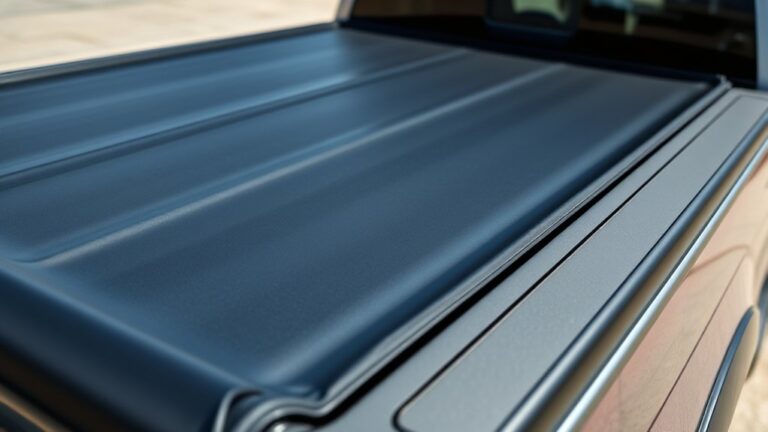
Vinyl covers typically feel smooth and flexible, while aluminum and fiberglass are rigid and solid. Canvas has a fabric-like texture. Look for manufacturer labels or documentation, which often specify the material type.
This detail is critical for identifying material-specific care needs. Knowing your cover’s composition helps you in sourcing cleaners tailored to that material, ensuring effective cleaning without damage.
Avoid generic solutions; select products designed for your cover type to maintain its integrity and appearance. Accurate identification streamlines maintenance and prolongs the cover’s lifespan.
What You’ll Need to Clean Your Tonneau Cover
To clean your tonneau cover effectively, you’ll need a few specific tools and products tailored to its material type. Start with a soft-bristle brush to remove loose debris without damaging the surface. Use a mild, pH-balanced cleaner designed for automotive fabrics or vinyl, depending on your cover’s composition.
Avoid harsh chemicals that can degrade seals or stitching. A microfiber cloth is essential for wiping down and drying, preventing scratches. For storage tips, keep a clean, breathable storage bag to protect the cover when not in use, reducing exposure to dust and UV light.
Additionally, two word ideas worth noting are “gentle agitation” for cleaning and “regular maintenance” to extend the cover’s lifespan. These tools and concepts ensure thorough, safe cleaning every time.
How to Clean Soft Vinyl and Hard Fiberglass Covers
You’ll want to use a mild soap solution and a soft brush to clean soft vinyl covers without damaging the material. For hard fiberglass covers, focus on non-abrasive cleaners and gentle wiping to maintain their finish. Proper techniques for each type guarantee longevity and preserve their protective qualities.
Cleaning Soft Vinyl Covers
Soft vinyl tonneau covers require regular cleaning to maintain their flexibility and appearance. Begin by rinsing the cover with water to remove loose dirt and debris.
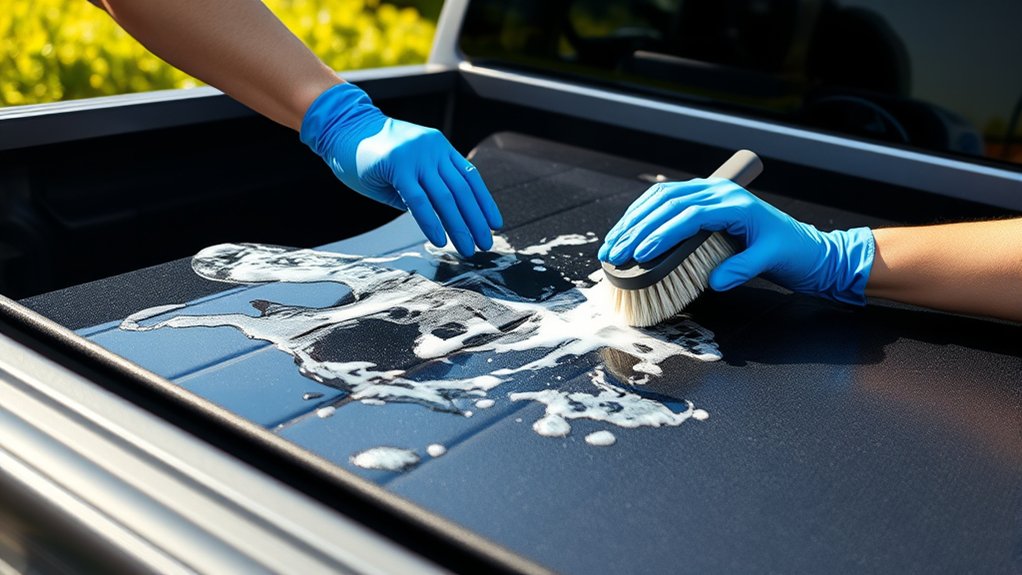
Use a soft-bristle brush and mild soap specifically formulated for vinyl care to gently scrub the surface. Avoid harsh detergents or solvents, as they can degrade the material.
Rinse thoroughly to eliminate all soap residues, which can cause premature wear if left behind. For tonneau maintenance, apply a vinyl protectant designed to preserve suppleness and provide UV protection.
Clean your cover every few weeks or after exposure to harsh weather conditions to prevent cracking and fading. Proper vinyl care extends the lifespan of your soft cover, ensuring it remains watertight and visually appealing.
Always follow manufacturer recommendations for optimal results.
Maintaining Hard Fiberglass Covers
While regular cleaning keeps soft vinyl covers flexible and protected, hard fiberglass covers demand a different approach due to their rigid structure and surface materials. You should follow a strict maintenance schedule, including inspecting seals, cleaning with mild detergents, and avoiding abrasive tools.
Proper storage solutions prevent UV damage and warping when not in use. Refer to the table below for key maintenance tasks:
| Task | Frequency |
|---|---|
| Inspect seals | Monthly |
| Wash surface | Bi-weekly |
| Wax application | Quarterly |
| Check hardware | Monthly |
| Proper storage | Off-season |
Adhering to this routine ensures your hard fiberglass cover remains durable, functional, and visually appealing over time.
Removing Stubborn Stains and Mold From Tonneau Covers
How do you effectively tackle stubborn stains and mold on your tonneau cover without causing damage? Start by preparing a solution of mild soap and water, avoiding harsh chemicals that can degrade the material.
For targeted stain removal and mold prevention, follow these steps:
- Gently scrub the affected area with a soft-bristle brush to loosen mold and dirt.
- Apply a mixture of diluted vinegar or a specialized cleaner designed for tonneau covers to kill mold spores.
- Rinse thoroughly with clean water, ensuring no residue remains that could attract new mold.
- Dry the cover completely with a microfiber cloth to prevent moisture retention.
How to Protect Your Tonneau Cover After Cleaning
Once you’ve thoroughly cleaned your tonneau cover, protecting it properly guarantees its longevity and performance. Implementing targeted care tips and suitable storage solutions preserves material integrity and resists environmental damage.
Always apply a UV protectant spray to shield against sun degradation and use a soft brush to distribute it evenly.
| Care Tips | Storage Solutions |
|---|---|
| Apply UV protectant | Store in a cool, dry place |
| Use mild cleaners | Avoid folding; roll instead |
| Inspect seals regularly | Cover with breathable fabric |
| Lubricate hinges | Elevate off ground to prevent moisture |
Following these steps maintains flexibility, prevents cracks, and reduces fading, ensuring your tonneau cover remains effective and visually appealing over time.
Common Mistakes to Avoid When Cleaning Your Tonneau Cover
Why do so many tonneau cover owners struggle to maintain their covers effectively? Often, they fall into common mistakes that compromise the cover’s durability and appearance. Avoid these pitfalls by following precise cleaning tips:
Many tonneau cover owners struggle due to common mistakes that harm durability and appearance.
- Using harsh detergents or solvents that degrade the material.
- Scrubbing aggressively, which can cause scratches or tears.
- Neglecting to rinse thoroughly, leaving soap residues that attract dirt.
- Cleaning in direct sunlight, which accelerates fading and damage.
Bonus Tips to Keep Your Tonneau Cover Looking Great Longer
To keep your tonneau cover in ideal condition, establish a regular maintenance routine that includes cleaning and inspecting for damage. You should also protect it from harsh elements like UV rays, rain, and debris by using appropriate covers or treatments. These proactive steps will extend the lifespan and preserve the appearance of your cover.
Regular Maintenance Routine
How often should you perform routine maintenance on your tonneau cover to ensure its longevity? Establish a consistent maintenance schedule, ideally monthly, to inspect and clean your cover. This prevents dirt buildup and material degradation.
Follow these key steps:
- Rinse the cover with water to remove loose dirt.
- Use a mild soap solution and a soft brush for thorough cleaning.
- Inspect seals, latches, and mounting hardware for wear or damage.
- Apply a UV protectant designed for tonneau covers to maintain flexibility and color.
Additionally, when not in use, store your tonneau cover using appropriate storage solutions such as padded bags or dedicated racks to prevent deformation. Adhering to this routine ensures your tonneau cover remains functional and visually appealing over time.
Protecting From Harsh Elements
When should you take extra precautions to shield your tonneau cover from harsh environmental factors? You should apply protective coatings and inspect weather seals before extreme weather conditions like heavy rain, snow, or intense sun exposure.
Protective coatings act as a barrier against UV rays, moisture, and dirt, preventing material degradation and color fading. Regularly check weather seals for cracks or wear, as compromised seals allow water and debris to penetrate, causing damage over time.
Clean and dry the cover thoroughly before applying any protective product to ensure optimal adhesion. Reapply coatings seasonally and replace weather seals as needed to maintain an effective defense.
Frequently Asked Questions
How Often Should I Clean My Tonneau Cover?
You should clean your tonneau cover every two to three months to ensure optimal tension maintenance and perform a thorough seal inspection.
Regular cleaning prevents debris buildup and extends your cover’s lifespan effectively.
Can I Clean My Tonneau Cover in the Winter?
Think of your tonneau cover as a shield in a snowstorm. You can clean it during winter, but focus on gentle snow removal and proper winter storage to prevent damage.
This ensures its materials stay intact and functional.
Will Cleaning Affect My Tonneau Cover’s Warranty?
Cleaning won’t void your tonneau cover’s warranty if you follow the manufacturer’s guidelines.
Maintaining proper cleaning frequency and using recommended products ensures warranty compliance and preserves the cover’s integrity over time.
Are There Specific Cleaners to Avoid for Tonneau Covers?
You should avoid harsh solvents and abrasive cleaners due to cleaning chemical restrictions. Instead, use material specific cleaners designed for vinyl or fabric covers to prevent damage, maintain flexibility, and preserve your tonneau cover’s protective qualities effectively.
How Do I Store My Tonneau Cover During Off-Season?
You should clean and dry your tonneau cover completely, then store it flat or loosely rolled to prevent creases.
Use store separation techniques with soft cloths during off-season storage to avoid damage and maintain flexibility.
Conclusion
Cleaning your tonneau cover not only preserves its appearance but also extends its lifespan—coincidentally, the same effort you put into regular maintenance prevents costly repairs. By identifying your cover type, using the right cleaning materials, and avoiding common mistakes, you ensure optimal protection and durability.
Remember, the time you invest in thorough cleaning today directly correlates with how well your cover performs tomorrow. Stay consistent, and your tonneau cover will serve you reliably for years. Proper cleaning is key to maintaining the functionality and look of your tonneau cover.