
How to Open Tonneau Cover When Tailgate Wont Open
If your tailgate won’t open, start by ensuring any integrated locks on the tonneau cover are released. Opening a tonneau cover when the tailgate won’t open requires careful handling to avoid damage. Use a flathead screwdriver or appropriate tool to carefully disengage the front rail clamps or quick-release latches without damaging seals or rails.
Then, gently lift the cover off its mounting brackets. Avoid forcing parts to prevent damage. If you follow these steps correctly, you’ll regain access smoothly.
There are additional methods to troubleshoot and maintain your cover for a hassle-free experience.
How to Open Your Tonneau Cover When the Tailgate Won’t Budge
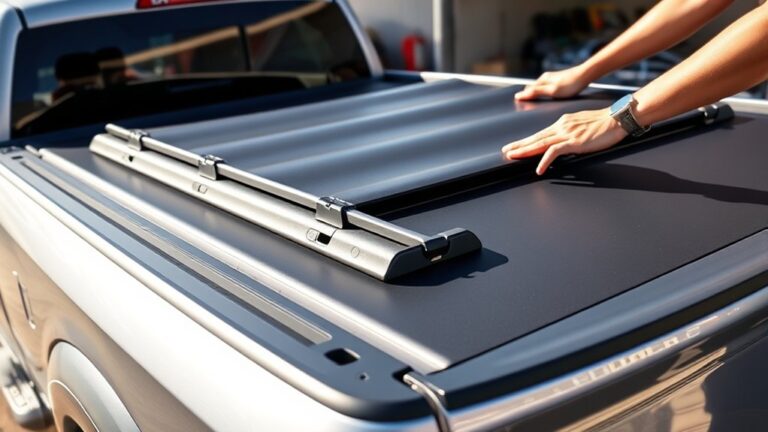
When your tailgate won’t budge, how can you still access your tonneau cover? First, locate the simplified mounting system typically found on modern covers; it allows partial removal without tailgate access. Use a flathead screwdriver or appropriate tool to disengage the clamps or quick-release latches securing the cover’s front rail.
Carefully lift the cover off its mounting brackets, ensuring you don’t damage seals or rails. If your cover features integrated locks, verify they’re unlocked before attempting removal. Always consult your product manual to confirm steps aligned with your model’s simplified mounting design.
Additionally, check your warranty coverage before attempting any disassembly. Unauthorized removal might void it. Proper handling and adherence to manufacturer instructions ensure safe and damage-free access despite a stuck tailgate.
How to Identify Why Your Tonneau Cover Blocks the Tailgate
Start by inspecting the tonneau cover for common issues like misalignment or damaged latches that can block the tailgate. Next, check for any physical obstructions or warped components causing interference. Identifying these causes will help you address why the cover prevents the tailgate from opening properly.
Common Tonneau Cover Issues
Why does your tonneau cover prevent the tailgate from opening? Common issues include misalignment, damaged latches, or warped panels. First, check if the cover is securely latched; a loose latch can block tailgate movement.
Inspect the alignment. If the cover shifts, it may press against the tailgate. Warping from weather exposure can cause the cover to bow, creating an obstruction. Additionally, debris trapped in the rails can hinder smooth operation.
Addressing these problems requires careful self care of your cover, much like maintaining your digital marketing tools to ensure peak performance. Regular cleaning and lubrication prevent damage, while timely repairs avoid tailgate blockages.
Identifying these issues early lets you fix them efficiently without risking further damage to your truck’s components.
Tailgate Obstruction Causes
Misalignment, damaged latches, and warped panels often cause your tonneau cover to block the tailgate, but pinpointing the exact obstruction requires a systematic inspection. First, check for misalignment by observing if the cover sits unevenly, like ocean tides shifting unpredictably.
Next, examine latches for damage or debris preventing a full release. Damaged latches mimic infinite universes of possible malfunctions but focus on visible breaks or rust. Then, inspect panels for warping or swelling caused by moisture or sun exposure, which can exert pressure on the tailgate.
Use a flashlight to identify tight contact points or gaps. Confirm the obstruction by manually lifting sections of the cover; resistance indicates the problem area. This methodical approach ensures you accurately identify why the tonneau cover blocks your tailgate.
How to Use the Tonneau Cover Release Mechanism Correctly
First, locate the release handle on your tonneau cover, usually positioned near the tailgate. Apply even pressure to the handle to disengage the locking mechanism smoothly. Before pulling, check for any obstructions that might prevent the cover from opening fully.
Locate The Release Handle
Where exactly is the release handle located on your tonneau cover? Typically, you’ll find it near the tailgate edge or along the side rails. Inspect the cover’s underside carefully, as the handle might be recessed or flush with the surface.
Proper toe alignment of the handle to the latch mechanism is critical; misalignment can prevent smooth operation, especially if the tailgate won’t open. If you notice latch misalignment, adjust the handle position slightly to ensure it engages correctly.
Use a flashlight to verify the handle’s placement relative to the latch and confirm it moves freely without obstruction. Identifying the release handle accurately is your first step toward manually disengaging the tonneau cover when the tailgate remains stuck.
Apply Even Pressure
How should you apply pressure to the tonneau cover release handle to guarantee it operates smoothly? You need to exert steady, even pressure directly on the handle’s center point. Avoid sudden jerks or uneven force, which can cause incomplete disengagement or damage internal components.
Uneven pressure may indicate design failures, especially if the mechanism feels stiff or unresponsive. In such cases, inspect for misalignment before forcing the handle, as repeated misuse could void warranty coverage or prompt warranty questions.
Applying controlled force ensures the release mechanism functions as intended without stressing the system. Remember, consistent pressure helps prevent mechanical binding, prolonging the cover’s lifespan and maintaining reliability when the tailgate won’t open.
Always use deliberate, balanced force to avoid unnecessary wear and complications.
Check For Obstructions
Why might the tonneau cover release mechanism fail to operate correctly? One common cause is an obstruction preventing the latch from disengaging. Before attempting to open the cover, visually inspect the release area for debris, dirt, or foreign objects lodged around the latch or in the track.
Even small particles can block smooth operation. Use a flashlight to check hard-to-see spots thoroughly. If you find dirt or grime, clean the latch and track with a soft brush or compressed air.
Avoid using excessive force to release the mechanism, as this can damage components. Ensuring the release area is clear will help the mechanism function as designed, allowing you to open the tonneau cover properly even when the tailgate won’t open.
How to Manually Override a Stuck Tonneau Cover Latch
When the tonneau cover latch sticks and prevents you from opening the tailgate, you’ll need to manually override the mechanism to regain access. First, locate the latch housing near the rear edge of the tonneau cover. Identify the release lever or cable designed for manual override.
Gently pull or push this lever while applying steady pressure on the cover to disengage the latch. If your tonneau latch uses a cable system, carefully trace and pull the cable to release tension. Avoid forcing the latch, as this could worsen the tailgate jam.
Once the latch disengages, lift the tonneau cover slowly to prevent damage. After clearing the jam, inspect the latch mechanism for debris or misalignment to prevent future sticking.
Tools You’ll Need to Safely Open a Jammed Tonneau Cover
To safely open a jammed tonneau cover, you’ll need essential hand tools like screwdrivers, pliers, and a wrench set. Make sure to wear safety gear such as gloves and eye protection to prevent injury. Preparing these items beforehand ensures you can work efficiently and avoid damage.
Essential Hand Tools
A few essential hand tools will help you safely and efficiently open a jammed tonneau cover when the tailgate won’t budge. Start with a flathead screwdriver to gently pry open latches or remove trim components without damaging seals.
A set of adjustable pliers provides the grip needed to manipulate stubborn locks or bolts. Use a rubber mallet to apply controlled taps, optimizing noise reduction and preserving the cover’s surface.
A flashlight is critical for inspecting hidden mechanisms, improving your user experience by ensuring precise adjustments. Finally, a torque wrench lets you carefully loosen or tighten fasteners to manufacturer specifications, preventing further damage.
Having these tools on hand streamlines the process, minimizes risks, and enhances overall efficiency during your repair.
Safety Gear Requirements
Why is wearing proper safety gear essential before attempting to open a jammed tonneau cover? It protects you from injury caused by sudden cover movements or sharp edges. Before you start, review your safety checklist, considering weather impact, such as slippery surfaces from rain or ice.
Equip yourself with the following:
- Cut-resistant gloves to prevent hand injuries from jagged metal or broken parts.
- Safety goggles to shield your eyes from debris or rust flakes.
- Non-slip footwear to maintain footing, especially in wet or icy conditions.
- A dust mask if dust or mold is present under the cover.
Following these precautions ensures your safety while managing the jammed tonneau cover effectively.
Tips to Gently Loosen a Jammed Tonneau Cover
How can you safely free a jammed tonneau cover without causing damage? First, identify the source of the jam by visually inspecting the cover’s edges and hinges. Avoid forcing the cover, as this risks warping or breaking components.
Apply a silicone-based lubricant sparingly to hinges and sliding tracks to reduce friction. Use a soft cloth to gently work the cover back and forth, loosening stuck areas incrementally. Avoid turning this into an unrelated topic or unrelated discussion ideas; focus solely on the mechanical interaction between the cover and its mounting points.
If resistance persists, stop and reassess rather than applying excessive force. These careful steps ensure you gently loosen the jammed tonneau cover while maintaining its integrity and function.
How to Spot Mechanical Problems in Your Tonneau Cover Mechanism
Mechanical issues in your tonneau cover mechanism often manifest through subtle signs that you can detect early with careful inspection. To maintain optimal trunk maintenance and prevent costly repairs, focus on these key indicators:
- Difficulty in opening or closing the cover, suggesting worn hinges or misaligned latches.
- Unusual noises such as grinding or clicking during operation, indicating debris or damaged components.
- Visible corrosion or rust around screws and weatherproofing drills, which can compromise seal integrity.
- Loose or missing fasteners that affect the cover’s stability and weatherproofing effectiveness.
Regularly examine these areas to catch mechanical problems early. Addressing them promptly ensures your tonneau cover remains secure and functional, avoiding tailgate access issues.
How Weather and Temperature Cause Tonneau Cover Jams
When does your tonneau cover tend to stick or jam more frequently? Typically, extreme weather and temperature fluctuations cause these issues. Cold temperatures can make seals and hinges contract, increasing friction and causing jams.
Conversely, heat can expand materials, warping components or softening seals, leading to misalignment. It’s imperative to avoid the wrong topic of blaming unrelated concepts like climate change or interior design for mechanical failures. These factors don’t directly affect your cover’s functionality.
Instead, focus on how temperature extremes impact the physical properties of your cover’s materials. Regularly lubricate moving parts with weather-appropriate products and inspect seals for brittleness or swelling. This proactive maintenance minimizes jams caused by environmental changes and ensures smooth operation despite climate variations.
What to Do If Your Tonneau Cover Design Blocks Tailgate Access
Environmental factors can affect your tonneau cover’s operation, but sometimes the design itself creates access challenges. If your tonneau cover blocks tailgate access, consider these steps:
- Perform a design critique by examining the cover’s hinge placement and locking mechanism to identify obstruction points.
- Check if the cover overlaps the tailgate excessively, which may require partial removal or adjustment.
- Avoid addressing unrelated topics like weather damage now; focus strictly on the physical design limitations causing the blockage.
- Consult the manufacturer’s technical specifications to verify if your model supports alternative opening methods or modifications.
How to Prevent Future Tonneau Cover and Tailgate Jams
Why do tonneau covers and tailgates jam in the first place? Most jams result from debris buildup, corrosion, or misalignment caused by prolonged exposure to weather impact. To prevent future issues, follow these maintenance tips: clean the cover and tailgate regularly, removing dirt and debris that can obstruct mechanisms.
Lubricate hinges and latches with a silicone-based lubricant every few months to reduce friction and corrosion. Inspect seals and weather stripping for damage to prevent water ingress that accelerates rust and swelling. Adjust alignment as needed to ensure smooth operation and avoid strain on components.
Additionally, store your vehicle in a sheltered area when possible to minimize exposure to harsh weather impact. Consistent maintenance prevents jams, extends component life, and ensures reliable tonneau cover and tailgate function.
Frequently Asked Questions
Can a Tonneau Cover Be Locked Without a Tailgate Lock?
You can lock a tonneau cover without a tailgate lock by using an unlocking workaround, like securing the cover’s latches directly.
Combine this with a tailgate workaround to ensure full security despite the tailgate’s locked status.
Are There Specific Tonneau Covers Recommended for Tailgates That Don’T Open?
Yes, you should choose tonneau covers with proven cover compatibility for tailgate workaround setups. Look for models designed to allow side or front access, ensuring you can operate them without relying on tailgate opening.
How Do I Clean My Tonneau Cover Without Damaging It?
You’ll want to follow cleaning tips specific to your tonneau cover’s material. Use mild soap, water, and a soft cloth.
Avoid harsh chemicals or pressure washers to ensure proper material care and prevent damage.
Can I Install a Tonneau Cover Myself or Should I Hire a Professional?
You can install a tonneau cover yourself to save money and gain hands-on experience. However, hiring pros guarantees precise fitting and durability, and helps avoid installation errors.
Weigh the benefits of installing a tonneau cover against your skill level and the tools you have available.
Will a Soft Tonneau Cover Prevent Tailgate Theft Better Than a Hard Cover?
You won’t fool a thief with soft tonneau covers. They offer minimal soft security and increase theft risk. Hard covers provide rigid protection, deterring break-ins more effectively. Choose based on security needs and locking mechanisms.
Conclusion
Now that you know how to tackle a stubborn tonneau cover blocking your tailgate, you’re equipped to handle this modern-day nuisance like a seasoned engineer—think of it as channeling your inner Renaissance mechanic.
Remember to inspect release mechanisms carefully, use the right tools, and consider weather effects. Taking these precise steps prevents jams and saves time.
Stay proactive with maintenance to avoid future hassles and keep your truck bed accessible at all times. Mastering how to open a tonneau cover when the tailgate won’t open ensures you’re never caught off guard.