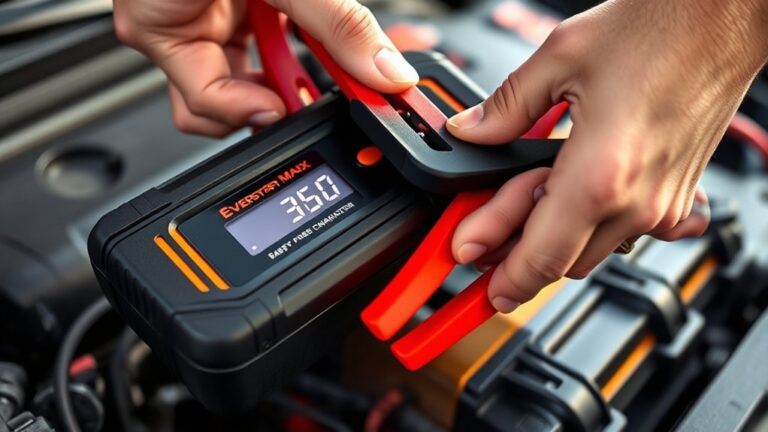
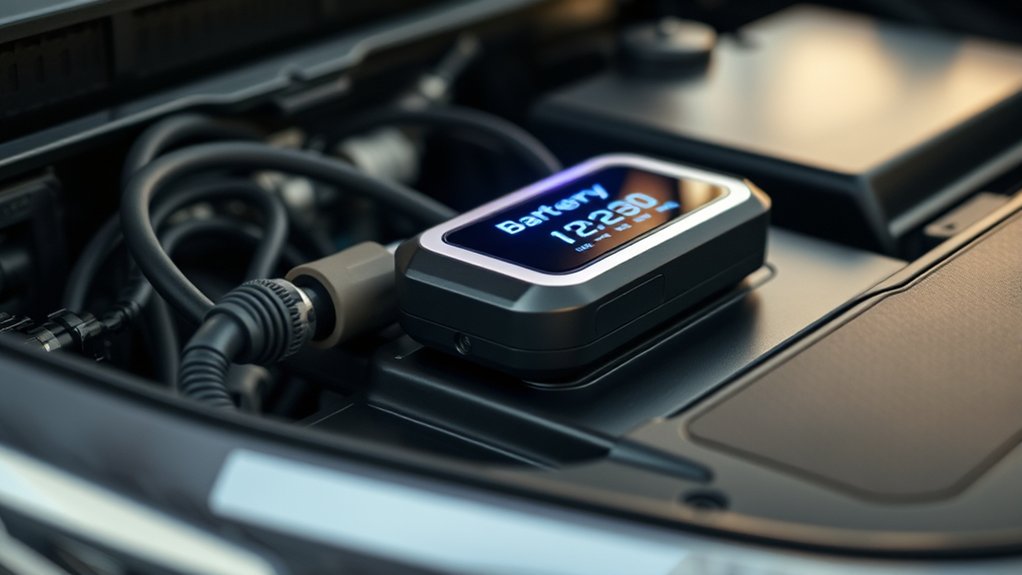
What Car Battery Charger
You need a car battery charger that safely restores power by supplying controlled voltage and current to reverse chemical discharge in battery cells. Choosing the right charger is essential for maintaining your battery’s health and ensuring reliable performance.
Select one compatible with your battery’s chemistry and voltage, ideally with smart features that prevent overcharging, reverse polarity, and short circuits. Use the charger in a well-ventilated space, connect the positive terminal first, and monitor the charging process to avoid damage.
Understanding different charger types, their safety functions, and proper maintenance can help you optimize battery life and performance. This knowledge ensures your battery remains efficient and dependable over time.
How Does a Car Battery Charger Work
Understanding how a car battery charger works begins with recognizing its role: it restores electrical energy to a depleted battery by supplying a controlled flow of electric current. When you connect the charger, it delivers a steady voltage that reverses the chemical discharge inside the battery cells.
A car battery charger restores energy by supplying controlled current, reversing chemical discharge within battery cells.
This process, known as charging, replenishes the battery’s stored energy. How it charges depends on the charger’s design; most use a regulated current to prevent overcharging, which can damage the battery.
To ensure effective charging, follow maintenance tips like regularly checking the battery’s voltage and cleaning terminals to avoid corrosion. You should also use the charger in a well-ventilated area since charging produces gases.
Proper use extends battery life and guarantees optimal performance.
Different Types of Car Battery Chargers Explained
Knowing how a car battery charger functions helps you appreciate why different chargers suit various needs. You’ll find primarily three types: trickle, standard, and smart chargers. Trickle chargers provide a slow, steady charge, ideal for maintaining batteries over long periods.
Standard chargers deliver a faster charge but require close monitoring to avoid overcharging. Smart chargers use microprocessors to adjust charge rates automatically, optimizing battery health.
When selecting a charger, consider AC compatibility for your power source. Some chargers work directly with AC outlets, while others are designed for DC or automotive power.
Portable options offer flexibility, letting you charge batteries on the go, which is essential for emergencies or remote locations. By understanding these types, you can match the charger to your battery’s requirements efficiently.
Why Smart Car Battery Chargers Are a Game Changer
What makes smart car battery chargers stand out from traditional models? They incorporate advanced smart charging technology that precisely monitors and adjusts voltage and current throughout the charging cycle. This automation ensures your battery receives the optimal charge without overcharging or undercharging, which extends battery life and maintains performance.
You’ll appreciate the built-in safety features that protect against short circuits, reverse polarity, and overheating, reducing risks significantly. Smart chargers also adapt to various battery types and conditions, so you don’t need to manually select settings.
Finding the Right Charger for Your Vehicle
How do you choose the right charger for your vehicle? Finding the right charger hinges on ensuring vehicle compatibility and meeting your battery’s specific needs. First, identify your battery type: lead-acid, AGM, or lithium, as chargers vary accordingly.
Next, verify the charger’s voltage output matches your vehicle’s battery system, commonly 12V or 24V. Finally, assess the charger’s amperage to suit your charging speed requirements without damaging the battery.
Consider these key factors for finding the right charger:
- Battery chemistry compatibility: Different chemistries require tailored charging algorithms.
- Voltage matching: Prevents electrical damage and ensures efficient charging.
- Safety features: Look for overcharge protection and reverse polarity safeguards.
Choosing the Right Charger by Battery Size
Why does battery size matter when choosing a charger? Because the battery capacity directly influences the charger’s required output current and voltage. Using a charger mismatched to your battery’s size can lead to inefficient charging or damage.
To ensure proper charging compatibility, first identify your battery’s amp-hour (Ah) rating. Chargers should provide an output current suitable for your battery capacity, typically 10-30% of the battery’s Ah rating.
For larger batteries, like those in trucks or SUVs, you’ll need a charger with higher amperage capacity. Conversely, small batteries, such as those in motorcycles, require lower amperage chargers.
Always check the manufacturer’s specifications to match charger output with battery size, ensuring efficient, safe charging and prolonging battery life.
Safety Features Every Car Battery Charger Needs
When selecting a car battery charger, you need to contemplate the safety features it offers to protect both you and your battery. Essential safety features prevent damage caused by overcharging, short circuits, and incorrect connections, ensuring reliable battery protection.
Prioritize chargers with:
- Reverse polarity protection: Stops charging if you connect the clamps incorrectly, preventing sparks and damage.
- Overcharge protection: Automatically halts charging once the battery reaches full capacity, avoiding overheating and battery degradation.
- Short circuit protection: Detects and interrupts current flow during faults, reducing fire and component damage risks.
These safety features enhance operational security and extend battery life. By choosing a charger equipped with robust battery protection measures, you safeguard yourself and maintain optimal battery health through precise, controlled charging.
How to Use a Car Battery Charger Correctly
Before you start charging, always follow essential safety precautions to prevent electrical hazards. Connect the charger clamps correctly—positive to positive, negative to negative—and ensure a secure fit. Then, monitor the charging time carefully to avoid overcharging and battery damage.
Safety Precautions First
How can you guarantee your safety while using a car battery charger? Adhering to strict safety protocols and maintaining hazard awareness is essential. Before you begin, ensure you’re working in a well-ventilated area to prevent gas accumulation.
Always wear protective gear such as gloves and safety goggles to shield against acid splashes. Additionally, keep sparks, flames, and smoking materials far from the battery.
Key safety precautions include:
- Inspect the charger and cables for damage before use to avoid electrical hazards.
- Disconnect the charger from power before attaching or removing clamps to prevent sparks.
- Avoid touching both battery terminals simultaneously to reduce the risk of electric shock.
Proper Connection Steps
Why should you follow a specific sequence when connecting a car battery charger? Following the correct order prevents sparks that can damage your battery or alternator health.
First, turn off the vehicle and all electrical accessories, including lights and radio. Connect the positive (red) clamp to the battery’s positive terminal. Then, attach the negative (black) clamp to a grounded metal part of the vehicle, away from the battery, to avoid sparks near hydrogen gas.
This sequence minimizes risk and protects sensitive electronics. Remember, proper battery charging complements regular vehicle maintenance, just like monitoring tire pressure ensures peak performance.
After connecting clamps securely, double-check connections before powering the charger. This precise method safeguards your battery, alternator, and overall vehicle integrity during the charging process.
Charging Time Guidelines
When should you stop charging your car battery to ensure optimal performance? You need to monitor charging time carefully to prevent overcharging, which can damage the battery and reduce its lifespan. Use efficiency metrics like voltage levels and amperage to guide you.
Most chargers have automatic shutoff features, but if yours doesn’t, follow these guidelines:
- For a standard 12V battery, charge at 2 amps for 10-12 hours or 10 amps for 1-2 hours, depending on the charger type.
- Stop charging once the voltage reaches about 12.6 to 12.8 volts, indicating a full charge.
- Use a multimeter to verify efficiency metrics during charging, ensuring the battery maintains optimal voltage without overheating.
Adhering to these charging time guidelines helps maintain battery health and performance.
Troubleshooting Common Car Battery Charger Problems
Encountering issues with your car battery charger can disrupt your routine and leave you stranded. To avoid a dead end or misdiagnosis, systematically check common problems. Confirm connections are secure, and the charger is compatible with your battery type.
Inspect cables for damage, and ensure the power source functions correctly.
| Problem | Solution |
|---|---|
| Charger won’t power on | Check power outlet and fuse |
| Battery not charging | Verify connection polarity and voltage |
| Charger shuts off prematurely | Allow battery cooling, check charger settings |
| Error lights on charger display | Consult manual for specific error codes |
Tips to Maintain Your Battery Alongside Proper Charging
How can you extend the lifespan of your car battery while ensuring efficient charging? Proper maintenance alongside correct charging practices is essential. First, adhere strictly to maintenance reminders provided by your battery manufacturer to avoid overcharging or deep discharges.
Second, implement corrosion prevention by regularly inspecting terminals and cleaning any buildup with a baking soda solution or specialized cleaner. Third, store your vehicle and battery in a dry, temperature-controlled environment to reduce self-discharge and extend battery life.
Additionally, use a smart charger with automatic shutoff to prevent damage during charging cycles. These steps optimize battery performance, prevent premature failure, and guarantee reliable starts. Prioritize these technical maintenance actions to maximize your battery’s functionality and longevity effectively.
Frequently Asked Questions
Can I Charge a Car Battery in Cold Weather?
Yes, you can charge a car battery in cold weather. Use a charger with temperature compensation, avoid fast charging, and ensure good ventilation.
Follow charging tips to prevent damage and optimize battery performance in low temperatures.
How Long Does It Typically Take to Fully Charge a Battery?
Charging a typical car battery takes 4-24 hours, depending on charging efficiency and battery chemistry.
Don’t worry about impatience. Think of it like filling a tank slowly to ensure optimal energy absorption and battery health.
Are There Chargers Compatible With Electric Vehicle Batteries?
Yes, you’ll find chargers designed with EV battery compatibility, ensuring optimal voltage and current. Always prioritize charging safety by using certified EV chargers to prevent damage and maintain battery longevity during the charging process.
Can a Car Battery Charger Damage My Car’s Electronics?
No, a quality car battery charger won’t damage your car’s electronics if used correctly. Car battery safety involves using compatible chargers and avoiding charging myths that claim all chargers cause harm to vehicle systems.
What Should I Do With an Old or Dead Car Battery?
Think of your old battery as a spent energy vessel; you should dispose of it safely by taking it to designated recycling centers. These facilities handle recycling options properly, preventing environmental harm and recovering valuable materials efficiently.