Where to Buy Brake Pads
You can buy brake pads from dealerships, local auto parts stores, or reputable online retailers.
When looking for brake pads, it’s important to consider where you purchase them to ensure quality and compatibility.
Each option offers distinct advantages and potential drawbacks.
Dealerships offer OEM parts with guaranteed fit and quality but usually at a higher price.
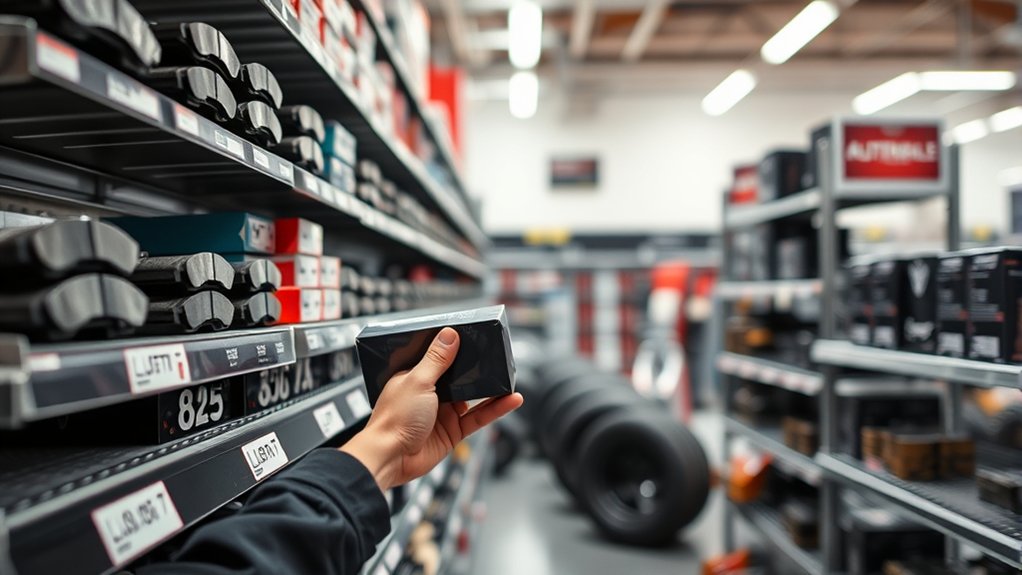
Local stores let you inspect products firsthand and benefit from expert advice.
Online sellers provide a broad selection and frequent discounts but require careful verification of compatibility and authenticity.
Each option has trade-offs in price, convenience, and reliability that you’ll want to understand before making your choice.
By weighing these factors, you can find the best place to buy brake pads for your needs.
Key Takeaways
- Purchase brake pads online for a broad selection, competitive prices, and frequent discounts, but verify vendor credibility to avoid counterfeits.
- Buy from local auto parts stores for immediate access, expert advice, and hands-on inspection of brake pads.
- Choose dealerships for OEM brake pads, professional installation, and guaranteed compatibility at higher prices.
- Compare prices factoring in shipping, handling fees, and potential discounts when buying online versus in-store.
- Always verify brake pad compatibility with your vehicle’s make, model, and year to ensure proper fit and performance.
How To Choose Brake Pads For Your Vehicle
When selecting brake pads for your vehicle, what factors should you prioritize to ensure optimal performance and safety? First, verify compatibility with your car’s make and model to prevent installation issues.
Check the badge design of the product. Reputable manufacturers often use distinct badges to signal quality and authenticity.
Additionally, evaluate the supplier’s social media presence. Active engagement and customer feedback can reveal product reliability and support responsiveness.
Avoid unknown brands lacking verified credentials or clear specifications. Prioritize sources providing detailed technical data, including material composition and wear ratings.
Key Features Of High-Quality Brake Pads
Selecting brake pads that match your vehicle is only the first step; understanding the key features that define high-quality brake pads will help you make a more informed choice. Here’s what to focus on:
- Material Safety: Ensure the brake pads use non-toxic, wear-resistant materials that minimize harmful dust and maintain structural integrity under heat.
- Brand Reputation: Opt for manufacturers with proven reliability and consistent quality controls to guarantee performance and durability.
- Performance Specifications: Look for pads with high friction coefficients and excellent heat dissipation to ensure effective stopping power and reduced fade during repeated braking.
OEM Vs. Aftermarket Brake Pads: Pros And Cons
When choosing between OEM and aftermarket brake pads, you’ll need to weigh performance differences and cost. OEM pads offer consistent quality and fit, while aftermarket options vary widely in materials and durability. Understanding these factors helps you make the most practical and cost-effective decision for your vehicle.
Performance Differences
How do OEM brake pads compare to aftermarket options in terms of performance? When choosing between them, focus on these critical aspects:
- Brake Pad Materials: OEM pads use materials specifically engineered for your vehicle, ensuring optimal friction and durability. Aftermarket pads vary widely; some match OEM standards, while others prioritize different performance traits.
- Noise Reduction: OEM pads often include shims and formulations designed to minimize noise. Aftermarket pads may produce more squeal or vibration, depending on their material composition and design.
- Consistency and Fit: OEM pads guarantee precise fit and consistent braking feel. Aftermarket options might require adjustments and can exhibit variable performance due to differences in manufacturing tolerances.
Understanding these factors helps you select brake pads that balance safety, comfort, and reliability tailored to your driving needs.
Cost Comparison
Why do brake pad costs vary so much between OEM and aftermarket options? OEM brake pads usually cost more because they meet strict manufacturer specifications and guarantee compatibility with your vehicle’s braking system.
Aftermarket pads offer a wider price range, often lower, since they come from various manufacturers with different materials and standards. You can save considerably by using discount codes or taking advantage of in-store promotions when buying aftermarket pads.
However, while aftermarket options can be cost-effective, quality varies, so research is essential. OEM pads provide consistent performance but at a premium price. Ultimately, balancing budget and performance needs will guide your choice.
Using discount codes or in-store promotions can make OEM pads more affordable or enhance the value of aftermarket options.
Finding Brake Pads For Performance And Specialty Vehicles
Where can you source brake pads that meet the demanding specifications of performance and specialty vehicles? Start by focusing on manufacturers that specialize in high-performance applications, ensuring compatibility with your custom motors. These suppliers often provide pads engineered for aggressive heat dissipation and superior friction coefficients.
Next, prioritize products validated through rigorous track testing, which guarantees reliability under extreme conditions. Finally, check for certifications and material composition tailored to your vehicle’s specific requirements.
Here’s a streamlined approach:
- Identify suppliers experienced with custom motors and performance modifications.
- Verify that pads undergo standardized track testing to confirm durability and stopping power.
- Confirm material specs align with your vehicle’s weight, speed range, and intended use.
This targeted method ensures you get brake pads engineered for optimal performance and safety.
Buying Brake Pads Online: Convenience And Options
When purchasing brake pads, online platforms offer unmatched convenience and a broad selection tailored to your vehicle’s needs. You can easily compare specifications, materials, and certifications to ensure compliance with engineering ethics, guaranteeing safety and performance.
Online suppliers often provide detailed product data, enabling you to make informed choices based on friction coefficients, wear rates, and thermal tolerance. The digital supply chain streamlines order fulfillment, reducing lead times and expanding your access to OEM and aftermarket options.
However, you should verify vendor credibility and product authenticity to avoid counterfeit parts that compromise safety. By leveraging online resources, you optimize your brake pad selection process efficiently, ensuring compatibility and reliability without sacrificing ethical standards inherent in automotive engineering practice.
Buying Brake Pads At Local Auto Parts Stores
How can you guarantee immediate access to quality brake pads while supporting hands-on selection? Buying brake pads at local auto parts stores offers practical advantages. You can inspect materials firsthand, ensuring compatibility with your vehicle’s specifications.
Plus, you get expert advice on-site, which is crucial when coordinating brake pad replacement with maintenance tasks like tyre rotation or engine oil changes.
Here’s why local stores stand out:
- Instant availability eliminates wait times common with online orders.
- Access to professional technicians helps you choose pads optimized for your driving needs.
- Ability to purchase additional supplies, such as brake fluid or tools, for comprehensive maintenance.
Choosing local stores means you’re ready for immediate installation, maintaining vehicle safety and performance efficiently.
Getting Brake Pads From Your Dealership
Why trust your dealership for brake pads? Your dealership offers OEM parts designed specifically for your vehicle’s make and model, ensuring optimal performance and safety. When you get brake pads from them, you’re less likely to face compatibility issues that can arise with generic brake maintenance parts.
Additionally, dealerships often provide professional installation, guaranteeing precise fit and alignment. They can also advise on related services like seasonal tire storage, helping you maintain your vehicle comprehensively.
While dealership prices might be higher, the assurance of genuine parts and expert service adds value. If you prioritize reliability and want to avoid potential risks linked to generic parts, your dealership is a practical source for brake pads and associated maintenance needs.
Comparing Prices: Online Vs. In-Store Brake Pads
When comparing brake pad prices, you’ll want to weigh the base cost against shipping and handling fees for online purchases. In-store options might have higher sticker prices but often avoid extra charges and offer immediate availability. Also, check for discounts or promotions unique to each buying method to maximize your savings.
Price Differences Breakdown
Where can you find the best value for brake pads: online marketplaces or physical stores? Understanding price differences hinges on factors like brake pad materials, brand, and retailer overhead. Here’s a breakdown:
- Material Cost Variance: Online sellers often offer competitive pricing on ceramic and semi-metallic pads due to bulk purchasing, while stores may price higher for specialty materials.
- Retail Markup: Physical stores include operational costs in prices, which can increase costs by 10-20% compared to online.
- Promotions and Discounts: Online platforms frequently provide flash sales or coupon codes, influencing price differences significantly.
Shipping And Handling Costs
How much you pay in shipping and handling can noticeably impact the total cost of brake pads when comparing online and in-store purchases. Online retailers often charge shipping costs based on weight, distance, and delivery speed, which can add a significant amount to your final price.
Handling charges may also apply, covering packaging and processing fees. In contrast, buying in-store eliminates shipping costs but may include handling fees indirectly through higher retail prices. Additionally, in-store purchases let you avoid delays associated with shipping.
If you’re comparing prices, factor in both explicit shipping costs and any hidden handling charges to get a true cost comparison. By evaluating these expenses precisely, you can determine whether online convenience or in-store immediacy offers better value for your brake pads.
Discount Availability Comparison
Why should you pay close attention to discount availability when comparing online and in-store brake pad prices? Discounts impact your overall cost considerably, especially when factoring in second hand pricing and seasonal sales. Consider these key points:
- Online retailers often offer more frequent seasonal sales, enabling you to save substantially during specific periods.
- In-store discounts may include immediate price reductions or bundled offers, but these vary widely by location and brand.
- Second hand pricing, while less common online, can occasionally be found through specialized marketplaces, offering cost-effective alternatives.
Ensuring Brake Pad Compatibility And Proper Fit
When selecting brake pads, you must verify their compatibility with your vehicle’s make, model, and year to guarantee proper fit and function. Use your owner’s manual or a trusted parts database to confirm exact specifications.
Pay attention to brake pad materials, such as ceramic, semi-metallic, or organic, since each type affects performance and wear differently. Ensure the pads you choose include proper wear indicators compatible with your braking system; these sensors alert you when replacement is necessary, maintaining safety.
Double-check the pad thickness and backing plate design to match your vehicle’s rotor dimensions precisely. Incorrect fit can cause uneven wear, noise, or brake failure. By confirming these details, you’ll secure brake pads that perform reliably and extend your braking system’s lifespan.
Shipping And Delivery For Online Brake Pads
After confirming brake pad compatibility and fit, the next step is understanding shipping and delivery options when ordering online. Evaluating these factors guarantees timely and secure receipt of your parts. Focus on:
- Shipping Options: Check if standard, expedited, or same-day shipping is available. Choose based on urgency and cost-effectiveness.
- Delivery Timelines: Confirm estimated arrival dates, factoring in weekends and holidays to avoid delays.
- Carrier Reliability: Opt for sellers who use reputable carriers with tracking capabilities for real-time updates.
Understanding Warranty And Return Policies For Brake Pads
How can you protect your investment when purchasing brake pads? Start by carefully reviewing the warranty terms offered by the seller. Warranty terms outline coverage for defects, wear, and performance issues, specifying the duration and conditions under which you can claim a replacement or refund.
Pay close attention to any exclusions or requirements, such as professional installation or mileage limits.
Equally important are the return windows. These define the timeframe within which you can return brake pads if they don’t meet your expectations or fit your vehicle.
Return windows typically range from 14 to 30 days but can vary significantly. Understanding these policies ensures you can act promptly if the product is defective or incompatible, saving you time and money while safeguarding your purchase.
Frequently Asked Questions
How Often Should I Replace My Brake Pads?
You should replace your brake pads every 30,000 to 70,000 miles. Regular inspection and wear monitoring ensure optimal safety.
Prioritize noise reduction and stopping performance during your two word discussion idea 1 and two word discussion idea 2.
Can Worn Brake Pads Damage My Rotors?
Yes, worn brake pads can cause rotor damage if you ignore wear indicators. Once the pads wear down, metal contacts the rotor, leading to scoring and warping.
Replace pads promptly to prevent costly rotor repairs.
What Are the Signs of Failing Brake Pads?
You’ll notice signs of wear like squealing noises and reduced braking efficiency. Check pad thickness regularly; if it’s less than 3mm, it’s time to replace.
Uneven wear or vibrations also signal failing brake pads.
How Long Does It Take to Install New Brake Pads?
You’ll spend about 30 to 60 minutes on brake pad installation time, depending on your vehicle and tools.
Stick to your maintenance schedule to guarantee timely replacements and maintain peak braking performance and safety.
Are Brake Pads Noisy When They Need Replacement?
Yes, noisy brakes often indicate worn pads. Pad wear indicators produce a high-pitched squeal as a warning.
You’ll hear this noise before the pads fully degrade, signaling it’s time for immediate replacement to ensure safety.
Conclusion
Choosing the right brake pads is like selecting the perfect key for a lock—precision matters. Just as a misfit key can jam your door, incompatible pads can compromise your safety. Remember, 90% of brake failures stem from improper pad selection or installation.
By understanding features, comparing OEM and aftermarket options, and checking compatibility, you’ll ensure a smooth, reliable stop every time.
Buy smart, fit right, and drive safely by knowing exactly where to buy brake pads that suit your vehicle’s needs.