
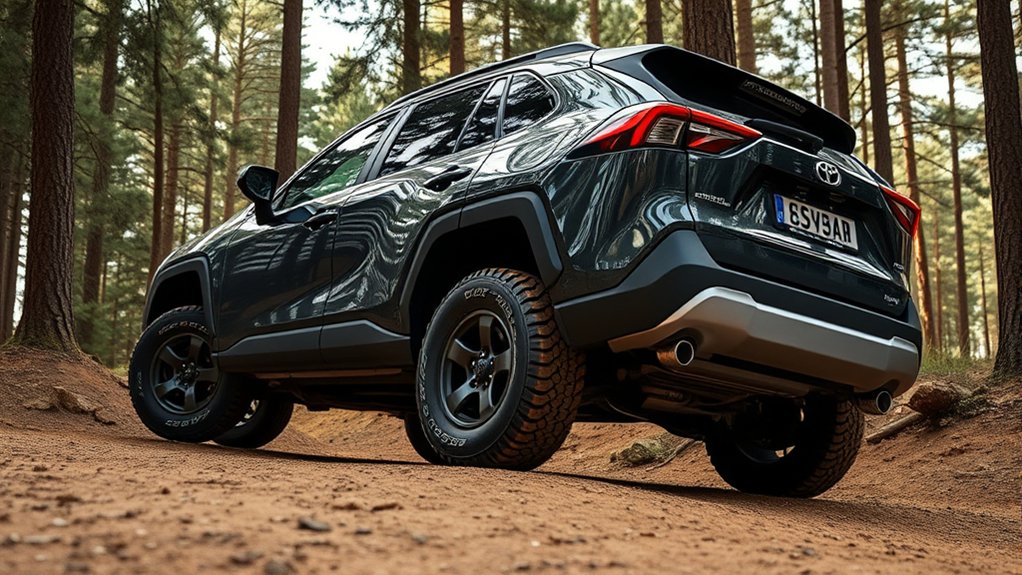
Are All rav4 Awd
Not all Toyota RAV4 AWD models come standard with all trims. AWD is standard only on specific trims like the Adventure and TRD Off-Road, while other versions—such as the base LE—offer it as an option.
Hybrid versions often include electronically controlled AWD as well. AWD improves traction and stability on rough or slippery surfaces but usually reduces fuel efficiency slightly and adds maintenance considerations.
Understanding these differences and deciding based on your driving environment helps you find the right fit, with more details to explore ahead.
Key Takeaways
- Not all Toyota RAV4 models come standard with AWD; it is available on many trims but optional on some.
- RAV4 Adventure and TRD Off-Road trims include AWD by default for enhanced traction.
- The base LE trim offers AWD as an optional upgrade, not standard.
- Hybrid RAV4 models typically feature electronically controlled AWD systems.
- AWD improves stability on rough terrain, but front-wheel drive is standard on certain trims for better fuel economy.
Does the Toyota RAV4 Come With AWD? Overview of Models and Options
What makes the Toyota RAV4 stand out in regard to drivetrain options? You’ll find that the RAV4 offers both front-wheel drive and all-wheel drive configurations, catering to diverse driving needs.
While AWD isn’t standard across all models, it’s available on many trims, enhancing off road ergonomics by improving traction and stability on uneven terrain. This versatility allows you to choose a drivetrain that suits your lifestyle, whether city driving or outdoor adventures.
Additionally, the RAV4’s thoughtful design supports efficient cargo organization, ensuring your gear stays secure regardless of the drivetrain. By balancing performance features like AWD with practical interior layouts, Toyota meets the demands of drivers seeking both capability and everyday functionality in one compact SUV.
Which Toyota RAV4 Trims Have AWD Standard or Optional?
The availability of all-wheel drive varies across the Toyota RAV4 lineup, giving you flexibility based on your driving preferences and needs. If you prioritize AWD as a standard feature, the RAV4 Adventure and TRD Off-Road trims include it by default, providing enhanced traction for diverse conditions.
Meanwhile, the base LE trim offers AWD as an optional upgrade, allowing you to decide if it fits your lifestyle. Hybrid models typically include AWD electronically controlled, aligning with eco-friendly trends much like solar panels supplement traditional energy sources.
Think of AWD availability like choosing between strawberry rhubarb pie: some trims come fully loaded, while others let you add the ingredients. This setup ensures you can balance performance, efficiency, and cost effectively when selecting your RAV4.
Identifying AWD vs. Front-Wheel Drive in a RAV4
You can spot the difference between AWD and front-wheel drive in your RAV4 by examining key features like traction control and drivetrain components. Checking the vehicle’s specifications or looking for an AWD badge can also help confirm the drivetrain type. Understanding these indicators guarantees you know how your RAV4 handles various driving conditions.
AWD vs. FWD Features
How can you tell if a RAV4 has all-wheel drive (AWD) or front-wheel drive (FWD)? The key lies in understanding their distinct features. AWD provides power to all four wheels simultaneously or as needed, enhancing traction on slippery or uneven surfaces.
In contrast, FWD delivers power only to the front wheels, which typically results in better fuel efficiency but less capability in challenging conditions. Avoid irrelevant topics or unrelated comparisons, like engine size or interior features, as they don’t directly indicate drivetrain type.
Instead, focus on how AWD improves handling and stability by distributing torque dynamically, while FWD relies on front wheels for propulsion and steering. Understanding these features helps you assess which drivetrain suits your driving needs without confusion.
Checking RAV4 Drivetrain
Wondering whether your RAV4 has all-wheel drive or front-wheel drive? You can quickly identify the drivetrain by paying attention to a few key indicators. First, check the dashboard for any drivetrain lighting; AWD models often display an AWD indicator when the system is active.
Second, listen for AWD noise. When driving on uneven surfaces, you might hear subtle sounds from the rear wheels engaging. Third, inspect the rear axle: AWD RAV4s have a visible drive shaft connecting the rear wheels.
Lastly, consult the owner’s manual or door sticker, which usually lists drivetrain specifications. By focusing on these signs, you’ll accurately determine if your RAV4 features AWD or front-wheel drive without guesswork.
Benefits of AWD for RAV4 Drivers
Why does AWD matter for RAV4 drivers? AWD enhances traction and stability, especially in adverse conditions like rain, snow, or uneven terrain.
When you choose a RAV4 with AWD, you avoid the need for aftermarket upgrades aimed at improving grip, which can be both costly and redundant. The system automatically distributes power to the wheels with the most traction, reducing slippage and improving control.
This built-in capability means you get reliable performance without extra modifications. Additionally, AWD can boost your confidence while driving, knowing the vehicle adapts dynamically to changing road conditions.
For drivers who prioritize safety and versatility, AWD offers clear advantages by integrating functionality that aftermarket options attempt to replicate, but often without the seamless integration and warranty benefits.
AWD vs. Front-Wheel Drive: What’s the Difference?
What sets AWD and front-wheel drive apart in a RAV4? AWD powers all four wheels, while front-wheel drive (FWD) sends power only to the front wheels. This difference impacts performance, handling, and efficiency. Consider these points:
- Traction: AWD offers superior grip on slippery terrain, enhancing off roadability.
- Handling: AWD provides more balanced control, especially in adverse conditions.
- Eco friendly: FWD generally uses less fuel, making it more eco friendly on paved roads.
- Complexity: AWD systems are more complex, affecting weight and maintenance.
Choosing between AWD and FWD depends on your driving needs. If you prioritize off roadability and traction, AWD suits you better. If you want a simpler, eco friendly option for city driving, FWD works well.
How AWD Affects Fuel Economy and Maintenance Costs
You’ll notice that AWD systems typically impact fuel efficiency by adding extra weight and mechanical complexity compared to front-wheel drive. This can also influence how often you need maintenance and the overall cost of keeping your vehicle in good shape. Understanding these factors helps you weigh the trade-offs between performance benefits and ongoing expenses.
Fuel Efficiency Comparison
How does all-wheel drive (AWD) impact the fuel efficiency of a Toyota Rav4? AWD systems typically add weight and mechanical complexity, which can reduce the vehicle’s overall fuel economy. When comparing AWD and front-wheel drive (FWD) Rav4 models, you’ll notice slight differences in mileage and maintenance costs due to drivetrain variations.
Here’s what to consider:
- AWD models generally consume more fuel because they power all four wheels.
- FWD versions tend to offer better fuel economy, especially in city driving.
- AWD systems may increase maintenance costs over time due to additional components.
- Fuel economy differences are often modest but noticeable on longer trips or rough terrain.
Understanding these factors helps you weigh fuel efficiency against the benefits of AWD’s enhanced traction.
Maintenance Frequency Differences
When comparing maintenance frequency between AWD and FWD Toyota Rav4 models, it’s important to recognize that AWD systems require more regular attention. AWD adds complexity with additional components like transfer cases and differentials, which demand periodic inspection and fluid changes.
This contrasts with the simpler FWD setup, where fewer drivetrain parts mean less frequent maintenance. While some might view this as an unrelated topic to fuel efficiency or cost, it directly impacts upkeep routines.
Making a random comparison to unrelated topics like tire wear patterns can mislead you about maintenance demands. Understanding the specific needs of AWD helps you plan service intervals better and avoid unexpected issues.
Ultimately, AWD systems require more care, so you should factor this into your vehicle maintenance schedule.
Cost Implications Overview
Why does choosing an AWD Toyota RAV4 affect your overall costs? AWD systems add complexity, impacting fuel economy and maintenance expenses. You’ll notice differences compared to 2WD models due to drivetrain compatibility and additional components.
Consider these factors:
- Fuel Economy: AWD typically reduces miles per gallon because of extra weight and mechanical drag.
- Maintenance Costs: More parts mean increased upkeep, especially for the transfer case and differentials.
- Warranty Coverage: Toyota’s warranty generally covers AWD components, but understanding specifics helps avoid surprises.
- Repair Complexity: AWD repairs can be pricier due to specialized parts and labor, influencing long-term costs.
Being aware of these cost implications helps you make an informed decision on whether AWD fits your budget and driving needs.
Choosing the Best RAV4 Drivetrain Based on Your Driving Needs
Where should you focus when choosing the best RAV4 drivetrain for your specific driving needs? Start by assessing your typical driving conditions. Do you encounter rough terrain or snowy roads often? If so, an AWD model provides enhanced traction and stability.
However, if you primarily drive on well-maintained city streets, a front-wheel-drive option may suffice, offering simpler drivetrain maintenance and potentially better fuel efficiency. It’s important not to fall for fuel economy myths that suggest AWD always consumes significantly more fuel. Modern RAV4 AWD systems are designed to optimize performance without excessive fuel penalties.
Ultimately, balancing your driving environment, maintenance preferences, and fuel expectations will help you select the drivetrain that aligns best with your lifestyle and ensures reliable performance.
Common Myths About AWD in the Toyota RAV4
How much do you really know about the all-wheel-drive system in the Toyota RAV4? There’s a gap between theory vs. practice when it comes to AWD, often influenced by consumer perception rather than facts.
Discover the truth about Toyota RAV4’s AWD—separating fact from common misconceptions.
You might assume AWD means flawless traction in every condition, but that’s not always true. Here are some common myths to consider:
- AWD makes your RAV4 invincible on ice and snow
- AWD significantly reduces fuel efficiency in all models
- AWD is only for off-road adventures, not daily driving
- AWD means you don’t need to drive cautiously in bad weather
Understanding these myths helps you make informed decisions about AWD in your RAV4, balancing expectations with real-world performance rather than assumptions.
Frequently Asked Questions
Can AWD Be Added to a RAV4 After Purchase?
You can’t easily add AWD to a RAV4 after purchase due to complex aftermarket conversion challenges. It requires extensive modifications and specialized maintenance, making it impractical compared to choosing an AWD model from the start.
Does AWD Impact RAV4 Resale Value?
Think of AWD as a sturdy bridge in your vehicle’s journey, boosting safety and appeal. In your resale value discussion, AWD and weather adaptability often raise interest, making your RAV4 a smarter, more attractive investment for future buyers.
How Does AWD Perform in Snowy Conditions?
AWD improves snow traction, helping you maintain control in slippery conditions. Pair it with winter tires for prime safety.
Regular system diagnostics guarantee the AWD functions correctly, enhancing performance and reliability during harsh winter weather.
Is AWD Available on Used RAV4 Models?
Yes, all-wheel drivetrain engineering is available on many used RAV4 models. Toyota’s design often includes AWD options, so you can find used RAV4s with this drivetrain. This enhances traction and stability in various conditions.
What Technology Controls the AWD System in a RAV4?
Wonder how the Rav4’s AWD system stays so responsive? It uses an intelligent drivetrain control module that monitors traction and adjusts power distribution.
Understanding drivetrain options helps, and following maintenance tips keeps it running smoothly.
Conclusion
Not all Toyota RAV4s come with AWD, but many trims offer it either standard or as an option. Choosing AWD is like adding a safety net for unpredictable roads, giving you better traction and control. However, it may slightly impact fuel economy and maintenance.
Understanding the differences between AWD and front-wheel drive helps you pick the right drivetrain for your needs. This ensures your RAV4 handles just the way you want it. When deciding on your next vehicle, keep in mind that not all RAV4 AWD models are the same, so choose the one that fits your lifestyle best.