Are Fram Good Oil Filters
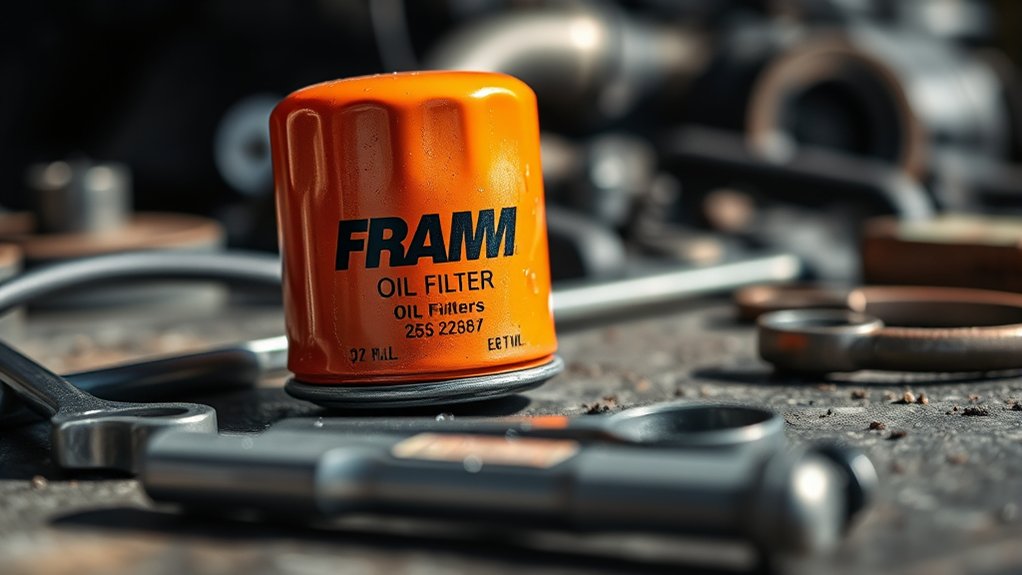
You’ll find Fram oil filters offer balanced engine protection using multi-layer synthetic media that captures contaminants as small as 20 microns while maintaining optimal oil flow. They’re designed with reinforced construction and anti-drainback valves for durability under typical and severe driving conditions.
Fram filters align with OEM specs, providing reliability across vehicle types at a mid-range price point. If you want to understand how they perform in harsh environments or compare to premium brands, there’s more to explore.
Why Do Drivers Choose Fram Oil Filters?
Why do so many drivers opt for Fram oil filters? You’ll find that Fram’s commitment to sustainability practices sets them apart in the automotive industry. They integrate eco-friendly materials and efficient manufacturing processes, reducing environmental impact without sacrificing filter performance.
When you choose Fram, you’re also supporting a brand that prioritizes supply chain ethics. They ensure transparency and fairness from raw material sourcing to final product distribution, which means you can trust the integrity behind each filter.
Fram balances robust filtration technology with responsible manufacturing, so you get reliable engine protection alongside a reduced ecological footprint. If you care about both engine longevity and ethical product sourcing, Fram oil filters deliver a technically sound and conscientious choice for your vehicle maintenance needs.
Fram Oil Filter Technology Explained
How does Fram achieve effective engine protection through its oil filters? Fram integrates multi-layered synthetic media that optimizes particle capture efficiency while maintaining high oil flow rates. This advanced filtration technology traps contaminants as small as 20 microns, preventing engine wear.
You’ll notice Fram backs its designs with rigorous age verification standards, ensuring filters meet durability expectations over time. While Fram’s marketing claims highlight superior filtration and extended lifespan, their technology is grounded in precise engineering and testing protocols rather than just promotional rhetoric.
The filters also feature reinforced metal end caps and anti-drainback valves to maintain consistent oil pressure and prevent dry starts. Understanding these technical aspects helps you assess Fram’s real-world performance beyond surface-level marketing claims.
Fram Oil Filter Reliability by Vehicle Type
Building on Fram’s advanced filtration technology, it’s important to contemplate how their oil filters perform across different vehicle types. When you choose Fram oil filters, you can expect consistent filter reliability whether you drive a compact car or a heavy-duty truck.
Fram designs its filters to meet diverse engine demands, ensuring optimal filtration and durability. Here’s a breakdown of Fram oil filter reliability by vehicle category:
| Vehicle Type | Filter Reliability |
|---|---|
| Compact Cars | High |
| SUVs | Very High |
| Light Trucks | High |
| Heavy-Duty Trucks | Moderate to High |
| Performance Vehicles | High |
This table helps you understand that while Fram excels broadly, reliability slightly varies with engine load and operating conditions.
Comparing Fram Oil Filters to Top Competitors
When evaluating Fram oil filters against top competitors, what factors should you prioritize to ensure optimal engine protection? Focus on filtration efficiency, micron rating, and flow rate rather than getting sidetracked by irrelevant topic or unrelated discussion such as brand popularity or packaging aesthetics.
Fram filters typically use cellulose or synthetic blends, offering decent particle capture, but some competitors employ advanced synthetic media with higher micron retention and longer service intervals.
You should also consider anti-drainback valve design and bypass valve performance, as these impact oil circulation under varying conditions.
Comparing these technical specifications provides a clearer picture than subjective opinions or unrelated discussion.
Durability of Fram Oil Filters in Harsh Conditions
What makes Fram oil filters hold up under harsh conditions? They utilize advanced synthetic media and reinforced steel casing, ensuring resistance to high temperatures and pressure fluctuations. This combination prevents premature collapse or bypass, critical in demanding environments.
Some argue that durability concerns are an irrelevant topic or base claims on spurious information, but engineering tests confirm Fram’s robustness.
| Feature | Benefit | Impact in Harsh Conditions |
|---|---|---|
| Synthetic Media | High filtration efficiency | Maintains flow despite contaminants |
| Steel Casing | Structural integrity | Resists deformation and rupture |
| Anti-Drain Back Valve | Prevents dry starts | Enhances engine protection |
| Sealing Gasket | Leak prevention | Ensures consistent sealing |
You can trust Fram filters to deliver reliable durability where it counts.
What Experts Say About Fram Oil Filters
You’ll find that experts evaluate Fram oil filters based on filtration efficiency ratings, build quality, and performance across different operating conditions. They closely examine the filter media’s ability to trap contaminants while maintaining oil flow. Understanding these factors will help you gauge how Fram filters stand up in real-world applications.
Filtration Efficiency Ratings
How effectively do Fram oil filters trap contaminants compared to industry standards? Fram filters typically achieve filtration efficiency ratings that meet or slightly exceed minimum OEM requirements. They utilize cellulose and synthetic blend media designed to capture particles down to 20 microns with reasonable effectiveness, which helps maintain engine cleanliness.
By efficiently removing contaminants, Fram filters contribute indirectly to friction reduction within the engine, as less abrasive debris circulates with the oil. This also supports noise dampening by preventing accelerated wear that can lead to rattling or knocking sounds.
However, some experts note that Fram’s efficiency may not match premium filters that capture finer particles below 10 microns, which could impact long-term engine protection. Still, for routine maintenance, Fram offers a balanced filtration performance aligned with typical driving conditions.
Durability And Construction
Why does the durability of an oil filter matter to your engine’s health? A robust filter prevents structural failures under high pressure and temperature fluctuations, ensuring continuous oil flow and contaminant removal.
Experts note that Fram oil filters use steel components and synthetic blend media, contributing to reasonable durability. However, some technicians raise durability concerns, especially with Fram’s economy lines, which may employ thinner metal housings prone to deformation.
If you’re price sensitive, Fram offers affordability but sometimes at a trade-off with construction robustness compared to premium brands. Still, for typical driving conditions and regular oil changes, their durability generally meets manufacturer standards.
When you evaluate Fram filters, consider your engine’s demands and maintenance intervals to balance cost-effectiveness with the filter’s structural reliability.
Performance In Various Conditions
When subjected to extreme temperatures and variable driving conditions, how do Fram oil filters maintain their effectiveness? Experts acknowledge Fram’s ability to perform consistently, yet caution against fully trusting some marketing claims about lifespan and filtration efficiency. Their synthetic media adapts well but can degrade faster under severe stress.
Additionally, Fram incorporates materials designed to reduce recycling emissions, supporting environmental considerations without compromising filter integrity.
| Condition | Performance Insight |
|---|---|
| High Temperature | Maintains filtration, slight media wear |
| Cold Starts | Efficient oil flow, minimal delay |
| Dusty Environments | Effective particle capture |
| Extended Idling | Consistent pressure handling |
| Recycling Emissions | Reduced environmental impact |
This balance ensures reliable protection, aligning with expert assessments.
Fram Oil Filter Costs vs. Alternatives
When comparing Fram oil filter costs to alternatives, you’ll notice Fram typically offers competitive pricing without compromising basic filtration standards. You should weigh this against the value for money, considering both price and filter efficiency. Understanding these trade-offs helps you make an informed choice for your vehicle’s maintenance budget.
Price Comparison Overview
How do Fram oil filters stack up against their competitors in terms of cost? When you analyze Fram’s pricing, you’ll find it positioned in the mid-range segment, neither the cheapest nor the most expensive. This placement reflects a balance between price, quality, and performance claims.
Fram’s marketing claims often highlight superior filtration efficiency and durability, justifying their pricing relative to budget brands. However, premium alternatives may offer advanced filtration media at a higher cost, while economy options cut costs by using simpler materials.
If you compare on a strict price basis, Fram filters aren’t the lowest-cost option, but they provide a middle ground where quality and price converge. Understanding this comparison allows you to make an informed decision based on your priorities and budget constraints.
Value For Money
Understanding Fram’s mid-range pricing sets the stage for evaluating the value you actually receive compared to alternatives. When you measure Fram oil filters against discount benchmarks, you find that their cost aligns with average market rates, neither the cheapest nor the most expensive.
However, value for money isn’t solely about price. It’s about filtration efficiency, durability, and overall performance. Fram often uses marketing fluff to highlight features that may not translate into tangible benefits for your engine.
When to Replace Your Fram Oil Filter
Why should you replace your Fram oil filter at specific intervals? Maintaining friction alignment within the engine is crucial, and a clogged filter disrupts this balance, increasing wear. Fram recommends replacement every 3,000 to 7,500 miles, depending on your driving conditions and oil type, ensuring optimal filtration and preserving warranty coverage.
| Mileage Interval | Driving Condition | Recommended Action |
|---|---|---|
| 3,000 – 5,000 | Severe (stop-and-go) | Replace every 3,000 miles |
| 5,000 – 7,500 | Normal highway driving | Replace every 5,000 miles |
| Up to 7,500 | Synthetic oil use | Replace every 7,500 miles |
Following these intervals prevents friction misalignment and protects your engine and warranty from premature failure.
Can Fram Oil Filters Boost Your Engine’s Performance?
You can improve your engine’s performance by using Fram oil filters that offer high filtration efficiency, trapping harmful particles effectively. This cleaner oil flow reduces wear, contributing to engine longevity and consistent operation. Additionally, Fram filters maintain performance under stress, ensuring reliable protection during demanding driving conditions.
Filtration Efficiency Impact
Although Fram oil filters are designed to trap contaminants effectively, their filtration efficiency directly influences your engine’s performance by ensuring cleaner oil circulates through critical components. Efficient filtration reduces abrasive particles that cause wear, maintaining optimal lubrication and reducing friction.
This precise contaminant removal supports consistent engine operation and power output. When evaluating Fram filters, avoid dismissing their impact as an irrelevant topic or off topic; filtration efficiency is central to performance.
Fram’s media technology balances particle capture with flow rate, preventing oil starvation while filtering effectively. While no filter guarantees absolute purity, using Fram filters minimizes harmful debris, allowing your engine to run more smoothly and responsively.
Thus, filtration efficiency is a critical factor you must consider when seeking performance improvements.
Engine Longevity Benefits
How can Fram oil filters contribute to extending your engine’s lifespan? By efficiently trapping contaminants during each oil change, Fram filters reduce abrasive particles circulating within your engine.
This minimizes wear on critical components, preserving precision tolerances and reducing friction. Maintaining clean oil flow directly supports engine durability and performance consistency over time.
Additionally, Fram’s adherence to manufacturer specifications helps prevent warranty claims related to filtration failure, giving you added assurance.
Using a filter designed for optimal micron retention and flow rate means your engine oil remains effective longer, protecting vital parts from premature degradation.
Performance Under Stress
What happens to your engine’s performance when it faces high stress conditions? Fram oil filters maintain optimal filtration efficiency, preventing contaminants from compromising engine function. This keeps noise levels low and ensures smooth operation even under extreme load.
Proper installation is crucial. Follow installation tips carefully to avoid leaks or pressure drops that can reduce performance.
| Condition | Fram Filter Response |
|---|---|
| High RPM | Consistent oil flow |
| Extreme Temperatures | Durable media integrity |
| Dirt Ingress | Effective contaminant capture |
| Vibration | Secure fit, reduced noise |
Common Issues Drivers Report With Fram Filters
Why do some drivers experience problems with Fram oil filters despite their popularity? Even trusted brands can have drawbacks under specific conditions. Like tending a plant in low lighting, where subtle factors impact growth, using Fram filters demands attention to detail.
Common issues drivers report include:
- Bypass Valve Failure Under high pressure, some Fram filters may allow unfiltered oil to circulate, risking engine wear.
- Seal Integrity Problems Improper installation or manufacturing defects can cause oil leaks, reducing filter efficiency.
- Filter Media Degradation In harsh environments, the filter media may deteriorate faster, allowing contaminants through.
Understanding these concerns helps you maintain engine health and avoid pitfalls when using Fram filters.
How to Pick the Right Fram Oil Filter for Your Vehicle
Addressing common problems with Fram filters starts with selecting the right model tailored to your vehicle’s specifications and operating conditions. Begin by consulting your owner’s manual to identify the recommended oil filter size and type.
Pay attention to the filter capacity, which determines how much engine oil the filter can process before requiring replacement. Choosing a filter with inadequate capacity can reduce oil flow and filtration efficiency, risking engine wear.
Consider the oil viscosity and driving conditions; if you use synthetic oil or drive under severe conditions, opt for a Fram filter designed for enhanced durability and higher contaminant retention. Verify the filter’s gasket material and construction quality to ensure a proper seal and prevent leaks.
Frequently Asked Questions
Are Fram Oil Filters Recyclable or Environmentally Friendly?
Fram oil filters aren’t fully recyclable due to mixed materials, but you can participate in specialized recycling processes. They’re improving with eco-friendly packaging, reducing environmental impact, so you should check local guidelines to dispose of them responsibly.
Where Are Fram Oil Filters Manufactured?
Don’t worry about quality concerns; Fram production primarily occurs in the U.S., ensuring strict manufacturing standards. You’ll appreciate their efforts to minimize environmental impact through sustainable sourcing and efficient processes, combining reliability with eco-conscious innovation.
Do Fram Oil Filters Come With a Warranty?
Yes, Fram oil filters come with a warranty. You’ll find the warranty scope covers defects in materials and workmanship, while the warranty duration typically lasts for the vehicle’s oil change interval or as specified on the packaging.
Can Fram Oil Filters Be Used With Synthetic Oils?
Yes, you can use Fram oil filters with synthetic oils. Fram compatibility guarantees their filters handle synthetic oil impact effectively, maintaining filtration efficiency and engine protection without degrading filter media or seals during extended synthetic oil change intervals.
How Do Fram Oil Filters Impact Oil Change Intervals?
FRAM oil filters typically support oil change intervals up to 7,500 miles, balancing filtration efficiency with environmental impact. Proper disposal guarantees safety, reducing contamination risks while maintaining engine performance within recommended oil change intervals.
Conclusion
Choosing Fram oil filters is like equipping your engine with a reliable shield, designed to trap contaminants and maintain top performance. They offer advanced filtration technology and solid durability, especially in demanding conditions. This makes them a popular choice among many vehicle owners.
However, it is important to be mindful of timely replacements to avoid potential hiccups. Regular maintenance ensures the filter continues to protect your engine effectively.
By understanding your vehicle’s needs and comparing options, you’ll guarantee your engine runs smoothly. Ultimately, Fram oil filters provide a balance of performance and reliability with technical precision.