What Are Wheel Nuts
Wheel nuts secure your vehicle’s wheels to the hub, guaranteeing stability and safety during motion. These essential components clamp the wheel tightly, preventing detachment caused by vibrations or improper torque. Choosing the right type, seat shape, and material is critical to match your wheel studs and prevent damage.
Proper tightening with a calibrated torque wrench maintains consistent pressure and avoids wheel failure. Understanding the role and maintenance of wheel nuts helps you ensure reliable wheel attachment and safe driving performance.
Explore how different types and installation practices affect wheel nut function to keep your vehicle secure on the road.
What Are Wheel Nuts and Why Do They Matter?
Why do wheel nuts play a critical role in vehicle safety and performance? You need to understand that wheel nuts are fasteners securing the wheel to the hub, ensuring stability during motion. Unlike an unrelated topic or random chatter, their function is precise and indispensable.
Wheel nuts secure the wheel to the hub, ensuring stability and safety during vehicle motion.
If wheel nuts aren’t properly tightened, you risk wheel detachment, leading to accidents or damage. Their material composition, threading, and torque specifications directly affect durability and safety.
When inspecting your vehicle, avoid distractions from unrelated topics or random chatter that might divert attention from checking these components. Proper maintenance of wheel nuts ensures consistent contact pressure, preventing loosening caused by vibrations.
In short, wheel nuts are fundamental to maintaining your vehicle’s operational integrity and your safety on the road.
How Wheel Nuts Secure Your Wheels
You rely on wheel nuts to firmly clamp your wheels to the hub, ensuring stability and safety. Different types of wheel nuts, like conical or spherical seats, match specific wheel designs to optimize fit and load distribution. Applying the correct torque when tightening is critical, as under- or over-tightening can compromise the wheel’s secure attachment.
Function of Wheel Nuts
How do wheel nuts guarantee your wheels stay firmly attached during operation? They achieve this by applying precise clamping force to the wheel hub, securing the wheel against the axle. When you tighten the wheel nuts to the specified torque, they create friction that prevents rotation or loosening under dynamic loads.
This function is critical; any misunderstanding, such as considering unrelated topics like paint quality or irrelevant concepts like wheel aesthetics, detracts from their mechanical role. Wheel nuts distribute stress evenly across the wheel mounting surface, ensuring structural integrity and safety.
Without proper function, vibrations and wheel detachment risks increase significantly. Therefore, you must maintain correct torque and inspect nuts regularly to ensure they perform their essential role in wheel retention and vehicle stability.
Types of Wheel Nuts
Which type of wheel nut best suits your vehicle’s design and performance requirements? Primarily, you’ll encounter conical, spherical, and flat seat wheel nuts, each designed to match specific wheel stud and rim shapes, ensuring optimal wheel nuts compatibility.
Conical nuts, with their tapered base, provide a secure fit for most passenger vehicles. Spherical nuts feature a rounded seat for alloy wheels requiring precise alignment, while flat seat nuts suit certain aftermarket designs.
Additionally, locking wheel nuts offer enhanced security by requiring a unique key for removal, preventing theft. When replacing or upgrading, confirm compatibility with your wheel studs and rims to maintain safety and performance.
Torque and Tightening
Why does proper torque matter when securing wheel nuts? Applying the correct torque ensures the wheel is firmly attached without damaging components. Over-tightening can strip threads or warp brake rotors, while under-tightening risks wheel detachment.
The wheel nut history reveals the evolution of fastening methods, emphasizing the importance of standardized torque values. Today, torque standards specify precise tightening forces measured in Newton-meters or pound-feet, tailored to vehicle specifications and wheel materials.
You should always use a calibrated torque wrench to achieve these values accurately. Following torque standards not only guarantees safety but also prolongs the lifespan of wheel studs and nuts.
Proper torque and tightening techniques maintain structural integrity and prevent mechanical failures, making them fundamental in wheel assembly and maintenance.
Different Types of Wheel Nuts and When to Use Them
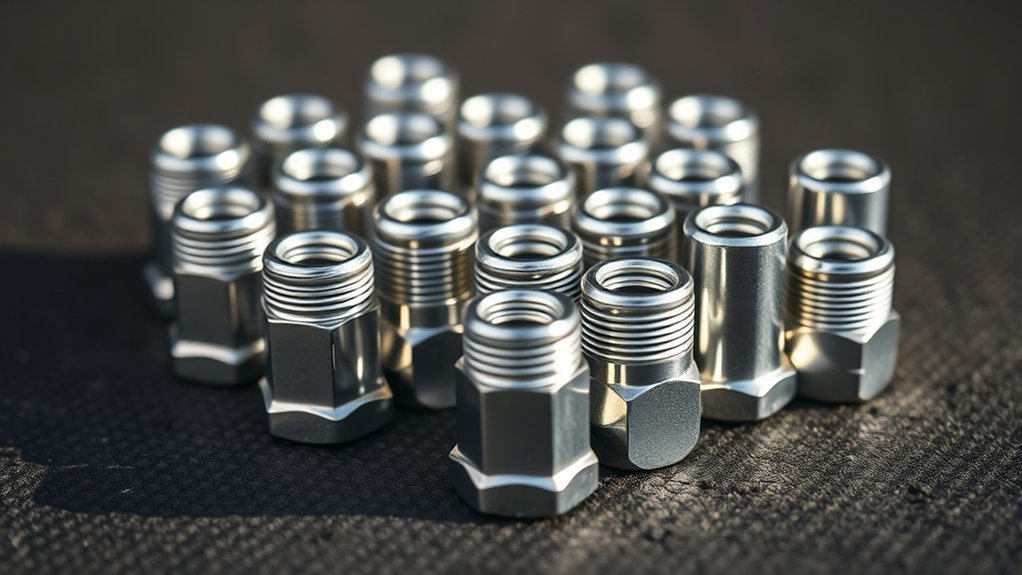
Understanding the various types of wheel nuts is essential for ensuring proper fitment and safe vehicle operation. You’ll encounter standard hex nuts, acorn (or conical) nuts, and spline drive nuts, each designed to match specific wheel sizing and lug pattern requirements.
Hex nuts are common for steel wheels, offering straightforward installation. Acorn nuts feature a tapered seat, aligning with alloy wheels and providing a secure fit that prevents loosening. Spline drive nuts require a special key and are often used for security purposes or unique lug patterns.
When selecting wheel nuts, always verify that the thread size, pitch, and seat type correspond exactly to your vehicle’s wheel sizing and lug pattern. Using the correct type prevents damage and ensures optimal load distribution during driving.
How to Spot Worn or Damaged Wheel Nuts
You should start by visually inspecting the wheel nuts for cracks, deformation, or corrosion. Pay close attention to signs of rust damage that can weaken the metal and compromise safety. Finally, check the threads for wear or stripping, which can prevent proper torque and secure fitment.
Visual Inspection Indicators
How can you quickly identify wheel nuts that need immediate attention? Start by examining the visual indicators on each nut. Look for irregular wear patterns on the hexagonal surfaces where the wrench grips; rounded edges or flattened corners signal excessive wear and risk of slippage.
Inspect the threads carefully. Any stripping, deformation, or inconsistent pitch indicates compromised strength. Also, check for visible cracks or fractures along the nut body, especially near the threaded section.
Uniform wear patterns are normal, but uneven or localized damage suggests improper torque or misalignment. These visual clues help you pinpoint nuts that may fail under stress, ensuring you address issues before they lead to wheel loosening or safety hazards.
Regular, detailed inspections using these indicators maintain wheel integrity and vehicle safety.
Signs of Rust Damage
While visual wear and deformation provide clear signs of potential wheel nut failure, rust damage often presents subtler yet equally dangerous indicators. You should closely inspect the wheel nuts for surface discoloration, pitting, or flaking, as these are telltale signs of rust damage.
Corrosion typically initiates around the base and threads, compromising structural integrity and torque retention. If you notice any reddish-brown deposits or rough texture, it’s essential to assess whether corrosion repair is feasible or if replacement is necessary.
Ignoring rust damage can lead to weakened nuts that may shear under stress, causing wheel detachment. Regularly cleaning and applying anti-corrosion treatments can prevent rust formation, but once damage is visible, thorough evaluation and prompt action are essential to maintain wheel safety and reliability.
Checking for Thread Wear
When inspecting wheel nuts, what signs indicate thread wear or damage? You need to focus on the condition of the threads, as damaged threads compromise safety. Avoid treating this as an unrelated topic or off topic concept; it’s critical. Look for:
- Flattened or stripped threads that reduce grip strength.
- Cross-threading evidence, such as uneven wear or difficulty screwing the nut on.
- Embedded debris or corrosion inside the threads, which can cause improper torque.
Use a thread gauge or visually compare nuts to new ones for precision. Damaged threads can cause wheel loosening or failure, so don’t overlook this inspection step. Remember, thread wear is a mechanical issue, not an unrelated topic, and ignoring it risks your vehicle’s integrity.
How to Choose the Right Wheel Nuts for Your Vehicle
Why does selecting the correct wheel nuts matter for your vehicle’s performance and safety? Using incompatible nuts can cause improper fit, leading to wheel detachment or damage. Avoid confusing this with an irrelevant topic like tire pressure or an unrelated concept such as brake pad material.
Focus on these key factors when choosing wheel nuts:
| Factor | Description | Importance |
|---|---|---|
| Thread Size | Matches wheel stud thread pitch | Ensures secure fit and grip |
| Seat Type | Conical, ball, or flat seat | Prevents wheel damage |
| Material & Grade | Steel quality and strength rating | Withstands torque and stress |
Confirm these specifications in your vehicle manual or consult a professional to maintain optimal safety and performance.
How to Install and Tighten Wheel Nuts
Properly installing and tightening wheel nuts is essential for securing your wheels and ensuring safe vehicle operation. Avoid distractions with unrelated topic information that can divert your focus. Follow these precise steps:
Position the wheel evenly on the hub, aligning bolt holes carefully to prevent off topic errors like misalignment.
Place the wheel evenly on the hub, ensuring bolt holes align to avoid misalignment errors.
Hand-tighten each wheel nut in a star or crisscross pattern to ensure even pressure distribution before using any tools.
Use a calibrated torque wrench to tighten the nuts to the manufacturer’s specified torque, avoiding overtightening or undertightening.
This method maintains wheel integrity and prevents damage or loosening during driving. Staying focused on the installation process, without introducing unrelated topic details, guarantees accuracy and safety in your wheel maintenance routine.
Common Wheel Nut Mistakes to Avoid
Following the correct procedure for installing and tightening wheel nuts minimizes risks, but overlooking certain common mistakes can still compromise wheel security. First, don’t confuse wheel nuts with unrelated topic components like lug bolts; mixing these up leads to improper fit and unsafe conditions.
Avoid skipping the torque specification. Using a torque wrench ensures you apply the exact tightness required. Over-tightening or under-tightening causes damage or loosening over time.
Also, never ignore damaged threads or cross-threading during installation, as this weakens the connection. Finally, steer clear of off topic discussion like wheel aesthetics during installation; focus solely on mechanical integrity to maintain safety.
Staying precise and attentive prevents costly errors and ensures your wheels remain securely fastened.
Tips to Maintain Your Wheel Nuts for Safety and Performance
How can you guarantee your wheel nuts continue to perform safely and effectively over time? Prioritize regular inspection and maintenance safety to prevent wear or damage that compromises function. Ensure you verify wheel hardware compatibility when replacing components to maintain proper fit and torque specifications.
Follow these key maintenance tips:
- Routinely check torque using a calibrated torque wrench to meet manufacturer specifications and avoid over- or under-tightening.
- Inspect wheel nuts for corrosion, cracks, or stripping, replacing any compromised hardware immediately.
- Clean threads and mating surfaces to remove debris that could affect seating and torque accuracy.
Frequently Asked Questions
Can Wheel Nuts Affect Tire Balancing?
Yes, improper wheel nut torque risks uneven tightening, causing vibrations that affect tire balancing.
You must ensure wheel nuts compatibility and torque specifications to maintain balance and avoid stress on wheels, enhancing safety and performance.
Are Wheel Nuts Standardized Across All Car Brands?
You won’t find wheel nuts standardized across all car brands due to standardization variability; instead, manufacturers use brand-specific patterns, including thread size, pitch, and seat type. This ensures compatibility with their unique wheel designs and safety requirements.
How Often Should Wheel Nuts Be Replaced?
Better safe than sorry: you should replace wheel nuts if you notice compromised thread integrity or stripped threads.
Always check wheel torque regularly, especially after tire changes, to assure safety and maintain proper fastening performance.
Can Using the Wrong Wheel Nuts Damage the Vehicle?
Yes, using the wrong wheel nuts can damage your vehicle by causing wrong torque application, leading to wheel loosening or overtightening. This increases corrosion risk and compromises wheel integrity, safety, and overall vehicle performance.
Do Wheel Nuts Need Lubrication During Installation?
You don’t need lubrication during wheel nut installation; lubrication myths can lead to incorrect torque calibration.
Applying grease alters friction, causing inaccurate torque readings and potentially unsafe wheel fastening. Always install dry for precise torque control.
Conclusion
Understanding wheel nuts is essential for your vehicle’s safety and performance. Did you know that improperly tightened wheel nuts cause about 85% of wheel detachment incidents? By choosing the right type, regularly inspecting for wear, and applying correct torque during installation, you guarantee your wheels stay secure.
Avoid common mistakes like over-tightening or using mismatched nuts, and maintain them meticulously to prevent costly and dangerous failures on the road. Proper care and attention to wheel nuts not only enhance safety but also extend the lifespan of your wheels.
In conclusion, understanding wheel nuts is a key part of vehicle maintenance that ensures your wheels remain firmly attached and your driving experience stays safe.