How to Test a Fuel Filter
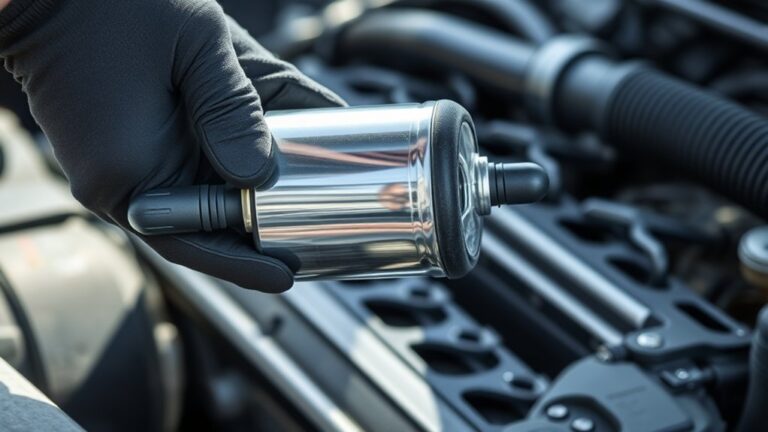
To test your fuel filter, start by locating it using your vehicle’s manual. Testing a fuel filter is essential to ensure your engine runs smoothly and efficiently. Begin by relieving the fuel system pressure for safety.
Next, use a fuel pressure gauge to check for any pressure drops across the filter. Perform a flow test by collecting fuel from the filter outlet while activating the fuel pump.
Visually inspect the filter for debris or damage. If your filter has electrical components, use a multimeter to check their functionality. For a more accurate diagnosis and proper maintenance, follow detailed steps and preventive tips.
How to Identify a Clogged Fuel Filter
How can you tell if your fuel filter is clogged? Start by identifying symptoms such as engine hesitation, reduced acceleration, or frequent stalling. A clogged fuel filter restricts fuel flow, causing these performance issues.
Common causes include contaminated fuel, dirt accumulation, and degraded filter media over time. You might also notice difficulty starting the engine or a noticeable drop in fuel efficiency.
To accurately pinpoint a clogged filter, observe these signs systematically and consider recent fuel quality and mileage since the last filter replacement. By methodically monitoring these symptoms and understanding the common causes, you can determine whether the fuel filter needs testing or replacement, ensuring optimal engine performance and preventing further mechanical complications.
Tools You Need to Test Your Fuel Filter
To accurately test your fuel filter, you’ll need specific tools, including a pressure gauge and a container for fuel flow measurement. Don’t forget to equip yourself with safety gear like gloves and eye protection to prevent injury. Additionally, optional diagnostic devices can help pinpoint issues more efficiently.
Essential Testing Tools
Which tools do you need to accurately test a fuel filter? To ensure you’re finding insights into its condition and addressing reliability concerns, you’ll want a precise set of tools. Each plays a critical role in diagnosing flow restrictions or contamination.
Here’s what you’ll need:
- Fuel pressure gauge: Measures pressure drop across the filter.
- Clear fuel line section: Visualizes fuel flow and debris presence.
- Hand-operated vacuum pump: Tests for filter clogging under suction.
- Multimeter: Checks any electronic fuel filter components.
- Container for fuel collection: Safely captures fuel during testing.
Using these tools methodically helps you pinpoint issues swiftly, ensuring your fuel filter maintains optimal performance and prevents vehicle reliability concerns.
Safety Equipment Needed
When working with fuel systems, why prioritize safety equipment before testing your fuel filter? Fuel is highly flammable and toxic, so adhering to strict safety protocols is essential.
First, wear appropriate PPE: chemical-resistant gloves to protect your skin from fuel exposure, safety goggles to shield your eyes from splashes, and a long-sleeved shirt to minimize skin contact.
Ensure you’re in a well-ventilated area or use a respirator to avoid inhaling harmful fumes. Avoid open flames or sparks nearby.
Additionally, have a fire extinguisher rated for flammable liquids within reach. Confirm that all tools and surfaces are grounded to prevent static discharge.
Optional Diagnostic Devices
After securing your safety gear and preparing your workspace, gather the diagnostic devices that will help you accurately assess your fuel filter’s condition. These optional diagnostic tools provide precise measurements to verify fuel flow and detect blockages efficiently. Using them ensures you don’t replace parts unnecessarily or overlook hidden issues.
Consider including these devices in your toolkit:
- Fuel pressure gauge to measure pressure before and after the filter
- Flow meter for quantifying fuel flow rate accurately
- Vacuum gauge to detect restrictions causing pressure drops
- Multimeter to check electrical components related to fuel pumps
- Inspection mirror for visual access to hard-to-see areas
Employing these optional diagnostic devices lets you methodically pinpoint fuel filter problems, saving time and ensuring optimal engine performance.
How to Locate Your Vehicle’s Fuel Filter
Because fuel filters vary widely by vehicle make and model, locating yours requires consulting your owner’s manual or a repair guide specific to your car. Finding fuel filter placement is essential before testing. Typically, filters are either inside the fuel tank, along the fuel line, or near the engine bay.
Locating filter position precisely helps avoid unnecessary disassembly.
| Vehicle Type | Common Fuel Filter Location | Notes |
|---|---|---|
| Passenger Cars | Near fuel tank or engine bay | Accessible under vehicle or hood |
| Trucks | Along the frame rail | Often external, easier to replace |
| Motorcycles | Under seat or near carburetor | Compact, often integrated |
| Diesel Vehicles | Near fuel injection pump | Requires careful handling |
Use this table as a reference when finding fuel filter locations in your specific vehicle.
How to Test Fuel Filter Flow Using a Pressure Gauge
Start by properly connecting the pressure gauge to the fuel system at the designated test port. Make sure the gauge is calibrated and secure to get accurate readings. Then, observe the pressure levels while the engine runs to determine if the fuel filter flow is within the manufacturer’s specifications.
Preparing The Pressure Gauge
How do you guarantee accurate readings when testing fuel filter flow with a pressure gauge? Properly preparing the gauge is crucial to assess filtration efficiency accurately, reflecting the real impact of petrol chemistry on flow dynamics.
Start by ensuring the gauge is calibrated and rated for the expected pressure range. Then, follow these steps:
Inspect the gauge for damage or contamination that could skew results. Connect the gauge securely to the fuel line test port.
Purge air bubbles from the gauge and hoses to prevent false readings. Confirm all connections are tight to avoid leaks.
Zero the gauge to establish a baseline before starting the test.
Interpreting Pressure Readings
When should you consider a fuel filter’s pressure reading as indicative of flow restriction? Start by comparing the measured pressure against the manufacturer’s specified maximum allowable pressure drop. If the pressure upstream of the filter exceeds this limit while the downstream pressure drops notably, it signals a flow restriction.
Interpreting pressure readings accurately requires understanding normal operating ranges and accounting for engine load conditions. A sudden spike or sustained high pressure upstream confirms fuel filtration is impeded, often due to clogging. Conversely, stable, low differential pressure indicates proper fuel flow.
Always measure pressure with the engine running at a consistent speed to avoid false positives. By methodically interpreting pressure data, you can diagnose fuel filtration performance precisely and determine whether the filter requires replacement or cleaning.
How to Visually Inspect Your Fuel Filter for Damage
Why is a visual inspection essential before further testing your fuel filter? A thorough visual inspection helps you identify obvious damage indicators that could compromise fuel flow or filter integrity. By spotting these early, you avoid unnecessary testing and focus on repairs.
During your visual inspection, look for:
During your visual inspection, check for cracks, corrosion, debris, leaks, and warping to ensure filter integrity.
- Cracks or fractures on the filter housing
- Corrosion or rust buildup around connections
- Dirt or debris clogging the filter mesh
- Fuel leaks around seals or joints
- Warping or deformation due to heat exposure
Identifying these damage indicators ensures you address physical faults before moving on to pressure or electrical testing. This methodical approach saves time and prevents overlooking critical faults that impair engine performance.
How to Test Your Fuel Filter and Pump With a Multimeter
To test your fuel filter and pump, start by measuring the fuel pump voltage with your multimeter to guarantee it receives proper power. Next, check the fuel filter’s resistance to identify any internal blockages or faults. These steps help pinpoint electrical and mechanical issues affecting fuel delivery.
Checking Fuel Pump Voltage
How do you verify if your fuel pump is receiving the correct voltage? First, avoid confusing this with any irrelevant topic like unrelated concepts in automotive diagnostics. Focus solely on the electrical supply to the pump. Use a multimeter set to DC volts.
Locate the fuel pump connector, then:
- Turn the ignition key to the “ON” position without starting the engine.
- Connect the multimeter’s positive lead to the pump’s positive terminal.
- Attach the negative lead to a good ground point.
- Observe the voltage reading; it should match the vehicle’s battery voltage (around 12V).
- If voltage is absent or significantly low, suspect wiring issues or a faulty pump relay.
This method ensures your pump gets the power needed to function properly.
Measuring Filter Resistance
When measuring filter resistance, you’ll need a multimeter set to the ohms (Ω) scale to check the fuel filter’s internal electrical continuity. First, disconnect the fuel filter from the system to isolate it. Place the multimeter probes on the filter terminals, ensuring a firm contact.
A low and stable resistance reading indicates proper continuity, while an infinite or fluctuating reading suggests a faulty filter. Avoid overcomplicating the process with unnecessary jargon; focus on straightforward values. Be cautious of misleading data caused by poor probe contact or a damaged multimeter.
Repeat the measurement to confirm accuracy. This method helps you determine if the fuel filter’s internal circuitry is intact and functioning, preventing further issues in fuel delivery and engine performance.
How to Perform a Flow Test on Your Fuel Filter
Regularly performing a flow test on your fuel filter helps ensure it isn’t restricting fuel delivery and compromising engine performance. To conduct an effective flow test, you’ll assess how well fuel filtration is maintained without flow impediments. Follow these steps:
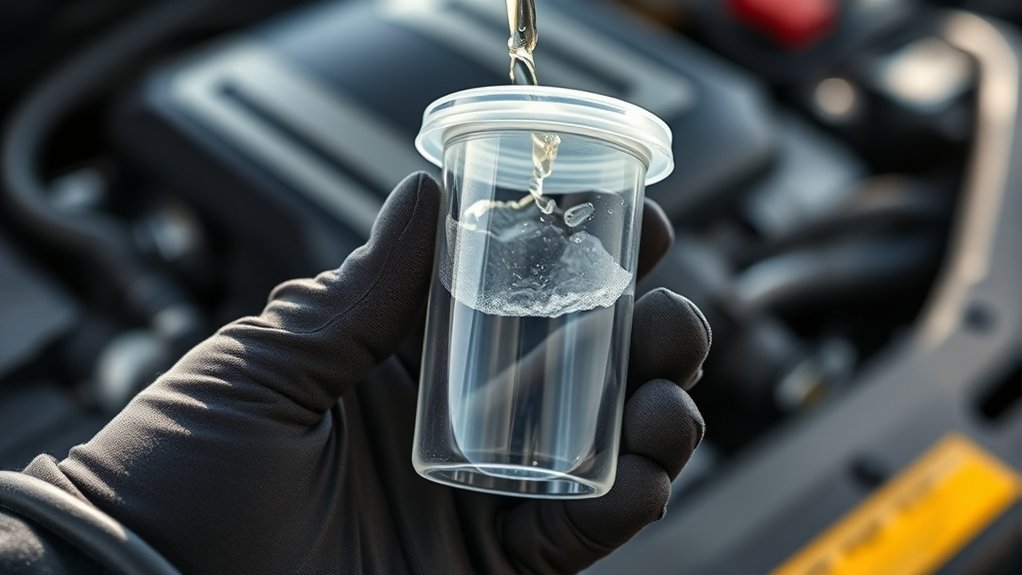
Disconnect the fuel line at the filter outlet. Place a clean container beneath to collect fuel. Turn the ignition key to the “on” position without starting the engine, activating the fuel pump.
Observe and time how quickly fuel flows into the container. Compare the flow rate to your vehicle’s specifications.
If the flow is sluggish or inconsistent, the filter may be clogged. This methodical approach ensures accurate assessment of fuel filtration efficiency and helps you identify potential blockages affecting engine power.
How to Fix a Failing Fuel Filter
Why does a fuel filter fail, and what steps can you take to restore proper fuel flow? Failure often results from contamination risk buildup, disrupting fuel dynamics.
To fix this, start by relieving fuel system pressure, then disconnect the filter. Clean or replace it depending on contamination severity. Always inspect connecting lines for debris to prevent recurring issues.
| Step | Action | Purpose |
|---|---|---|
| 1. Pressure Relief | Depressurize system | Prevent spills, ensure safety |
| 2. Disconnect | Remove fuel filter | Access for cleaning/replacement |
| 3. Clean/Replace | Use suitable solvent or swap | Restore proper filtration |
| 4. Inspect Lines | Check fuel lines for debris | Maintain fuel dynamics flow |
This methodical approach reduces contamination risk, optimizing fuel flow performance.
When to Replace Your Fuel Filter Instead of Testing
Although testing a fuel filter can identify many issues, you should replace it immediately if you notice persistent engine performance problems, visible contamination, or if the filter has exceeded the manufacturer’s recommended service interval. Ignoring these signs risks severe engine damage and compromises safety.
When deciding replacement, consider the following:
- Unexplained engine misfires or stalling
- Dark, clogged filter elements upon inspection
- Noticeable fuel odor indicating leakage
- Manufacturer’s service schedule surpassed
- Rapid fuel consumption without other causes
Being diligent aligns with finding ethics, ensuring you prioritize vehicle integrity over questionable shortcuts. Avoid marketing ethics pitfalls that promote unnecessary testing when replacement is clearly warranted.
Trust your technical judgment and act decisively to maintain optimal engine performance and safety.
Tips for Preventing Fuel Filter Problems in the Future
Maintaining your fuel filter’s condition starts with proactive steps that reduce wear and contamination. By regularly using high-quality fuel, you minimize particulate buildup, preserving fuel efficiency and emissions control.
Schedule routine inspections and timely replacements, as clogged filters compromise engine performance and increase harmful emissions. Avoid running your tank near empty to prevent sediment ingestion.
| Action | Benefit |
|---|---|
| Use quality fuel | Reduces contaminants |
| Regular filter inspection | Detects early clogging |
| Timely filter replacement | Maintains optimal fuel flow |
| Keep tank above quarter full | Prevents sediment pickup |
Implement these methods systematically to sustain your fuel filter’s integrity, ensuring consistent engine reliability and adherence to emissions standards.
Frequently Asked Questions
What Are the Symptoms of a Bad Fuel Filter?
You’ll notice poor engine performance, hesitation during acceleration, and difficulty starting if you have a bad fuel filter. A clogged filter reduces fuel quality and flow, directly impacting engine efficiency and overall vehicle responsiveness.
Can a Dirty Fuel Filter Affect Engine Performance?
Yes, a dirty fuel filter can directly hinder engine performance. Two word idea 1: fuel restriction. Two word idea 2: pressure drop.
Both cause reduced fuel flow, leading you to experience power loss and inefficient combustion.
How Often Should Fuel Filters Be Replaced on Average?
You should replace fuel filters every 20,000 to 40,000 miles, depending on your vehicle and fuel quality. Follow manufacturer guidelines for replacement intervals to ensure optimal engine performance and prevent clogging-related issues.
Are Fuel Filters Different for Diesel and Gasoline Engines?
Yes, you’ll find diesel vs gasoline fuel filters differ markedly. Diesel filters handle finer filtration due to diesel’s contaminants, requiring more robust construction. Gasoline filters focus on removing fewer impurities with less dense filtration media.
Can You Drive Safely With a Clogged Fuel Filter?
You can’t ensure driving safety with a clogged fuel filter; it restricts fuel flow, causing engine performance issues.
Consider filter alternatives like high-flow or synthetic options to maintain optimal fuel delivery and prevent potential breakdowns.
Conclusion
Testing your fuel filter is essential to keep your engine running smoothly and avoid costly breakdowns. With the right tools and a methodical approach, you can quickly identify blockages or damage before they spiral out of control.
Remember, a clogged fuel filter can choke your engine like a giant hand squeezing a garden hose. Stay proactive—regular inspections and timely replacements will guarantee your fuel system performs flawlessly for miles to come.
In conclusion, knowing how to test a fuel filter properly helps ensure your vehicle’s fuel system remains clean and efficient, preventing performance issues and extending the life of your engine.